
Bradford Pear Removal in Virginia: Plan and Cost per Acre
Cut Brush Team · November 3, 2026 · 9 min read

Removing Bradford pear in Virginia is two different jobs. A single old yard tree is cut down and cleared, priced in the quote. A field or fence row taken over by its wild, thorny offspring needs a mulching pass to clear the stand and return cuts for the sprouts that follow. Clearing a young Callery pear thicket from an old field or lot edge typically runs $1,500 to $2,500 an acre.
Each spring the white bloom along Virginia roadsides shows how far the tree has travelled from the streets it was planted on. Around South Boston, Halifax and Danville it often marks an idle hayfield, an unmowed fence row or a woods edge, and by summer those spots are thickets too dense to walk through.
Callery Pear in Virginia
“Bradford” is one cultivar of a single species, Pyrus calleryana, the Callery pear. In Virginia it is ranked Medium for invasiveness in all three regions, Coastal, Piedmont and Mountain, on the state invasive plant list. That list is for education and carries no regulatory weight, so the decision to remove a tree you own is yours.
It is not just a planted tree here. Callery pear is on record in Halifax and Campbell counties, naturalized in fencerows, old fields, roadsides and disturbed woods, and far more common than the county records show; it probably grows wild in most, if not all, Virginia counties.
What the law says. From 1 January 2027, a store that sells a listed invasive plant for outdoor planting must post signage identifying it as invasive, along with alternatives, and Callery pear is on that list. It is a labelling rule for garden retailers. It does not require anyone to remove a tree, and it does not stop you owning one.
How to Spot It
Callery pear flowers before its leaves open, so in early spring a pear-filled field shows up as a haze of white while the oaks, maples and sweetgums are still bare. The leaves are glossy and broad with a short point, and they color red and purple late in the fall. Wild trees often carry stiff thorns along the twigs; the planted varieties usually do not. Early spring is the best time to walk the property, mark the pear and flag any native trees you want to keep.
How a Street Tree Became a Field Weed
The planted Bradford pear was meant to be a tidy, fruitless street tree. Three habits undid that.
Cultivars cross. A single variety rarely sets good seed on its own, but different varieties planted within reach of each other cross-pollinate, and the result is fruit with viable seed. As more varieties went into yards, parking lots and subdivisions, the pollen found partners.
Birds plant it. Birds eat the small fruit, so fertile seed spreads wherever birds perch: fence lines, field edges, power line rights of way and the rows along a woods edge. That is why pear so often comes up along a fence.
The wild seedlings revert. Seedlings take after their wild ancestors rather than the cultivar, and grow sharp thorns. Callery pears spread easily and can form dense thickets, which is how a field left unmowed for a few seasons turns into a stand of thorny young trees.
Open, sunny ground is what it wants. An abandoned pasture, a cutover or a lot that stopped being mowed is ideal.
Why One Cutting Fails
Cutting a Callery pear at the ground does not kill it. The plant still grows from the root, so all a single cut does is cut it back. A field that was bush hogged once and left usually comes back thicker the next summer, because each stump sends up a cluster of new shoots.
Three things make a one-pass job a poor bet:
- Stumps sprout. Every cut stem becomes several by the next growing season.
- Seed keeps arriving. As long as fruiting pears stand along the road or the next property, birds keep planting new seedlings on the cleared ground.
- Thorns slow hand work. Cutting a thicket with a saw is slow and painful, which is why many owners give up partway and leave the rest to spread.
A Removal Plan for Yard Trees and Thickets
The old yard tree. Planted Bradford pears grow into large trees, and their wood is weak and prone to snapping. A single large tree by a house or a drive can be cut down and its trunk and limbs mulched on site or hauled away, which is discussed and priced in the quote. A planted tree that is removed can still sprout from its roots, so watch the spot the next season.
The thicket. For a field, a fence row or a woods edge, the plan runs over a season or more:
- Map it in bloom. Walk the property in early spring while the pear flowers, note where the thickets are and flag the native trees you are keeping.
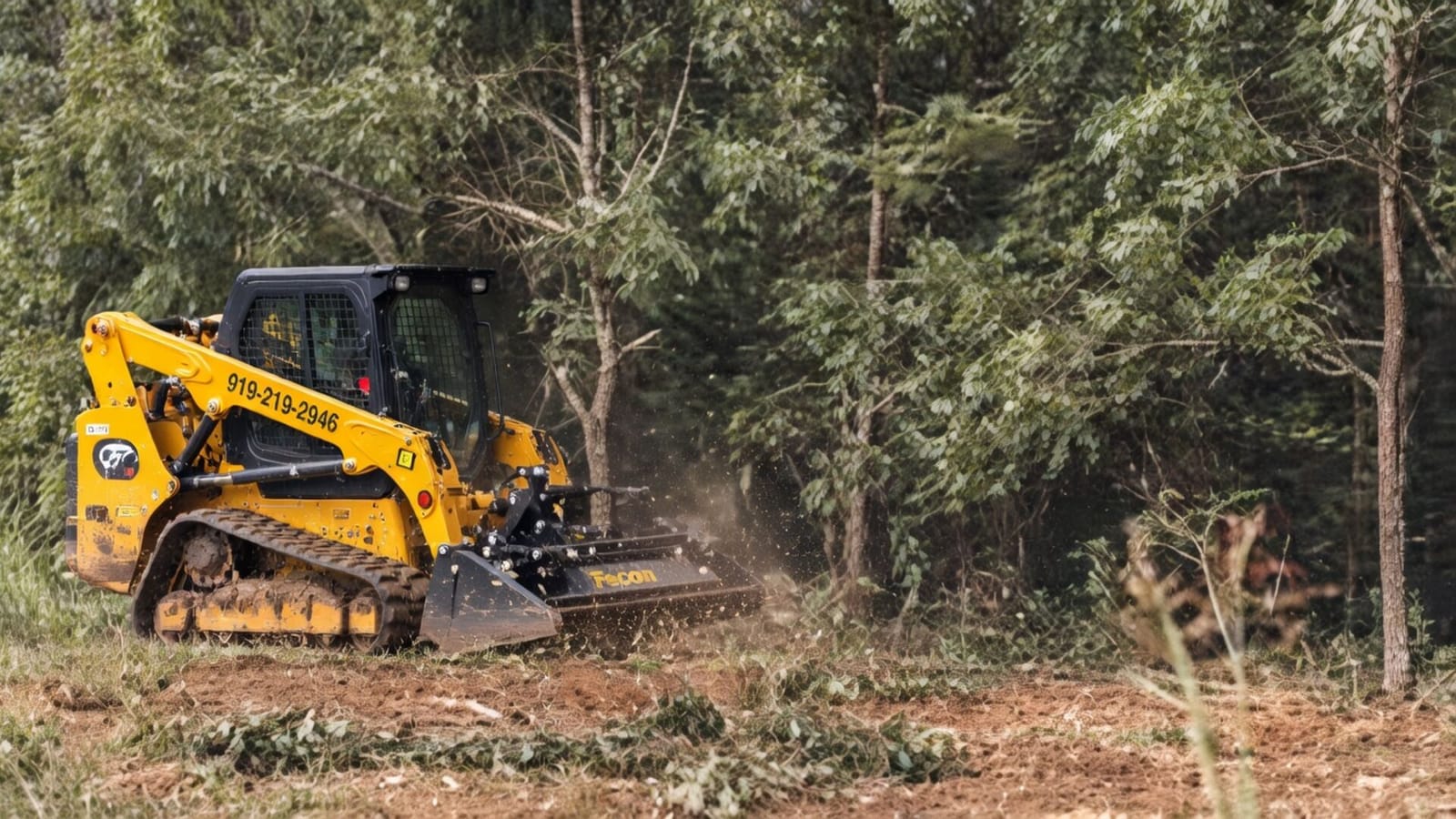
- First pass with a mulcher. A forestry mulcher cuts every stem in the stand and grinds it into chips where it stood, with the stumps ground flush. Nothing is hauled and there is no brush pile to burn.
- Stump treatment, if you choose it. Treating cut stumps or sprouts with herbicide is a licensed applicator’s work, arranged by you and timed to follow the mulcher. Cut Brush does the mechanical work.
- Cut the sprouts. Expect shoots from the stumps through the next growing season. Cutting them before they turn woody, by mulcher on a large area or by mower on level ground, keeps the plants from rebuilding.
- Keep it mowed, grazed or planted. Ground that is mowed, grazed or put back in hay gives new seedlings little chance. Ground left idle invites the next round from the birds.
Pro tip: Book the first follow-up visit when you book the clearing. The sprouts in the first summer decide whether the job holds.
The state’s tree exchange. The Virginia Department of Forestry runs a Callery Pear Exchange for Virginia residents removing the tree from their own private land: one native tree in a 2-gallon pot for each Callery pear removed, up to three per household, with a photo of the removed tree that shows it is a Callery pear. The landowner pays for the removal. As of 3 November 2026 no date was posted for the next exchange, so check before you schedule if you want the replacement trees.
What Bradford Pear Removal Costs
Clearing young Callery pear and brush from an old field, fence row or lot edge typically runs $1,500 to $2,500 per acre, the pear thicket and old-field regrowth row on our South Boston pricing page. A mature thicket with trunks thicker than your arm prices as forestry mulching, $1,500 to $4,000 per acre, and taking a whole parcel to an agreed finish is land clearing, up to $4,500 per acre.
| Pear job | Cost | Notes |
|---|---|---|
| Young pear, pine seedlings and brush on a field or fence row | $1,500 – $2,500 per acre | A narrow fence row is measured by its acreage |
| Mature pear thicket or mixed woods | $1,500 – $4,000 per acre | Priced as forestry mulching |
| A parcel cleared to open ground | $1,500 – $4,500 per acre | Land clearing; stumps flush |
| One fence row, a corner or a single yard tree | Minimum charge of about $1,500 | It replaces the acre rate and nothing is added to it; hauling a large tree is priced in the quote |
| Return cuts for sprouts | Priced per visit | Listed in the quote as their own lines |
| Herbicide treatment | Set by the applicator | A licensed applicator’s work, separate from ours |
Each pass grinds brush, small trees and stumps into mulch where they stand; stumps end flush with the ground and nothing leaves on a truck. Full stump removal below grade and cutting and hauling very large trees are discussed and priced in the quote. Grading and build pads are not part of our price: we clear to the ground so a builder can grade.
Within its band, a pear job moves with the age and density of the stand, the keeper trees to steer around and the access. The South Boston forestry mulching cost guide shows how many acres a day covers on old-field growth and how to compare a day-rate bid with these bands.
Pear Around South Boston and the Dan River Region
Around South Boston, Halifax and Clover, and out to Clarksville, Chase City, Brookneal, Chatham and Danville, pear work tends to come in three settings.
Idle hayfields and pasture. Fields that stopped being cut fill with young Virginia pine and pear together. One mulching pass takes both down; the pear is the part that comes back, so the return cuts are what to budget. Putting the field back in hay or under grazing afterward is the cheapest follow-up there is.
Fence rows and field edges. Birds sitting on the wire plant pear in a line. Mulching both sides opens the wire for repair and gives back the field edge.
Town lots and old yard trees. In South Boston and Danville the job is more often one or two big planted pears by a house, or a vacant lot gone to thicket. A single tree or a small lot starts at the minimum charge.
Two state rules are worth knowing. From February 15 to April 30, Virginia bans open-air burning before 4 p.m. within 300 feet of woods or dry grass, which slows any job that burns brush piles; mulching leaves nothing to burn. Soil erosion control requirements apply to work that disturbs 10,000 square feet or more, so check with your town or county office first. Requirements vary by parcel, scope and jurisdiction, and the governing authority makes the determination. Our South Boston land clearing page covers the local offices and the towns we serve, and the Virginia land clearing cost guide has prices across the state.
Frequently Asked Questions
Is Bradford pear banned in Virginia?
The law that names it, as of 3 November 2026, is a signage rule: from 1 January 2027, stores selling Callery pear for outdoor planting must post signs identifying it as invasive. It does not require you to remove a tree you own.
Should I cut down my Bradford pear?
A healthy yard tree is your call, though many owners replace them because the wood breaks easily and the seed spreads. A field or fence row filling with wild pear is worth clearing before it closes in, with a plan for the sprouts that follow.
Will mulching kill Callery pear?
Not on its own. Mulching removes every stem at once, but the roots sprout again. Return cuts, and stump treatment by a licensed applicator if you want it, are what keep the ground open.
How much does Bradford pear removal cost in Virginia?
Clearing young pear and brush from open ground runs $1,500 to $2,500 per acre, and mature thickets $1,500 to $4,000, with a minimum charge of about $1,500 for a small job or a single tree. Return visits are priced separately.
Get the Pear Off Your Land
Request a free quote and we’ll contact you to discuss your property, access and the clearing you need. Our crew plans pear work as a sequence: marked in bloom, mulched, cut again and checked the next season, so the field stays open once it is cleared.
More from the Cut Brush Blog
Keep reading for more tips and guides on land clearing.
 Cost Guide
Forestry Mulching Cost in South Boston, VA (2026)
Forestry mulching in South Boston, VA costs $1,500 to $4,000 an acre. See acres a day on old fields, how to check a day-rate bid and why pear needs a recut.
 Guide
Mimosa Tree Removal in Virginia: Plan and Cost per Acre
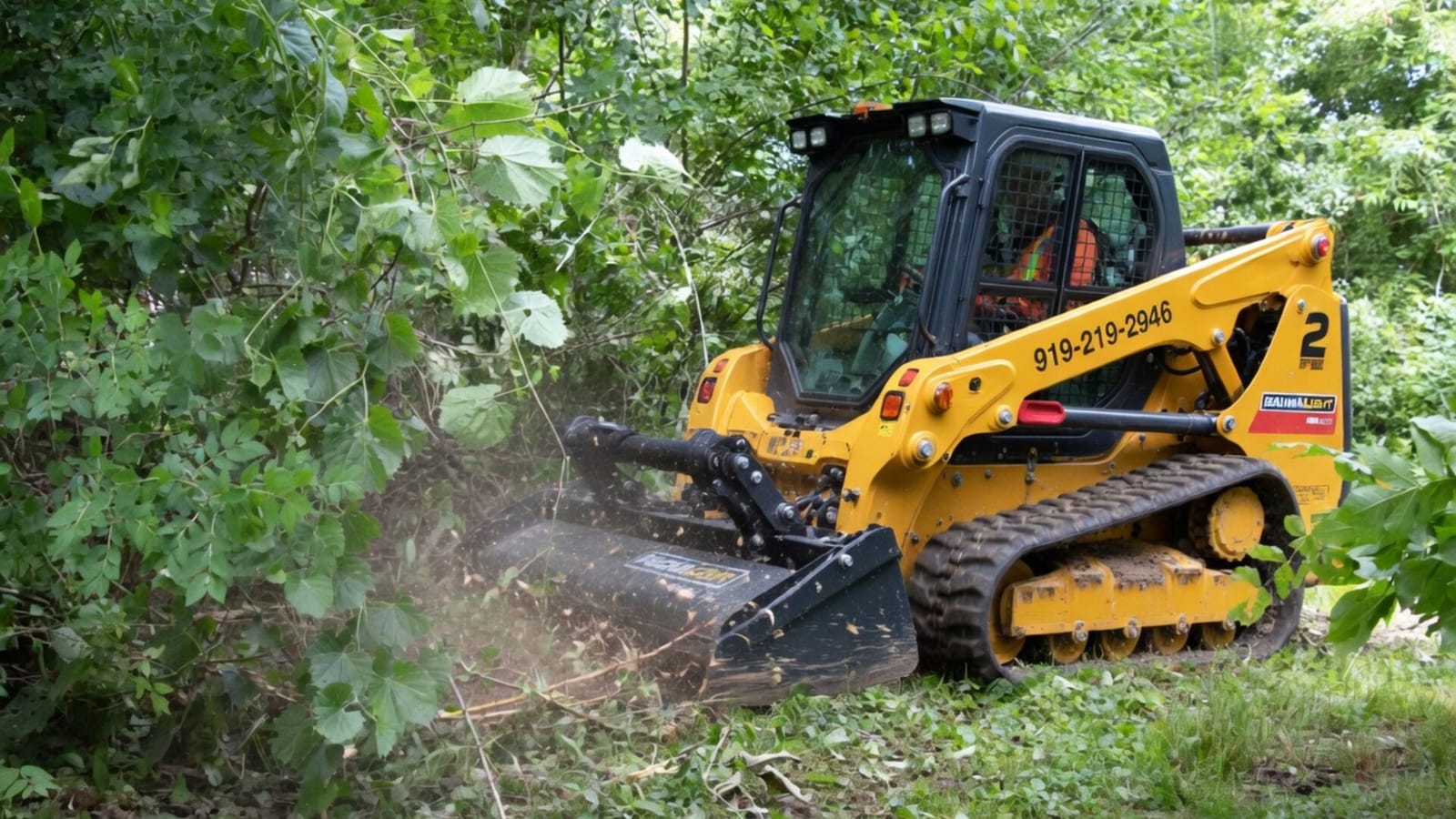
Mimosa tree removal in Virginia: $1,500 to $2,500 an acre for old-field and fence row work, why a cut tree sprouts back and the visits that follow. Free quote.
Let's Get Started on Your Land
Request a free quote. We'll contact you to discuss your property, access, and the clearing you need.
Get a Free QuoteOr call us directly: (571) 520-9081