
Buckthorn Removal in North Dakota: A Fargo-Moorhead Plan
Cut Brush Team · October 12, 2026 · 8 min read

Walk the woods along the Red River in late October, after the ash and the native shrubs have dropped their leaves, and one plant is often still green: a dense, spiny shrub crowding the understory so tightly you cannot see the water. Around Fargo and Moorhead that is usually common buckthorn. It also turns up in old farmstead windbreaks and fence rows, which is no accident; it was first brought to North America for exactly those plantings.
Removing it is a job many owners try once, with a chainsaw on a weekend, and then watch come back thicker. This guide covers where buckthorn grows around Fargo-Moorhead, how to recognize it, how it spreads, why one cutting fails, the plan that does work, and what clearing a thicket costs.
Where Buckthorn Grows Around Fargo-Moorhead
The North Dakota Department of Agriculture’s buckthorn fact sheet says the plant was most likely introduced in the 1800s “for shelter belts, hedges, and wildlife habitats,” and that in North Dakota it has been reported east of the Missouri River in counties including Cass and Richland. It “will typically flourish in fence rows, woodland edges, pastures, ravines, and roadsides,” and it grows in clayey and poorly drained calcareous soils, which describes a great deal of the Red River Valley.
It is in the city’s own woods too. In 2022 the Fargo Park District took a North Dakota Forest Service grant to “remove invasive buckthorn and help plant desirable shrubs and trees in wooded areas just south of Stone Bridge #2.” And NDSU Extension’s guide to North Dakota’s riparian sites lists buckthorn among the non-native plants that “have invaded sites and negatively impacted stream stability.”
North Dakota and Minnesota treat it differently. Buckthorn is not one of North Dakota’s 13 state noxious weeds, so no state rule makes a landowner control it. Across the river in Moorhead, Dilworth and the rest of Clay County, the Minnesota Department of Agriculture lists common and glossy buckthorn as restricted noxious weeds, whose propagating parts may not be imported, sold or transported in Minnesota except by permit. In practice that means fruiting brush should not be loaded on a trailer and hauled away; grinding it where it stands keeps the berries on your own ground.
How to Recognize Common Buckthorn
The state fact sheet gives the field marks:
- Size: a shrub or small tree, 6 to 20 feet tall, about as wide as it is tall.
- Branch tips: the end bud is a modified spine, so many twigs finish in a short thorn.
- Leaves: oval, 1½ to 3 inches long, dark glossy green above and pale below, with two or three main side veins. They sit almost opposite each other on the stem.
- Bark: rough, gray to brown, with long light-colored flecks.
- Fruit: glossy black berries about a quarter inch across, ripening from August into September.
The easiest test is the calendar. Buckthorn leafs out early in spring and holds its leaves late into fall, so a green shrub in a bare November woods is worth a closer look.
How Buckthorn Spreads
Seed, in quantity. The fact sheet says buckthorn “reproduces primarily through prolific seed production,” and seedlings “begin to produce seeds after a few years of establishment.” A handful of shrubs at the edge of a belt can fill the whole row within a few seasons.
Shade that shuts out everything else. Because it leafs out early and keeps its leaves late, a buckthorn stand casts “a dense shade which can prevent native trees, shrubs, and wildflowers from establishing.” Under a thicket, nothing replaces the old trees as they die. That is why buckthorn matters in a windbreak: it does not add shelter, it stops the next generation of the trees that do.
Seed in the soil. Seeds “can remain viable in the soil for two to three years.” Clear every stem today and seedlings still come up for at least two more summers.
Why One Cutting Fails
Cutting a buckthorn stem does not kill its roots. The fact sheet notes the plant “can also resprout after being cut,” and a stump left alone sends up a cluster of new stems from its stored energy. Cut once and walk away, and by the next fall the stand is shorter but thicker.
Fire is not a reliable shortcut either. The sheet warns that “burning at the incorrect time may actually stimulate re-sprouting,” and that a dense stand often will not carry a fire well. And it is frank about large stands: they “are almost impossible to completely eradicate, but small populations of the species can be adequately controlled.” The realistic goal on an old, big thicket is control: knock it down, keep the sprouts and seedlings cut, and let the trees you want take the ground back.
That is why any quote that promises buckthorn “gone” in one visit deserves a second question. One mulching pass opens the stand. It is the start of the plan, not all of it.
A Removal Plan That Holds
Here is how the state’s guidance translates to a riverbank thicket, an infested windbreak or a backyard edge in Fargo-Moorhead.
- Mark what stays. Walk the stand and flag the trees and native shrubs you want kept. Every keeper is a line the machine steers around.
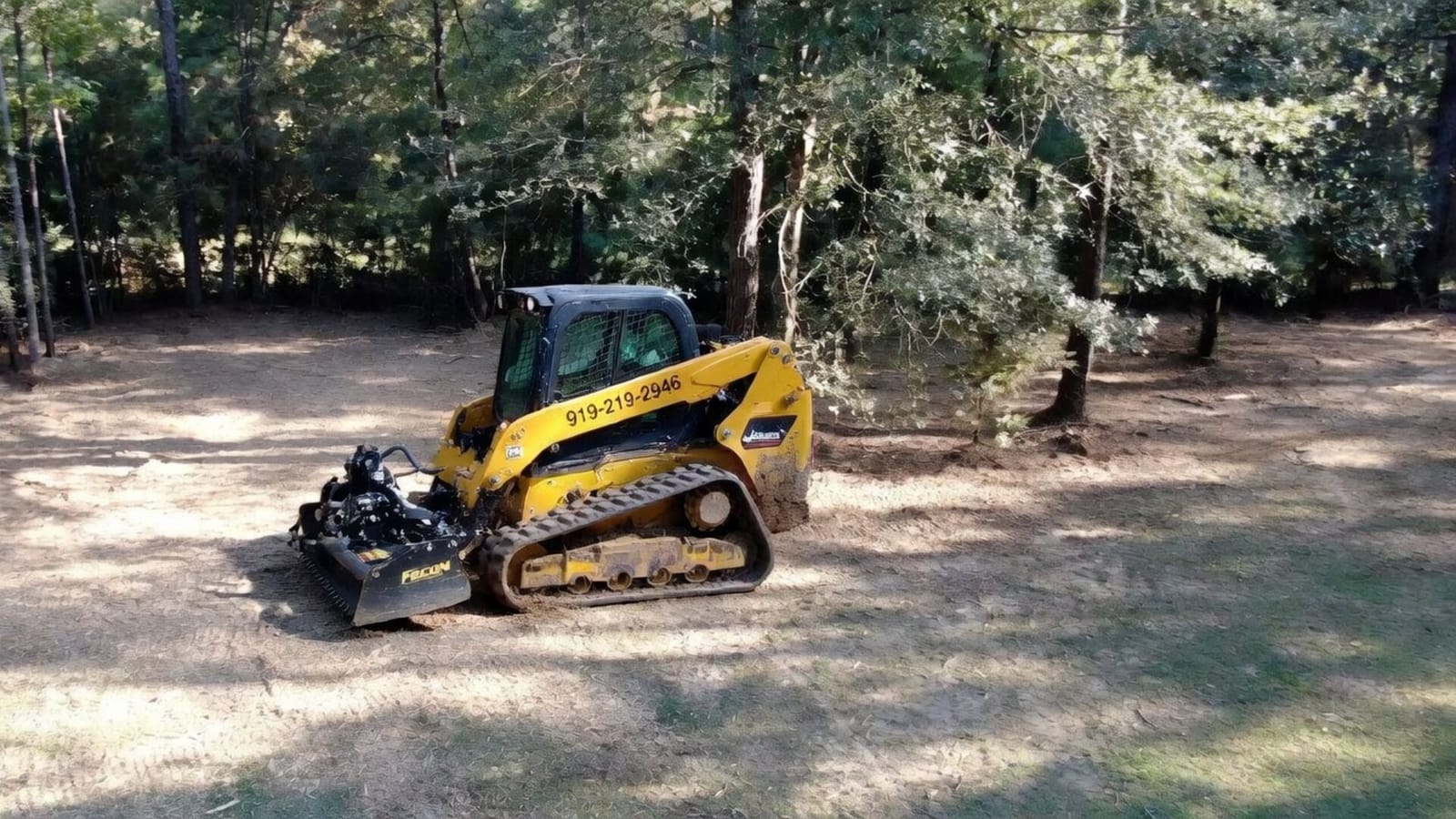
- The opening pass, on firm ground. On acreage, a forestry mulcher cuts every stem in one pass and leaves the brush as chips on the ground, berries included, with nothing hauled off. On Fargo clay, book it for late summer, fall or frozen ground; in a wet spring the machine ruts the ground and the job slows.
- Sprout cuts in June. The fact sheet’s mechanical schedule is “mowing or cutting in early and late June for several years,” which reduces stem heights and infestations. On open ground our crew can come back with the mulcher or a mower; around keeper trees, many owners handle the trimmer work themselves.
- Seedlings for three summers. With seed lasting two to three years, walk the ground each season. The sheet notes hand pulling or grubbing works well on small seedlings.
- Herbicide, if you choose it. The state lists glyphosate and triclopyr as effective, and cut-stump treatment works when herbicide is applied to the cut surface immediately after a low cut. Cut Brush does mechanical work only and applies no herbicide. If you want a chemical follow-up, that is a licensed applicator’s work, and they need to be on site the day stems are cut, so plan the two together. Your county extension agent can advise on rates and timing.
- Cover the ground. Opened ground left bare fills with buckthorn seedlings first. Decide before the cut what should grow there: grass you can mow, or new trees and shrubs, the way the Park District paired removal with planting.
Pro tip: If the buckthorn is inside an old shelterbelt, ask the local Soil Conservation District or the North Dakota Forest Service to look at the windbreak first. A plan that removes the buckthorn and the dead rows together, and names what gets replanted, saves paying for a second visit.
What Buckthorn Removal Costs
Clearing buckthorn from under trees you keep typically runs $1,500 to $2,500 an acre, the row and buckthorn band on our Fargo pricing page. An old, closed thicket with larger stems prices as forestry mulching, $1,500 to $4,000 an acre.
| Job | Typical range | Notes |
|---|---|---|
| Buckthorn and brush under trees you keep | $1,500 – $2,500 per acre | The row and understory band |
| Dense thicket with larger stems | $1,500 – $4,000 per acre | The forestry mulching band |
| Small backyard or single-row stand | $1,500 minimum charge | Where small jobs start; access and density set the final quote |
| Follow-up passes for sprouts | Priced per visit | Listed in the quote as their own lines |
| Herbicide treatment | Separate trade | Quoted by a licensed applicator |
Each pass grinds stems and stumps into mulch on site, flush with the ground, with nothing hauled away. Full stump removal below grade is discussed and priced in the quote if you want it, and grading is not part of our price.
What moves a buckthorn job inside its band is stem count, how many keeper trees the machine works around, and how wet the clay is. A row measured by length and width usually comes to less than an acre, so a single infested row often bills at the minimum. The Fargo forestry mulching cost guide explains rows, belts and hourly quotes in more detail.
Frequently Asked Questions
Will mulching kill buckthorn?
Not on its own. Mulching cuts every stem at once, but the roots resprout and seed in the soil keeps germinating for two to three years. Sprout cuts in June and a seedling check each summer are what hold it down.
Is buckthorn illegal in North Dakota?
It is not on North Dakota’s state noxious weed list. In Minnesota, including Moorhead and Clay County, it is a restricted noxious weed, so its propagating parts may not be sold or transported except by permit.
Why is buckthorn such a problem?
It leafs out early and keeps its leaves late, shading out the native trees, shrubs and wildflowers that would otherwise fill the understory, and its berries spread it along rows, fence lines and river woods.
How much does buckthorn removal cost around Fargo?
Understory clearing runs $1,500 to $2,500 an acre and dense thickets $1,500 to $4,000, with a minimum charge of about $1,500 for small jobs. Follow-up visits are priced separately, and herbicide is a separate trade.
Get Buckthorn Out of Your Woods or Windbreak
Request a free quote and we’ll contact you to discuss your property, access and the clearing you need. Our crew plans buckthorn work in the order that holds: flagged, cut, cut again, and checked the next summer. Whether it is a thicket on a riverbank lot in Fargo, an old row on a Kindred farmstead or a backyard edge in Moorhead, every year left alone puts more seed in the soil.
Read more: the ground, rules and towns on our Fargo land clearing page, what each method does on the Fargo services page, and statewide costs in the North Dakota land clearing cost guide.
More from the Cut Brush Blog
Keep reading for more tips and guides on land clearing.
 Cost Guide
Land Clearing Cost Per Acre in North Dakota (2026 Guide)
$1,500 to $4,500 an acre to clear North Dakota land, the rates our crew charges around Fargo. How old shelterbelts, Fargo clay and burn days move the price.
 Cost Guide
Forestry Mulching Cost in Fargo, ND (2026)
Forestry mulching around Fargo, ND runs $1,500 to $4,000 an acre. What one shelterbelt row, an old belt or river brush costs, and how Fargo clay sets the price.
Let's Get Started on Your Land
Request a free quote. We'll contact you to discuss your property, access, and the clearing you need.
Get a Free QuoteOr call us directly: (919) 525-3950