Clearing Land With Cogongrass Around Valdosta
Cut Brush Team · September 24, 2026 · 5 min read
If cogongrass is on your land, clear around it, not through it, and call the Georgia Forestry Commission before any machine arrives. Around Valdosta that is not a technicality. Cogongrass is most common in exactly this part of the state, it spreads from root fragments that equipment carries, and the state will treat a confirmed site at no cost to you. Clearing that ignores it can turn one patch into several.
Why South Georgia Has to Plan for It
The Georgia Forestry Commission reports that cogongrass infestations are being found primarily in south Georgia, though the grass can grow anywhere in the state (Georgia Forestry Commission).
Where it turns up matters for a landowner. In the commission’s own tally of known Georgia sites, 67 percent were in planted or natural pine, 21 percent along road rights of way, and 7 percent in open ground such as pasture, pond dams and powerline corridors; logging decks and food plots made up smaller shares (Georgia Forestry Commission strategy document). That is a 2010 statewide count rather than a Lowndes County survey, but it describes the pine stands, field edges and roadside frontage that make up most clearing work around Valdosta.
Why a Mulcher Should Not Go Through It
Cogongrass spreads through both rhizomes and seed. The commission’s advice is direct: avoid mowing or disking through or near a known or suspected cogongrass spot, since this could move seed or root fragments to other areas (Georgia Forestry Commission).
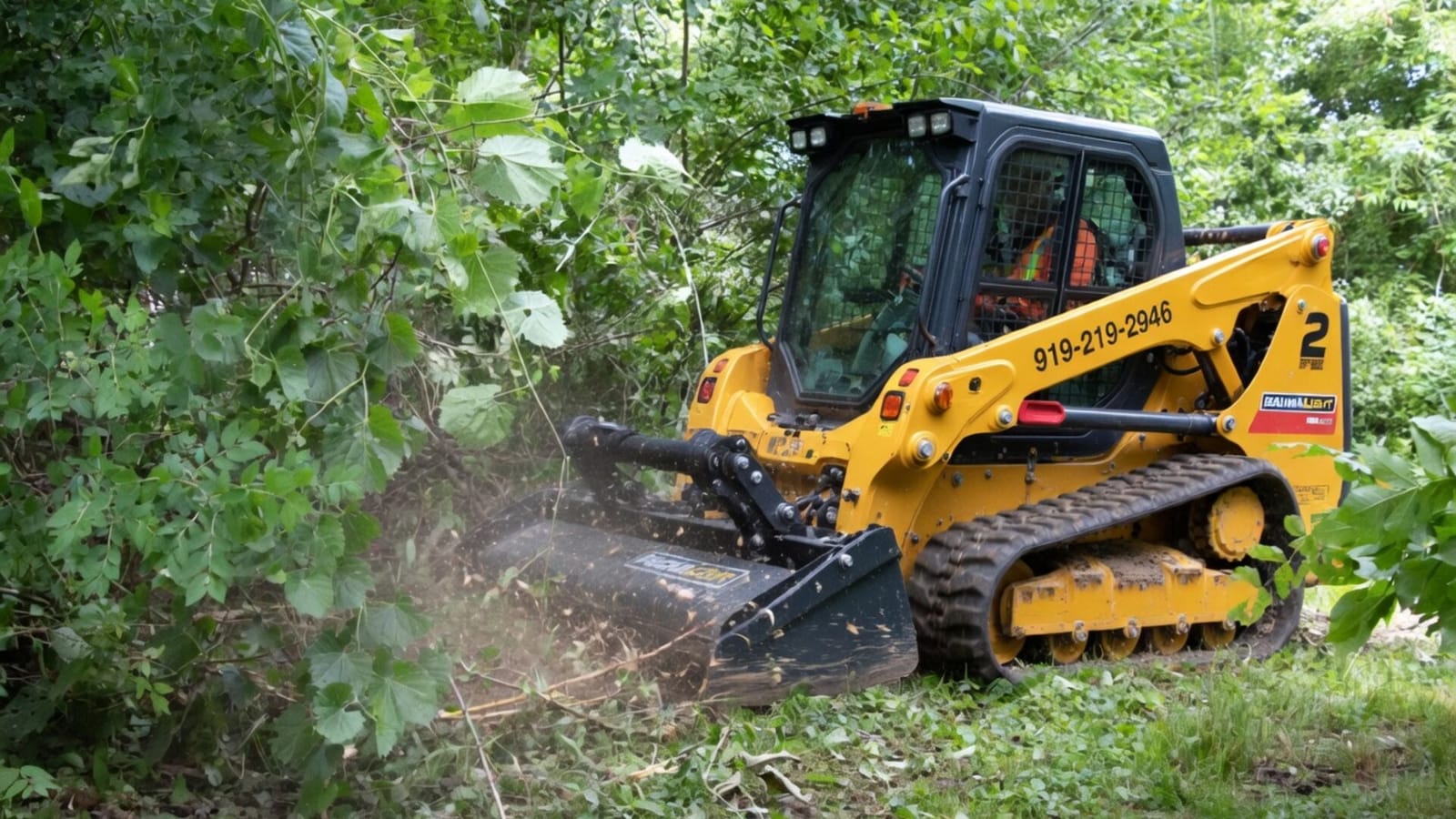
A forestry mulcher is a heavier version of the same problem. Its head works at the surface, where the rhizome mat sits, and its tracks pick up soil and plant material and carry it to the next part of the tract, or the next property. Grinding a patch shreds the top growth, leaves the roots and can spread fragments onto clean ground.
So the rule on any tract with cogongrass is simple: the machine stays out of the patch and a margin around it, and it is cleaned before moving from an area near a patch to clean ground.
Who Treats It, and What It Costs You
Treatment is chemical, and it is the commission’s program rather than a clearing contractor’s add-on. If a suspected site is confirmed, a chemical eradication program is started at no expense to the landowner; you report it to your local Georgia Forestry Commission office (Georgia Forestry Commission).
It also takes time. The commission’s strategy document says cogongrass is rarely eradicated with one application, that infestations usually need multiple treatments over two to three years, and that a site is only classed as eradicated after three consecutive years with no resprouting. In its own words: “Unless 100% eradicated, cogongrass will reclaim the site.”
Cut Brush does not spray, and that is a legal line as much as a choice. Anyone in the business of applying pesticides to another person’s land in Georgia must hold a Pesticide Contractor License from the Commissioner of Agriculture, with a certified commercial applicator supervising the work (Georgia Department of Agriculture). We do not hold one. A bid that includes spraying should prompt a question about that license.
How a Clearing Job Works Around a Patch
The rest of the tract does not have to wait. The job is sequenced.
Walk and mark first. Suspected patches are flagged on the walk-through, with a margin, before any price is set. Road frontage and old log decks get a close look.
Report before work starts. The landowner calls the local commission office. Confirmation and the start of treatment do not have to hold up clearing elsewhere on the property.
Clear clean ground, route around the rest. The machine works away from marked patches, crosses them nowhere, and is cleaned of soil and plant material before moving between areas.
Come back to the patch last, if at all. Once treatment has done its work and the commission is satisfied, the ground it occupied can be opened. Until then, it stays marked.
That sequence costs some extra care, which sits a job higher in its price band rather than adding a separate line. Ranges are on the Valdosta pricing guide, and the mulching figure specifically is in our Valdosta forestry mulching cost guide.
Burning Is Not the Shortcut It Looks Like
The counties around Valdosta are not under Georgia’s summer burn ban, so it is tempting to think fire settles the matter. It does not. A cogongrass fire is hot and fast, and the commission recommends landowners consult it before burning an infestation; any burn is a step inside a treatment plan, not a substitute for one (Georgia Forestry Commission strategy document). In that document, burning appears only as a way to clear the thatch ahead of herbicide, so the spray reaches new growth; it is not a treatment on its own.
Frequently Asked Questions
Can you mulch a tract that has cogongrass on it?
Yes, the parts that do not have it. The patch and a margin around it are marked and left alone, and the machine is cleaned before it moves between areas. The patch itself goes to the Georgia Forestry Commission for treatment.
Does cogongrass make clearing more expensive?
Usually a little, as care rather than a new rate: routing around marked ground, cleaning equipment between areas and sometimes an extra visit once treatment is done. The treatment itself, once a site is confirmed, is at no cost to the landowner.
How long before the patch can be cleared?
It depends on the commission’s treatment. Most sites take multiple treatments over two to three years, and eradication is only declared after three straight years with no regrowth.
Clear the Rest of the Land the Right Way
A tract with cogongrass can still be opened and used, with a plan that keeps the grass where it is.
See every range on the Valdosta pricing guide, read the local conditions on our Valdosta land clearing page, then request a free quote. We walk the ground, mark what needs marking, and put the scope in writing.
More from the Cut Brush Blog
Keep reading for more tips and guides on land clearing.
 Cost Guide
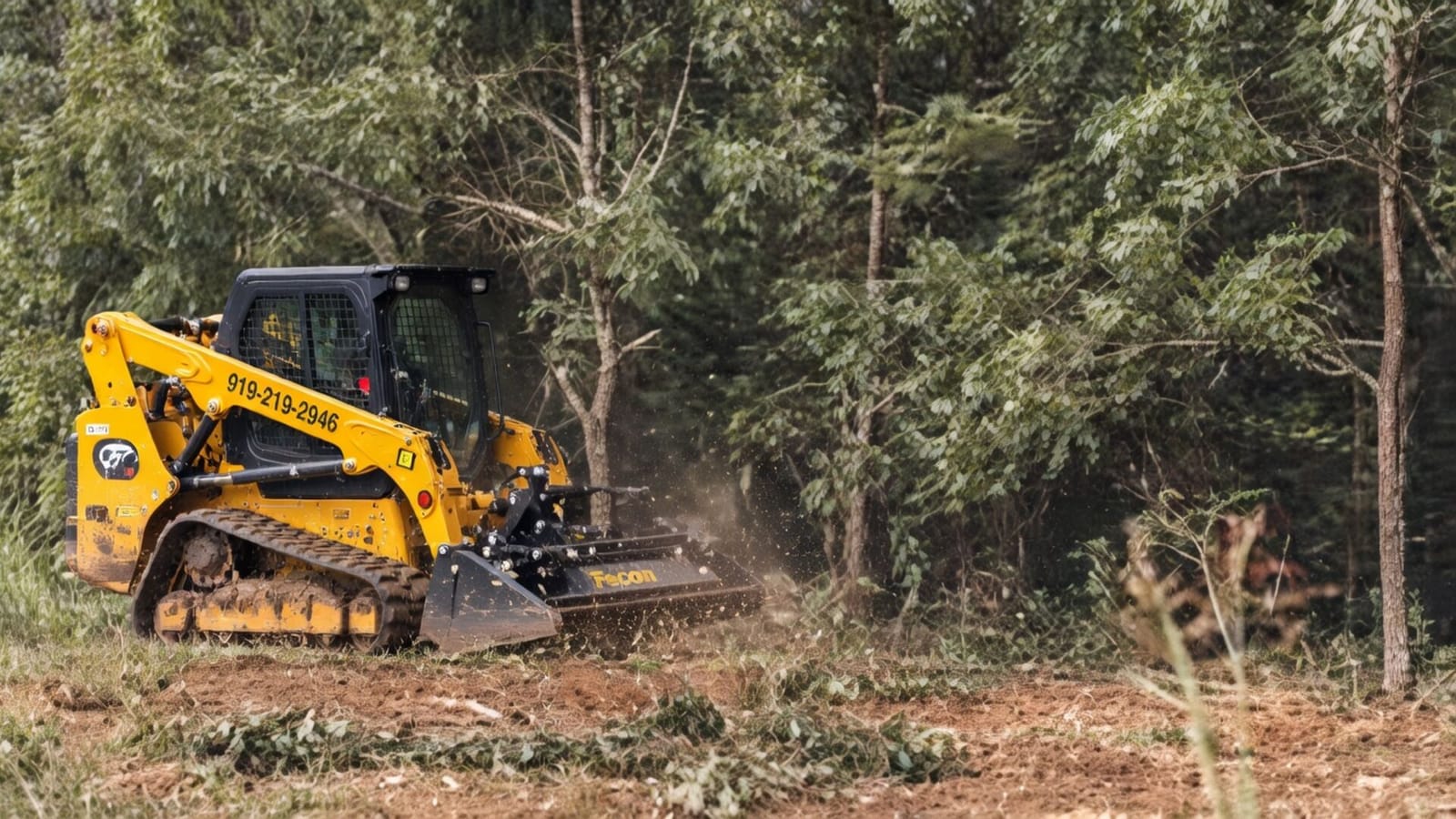
 Forestry Mulching Cost in Valdosta, GA (2026)
Forestry mulching around Valdosta runs $1,500 to $4,000 per acre. See what pine understory, wet flatwoods ground and cogongrass patches do to the price.
 County Guide
 Land Clearing Permits in Valdosta & Lowndes County
Valdosta and Lowndes County each issue their own land disturbance permit. Here are the one acre and 200 foot tests, the tax statement and the burn rules.
Guide Kudzu Removal in Georgia: Cost and a Plan That Lasts
Kudzu removal in Georgia takes more than one cutting. See why it regrows, the multi-visit plan that drains the root crowns, and what it costs per acre.
Ready to Get Started on Your Land?
Get a free, no-obligation estimate for property in Valdosta & South Georgia.
Get Your Free QuoteOr call us directly: (919) 525-3950