
Forestry Mulching Cost in South Boston, VA (2026)
Cut Brush Team · November 3, 2026 · 5 min read

Forestry mulching around South Boston, Virginia costs $1,500 to $4,000 an acre, and lighter work on old fields, fence rows and young pear runs $1,500 to $2,500 an acre. Where your job lands in those bands depends less on the rate than on how much ground a day of machine time can finish, and in Halifax County that mostly comes down to how long a field has been left to grow.
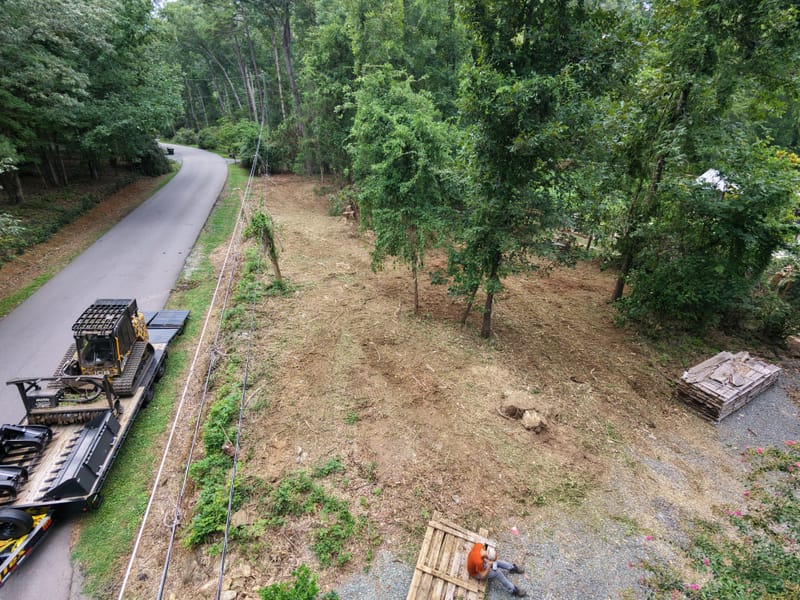
Every band covers the same finish. The mulcher grinds brush, small trees and stumps into mulch on site, leaves stumps flush with the ground and sends nothing off the property. Full stump removal below grade, and cutting and hauling very large trees, are discussed and priced in the quote. Grading is not part of our price; we clear to the ground so a builder can grade. A small job pays a minimum charge of about $1,500 that stands in for the acre rate and is never added on top of it.
How Many Acres Does a Mulcher Clear in a Day?
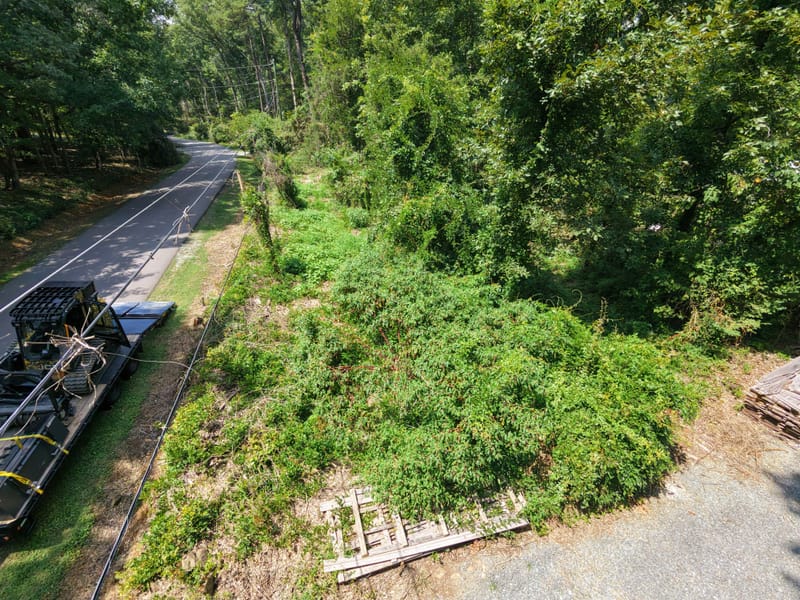
A tracked mulcher usually covers one to two acres a day in light brush and seedlings, and closer to half an acre a day in dense stems. Around South Boston the difference between those two numbers is usually the age of the growth, because Virginia pine moves into old fields and clearings quickly once the mowing stops, and every year it is left the stems get thicker.
| Ground | What a day usually covers | What slows it |
|---|---|---|
| A field idle a few years: briars and pine seedlings | About 1 to 2 acres | Old fence wire, rocks, soft low spots |
| A field idle many years, or a pear thicket | Closer to half an acre | Stem size, how tightly packed, thorns |
| A closed-in woodlot taken to bare ground | Priced as land clearing, the slowest of the three | Trunk size, stumps, access |
A hayfield that went unmowed for years can look light from the road and turn out to be young pine and thorny pear once you walk in.
A per-acre quote fixes the price before the machine is unloaded. A four-acre hayfield outside Halifax gone to briars and young pine, priced in the $1,500 to $2,500 regrowth band, comes to $6,000 to $10,000, and if the stems are thicker than they looked, the extra day is ours to absorb.
Comparing a Day-Rate or Hourly Bid With a Per-Acre Price
Some clearing is sold by the machine day or the hour. If you receive a bid like that, multiply the rate by the days or hours it expects, then add the trailer or mobilization charge. That is the job total. Divide the job total by the acres the time is meant to finish, and you have a figure you can set beside our band.
Say a bid works out, trailer charge included, to a job total of $4,800, and the time is meant to cover two acres. That is $2,400 an acre. If the same time only finishes one and a half acres, the same bid is $3,200 an acre; if it finishes three, it is $1,600. Nothing about the rate changed, only the acres behind it.
So ask two questions of any time-based bid: how many acres does it assume, and how is extra time billed? We do not sell by the hour or the day; the per-acre band is the figure to hold such a bid against.
Why a Pear Field Needs a Second Pass in the Budget
Callery pear, the wild offspring of the Bradford pear, is the reason a South Boston field quote often has more than one line. Pine seedlings come out with the first pass. Pear does not stay out: a pear cut back at ground level still grows from the root, and birds keep bringing seed from any fruiting tree nearby.
We price the first pass inside the mulching or regrowth band and write each return cut as its own line, so you can see what the next growing season adds and decide how many visits to take. A licensed applicator’s stump treatment is an option, and our crew times the cuts around it. Budget the first pass and at least one return cut together. The Virginia Bradford pear removal guide lays out the full plan.
Mulching Versus Piling and Burning
The older way to clear a field is to push the brush into piles and burn them. From February 15 to April 30, Virginia bans open-air burning before 4 p.m. within 300 feet of woods or dry grass that could carry fire to them, and a locality can be stricter. Piles also leave scorched patches in the field. A mulched field has no pile, so the work never waits on the burning hours.
Mulching also keeps the roots in the ground and lays a chip cover over it. That still leaves the rules on disturbed soil: Virginia’s soil erosion control requirements apply to any activity that disturbs 10,000 square feet or more. Inside South Boston those questions go to the town’s Public Works Department, and in the rest of Halifax County to Building Code Enforcement in Halifax. Requirements vary by parcel, scope and jurisdiction, and the governing authority makes the determination.
Frequently Asked Questions
How many acres can a forestry mulcher clear in a day?
About one to two acres in light brush and seedlings, and closer to half an acre in dense stems or a pear thicket.
Is a day rate cheaper than paying by the acre?
Only if the day finishes the acres it was priced for. Add the trailer charge to the time, divide by the acres finished, and compare that figure with the per-acre band.
What does the minimum charge cover?
It covers bringing the machine to the property and doing a small job. It replaces the acre rate whenever the acre rate would come to less than $1,500, and it is never a fee added to one.
Ask for a South Boston Quote
Request a free quote and we’ll contact you to discuss your property, access and the clearing you need. The clearing line, the finish and the price are written down before anything comes off the trailer.
The four bands are on the South Boston pricing page, the towns we cover and the local offices are on the South Boston land clearing page, and prices across the state are in the Virginia land clearing cost guide.
More from the Cut Brush Blog
Keep reading for more tips and guides on land clearing.
 Guide
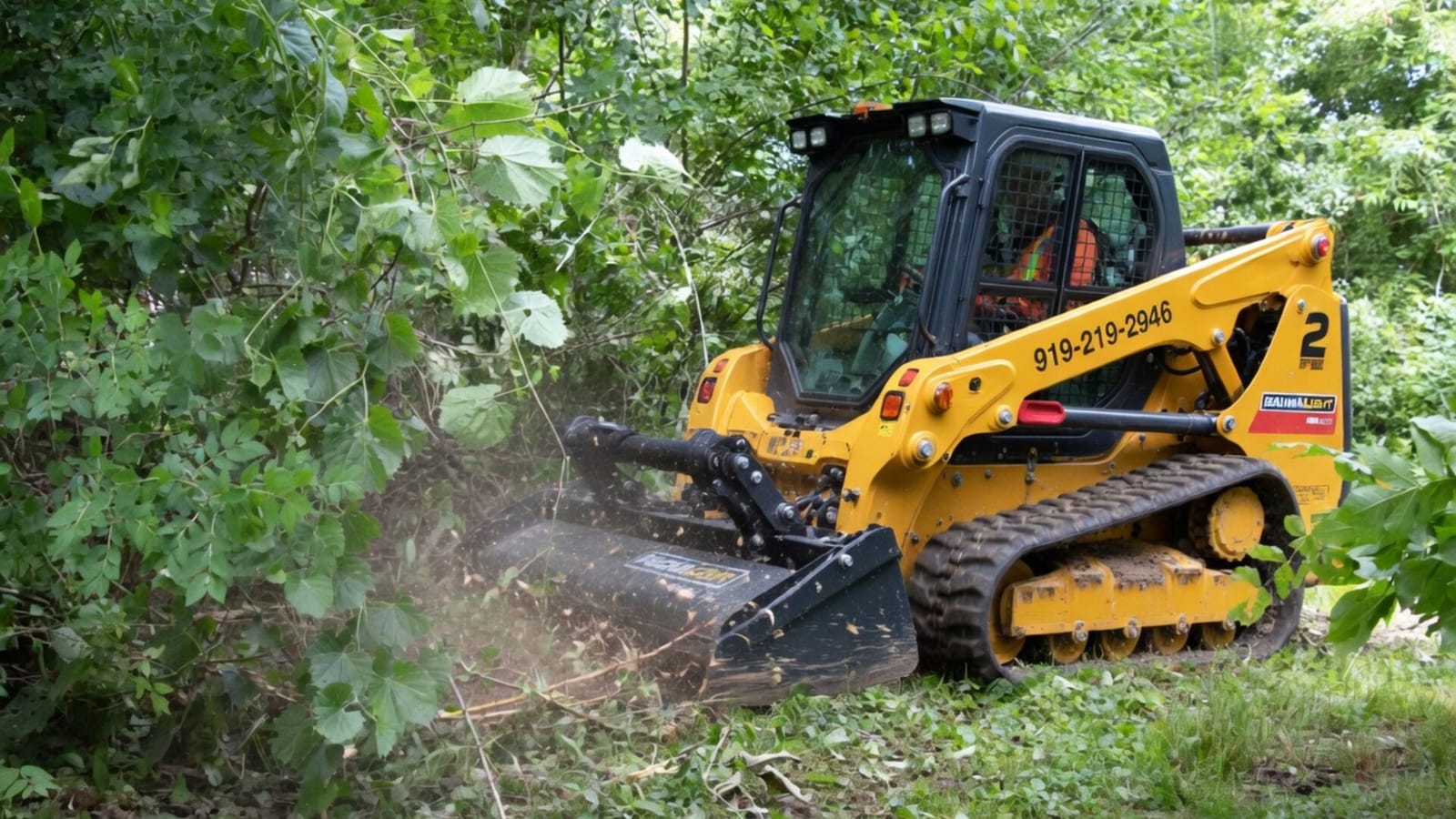
Bradford Pear Removal in Virginia: Plan and Cost per Acre
Bradford pear removal in Virginia: $1,500 to $2,500 an acre for young Callery pear thickets, plus the return cuts that keep it gone. Request a free quote.
 Cost Guide
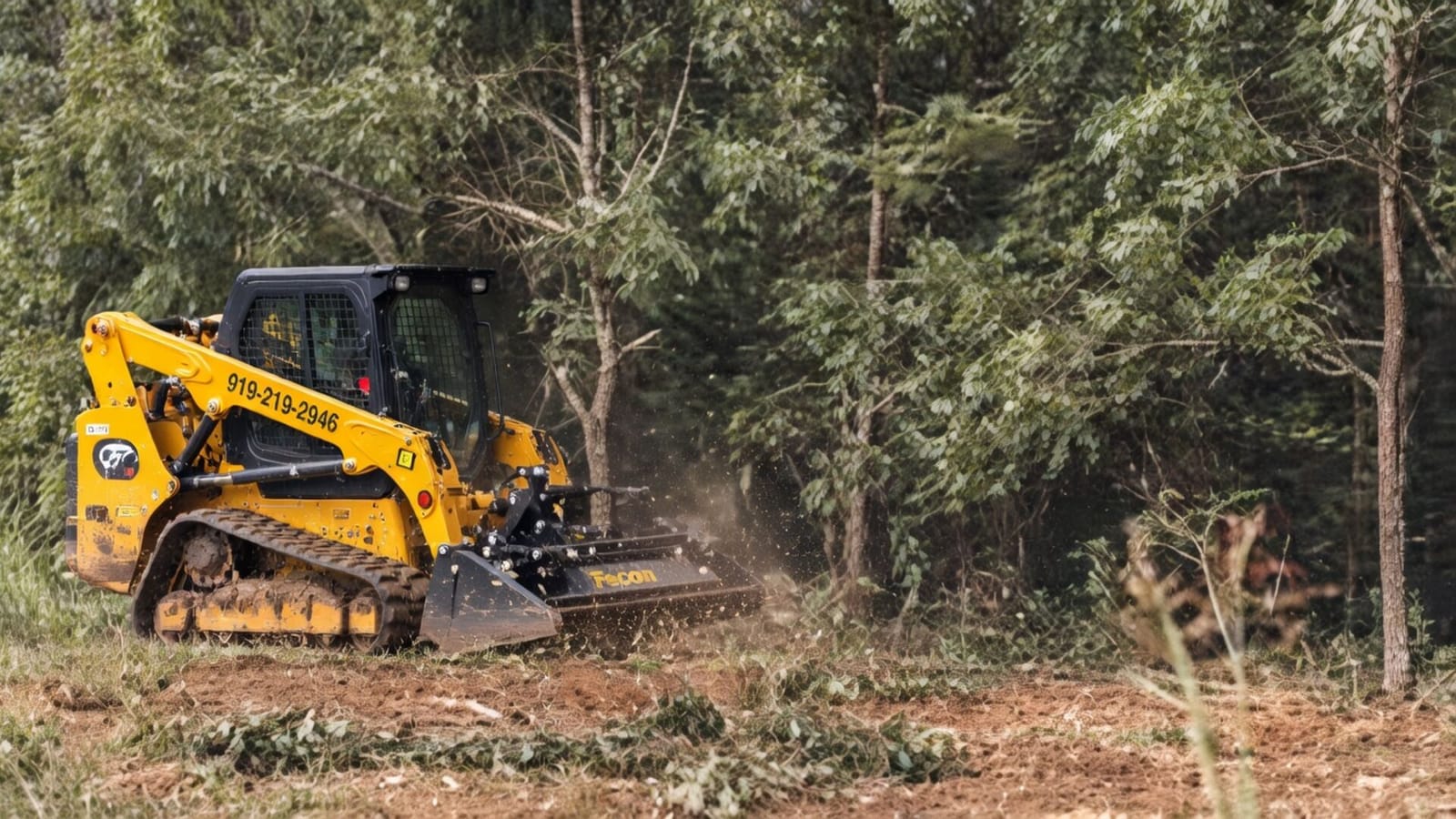
Forestry Mulching Cost in Virginia (2026 Guide)
Forestry mulching in Virginia costs $1,500 to $4,000 an acre. See how Bay Act buffers, Valley sinkholes, summer burn bans and big trees move your quote.
Let's Get Started on Your Land
Request a free quote. We'll contact you to discuss your property, access, and the clearing you need.
Get a Free QuoteOr call us directly: (571) 520-9081
 Quick answers from Cut Brush