
Forestry Mulching Cost in Tuscumbia, AL (2026)
Cut Brush Team · October 31, 2026 · 5 min read
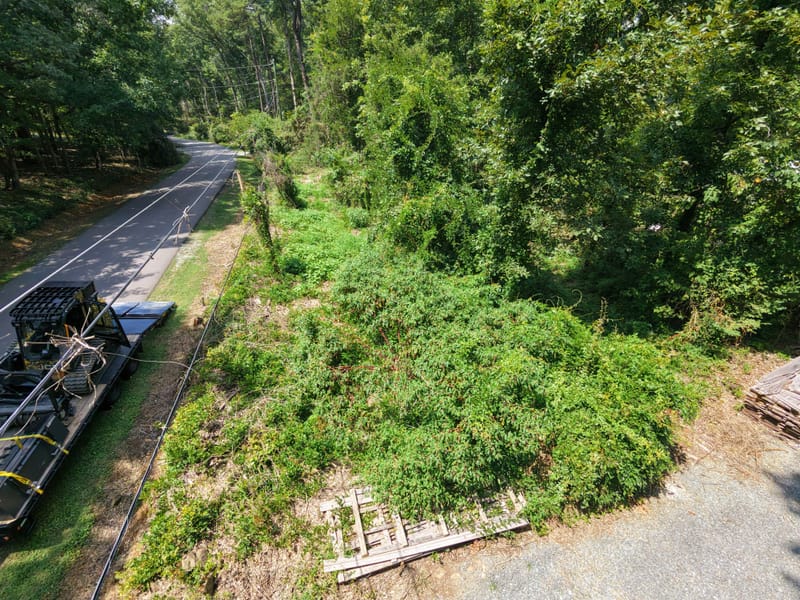
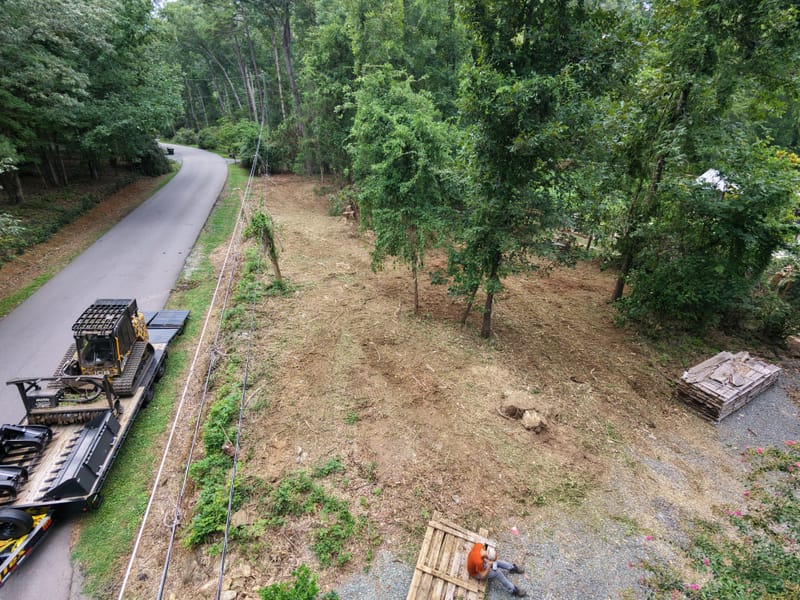
Forestry mulching around Tuscumbia costs $1,500 to $4,000 an acre, and lighter Callery pear and thicket work along a fence row or field edge runs $1,500 to $2,500 an acre. Where a job lands in that range depends on how thick the stand is, how much rock and soft ground the machine meets, and how the bid is written. Below: how a per-acre price lines up with a bid by the hour or by the day, and what a day of mulching actually clears.
At these rates the machine grinds brush, small trees and stumps into mulch on site, stumps finish flush with the ground, and nothing is hauled away. Full stump removal below grade, and cutting and hauling very large trees, are discussed and priced in your quote. Grading is not part of our price: we clear to the ground so a builder can grade. Small jobs start at a minimum charge of about $1,500, billed in place of an acre rate on work too small to reach it, never as a fee on top.
Per-Acre, Hourly and Day Bids Side by Side
A per-acre price names the finish and the acres, and the risk of a slow day is ours. A bid by the hour or the day leaves that risk with you. To compare them, turn each one into the same unit.
If a bid is by the hour, multiply the rate by the hours expected, add the trailer or mobilization charge for bringing the machine, and divide the total by the acres. If it is by the day, multiply the day rate by the days, add the same charge, and divide by the acres. The answer is the per-acre figure to set beside the $1,500 to $4,000 band.
Here is the arithmetic with made-up numbers, to show the steps and not a price: a bid of $400 an hour for 15 hours is $6,000, a $600 trailer charge brings it to $6,600, and across 3 acres that is $2,200 an acre. Never multiply an hourly rate by the acres, and never leave the trailer charge out, because on a small job it is most of the bill.
Our per-acre quote names the finish, keeps a denser-than-expected stand inside the same band, and lists any return visit for sprouts on its own line.
What a Day of Mulching Covers
Light brush goes at roughly 1 to 2 acres a working day, while a dense stand can hold the machine to about half an acre. The spread is wide because the machine’s speed depends on what is in front of it. Open pasture with scattered saplings goes quickly. A thicket of thorny pear, with stems packed shoulder to shoulder, has to be taken in passes, and trunks that are too big for the drum are cut first.
That is why a flat day rate says little by itself: the acres cleared in that day swing with the stand. Per-acre pricing ties the number to the ground, which is where the work is.
Thorny Pear Thickets and What They Add
Wild Callery pear fills open fields, unimproved pastures and rights-of-way in Alabama, and it carries thorns sharp enough to puncture tires. In a Tuscumbia pasture the thorns slow the work, and grinding the stems where they stand leaves nothing sharp to rake up and haul.
The roots are the other cost. Pear keeps sprouting from its lateral roots after a cut, so a first pass is usually followed a growing season later by a lighter return cut.
| What is on the land | First pass | What follows |
|---|---|---|
| A fence row or field edge of young pear | $1,500 – $2,500 / acre | A walk for sprouts, and a return cut if they are up |
| A pasture closed into a thicket | $1,500 – $4,000 / acre | A return cut on the sprouts, listed on its own line |
| Wooded acreage cleared for a house | $1,500 – $4,500 / acre equivalent | A short walk-through before the builder starts |
Every figure in the table is one of the bands on the Tuscumbia pricing page. The rows show where each kind of ground tends to sit, not separate prices, and a given acre can land anywhere in its band.
The return cut is quoted as its own line so you can book it, push it back or skip it. Skipping it lets the stand rebuild from the same roots. Treating stumps or sprouts with herbicide is a licensed applicator’s work, quoted by the applicator and not by us. The Alabama Bradford pear removal guide walks through the visits.
Rock and Sinkhole Ground
Many parts of north Alabama sit on limestone that dissolves into caves and sinkholes. A mulcher needs firm footing, so a depression, an open hole or a rise where rock sits at the surface can be left out of the quote or worked slowly, and either one changes the price. If you know of one on your land, say so when we contact you; the quote then names it and the operator keeps the machine off it. Our north Alabama karst and sinkholes guide covers the ground in more detail.
Frequently Asked Questions
How many acres can a forestry mulcher clear in a day?
Roughly 1 to 2 acres of light brush, or about half an acre of a dense stand such as a pear thicket. The stand, the footing and the trees you keep decide it.
Is forestry mulching cheaper than clearing and hauling?
Usually, because it removes the pile and the truck. A lot that must be bare soil for a slab is the exception, since the chips have to be moved first.
Does a small lot always cost the $1,500 minimum?
Only when its acreage-based price falls below that. The minimum is a floor for small jobs, not the usual price of an acre.
Get a Price for Your Tuscumbia Land
Request a free quote and we’ll contact you to discuss your property, access and the clearing you need. The quote lists the first pass and any return cut as separate lines, in writing.
Read more: the towns, offices and burning rules on our Tuscumbia land clearing page, and the statewide numbers in our Alabama forestry mulching cost guide.
More from the Cut Brush Blog
Keep reading for more tips and guides on land clearing.
 Guide
Bradford Pear Removal in Alabama: Clearing Wild Thickets
Bradford pear removal in Alabama: clearing wild Callery pear from fields and fence rows at $1,500 to $2,500 an acre, then the sprouts. Request a free quote.
 Cost Guide
Forestry Mulching Cost in Alabama: 2026 Per-Acre Guide
Forestry mulching cost in Alabama runs $1,500 to $4,000 per acre. See how privet, karst rock, and wet clay move the price in North Alabama. Get a free quote.
Let's Get Started on Your Land
Request a free quote. We'll contact you to discuss your property, access, and the clearing you need.
Get a Free QuoteOr call us directly: (205) 407-1661
 Quick answers from Cut Brush