Kudzu and Privet Clearing in Gadsden, AL: Getting the Timing Right
Cut Brush Team · October 1, 2026 · 5 min read
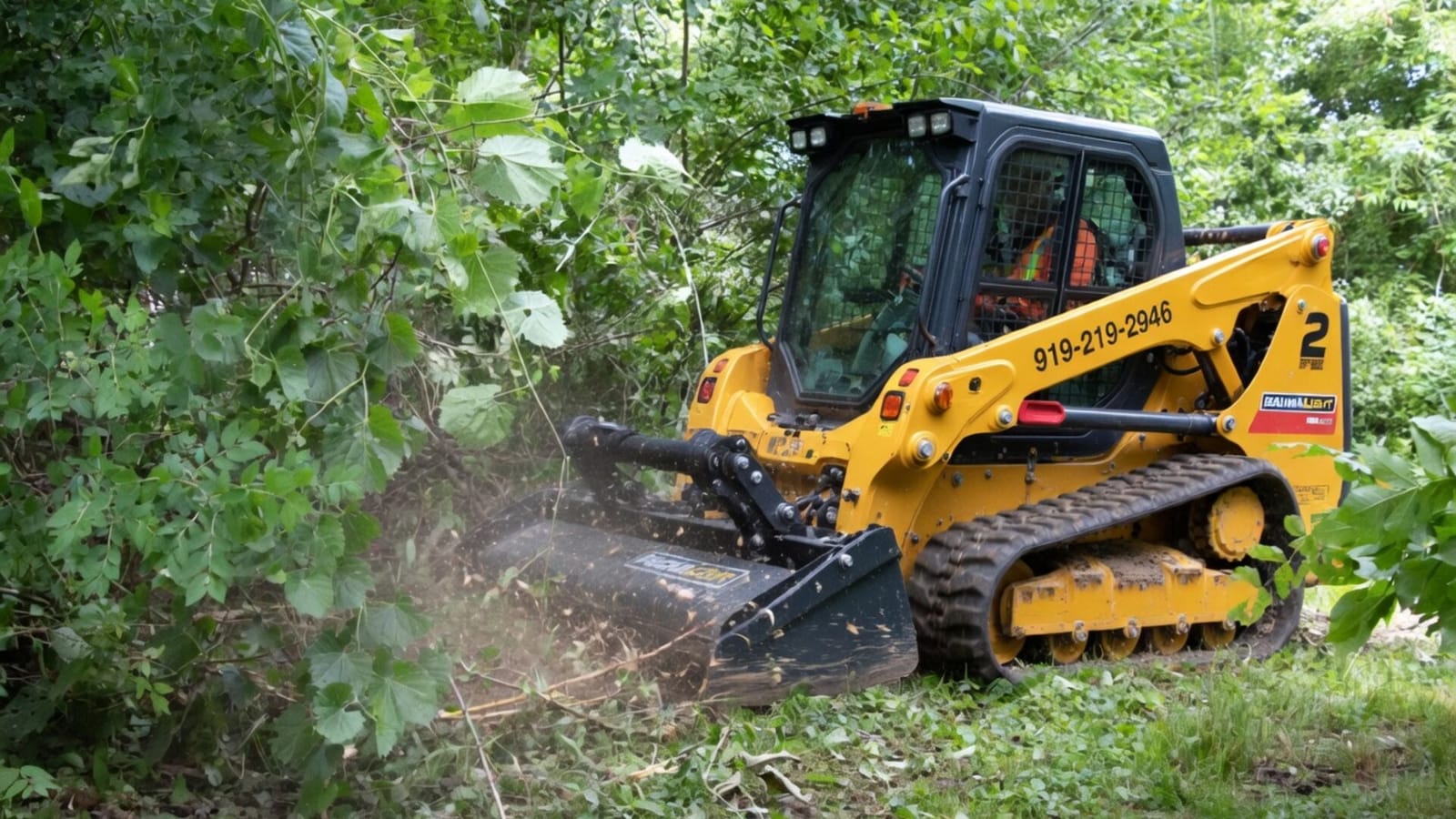
A forestry mulcher clears kudzu and privet quickly, but neither plant is gone after one pass, so around Gadsden the month you clear in matters as much as the method. Privet sprouts again from its stumps and roots, and kudzu returns from root crowns in the soil. Alabama Extension names a treatment window for each, and in Etowah and DeKalb counties the state also takes burning off the table from May through October. Line those dates up and one clearing does most of the work instead of half of it.
Where the Two Plants Sit on Northeast Alabama Land
Alabama Extension’s privet guide lists bottomland forests, fence rows and stream banks as the places Chinese privet establishes, with birds and other animals spreading its dark blue fall fruit. Around Gadsden that means the creek ground along Black Creek, Big Wills Creek and the Coosa, the fence lines of old pasture, and any woods edge where birds perch.
Kudzu sits on the other side of the same property: draped over the woods edge, a road bank or an old outbuilding. Extension describes it growing from seed and from root crowns that you can find by following a vine back to where it roots (Alabama Extension, kudzu control). On a sloped lot it often covers the very ground a buyer or builder wants to see.
What a Mulcher Does, and What It Leaves
A tracked mulcher with a carbide-tooth drum grinds privet walls, vine-covered saplings and brush into chips where they stand. Extension says plainly that brush mulchers can clear dense privet stands quickly. What the machine cannot do is reach below the soil:
- Privet “rapidly sprouts from stumps and lateral roots” after mechanical removal, so a cleared bank greens up again.
- Kudzu cannot regrow from below the root crown and does not sprout from lateral roots, which sounds like good news. But the crowns sit in the soil where the vine roots, and a drum running at ground level does not reliably remove them.
So clearing is the step that opens the ground and makes treatment practical. It is not the treatment, and a quote that implies otherwise is promising something the method does not do.
The Treatment Windows Extension Recommends
Alabama Extension gives each plant its own best season:
| Plant | What comes back | Extension’s preferred follow-up |
|---|---|---|
| Chinese privet | Sprouts from stumps and lateral roots | Foliar glyphosate in late fall after mechanical removal; avoid cut-stump treatment in early spring sap flow |
| Kudzu | Regrowth from root crowns | Foliar treatment from late summer through early fall; older crowns may need 3 to 5 years |
Extension also notes that young kudzu crowns can often be killed with a single treatment, while older ones need repeated work. A patch that has been left for many years is a multi-season project however it is cleared.
Treatment is a separate job, for a treatment provider or for the owner following the product label. Our part is to clear in an order and at a time that gives that work the best chance.
Working the Calendar Around Gadsden
The local wrinkle is burning. Under the state’s open burning rule, vegetation from clearing land may be burned only on the property it came from, 500 feet or more from the nearest occupied home off the property, lit between 8 a.m. and 3 p.m. and attended. From May through October that permission is revoked in twelve counties, including Etowah and DeKalb (ADEM rule 335-3-3-.01). Cherokee and Marshall are not on that list. The Alabama Forestry Commission posts current burn restrictions.
Put the pieces together and a sensible plan for a Gadsden tract looks like this:
- Clear in late summer or early fall. Mulching leaves no pile, so the burn revocation does not matter, and kudzu regrowth is still in its treatment window.
- Let privet put out new leaves, then treat it in late fall. The fresh sprouts are what a foliar spray reaches.
- Come back the next year. A mowing or mulching pass on the regrowth costs far less than clearing a closed-in thicket twice.
Clearing in spring still works; it just means the first treatment waits for the season to come round, and the regrowth gets a head start.
Slopes and Creek Banks Need Their Own Care
Etowah County’s terrain is rolling and hilly, according to the Encyclopedia of Alabama, and much of the kudzu here sits on exactly the banks and slopes where bare soil can wash. Mulching helps because the chip layer stays on the ground and the stumps stay in it. Inside the City of Gadsden, clearing an acre or more, or any amount near the river or in a floodway, also brings the city’s land disturbance permit and its erosion control plan into play. Our Gadsden and Etowah County permit guide sets out each trigger.
Frequently Asked Questions
Can I just mow kudzu down?
Extension says repeated mowing that removes most of the leaf area every month of the growing season for a few years can weaken or kill a stand. One cut does not.
Does mulching spread privet?
The fruit is spread mainly by birds. Clearing does not stop that, which is why follow-up matters more than the clearing pass.
When is the best month to clear?
Late summer to early fall suits both plants’ treatment windows and makes the burn revocation irrelevant, since mulching leaves no pile.
Plan the Clearing and the Follow-Up Together
Ranges for this kind of work are on the Gadsden pricing guide, the rest of what shapes a job here is on our Gadsden land clearing page, and the per-acre mulching figure is broken down in the Gadsden forestry mulching cost guide. When you are ready, request a free quote and mention where the privet and kudzu sit on the property.
More from the Cut Brush Blog
Keep reading for more tips and guides on land clearing.
 Guide
Guide Land Clearing Permits in Gadsden & Etowah County, AL
When clearing land in Gadsden needs a city land disturbance permit, the riverfront and floodway rule, what Etowah County relies on, and the state burn limits.
 Cost Guide
 Forestry Mulching Cost in Gadsden, AL (2026)
Forestry mulching around Gadsden runs $1,500 to $4,000 per acre. How slope, privet and kudzu, creek ground and the May to October burn ban move a quote.
Guide Kudzu Removal in Alabama: Cost and a Plan That Lasts
Kudzu removal in Alabama takes more than one cutting. See why it regrows, the multi-visit plan that drains the root crowns, and what it costs per acre.
Ready to Get Started on Your Land?
Get a free, no-obligation estimate for property in Gadsden & Northeast Alabama.
Get Your Free QuoteOr call us directly: (919) 525-3950