What to Know Before Clearing Land in Elizabethton and Carter County
Which office, then the state. Inside Elizabethton, construction or demolition
on private property takes a building permit from the city's Building and Codes Enforcement
office. On unincorporated Carter County land the county's Planning and Zoning office issues
building permits, reviews commercial and industrial site plans, and handles floodplain review
and stormwater. Separately, the state's construction stormwater permit comes into play when clearing,
grading or excavating reaches one acre, or less as part of a larger common plan. Requirements
vary by parcel, scope and jurisdiction, and the governing authority makes the determination,
so ask before a lot is opened.
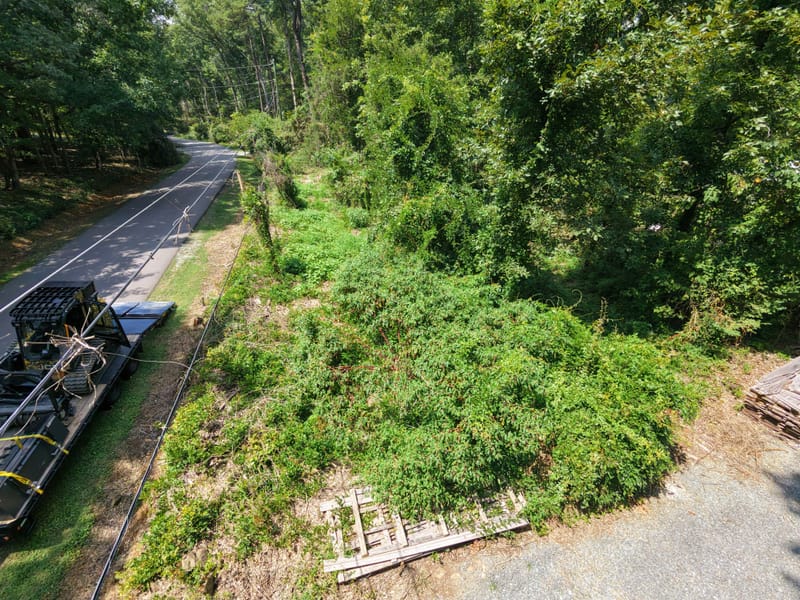
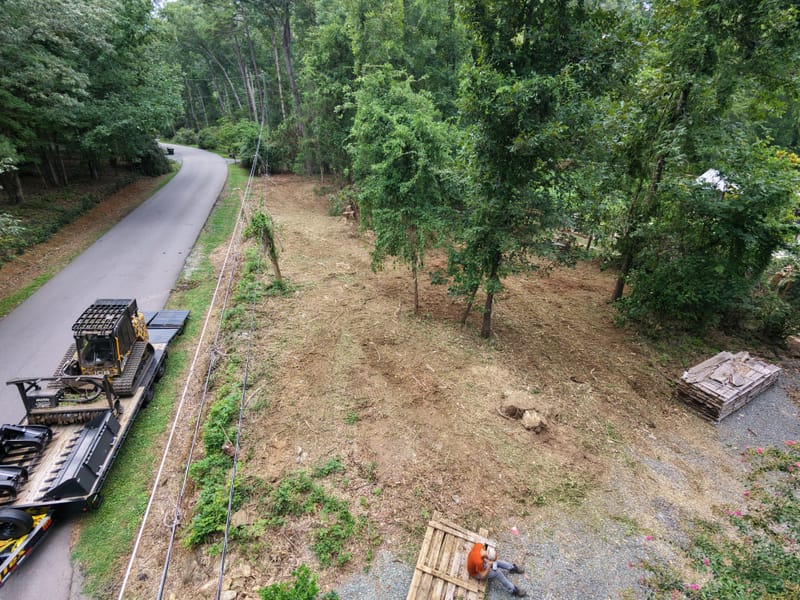
The slope sets the method. Lynn Mountain stands across US 19E from downtown and
Holston Mountain rises to the northeast, so a lot here is often tilted before it is
overgrown. A tracked mulcher works hillsides, but a stand that is too steep for it is
walked, flagged and, where needed, cut by hand. Ground beside the Doe and Watauga rivers
is a different case: it can sit in a mapped floodplain, and it stays soft after rain.
Rose rows and the burn calendar. Tennessee lists multiflora rose as a pest
plant, and an old fence row full of it grows back from the crown if it is only knocked down.
Burning the brush instead takes a Division of Forestry permit from October 15 to May 15, and
a county or town can set its own rules or call a ban, so check whether one is in force before
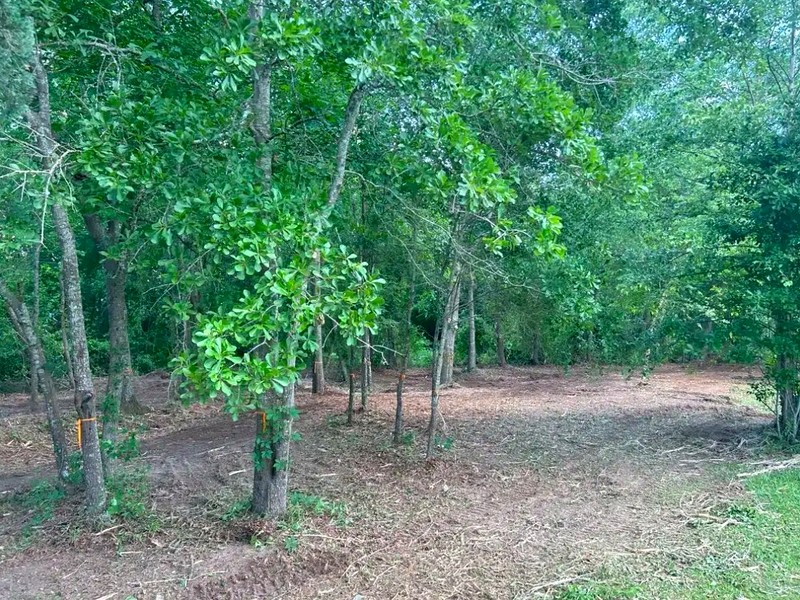
you light a pile. Mulching leaves nothing to burn.