Clearing Eastern Redcedar Around Oklahoma City
Cut Brush Team · September 12, 2026 · 5 min read
If you own acreage around Oklahoma City, the tree taking your grass is almost certainly eastern redcedar, and it is not slow. Federal estimates reported by the Oklahoma Conservation Commission put the spread at 762 acres a day, with eight million of the state’s seventeen million acres of prairie, shrubland and forest already carrying at least fifty redcedars per acre, a 400 percent rise over fifty years (Oklahoma Conservation Commission).
That is the backdrop to almost every clearing quote here. This is what the tree does to a property, and what works on it.
Why Cedar Took Over Central Oklahoma
Before settlement, cedar was a minor tree here, surviving on rock outcrops, in gullied ground and along streams and canyons: the places fire could not reach. Prairie fire, set by lightning and by people, kept it out of the grass.
Fire control changed that. Birds carry the seed, seedlings establish in ungrazed and unburned grass, and nothing knocks them back. The commission’s own inventory mapped canopy bands across a dozen counties, Oklahoma, Canadian and Logan among them, which is the ground this market covers. For a landowner the version that matters is short: a place that is not burned, grazed hard or mowed is on a one-way trip toward cedar.
What Cedar Costs You Before Anyone Clears It
Three costs show up long before a machine does.
Water. Research cited by the commission puts a single cedar at up to 30 gallons a day and an acre at 55,000 gallons a year, taken from grass and from groundwater recharge. The canopy also catches rain and snow that evaporates before reaching the soil.
Fire. Cedar limbs grow close to the ground and the foliage carries a high content of volatile oils, so a grass fire can climb one tree and ladder into the crowns of others, with sparks carried by wind to rooftops. A cedar row planted for privacy beside a house is a fuel arrangement, meant or not.
Grass and wildlife. Closing canopy shades out forage, taking carrying capacity and land value with it. As few as three junipers per acre pushes some grassland birds out, so quail ground goes first.
Cutting, Grinding or Burning: What Works
Two control methods are established. A third gets asked about.
Prescribed burning is the cheapest tool and works well on trees six feet tall and smaller. Its limits are real: it needs enough grass for fuel, temperature, wind and humidity inside acceptable ranges, plus labor and equipment. Most owners of small acreage near houses rule it out on that alone.
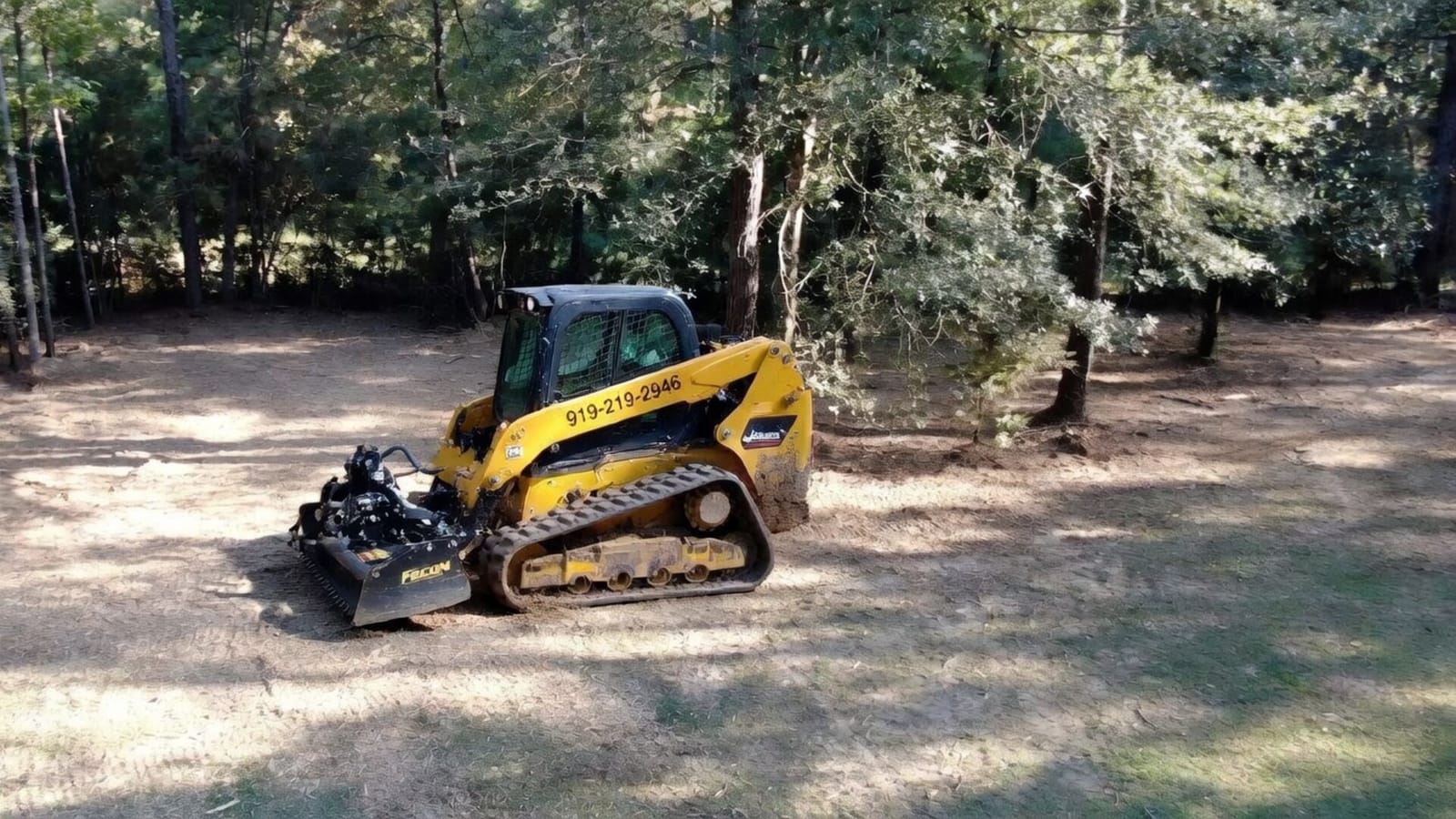
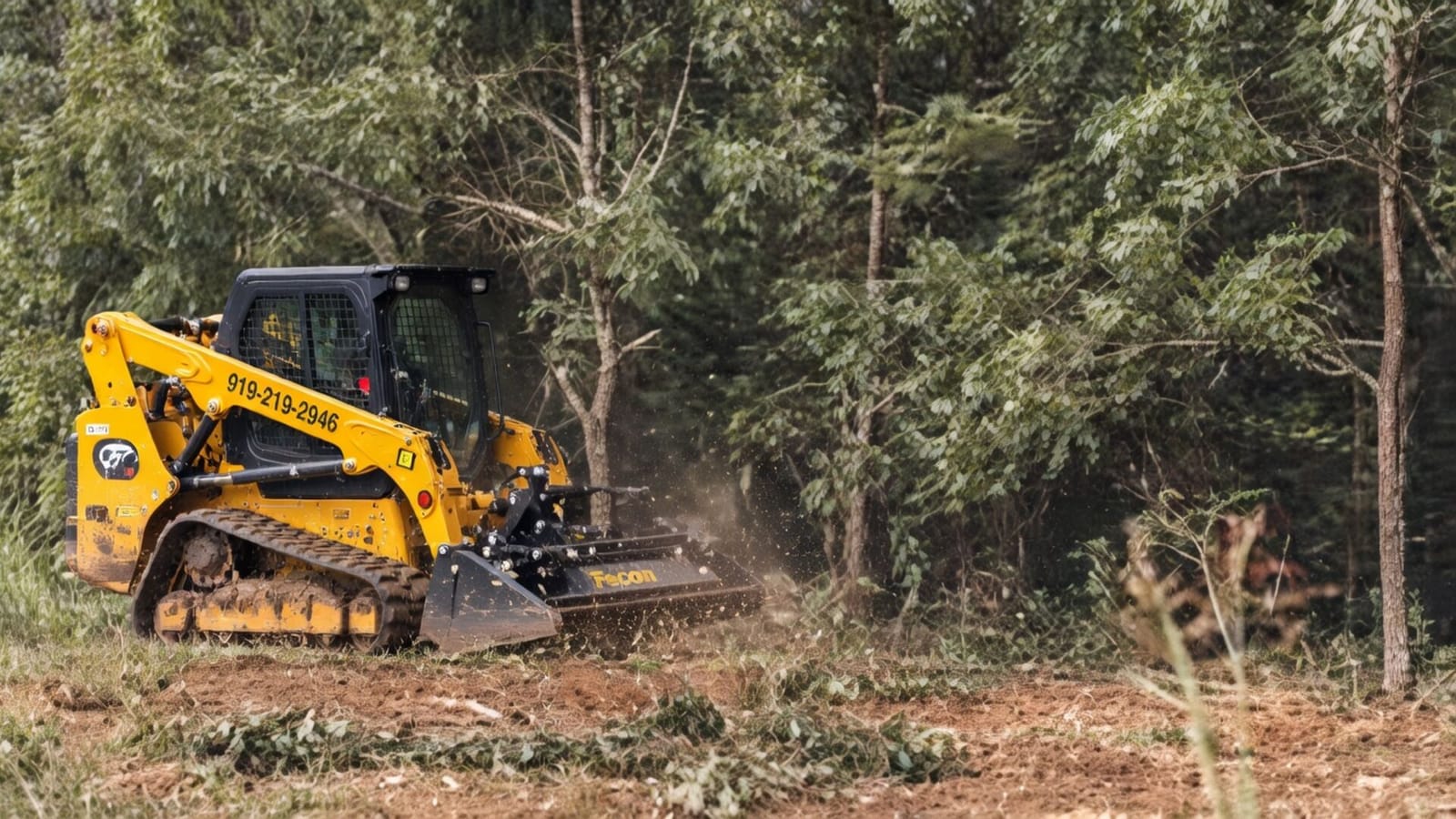
Mechanical treatment is the other, and it scales from hand tools on small trees to machines with saws or blades and dozers on large ones. Forestry mulching sits in that family: a tracked carrier with a rotary head grinds standing cedar on the spot and leaves the material as chip, stumps cut flush rather than pulled. Nothing is piled, loaded or trucked away.
Burning the piles afterwards is the third, and the one Oklahoma makes hardest. Burn bans are passed by county commissioners or proclaimed by the Governor, and the state is blunt: a ban is a ban on burning, and a county violation carries a fine of not more than $500, imprisonment for up to a year, or both (Oklahoma Department of Agriculture, Food and Forestry). Oklahoma Forestry Services publishes the live county list. Plan around piles and you have made your finish date somebody else’s decision.
There is a soil argument for grinding too. Renfrow clay, the dominant local series, holds 35 to 55 percent clay and is rated high to very high for runoff on slopes of one to five percent (USDA NRCS). Roots left in place under a chip layer protect a surface that moves water fast even where it looks flat.
The Follow-Up Pass Is the Whole Plan
Hundreds of new seedlings can emerge in a single year, and a cedar puts on about a foot of height and a foot of width annually, so a tree outgrows hand tools in a few seasons. A cleared place is therefore not a finished place. It is one with a maintenance interval, and the interval is short enough to matter.
The arithmetic is the good news. A return pass through seedlings is the lightest scope we quote and sits at the bottom of our bands, while clearing a grown thicket twice is close to full price again.
Frequently Asked Questions
Do I have to pull cedar stumps out?
Usually not. A mulching head cuts stumps flush and leaves the root mass in the soil, an advantage on clay that sheds water. Pulling stumps belongs to a build: a pad, a drive or a septic field, priced as clearing rather than mulching.
Is winter a better time to clear cedar?
There is no seasonal discount, but conditions matter. Wet clay slows a tracked machine and marks a surface that would have stayed clean a fortnight later, so timing flexibility buys a better result for the same money.
Will taking the cedar out bring the grass back on its own?
Often a good deal of it, because you have given sunlight and soil water back to what is already there. Whether it needs seeding is a question for your conservation district, not for us.
Get a Plan for the Cedar on Your Place
Cedar is not a problem you finish in one visit; it is one you get ahead of. The first step is knowing how tall the stand is and what the ground is for.
Cedar work is priced as mulching, understory work or whole-tract clearing depending on how tall the stand has grown. All three bands are on the Oklahoma City pricing guide, the mulching figure is broken out in the Oklahoma City forestry mulching cost guide, local conditions are on the Oklahoma City land clearing page, and the statewide view is in the Oklahoma cost per acre guide. Then request a free quote and we will put the scope and the follow-up interval in writing.
More from the Cut Brush Blog
Keep reading for more tips and guides on land clearing.
Guide Land Clearing Permits in Oklahoma City, OK
Oklahoma City sorts land disturbing work by priority, so jobs under an acre still file. Here are the thresholds, the state layer and the official sources.
 Cost Guide
 Forestry Mulching Cost in Oklahoma City, OK (2026)
Forestry mulching around Oklahoma City runs $1,500 to $4,000 per acre. See what cedar height, red clay and county burn bans do to the hours on your land.
Cost Guide Land Clearing Cost Per Acre in Oklahoma (2026 Guide)
Land clearing cost per acre in Oklahoma runs $1,500 to $4,500. See how cedar, red clay, access and county burn bans move the number. Free written quotes.
Ready to Get Started on Your Land?
Get a free, no-obligation estimate for property in Oklahoma City & Central Oklahoma.
Get Your Free QuoteOr call us directly: (919) 525-3950