
Underbrush Removal Cost in Oklahoma (2026 Guide)
Cut Brush Team · October 9, 2026 · 8 min read

You want to keep the post oaks and the shade. What has to go is the cedar crowding in under them and the greenbrier knitting it together, so you can see the pond from the porch again. Underbrush removal in Oklahoma runs $1,500 to $2,500 an acre with Cut Brush, the rate our crews charge around Durant, McAlester, Oklahoma City and Duncan. The oaks stay standing; everything under them gets ground where it grows.
At a glance:
- Our price: $1,500 to $2,500 an acre, with a working minimum close to $1,500 a job.
- Cedar is ladder fuel: Oklahoma State University’s L-318 asks for 30 to 60 feet of open space between cedars and the roofline, with any cedar near the house pruned to six feet off the ground.
- Keeper oaks: OSU’s HLA-6429 says to protect at least three times the drip line of a tree you want saved, and never to pile more than three to four inches of mulch over its roots.
- What comes back: cedar cut below its lowest live branch stays dead. Post oak and blackjack sprout from the stump, and privet needs its stumps treated.
- Lake lots: on Corps of Engineers land, private cutting is allowed only in designated shoreline areas and only under a Corps permit.
Pick the closest of our four Oklahoma areas at the bottom of this page. We walk the woods with you, mark what stays, and write down one price.
How Much Does Underbrush Removal Cost in Oklahoma?
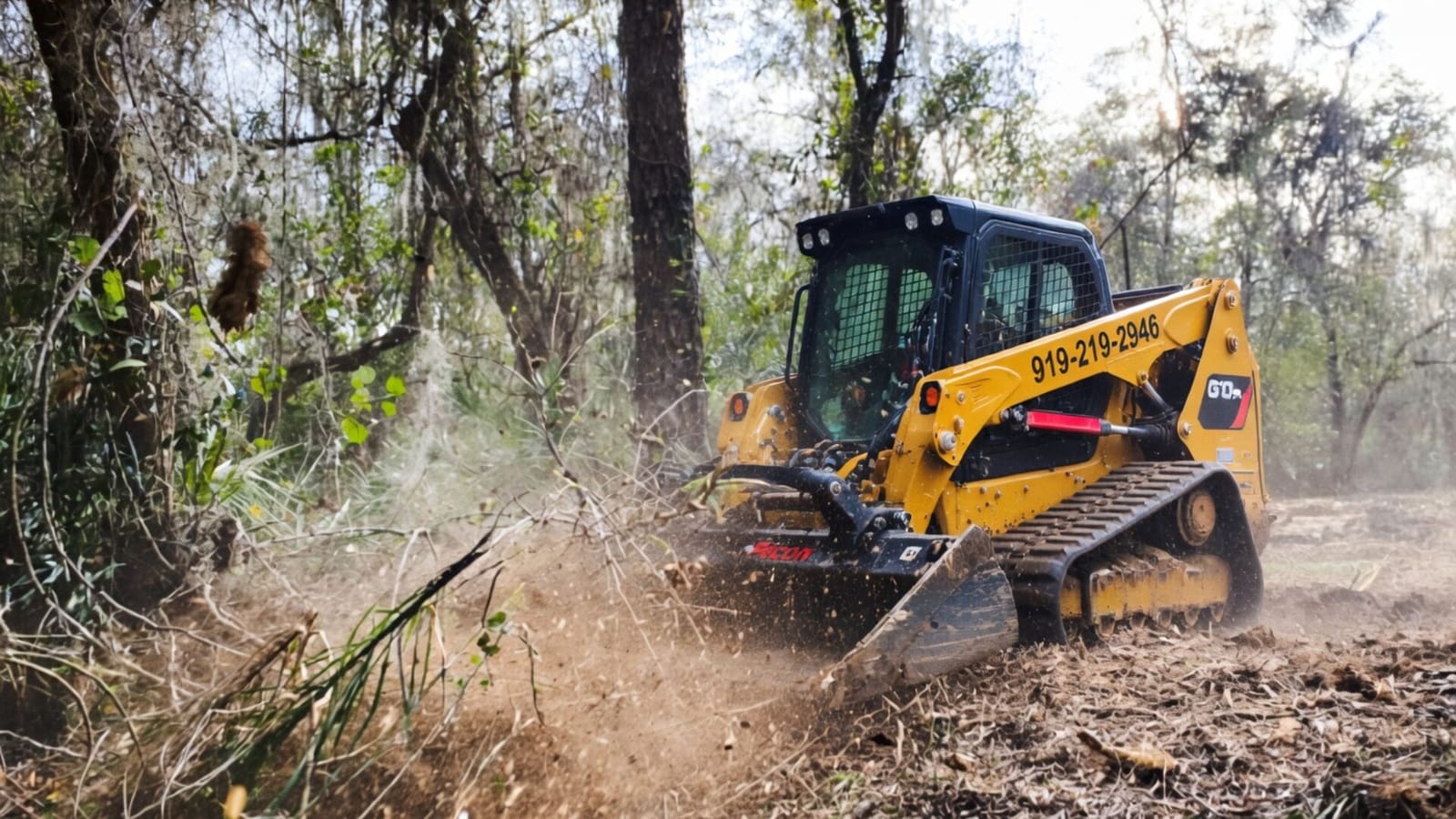
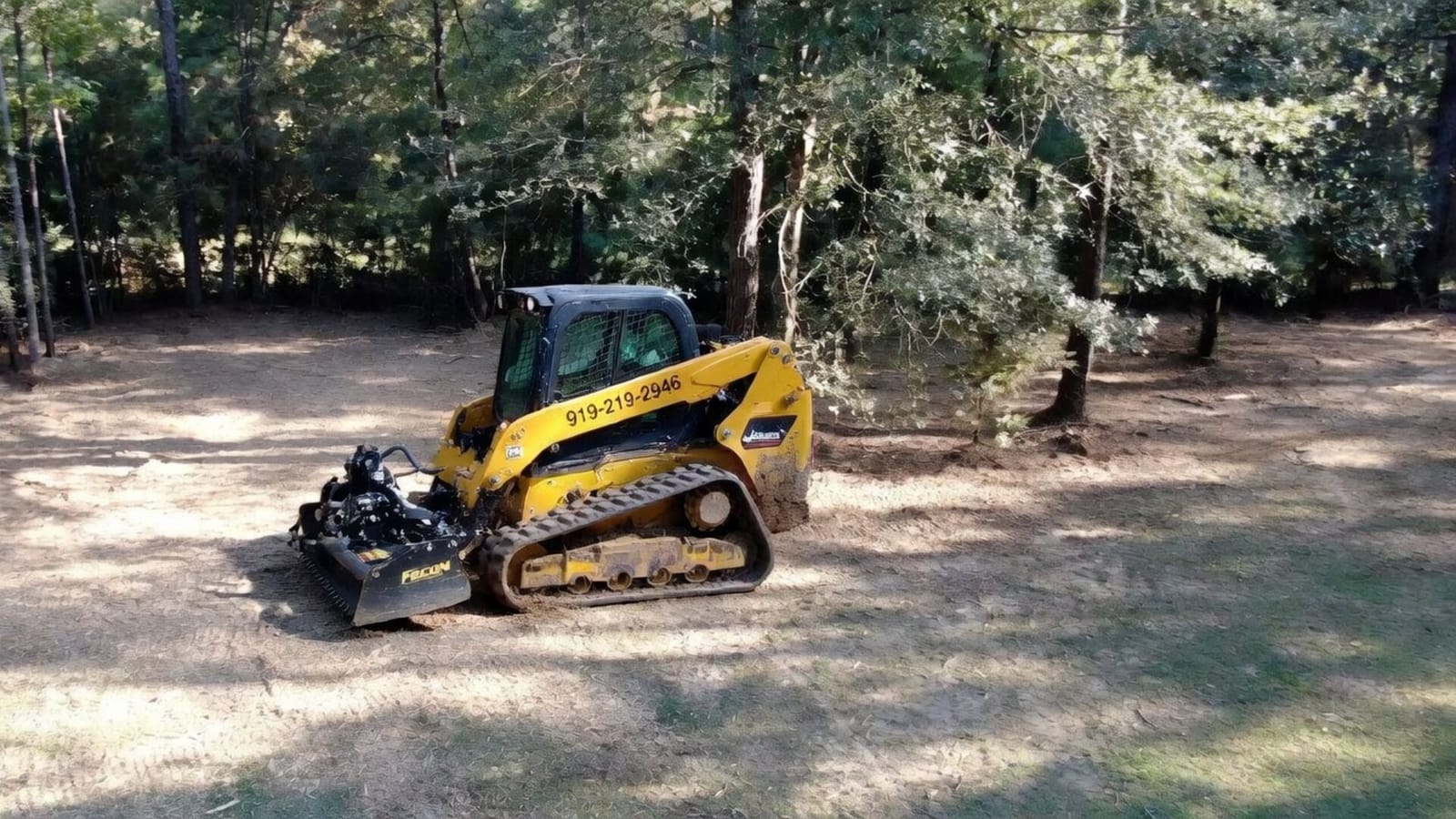
Underbrush removal is a forestry mulcher working under a canopy you keep. It grinds the young cedar, shrubs, vines and saplings, steps around the trees you have marked, and leaves a thin layer of chips behind. In Oklahoma most of it is cedar work. This is how the band plays out by what is standing.
| What is under the oaks | Our price per acre | What it looks like |
|---|---|---|
| Cedar seedlings, buckbrush and greenbrier under scattered oaks | $1,500 – $2,500 | Low end: open woods, room to move, few trees to work around |
| Cedar grown up into the oak limbs, keeper trees close together | $1,500 – $2,500 | High end: slow, light passes inside overlapping root zones |
| Privet walling off a woods edge or creek | $1,500 – $2,500 | Ground in the same pass; stumps need treating, regrowth is a second visit |
| The oaks come down too | $1,500 – $4,000 | No longer understory work; this is a full forestry mulching job |
Where these numbers come from. The bands are copied from our four Oklahoma pricing pages, which publish the same understory row under a local name: Redcedar & Lake Lot Clearing on the Durant pricing page, Redcedar & Privet Clearing on the McAlester pricing page, Regrowth & Understory Work on the Oklahoma City pricing page, and Cedar & Pasture Clearing in Duncan. Taking the oaks as well moves you to the mulching band in the Oklahoma forestry mulching cost guide.
What Changes the Price Under Oklahoma Oaks
How far the cedar has climbed. OSU’s Cross Timbers fact sheet NREM-5155 describes cedar growing up beneath old oaks and bridging the gap between the ground and the canopy, which in a drought turns a grass fire into a crown fire. Seedlings under knee height grind in seconds. Cedar already up into the oak limbs has to come down in pieces so it does not strip the tree you are saving, and those acres sit at the top of the band.
Whether the cut cedar can stay where it falls. The same OSU sheet warns that cedar felled and left lying piles fuel at the base of the oaks and can kill them in the next fire. On an understory job that settles the method: we grind the cedar, we do not drop it.
What sprouts back. OSU’s NREM-2912, written after the March 2025 wildfires near Stillwater, notes that post oak and blackjack come back by stump sprouting, so oak saplings cut out of the understory return as clumps. Cedar is the opposite: OSU’s L-320 says a redcedar cut beneath its bottom green limb does not resprout. In the eastern half of the state, wildlife biologists find Chinese privet walling off woods edges and tell owners to treat each cut stump the same day. We price the cedar pass on its own and the privet and oak sprouts as a lighter follow-up.
How many keeper trees, and their roots. OSU’s HLA-6429 names oaks as the native trees most often hurt by site disturbance, with decline showing one to five years later. Many of the roots that take in oxygen sit in the top three to six inches and reach two or three feet past the drip line. Twenty big post oaks on an acre means slow, light work inside each root zone and a thin chip layer. A few scattered trees means a fast acre.
Wet clay under the woods. OSU’s wildfire sheet also cautions that heavy equipment in Cross Timbers stands can leave ruts and compaction that open the way for sericea lespedeza, Johnsongrass and old world bluestem. We book woods work for the dry months where we can.
Pro tip: Before the walk-through, flag each oak you want kept and pace out its drip line, the edge of its branch spread. Where two trees’ circles overlap, tell us; that ground is all root zone, and the machine works it slowly.
Underbrush Removal Across Oklahoma
Texoma country around Durant. Near Bennington, the Bosville soil grows oak with a grass understory over very slowly draining red clay that holds water near the surface from fall into early spring. Summer work keeps the tracks off soaked ground. On a lake lot, federal rule 36 CFR 327.30 allows private cutting or pruning on Corps land only in Limited Development or Protected Shoreline Areas, under a permit, with the government line marked. Our quote covers your side of that line, and the Durant cedar and lake lot guide shows what that work looks like.
Lake Eufaula country around McAlester. The Counts soil of Pittsburg County grows post oak and blackjack with southern red oak mixed in, and the ridges between carry the Clebit soil, 10 to 20 inches over hard sandstone. Privet is the extra line here, since McAlester sits in the eastern half of the state where ODWC finds it.
Central Oklahoma. Out past Spencer, Choctaw and Harrah, the Stephenville soil carries post oak, blackjack, hickory and cedar together. These are the Cross Timbers woods OSU studies, where greenbrier and buckbrush were the main understory plants in stands left alone.
Southwest Oklahoma around Duncan. Woods are fewer, and the understory work is mostly cedar in fence rows and shelterbelts. OSU’s L-318 notes that cedar planted in farmstead windbreaks can end up touching the house, which makes the windbreak next to the home the place to start.
Fire Spacing, Burning and Cost Share in Oklahoma
OSU’s fire spacing. L-318 calls eastern redcedar a ladder fuel whose oily foliage lights easily and throws embers downwind. For a home on cedar-invaded land it advises clearing a 30-foot area around the house, keeping 30 to 60 feet of open space between cedars and the roofline, and pruning any cedar near the home to at least six feet above the ground.
Burning instead of grinding. State air rules keep a land clearing fire 500 feet or more upwind of a neighbour’s occupied house, and county burn bans run up to 14 days at a time and can be renewed. OSU’s cedar guidance adds not to pile cedar at all. Grinding in place skips all three problems.
Cost share. The Oklahoma Conservation Commission pays a flat $147.21 to $419.11 an acre toward cutting or mulching cedar, depending on canopy cover, on 20 contiguous acres or more in 23 districts. Bryan, Marshall, Johnston, Atoka and Pittsburg are not on this year’s list; Hughes and Coal are. Forest landowners can also ask their Oklahoma Forestry Services forester about NRCS EQIP.
We grind the understory and stop there: no permits filed, no grading, no pads.
Frequently Asked Questions
What does underbrush removal cost per acre in Oklahoma?
We charge $1,500 to $2,500 an acre in all four of our Oklahoma areas. A single wooded acre behind a house usually lands at the $1,500 minimum. Tall cedar tangled into tightly spaced keeper oaks lands at $2,500.
Will clearing the cedar out from under my oaks hurt them?
It can if the ground gets compacted or buried. OSU puts many oak feeder roots in the top three to six inches, so we stay light inside each root zone, keep the chip layer thin, and stay off saturated clay. Taking out the cedar ladder is what OSU recommends for the oaks.
Will the underbrush grow back?
Cedar will not, if it is cut below its lowest live branch. Post oak and blackjack saplings sprout from the stump, and privet returns unless the stumps are treated. Budget a second, lighter visit for them the following season.
Can I clear the brush on my Lake Texoma lot?
On your own land, yes. On Corps land past the government line, private cutting needs a Corps permit and is allowed only in designated shoreline areas.
Can a brush hog do this instead?
Not between trees. A tractor and rotary cutter need open ground and leave cedar stumps at deck height. For an open pasture, see the Oklahoma brush hogging cost guide.
Get an Underbrush Removal Quote in Oklahoma
Choose the nearest area below and request a free quote. Our crew will contact you to discuss the worst cedar thicket, the way in for a trailer, every tree that has to stay, and how open you want the woods when we leave: grass under the oaks, a clear view to the water, or a firebreak around the house. If the lot touches Lake Texoma or Lake Eufaula, we will go over where the government line runs. Woods across the state line? Our Texas underbrush guide and Arkansas underbrush guide cover them.
Sources
More from the Cut Brush Blog
Keep reading for more tips and guides on land clearing.
 Cost Guide
Forestry Mulching Cost in Durant, OK (2026)
Forestry mulching around Durant, OK runs $1,500 to $4,000 per acre. How cedar height, Durant clay, burn bans and access move a Bryan County quote.
 Guide
Clearing Redcedar on Lake Texoma Land Near Durant, OK
Before clearing cedar on a Lake Texoma lot or Bryan County pasture, find where your land ends. Corps shoreline rules, Durant clay and how to keep cedar back.
 Cost Guide
Land Clearing Cost Per Acre in Oklahoma (2026 Guide)
Land clearing cost per acre in Oklahoma runs $1,500 to $4,500. See how cedar, red clay, access and county burn bans move the number. Free written quotes.
Comparing states? See land clearing costs by state.
Let's Get Started on Your Land
Request a free quote. We'll contact you to discuss your property, access, and the clearing you need.
Get a Free QuoteOr call us directly: (919) 525-3950