Clearing Land on Clay and Sand Around Columbus, GA
Cut Brush Team · September 25, 2026 · 5 min read
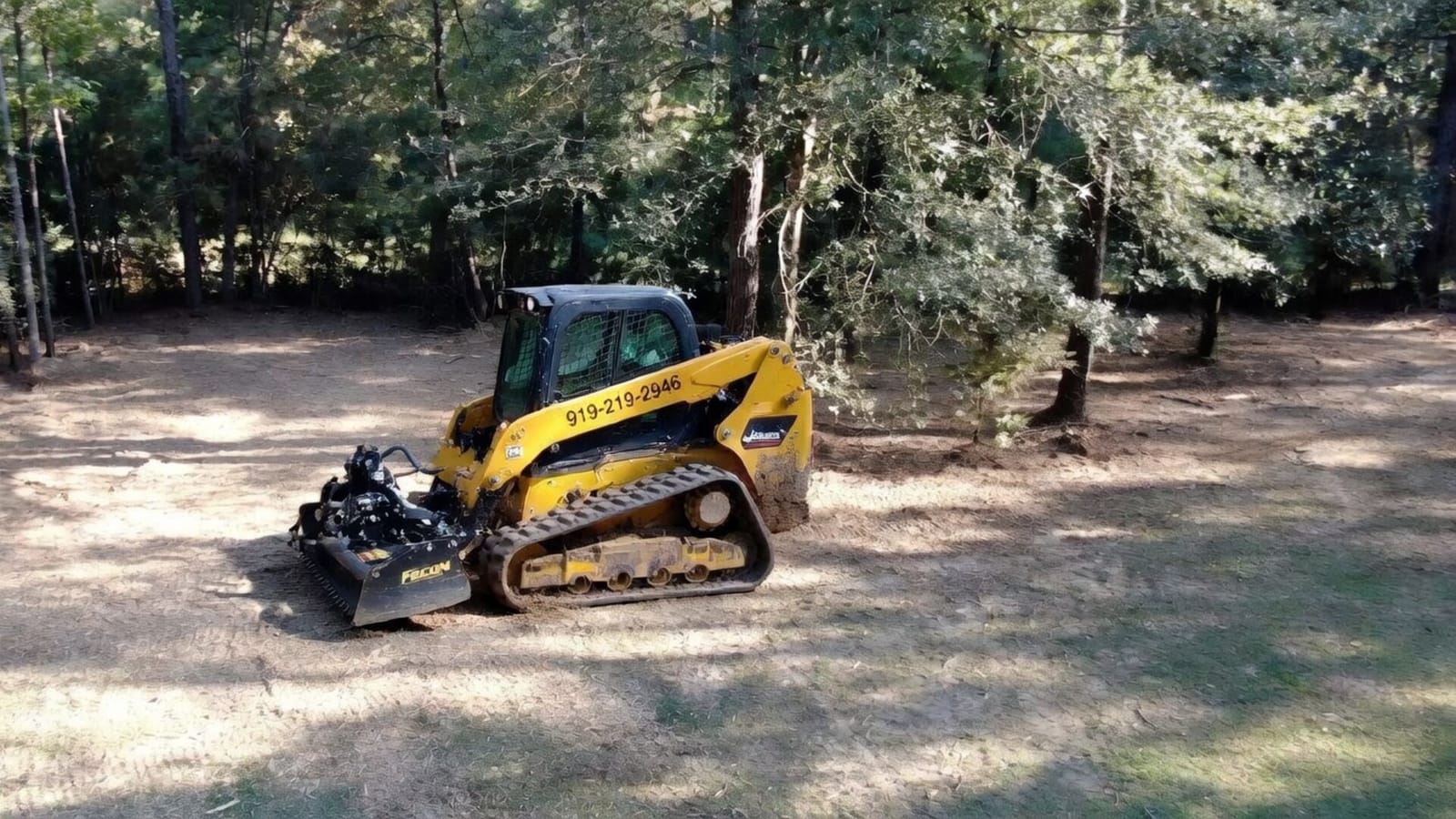
Around Columbus, the first question about a clearing job is which side of the Fall Line the land sits on. North of it, toward Hamilton and Pine Mountain, the ground is Piedmont clay on slopes. South of it, toward Cusseta, Buena Vista and Seale, it runs to deep sand. The same machine and the same acreage behave differently on each, and the finish that protects the ground afterwards is different too.
Where the Line Runs
The Fall Line is a geological boundary about twenty miles wide, running northeast across Georgia from Columbus to Augusta. Columbus grew where the Chattahoochee River crosses it, at the upstream head of navigation. To the north lie clay soils and narrow stream valleys in the Piedmont; to the south, sandy soils and wide floodplains in the Upper Coastal Plain (New Georgia Encyclopedia).
For a landowner, that means one service area holds two kinds of ground. Broadly, Harris County to the north is on the Piedmont side, and the counties to the south of the city are on the Coastal Plain side. The line is a band rather than a fence, so parcels near it can hold some of each. The only reliable way to know what is on a given parcel is to walk it.
Clearing on Piedmont Clay
Clay is dense, holds water at the surface after rain and turns slick on a grade. Three things follow for a clearing job.
Timing. A tracked machine that works a clay slope easily in a dry spell can slide and rut on the same slope after a wet week.
Slope. Narrow valleys mean grades. Passes run across the slope rather than straight down it, the machine turns more often, and some pitches are too steep to work safely at all. That is slower work, and it prices higher in the band.
Bare ground. Clay sheds soil quickly once its cover comes off, and a slope sends that soil toward the nearest branch. On this side of the line, the mulch mat is not a by-product; it is the cheapest erosion cover you will ever buy, and a finish that strips the ground bare needs a plan for what goes back on it before the next storm.
Clearing on Fall Line Sand
South of the line, the soils change character. Sandhill soils such as the Lakeland series are excessively drained, with sand more than 80 inches deep, and their native cover is blackjack oak, turkey oak and post oak with scattered longleaf pine (USDA NRCS).
Timing is easier. Deep sand drains fast, so a machine can usually work within days of heavy rain.
The vegetation is different. Scrub oak is the typical target: dense stands of turkey and blackjack oak crowding the pine. Those oaks resprout from the root after cutting, so a single pass opens the ground but does not end them. Plan on a repeat pass every few years.
Bare sand moves too. It does not slide like clay, but it blows in dry wind and washes where water concentrates, along a drive or down a firebreak. Leaving the mulch mat in place and keeping a finish covered matters here just as much.
What Does Not Change Across the Line
Some rules follow the parcel whichever soil it sits on.
Water. Georgia law exempts a project under one acre from the state erosion rules, but not within 200 feet of the bank of any state waters (Georgia Code 12-7-17). The creeks that drain toward the Chattahoochee cross both kinds of ground, and a branch near the work area can bring a buffer and a permit with it. A river or creek bottom that holds water may be wetland, which only a formal determination can confirm; the work stops at its edge until that is settled.
Invasives. Chinese privet, kudzu, Japanese honeysuckle and multiflora rose are recognized invasive plants of Georgia forests (Georgia Forestry Commission), and they turn up along creeks and old homeplaces on both sides of the line. Mechanical clearing knocks them back but does not kill the roots. Cut Brush applies no herbicide; in Georgia, applying pesticides to another person’s land for pay requires a Pesticide Contractor License (Georgia Department of Agriculture), which we do not hold. Any treatment is by a licensed treatment provider you engage, scheduled around the clearing.
Permits. The paperwork depends on the jurisdiction and the size of the disturbance, not the soil. Our Columbus land clearing permit guide covers the city and state rules.
What to Ask Before Work Starts
- Which parts of the tract are clay and which are sand, and how does that change the schedule?
- Which slopes will be worked, which left, and how will bare ground be covered?
- Where are the creeks, and how far is the work from each one?
- Which trees stay, and are they marked before the machine arrives?
- What is the finish: mulch mat, stumps out, or ground ready for a builder?
Frequently Asked Questions
Is clearing cheaper on sandy land than on clay?
Often per acre, because sand drains fast and flat ground lets a machine move freely. Dense scrub oak or a finish that needs cover can close the gap.
Can you clear a steep lot near Pine Mountain?
Many slopes can be worked with a tracked machine running across the grade. Some pitches are too steep to work safely, and that is decided on the walk-through.
Does mulching stop scrub oak coming back?
No. Turkey and blackjack oak resprout from the root. Mulching opens the stand; keeping it open takes a repeat pass every few years.
Start With the Ground
Clay or sand, the job starts with walking the parcel. Ranges for each kind of work are on the Columbus pricing guide, the wider market is on our Columbus land clearing page, and when you are ready, request a free quote. We put the scope and the finish in writing before anything is booked.
More from the Cut Brush Blog
Keep reading for more tips and guides on land clearing.
County Guide Land Clearing Permits in Columbus & Muscogee County, GA
Columbus issues a minor land disturbance permit for small clearing and a full site permit for the rest. The size tests, the 200 foot rule and burn rules.
 Cost Guide
 Forestry Mulching Cost in Columbus, GA (2026)
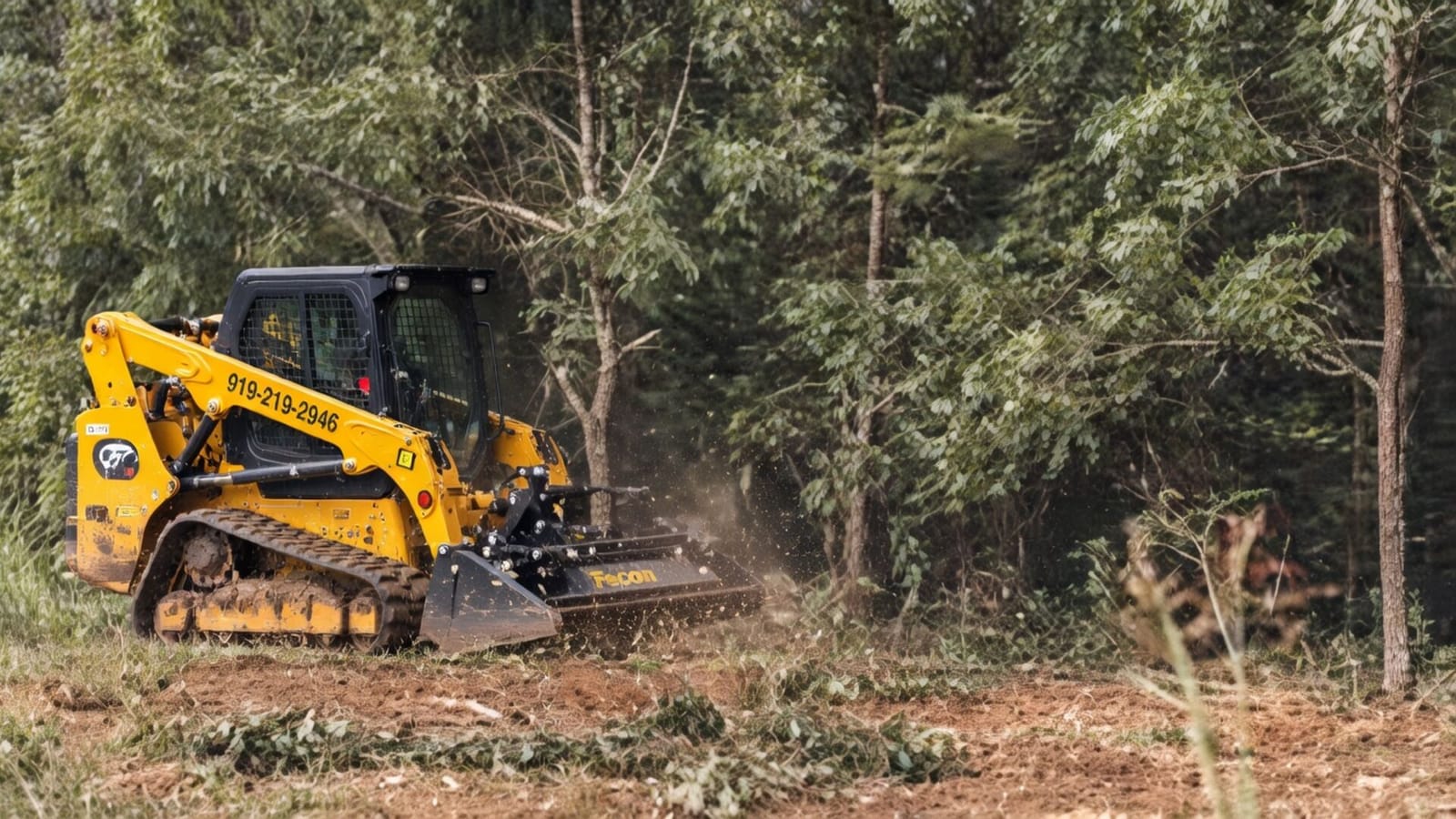
Forestry mulching around Columbus, GA runs $1,500 to $4,000 per acre. See what Piedmont clay, Fall Line sand, scrub oak and creeks do to the price.
 Guide
Guide Wisteria Removal in Georgia: Save the Trees, Stop Regrowth
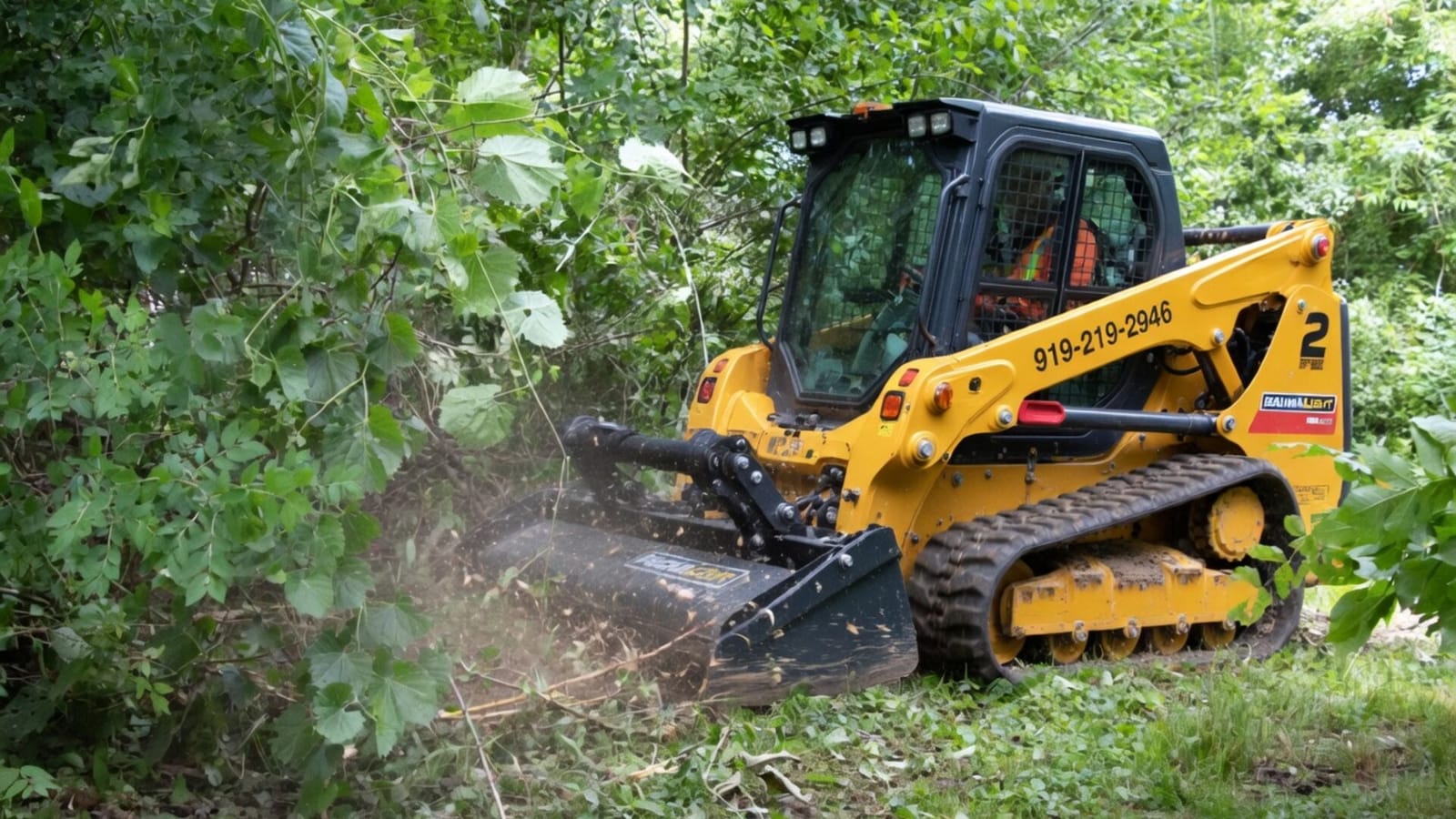
Wisteria removal in Georgia starts with cutting vines off the trees you want to keep. See how it spreads, why one cutting fails, and what clearing costs.
Ready to Get Started on Your Land?
Get a free, no-obligation estimate for property in Columbus & the Chattahoochee Valley.
Get Your Free QuoteOr call us directly: (919) 525-3950