Forestry Mulching Cost in Columbus, GA (2026)
Cut Brush Team · September 25, 2026 · 6 min read
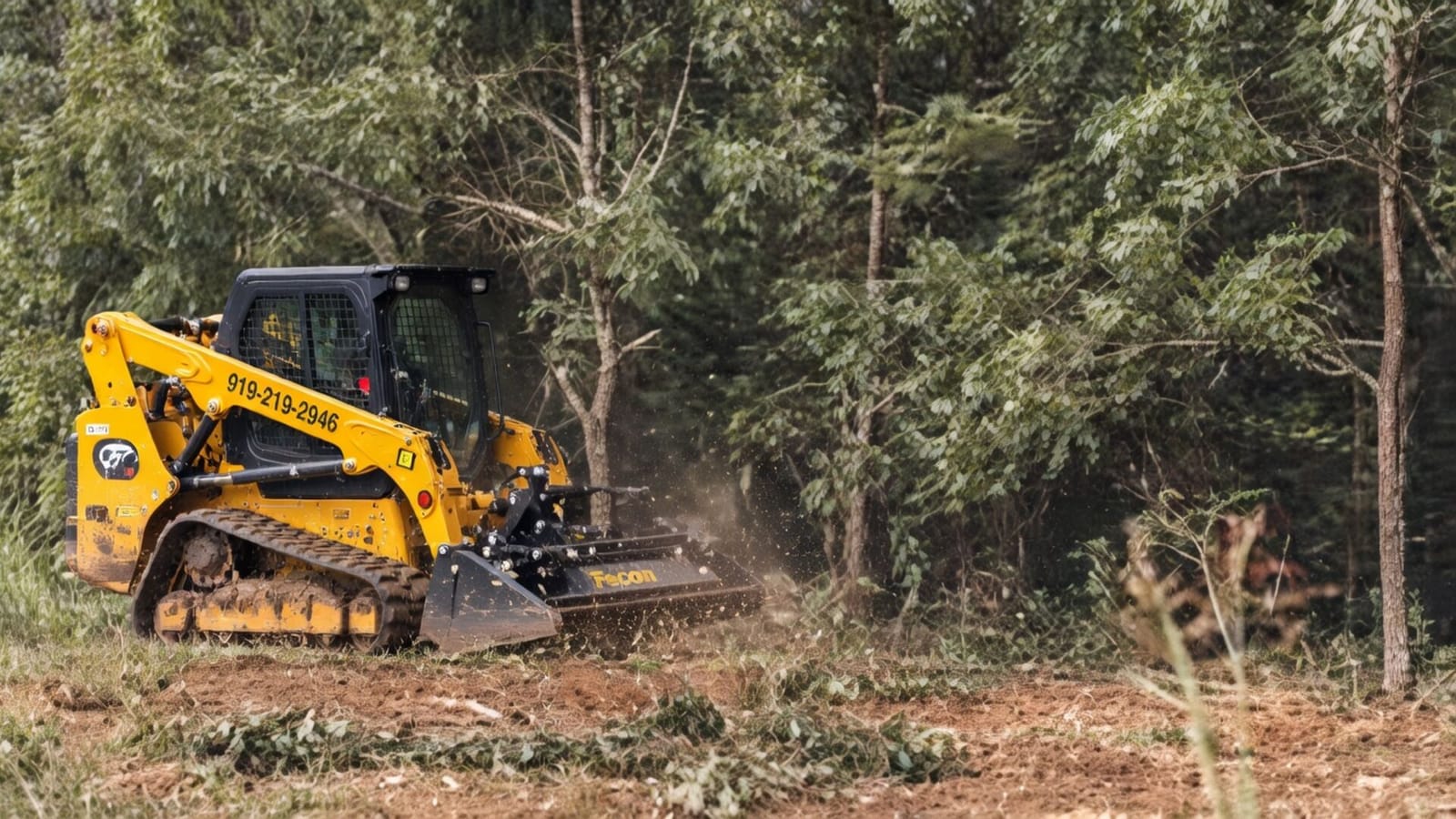
Forestry mulching around Columbus, GA runs $1,500 to $4,000 per acre. A light pass under well-spaced pine on open ground sits at the floor. A stand closed in for a decade, on a clay slope with a creek at the bottom, sits at the ceiling. What usually decides where a Chattahoochee Valley tract lands is not the acreage: it is which side of the Fall Line the ground is on, what has grown up under the canopy, and how close the work sits to water.
What Does Forestry Mulching Cost Per Acre Near Columbus?
| Condition | Range | Why it prices there |
|---|---|---|
| Saplings and light brush on level, open ground | $1,500 – $2,000 / acre | A quick single pass with few turns |
| Scrub oak or thicket under pine you are keeping | $2,000 – $3,000 / acre | Weaving between flagged trees |
| Pasture or woods left alone for ten years or more | $2,800 – $3,600 / acre | Bigger trunks, second passes, heavier wear |
| Thick growth on clay hillsides or along creeks | $3,000 – $4,000 / acre | Slow travel, cover on bare soil, buffers to avoid |
Small jobs carry a minimum near $1,500 per project, since hauling a tracked machine out costs the same for an hour of work as for a day. Treat the table as a budgeting guide; the site visit that produces your written number costs nothing.
Clay or Sand: The Fall Line Runs Through the Price
Columbus sits on the Fall Line, the band about twenty miles wide that runs northeast across Georgia from here to Augusta. North of it lie clay soils and narrow stream valleys; south of it, sandy soils and wide floodplains (New Georgia Encyclopedia). Both kinds of ground sit inside one service area, and they cost differently to work.
On the clay side, toward Hamilton, Shiloh and Pine Mountain, the ground turns slick after rain and slopes are common. A machine works slower across a grade, and bare clay sheds soil quickly, so the mulch mat left behind is part of what you are paying for rather than a by-product.
On the sand side, toward Cusseta, Buena Vista and Seale, the soils can run deep. Sandhill soils such as the Lakeland series are excessively drained, with sand more than 80 inches deep (USDA NRCS). That carries a tracked machine well even after a wet week, which keeps hours down. The catch is that bare sand blows and washes, so a finish with no cover on it is a false saving.
Why the Stand Matters More Than the Acreage
The same soil description lists blackjack, turkey and post oak as the native growth beneath scattered longleaf pine on the sandhills. By the creeks and around abandoned house sites, expect Chinese privet, Japanese honeysuckle and sweetgum instead. Whatever it is, the head is cutting the growth between trees, and the trees you keep set how freely the carrier can travel.
Scattered pine over knee-high scrub goes fast. Planted rows packed with a decade of oak and sweetgum sprouts go slowly: each stem takes its own bite, the machine turns constantly, and every keeper trunk has to be protected from scuffing. On two tracts of equal size, that alone can move a price from the low end of the band to the middle, which is why a number given before anyone sees the woods is only an estimate.
What Creeks and Permits Do to the Number
Distance to water changes a job more often than size does. Georgia law exempts a project under one acre from the state erosion rules, but not within 200 feet of the bank of any state waters (Georgia Code 12-7-17). Near a creek, expect a buffer left standing, cover on the low side and slower passes. Agency fees stay with the owner, and in Columbus the permit you need depends on how much ground is disturbed. Our Columbus land clearing permit guide sets out which one applies.
A bottom that holds water most of the year may be wetland, which only a formal determination can confirm. The work stops at its edge until that question is settled.
Mulching or Clearing: Which Are You Buying?
Two quotes for the same land can differ by thousands because they describe different jobs.
Forestry mulching chips brush and saplings where they grow with a single tracked machine. Stumps are cut level and stay in the ground, the chips stay as cover, and nothing is shaped for building. Use it to open up a thicket, win back a pasture border, or make woods you can hunt and walk.
Land clearing takes the whole parcel to a finish the quote spells out: stumps pulled or not, wood trucked off or stacked for a permitted burn, a pad shaped or not. At $1,500 to $4,500 per acre, it is the choice when a house, driveway or utility line is coming. Get each bidder to state in writing which job they priced.
Getting rid of the wood is easier here than in metro Atlanta. The five Georgia counties in this service area are all outside the 54-county summer burn ban that runs May through September (Georgia EPD), so a pile can be burned with a Forestry Commission permit. Chipping on site still tends to cost less, because it skips pushing piles, waiting for a burn day and cleaning up after.
Frequently Asked Questions
How much does it cost to mulch one acre near Columbus?
Plan for $1,500 to $4,000. Light thinning under pine is at the bottom and thick growth on a clay hillside near the top. One acre on its own usually lands near the project minimum, since delivery costs the same regardless of size.
Is mulching cheaper on sandy ground?
Often, per hour worked, because deep sand carries a machine well and gives the head little to fight. Whether the whole job is cheaper depends on what is growing and how much cover the finish needs.
Will the brush grow back after mulching?
Parts of it will. Oak, sweetgum and privet sprout again from the stump, so a return pass every few years keeps the ground open. We use no herbicide; chemical follow-up would come from a licensed treatment provider you hire directly.
Get a Real Number for Your Columbus Property
A single figure for forestry mulching cost in Columbus comes from seeing the land: clay or sand, what has grown under the trees, and where the creeks are.
Check your job against the ranges on the Columbus pricing guide, see the local conditions on our Columbus land clearing page, and request a free quote. The scope goes in writing, and the price you sign is the price you pay.
More from the Cut Brush Blog
Keep reading for more tips and guides on land clearing.
 County Guide
 Land Clearing Permits in Columbus & Muscogee County, GA
Columbus issues a minor land disturbance permit for small clearing and a full site permit for the rest. The size tests, the 200 foot rule and burn rules.
Guide Clearing Land on Clay and Sand Around Columbus, GA
Columbus sits on the Fall Line, with Piedmont clay to the north and deep sand to the south. How each kind of ground changes a clearing job and its finish.
Cost Guide Land Clearing Cost Per Acre in Georgia (2026)
Land clearing cost per acre in Georgia runs $1,500 to $4,500. See how red clay, slope, regrowth and the summer burn ban move the number. Free quotes.
Ready to Get Started on Your Land?
Get a free, no-obligation estimate for property in Columbus & the Chattahoochee Valley.
Get Your Free QuoteOr call us directly: (919) 525-3950