
Russian Olive Removal in Montana: Rules, Plan and Cost
Cut Brush Team · October 31, 2026 · 7 min read

Russian olive comes off Montana ground in three stages: the trees are cut or mulched, a licensed applicator treats the stumps and sprouts, and the site is checked for at least five years. Clearing scattered trees along a fence, a ditch or a field edge typically costs $1,500 to $2,500 an acre, and a dense thicket on a creek or river bottom falls in the $1,500 to $4,000 mulching band.
Cutting alone does not finish the job, because the roots send up new growth. Montana also regulates the tree, so what you may do with it matters as well as what it costs.
What Montana’s Regulated Listing Means for Your Trees
Russian olive is a Priority 3 regulated weed in Montana, which makes it illegal to intentionally spread or sell. The rule is the state’s, and it covers spreading and selling the tree on purpose. The plant is recorded in woodlands, thickets, riparian forests and moist meadows around wetlands in the plains and valleys, which in practice means river corridors, creek bottoms and the edges of wet ground.
How to Recognize It
Russian olive has silvery green leaves and olive-like seeds, and it holds its leaves after the first frost. Mature trees have grey-brown papery bark and young ones have smooth, reddish-brown bark, and both carry thorns. It can be mistaken for native buffaloberry, so have a doubtful shrub identified before it is cut.
How Russian Olive Spreads and Why One Cutting Fails
Several bird species eat the fruit and spread the seed, so seed turns up well away from the parent tree. Once it is up, it keeps coming back from below: the tree sprouts from the trunk, the root crown and the roots after it is cut or damaged.
That is why a day of cutting can end with a ring of green shoots around every stump by the next summer. Three details decide how the work should be planned:
- Cutting, lopping or mulching alone brings extensive regrowth from the stump and root. The plan therefore adds a treatment by a licensed applicator.
- Mulch soon after cutting. The wood hardens and older bark turns stringy, so trees left lying make the machine’s job harder.
- Seed rides on equipment. The machine should be cleaned before it moves to a different property so seed does not travel with it.
Neither cutting by hand nor mulching is wrong. A few trees on a fence line suit a saw and a stump treatment. A thicket on a creek bottom suits the mulcher, with the sprouts treated as they appear.
A Montana Removal Plan, Visit by Visit
- Walk the ground and flag the keepers. Mark the cottonwoods and any other trees you want left. If you are not sure a tree is Russian olive, ask the Gallatin County Weed District or the weed district in your county.
- Check the ground type. A stream bank, a mapped floodplain or a spot where a burn pile would go each come under a different office, and the owner holds any permit that applies.
- Choose the method for each stand. Scattered trees can be felled and their stumps treated. A solid thicket is better mulched, with a plan for the sprouts. A parcel can have both.
- Line up the applicator. Herbicide is a licensed applicator’s work, arranged by you; our crew does not apply it. The applicator picks the product and the timing, so book the person before the clearing date.
- Clear the trees. Our crew mulches the stand or fells the marked trees, grinds the wood where it lies and works around every flagged tree. Nothing is piled, so there is nothing to burn.
- Return and replant. Walk the site each season for at least five years, cutting or pulling what comes up. Seedlings pull by hand most easily in spring while the soil is moist. Where you replant, choose native trees and shrubs that suit the ground, and skip planting where ice and high water scour the bank.
Pro tip: If the trees have been serving as a windbreak, decide what replaces them before the clearing date, so the ground is not left open longer than it has to be.
What Russian Olive Removal Costs in Montana
Scattered Russian olive along a fence, a ditch or a field edge, worked around the trees you keep, typically costs $1,500 to $2,500 an acre, the Russian olive and brush row on our Four Corners pricing page. A strip is priced by the share of an acre it covers. A dense stand on a creek or river bottom falls in the $1,500 to $4,000 forestry mulching band, and clearing a whole parcel to an agreed finish can reach $4,500.
| Job | Price | What it covers |
|---|---|---|
| Scattered trees along a fence, ditch or field edge | $1,500 – $2,500 per acre | Priced by the share of an acre the strip covers |
| Dense thicket on a creek or river bottom | $1,500 – $4,000 per acre | The forestry mulching band |
| A short strip or a handful of trees | Minimum charge of about $1,500 | Replaces the acre rate; never added to it |
| Return visit to cut sprouts | Listed on a separate line | You can accept or decline it |
| Stump and sprout treatment | Priced by the applicator | Herbicide work is not ours |
On every visit Russian olive, brush, small trees and stumps become mulch on site, stumps finish flush with the ground and nothing is hauled away. Full stump removal below grade, and cutting and hauling very large trees, are discussed and priced in the quote. Grading and build pads are not part of our price: we clear to the ground so a builder can grade.
Density, the trees you keep, wet ground and the distance between patches decide where a job lands in its band. When we call about your quote, we go over where the trees stand, how tightly they grow and how a machine gets to them, and any return visits are listed as their own lines. Our Four Corners forestry mulching cost guide shows how an acre is paced and how an hourly figure converts to an acre price.
Russian Olive in the Gallatin Valley and Across Montana
Four Corners and Gallatin County. The tree follows river corridors, and the Gallatin, Madison and Jefferson rivers meet at Three Forks to form the Missouri. The Gallatin County Weed District is at 903 North Black Avenue in Bozeman and can identify a tree and answer weed questions. For work on a stream bank, the Gallatin Conservation District runs the 310 permit program outside the 1949 Bozeman and Belgrade city limits, and the permit costs nothing. The weed district also reviews the weed management plans that come with new developments, so read your paperwork if the lot sits in a newer subdivision. Our Four Corners land clearing page covers the towns from Gallatin Gateway to Wheatland and the local rules.
The big river corridors. Russian olive has been documented along the Missouri, Yellowstone, Milk, Marias, Musselshell and Sun rivers, so a long river-bottom parcel anywhere in the state can hold a stand. The method is the same wherever it grows: clear, treat, return.
Other woody invaders. Common buckthorn also comes back after one cutting, and our Montana buckthorn removal guide sets out its visits. Rules, burn seasons and prices across the state are in the Montana land clearing cost guide.
Frequently Asked Questions
Is it legal to sell or spread Russian olive in Montana?
No. The Priority 3 listing makes it illegal to intentionally spread or sell.
Does mulching Russian olive stop it from growing back?
No. Mulching brings the trees down and leaves the roots, which sprout. A treatment by a licensed applicator and return visits to cut the sprouts are part of the plan.
How long should I watch the ground afterward?
At least five years. Walk it once a season and cut or pull anything that comes up before it sets seed.
How much does Russian olive removal cost in Montana?
Scattered trees along fences, ditches and field edges run $1,500 to $2,500 an acre, and a dense river-bottom thicket $1,500 to $4,000. A short strip is charged the minimum of about $1,500, and the applicator prices stump treatment.
Start a Russian Olive Clearing Plan for Your Montana Ground
Request a free quote and we’ll contact you to discuss your property, access and the clearing you need. The quote treats Russian olive as work over several seasons, with the clearing and each return visit listed as separate lines.
More from the Cut Brush Blog
Keep reading for more tips and guides on land clearing.
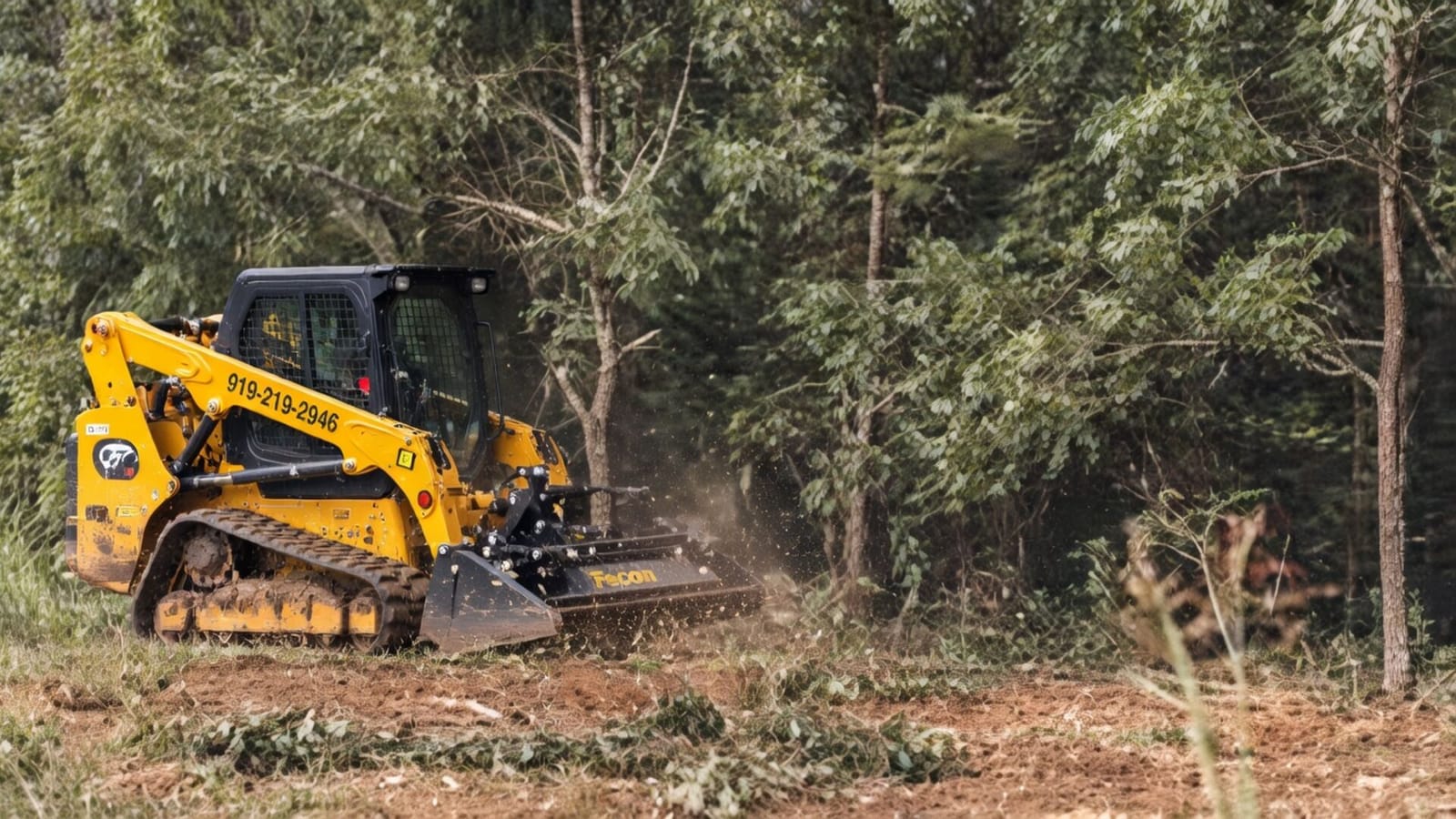 Cost Guide
Forestry Mulching Cost in Four Corners, MT & Gallatin County
Forestry mulching in Four Corners, MT and Gallatin County: $1,500 to $4,000 an acre. How an acre is paced, hourly math and cheaper routes. Request a free quote.
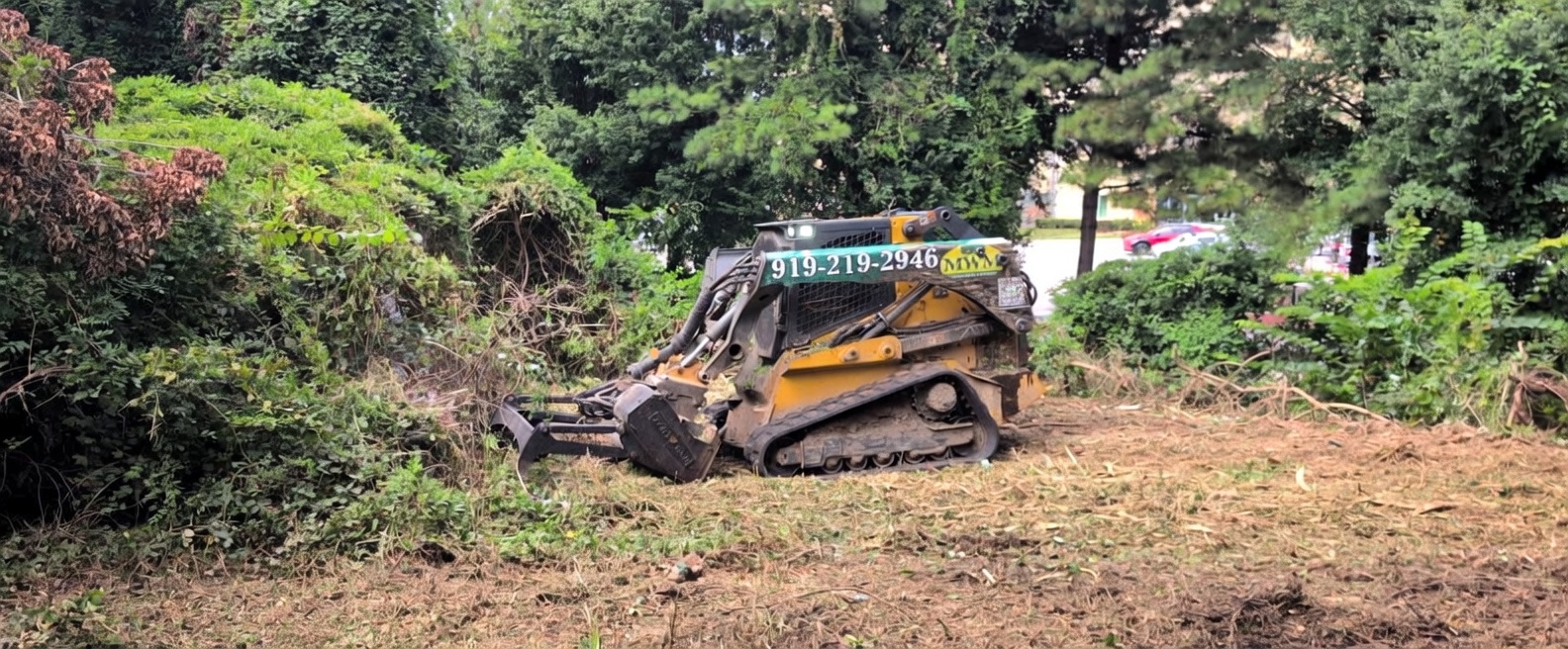 Cost Guide
Brush Hogging Cost Per Acre in Montana (2026 Guide)
Brush hogging a Montana field costs $75 to $400 an acre, set by how long since the last cut. When to mow knapweed, what sagebrush does, and fire season rules.
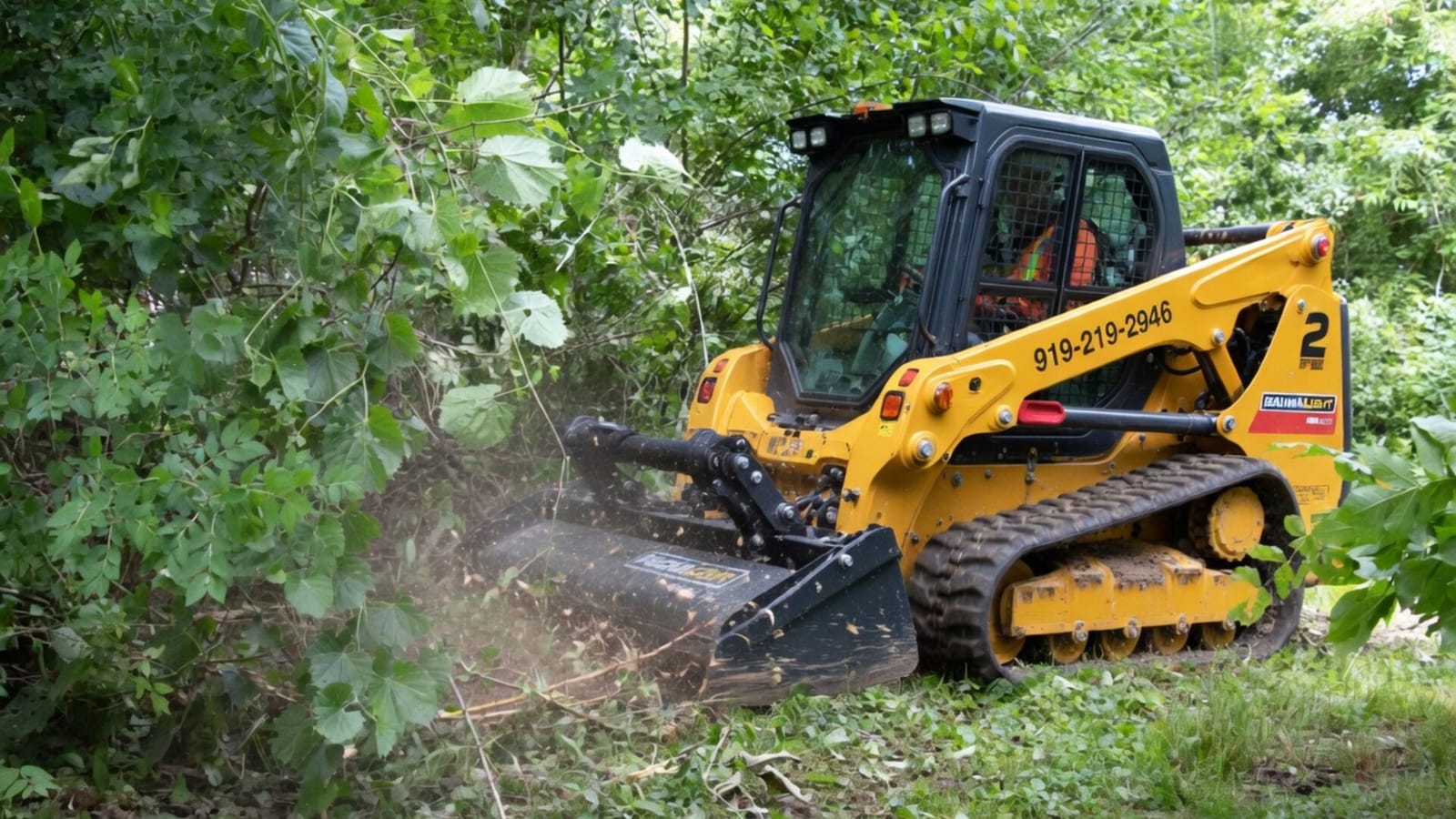 Guide
Buckthorn Removal in Montana: The Plan and the Cost
Buckthorn removal in Montana: $1,500 to $2,500 an acre to clear a creek-side thicket near Missoula. Why cutting alone fails. Request a free quote.
Let's Get Started on Your Land
Request a free quote. We'll contact you to discuss your property, access, and the clearing you need.
Get a Free QuoteOr call us directly: (919) 525-3950