What to Know Before Clearing Land Around Odessa
This is farm country. About 71 percent of the land
within 15 miles of Odessa is farmed, split almost evenly between pasture and hay and cultivated crops,
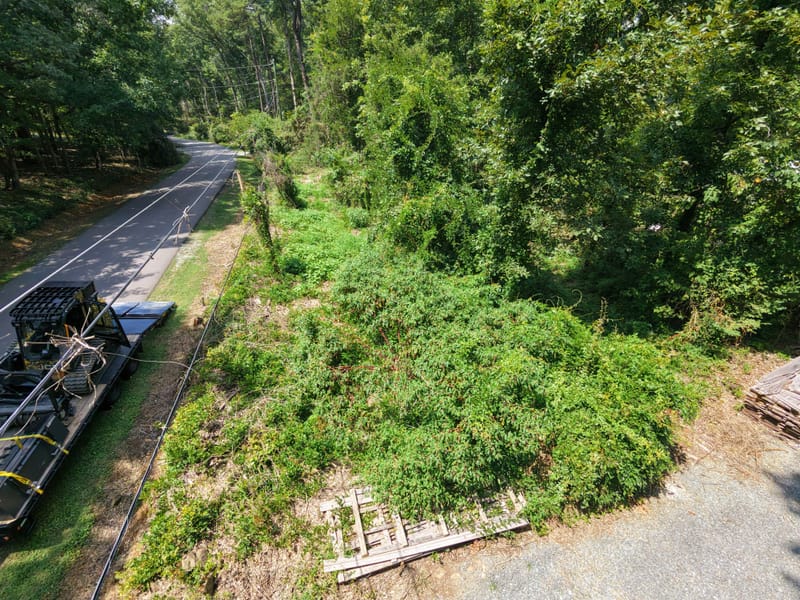
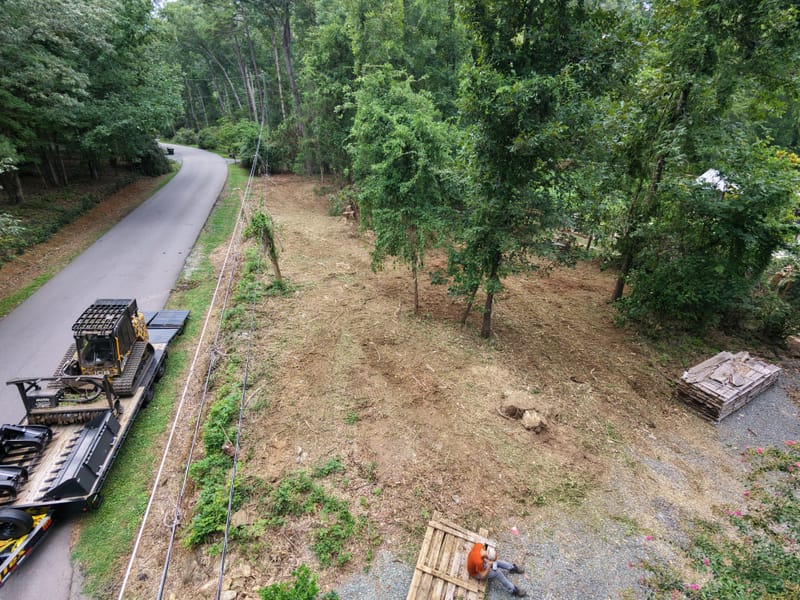
with roughly 17 percent in hardwood forest. That shapes the work: most clearing here is a fence row, a field
corner or a creek edge between ground that is worked and ground that is not, and the fence and the
field beside it have to come through untouched.
One state threshold, two local offices. Clearing and grubbing count as land disturbance in Missouri, and work that disturbs an acre or more needs state DNR coverage; inside Odessa, projects over an acre go to that same DNR review. Inside city limits, permits run
through Community Development at City Hall on South 2nd Street. In the county, the Planning & Economic
Development Office in Lexington administers the Land Development Code. Requirements vary by parcel, scope and jurisdiction, and the governing
authority makes the determination.
Pear and cedar on the edges. Callery pear grows statewide and stands out on roadsides and old fields; escaped trees grow long thorns that make the thickets
impenetrable, and a cut tree sends vigorous sprouts up from the stump. Eastern red cedar, once confined
to bluffs and cliffs, now grows in pastures and along fencerows. Callery pear needs follow-up for stump and root sprouts, and our
Missouri Bradford pear guide
explains the follow-up.