
Brush Hogging Cost Per Acre in Minnesota (2026 Guide)
Cut Brush Team · October 9, 2026 · 8 min read

The hay field or horse pasture you stopped cutting a few summers ago is now thistle, raspberry canes and sumac starting to close in from the fence line. Brush hogging runs $75 to $400 an acre with Cut Brush, with a $250 to $500 minimum per visit, and our Minnesota crew mows across the Twin Cities metro: Hennepin, Anoka, Washington, Dakota, Scott and Carver counties. How long the field has gone since its last cut decides where in that range it lands.
At a glance:
- Cut within the past year: $75 to $150 an acre.
- One or two seasons of growth: $125 to $250. Three or more years overgrown: $200 to $400.
- Minimum: $250 to $500 a visit, so one small paddock usually starts at the minimum.
- Weed law: wild parsnip, Canada thistle and leafy spurge are Prohibited Control noxious weeds, which Minnesota requires be controlled on all land.
- Past a mower: stems thicker than 2 to 3 inches move the job to our understory row, $1,500 to $2,500 an acre.
We mow hobby farms and horse acreage from Corcoran and Independence to Ham Lake, Hugo and Farmington. For a field elsewhere in Minnesota, tell us where it is, and we will contact you to talk through the acreage, access and the cut you need.
How Much Does Brush Hogging Cost in Minnesota?
What we charge follows one question: how many growing seasons has the field had since a mower last went over it?
| Field condition | Our price per acre | What it looks like in Minnesota |
|---|---|---|
| Mowed within the past year | $75 – $150 | Pasture grass and weeds, thistle and parsnip rosettes, no woody stems |
| 1–2 seasons of growth | $125 – $250 | Waist-high grass, Canada thistle patches, raspberry canes, first sumac sprouts |
| 3+ years overgrown | $200 – $400 | Sumac, hazel and dogwood up to about 2 inches, prickly ash in the corners |
| Going back to woods | Not a brush hog job | Aspen suckers and buckthorn past 2 to 3 inches |
Where these numbers come from. These are the brush hogging rates Cut Brush publishes by field condition, with the $250 to $500 minimum per visit, and they are what we charge for mowing in Minnesota. Our Minneapolis pricing page lists the work past a mower: regrowth and understory at $1,500 to $2,500 an acre and forestry mulching at $1,500 to $4,000.
What Is Brush Hogging?
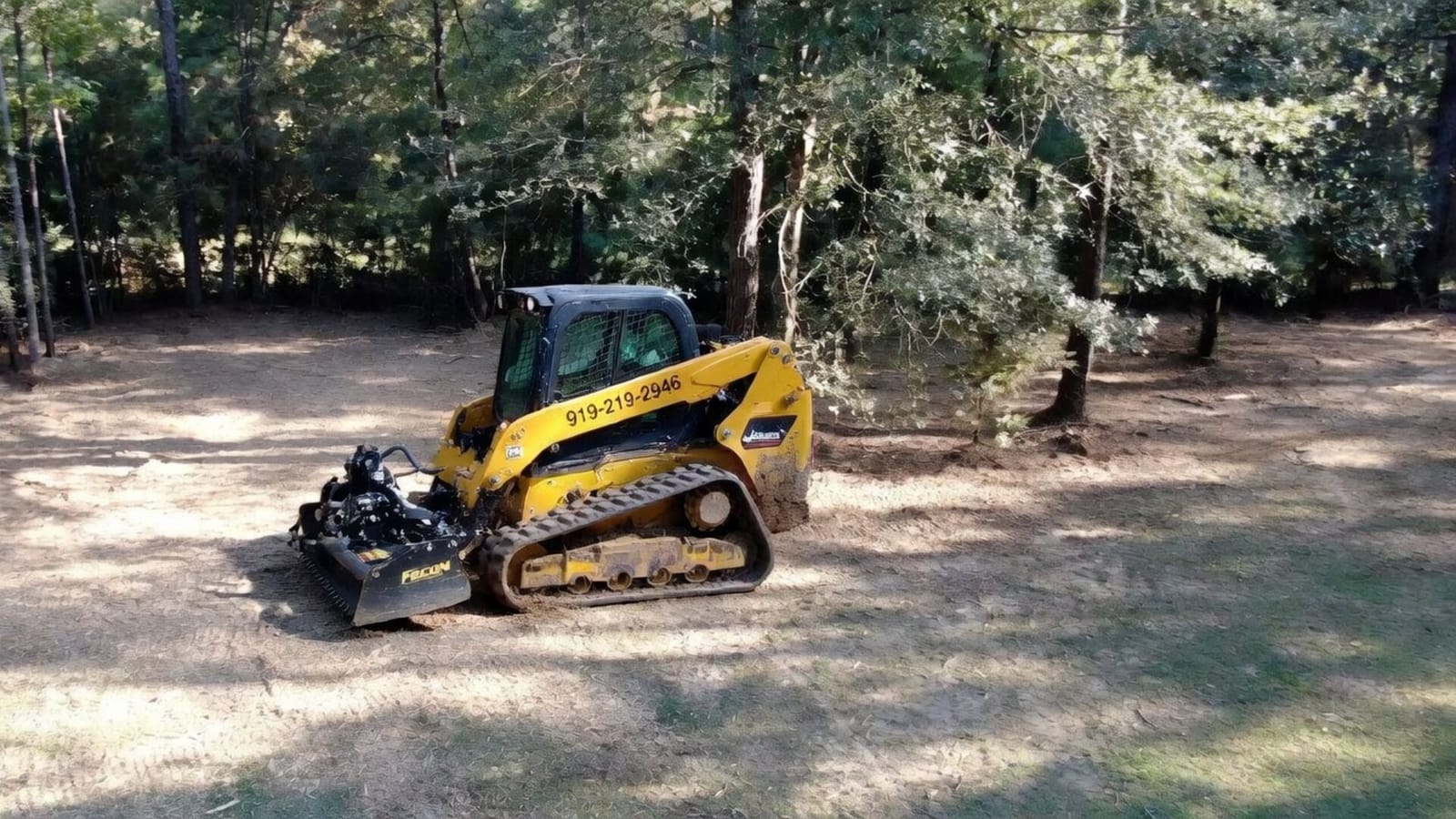
A tractor pulls a heavy rotary cutter through growth a lawn mower cannot handle: tall grass, weeds, canes and saplings up to about 2 inches across. The cut material lies where it falls. It is the cheapest way to take a field back while it is still a field, and the right tool for keeping one open year after year.
Once stems pass 2 to 3 inches they bend and splinter instead of cutting, and the cutter takes a beating. That is forestry mulching territory, priced in our Minnesota forestry mulching cost guide.
What Changes the Price of a Minnesota Field
Wild parsnip. The Minnesota Department of Agriculture lists wild parsnip as a Prohibited Control noxious weed, found throughout the state and heaviest in the southeast and along road and rail rights of way. Its sap on skin, in sunlight, causes severe rashes and blisters, so our operators wear gloves, long sleeves and long pants, and the MDA advises washing equipment after mowing a stand so the seed does not ride to the next farm. That wash-down is time, and a parsnip field prices a step higher than clean grass.
Weeds the law says you must control. The Prohibited Control list also names Canada thistle, leafy spurge, poison hemlock, common tansy, Japanese knotweed and purple loosestrife. These must be controlled on all lands in the state, meaning kept from spreading by seed or root, and the county agricultural inspector enforces it. For a thistle field the timing matters more than the cut: mowing after the seed is ripe spreads the problem, so we book these before seed set.
Woody stems that come straight back. University of Minnesota Extension notes that most deciduous trees and shrubs re-sprout once cut, and that aspen sends up shoots from roots several feet away. Sumac, hazel, prickly ash, dogwood and raspberry are on its list of aggressive natives. Mowing holds them down; it does not end them. A field ringed by an aspen stand keeps sending suckers out into the grass, which is why an annual cut is cheaper than a rescue every few years.
Wet ground under the deck. In the Red River Valley the Fargo soil is level clay, 40 to 60 percent clay, that cracks open as it dries and drains very slowly when wet. Across south central Minnesota the Canisteo soil sits in flats and hollows with water at the surface in wet spells unless it is tiled. On either one, the tractor waits for the field to carry it, and a soft field takes longer per acre.
Pro tip: If wild parsnip is anywhere on the place, book the mowing before it flowers in June. The MDA says cutting larger stands before flowering kills most mature plants, and the cutter does not spread ripe seed across the rest of your ground.
Brush Hogging Costs Across Minnesota
Twin Cities metro. Horse pasture, hobby farm ground and big suburban lots are the usual mowing jobs here. Many of these fields have a buckthorn or sumac fence line that has crept in, which we price from the understory row once it is past mower size. Our Minneapolis services page shows what each method covers.
Southeast blufflands and farm country. Wild parsnip is thickest here, according to the MDA, so road frontage and field edges are often a June job with an equipment wash afterward. Where a field edge runs into oak woods, the DNR asks that oaks not be cut or wounded from April through July because of oak wilt, which matters when saplings along the woods line come down too.
Minnesota River Prairie and the southwest. The DNR calls this country the heart of the Minnesota Cornbelt. Fields are mostly cropped, so mowing work is fence rows, grassed waterways, ditch banks and set-aside grass, usually narrow and slow per acre.
Red River Valley. A flat, heavily ditched lake plain on Fargo clay, with woody growth mostly in narrow strips along the larger streams. A rain can keep a tractor off a ditch bank for days.
The north woods. Open ground up north sits among aspen and birch, and a field edge beside an aspen stand fills with suckers within a few seasons. Past mower size, see our Minnesota underbrush removal cost guide.
Mowing Season, Ditches and Burning in Minnesota
The state’s roadside calendar. Under Minnesota Statutes 160.232, road authorities outside cities may mow only the first eight feet from the road surface until July 31. The full right of way may be mowed after that, and from August 31 to the next July 31 only for safety and no shorter than 12 inches. The rule binds road authorities, not landowners, but it shows when the state itself holds off on mowing.
Burning the cuttings. Mowed grass is left to lie, but a fence row of sumac and saplings often ends up piled. Without 3 inches of continuous snow on the ground, a pile over 3 feet by 3 feet needs a DNR burning permit, and spring restrictions stop permits in fire-prone counties for a stretch after snowmelt.
When the field has become woods. Clearing that disturbs an acre or more of soil can bring in the state stormwater permit; the Minnesota land clearing cost per acre guide covers that side.
Frequently Asked Questions
How much does it cost to brush hog an acre in Minnesota?
With Cut Brush, $75 to $400 an acre depending on how long the field has gone, with a $250 to $500 minimum per visit. On a single acre the minimum usually sets the price, because hauling the tractor costs the same for one acre as for ten.
Do I have to control wild parsnip or thistle on my land?
Yes. Both are Prohibited Control noxious weeds in Minnesota and must be controlled on all lands so they do not spread. For wild parsnip, the MDA says mowing larger stands before they flower in June kills most mature plants.
Can a brush hog handle sumac and aspen suckers?
Up to about 2 inches, yes. Past 2 to 3 inches the stems shred instead of cutting, and we will quote the field from our $1,500 to $2,500 an acre understory row instead.
How often should I mow an old field in Minnesota?
Once a year keeps most fields in our cheapest tier and stops sumac and aspen from getting ahead. Time the cut to what grows there: before June flowering for wild parsnip, before seed set for thistle.
Do you brush hog outside the Twin Cities?
Our crew works from Minneapolis. Tell us where the field is, and we will get in touch to discuss the ground, the gate and how often you want it cut.
Get a Brush Hogging Quote in Minnesota
Pick the Minneapolis area below and request a free quote for a written number. Our crew will contact you to go over the field and the gate or approach the tractor would use, what is growing (grass, thistle, wild parsnip, sumac, saplings), whether horses or cattle graze it, and whether you want one cut or a field kept open every year.
Sources
More from the Cut Brush Blog
Keep reading for more tips and guides on land clearing.
 Cost Guide
Land Clearing Cost Per Acre in Minnesota (2026 Guide)
Land clearing cost per acre in Minnesota runs $1,500 to $4,500. See how buckthorn, permits and frozen-ground season move the number. Free quotes.
 Cost Guide
Forestry Mulching Cost in Minneapolis, MN (2026)
Forestry mulching around Minneapolis runs $1,500 to $4,000 per acre. See what buckthorn density and permits do to the hours and the price on your land.
 Guide
Bush Honeysuckle Removal in Minnesota: Rules, Plan and Cost
Bush honeysuckle removal in Minnesota costs $1,500 to $2,500 an acre. Know the restricted species, legal brush moves and visits. Request a free quote.
Comparing states? See land clearing costs by state.
Let's Get Started on Your Land
Request a free quote. We'll contact you to discuss your property, access, and the clearing you need.
Get a Free QuoteOr call us directly: (919) 525-3950