
Brush Hogging Cost Per Acre in Missouri (2026 Guide)
Cut Brush Team · November 9, 2026 · 9 min read
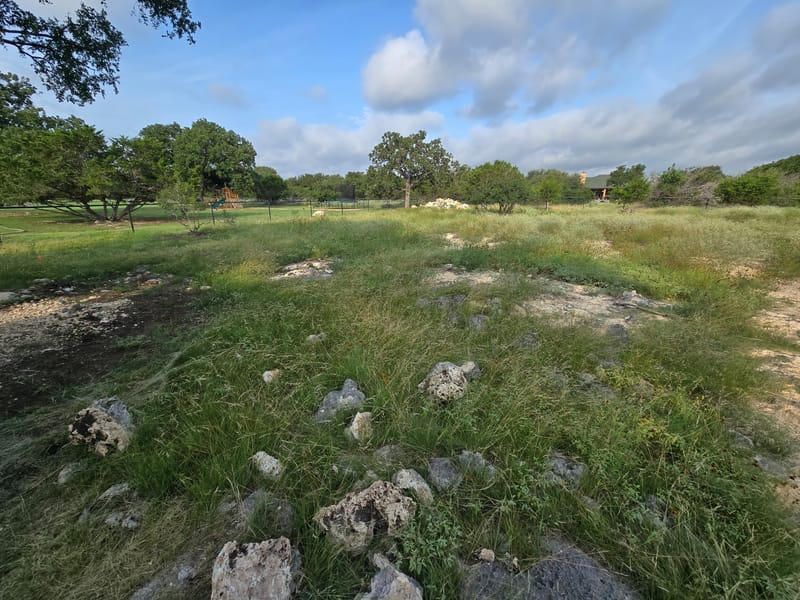
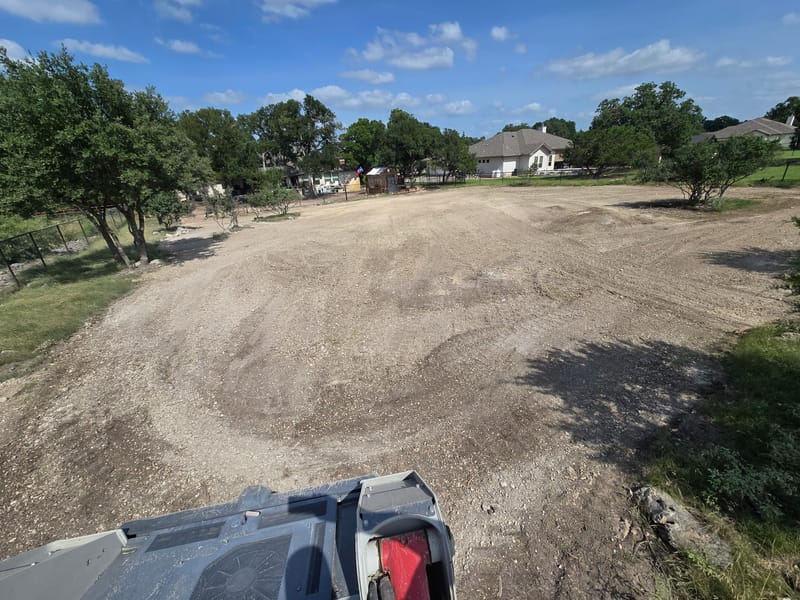
Our crew brush hogs Missouri fields for $75 to $400 an acre, and where yours lands depends mostly on how long it has been since the field was last cut. Every visit carries a minimum of $250 to $500, so a one-acre lot pays the minimum rather than an acre rate.
At a glance:
- Cut within the past year: $75 to $150 an acre
- One or two seasons of growth: $125 to $250 an acre
- Three or more years overgrown: $200 to $400 an acre
- Missouri law: every landowner must control the state’s twelve noxious weeds, multiflora rose and musk thistle among them, often enough each year to keep them from going to seed.
- What grows back: sumac, hedge (Osage orange) and honey locust return thicker after a mowing, while a cedar cut below its lowest branch is finished.
Our Missouri crews work from two markets: Odessa, covering Lafayette County and the eastern Kansas City metro, and Herculaneum, covering Jefferson County south of St. Louis.
How Much Does Brush Hogging Cost Per Acre in Missouri?
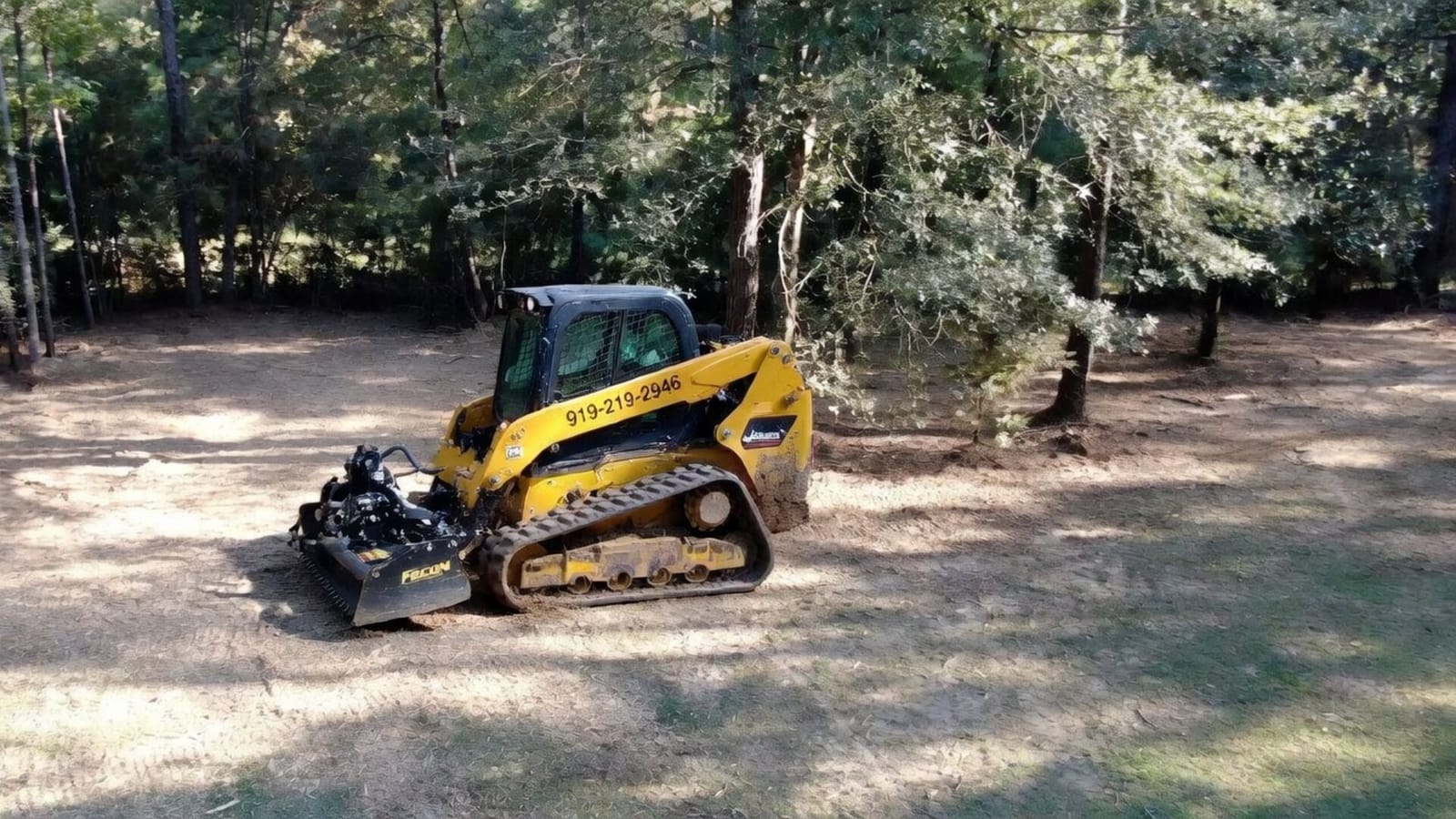
Brush hogging is a tractor or tracked loader driving a heavy rotary cutter through grass, weeds, briars and saplings that would wreck a lawn mower. It chops the growth and leaves it lying on the field. On Missouri ground we price it by the state of the field:
| Field condition | Our price per acre | What it looks like in Missouri |
|---|---|---|
| Mowed within the past year | $75 – $150 | Pasture or hay ground gone tall and weedy, no woody stems |
| One or two seasons of growth | $125 – $250 | Blackberry canes, musk thistle, sericea lespedeza, knee-high cedar |
| Three or more years overgrown | $200 – $400 | Sumac, honey locust and hedge sprouts, head-high cedar, saplings up to 2 inches |
| Saplings past 2 to 3 inches | Not a brush hog job | Grown-up hedge rows and locust thickets, priced in the clearing bands below |
Where a job is better quoted by the hour, we charge $60 to $150 an hour, set by the machine and the ground. Every visit has a $250 to $500 minimum.
Where these numbers come from. They are our brush hogging bands, wide on purpose so the written quote never surprises you. Once a field has grown past a mower, the work moves to the clearing bands on our Missouri pricing pages. The Odessa pricing page calls that row Fence Line & Pear Clearing and the Herculaneum pricing page calls it Honeysuckle & Understory Clearing; both run $1,500 to $2,500 an acre, and forestry mulching runs $1,500 to $4,000. For taking a whole tract back to open ground, see our Missouri land clearing cost guide.
What Changes the Price of a Missouri Mowing Job
How long since the last cut. A field mowed every year cuts at full speed in a single pass. Two seasons of blackberry and thistle make the operator slow down, and three years of locust and sumac sprouts can take a second pass. Blackberries deserve a word of their own: a late-summer pass only tidies them. Cutting them between full leaf and blossom in spring, several years running, is what slowly thins a Missouri briar patch.
Which brush is standing. The pasture sprouters that matter most here are sumac, hedge and honey locust, and mowing alone can leave all three worse off than before it was cut. Honey locust needs three or four mowings a year over several years before a cutter gets ahead of it. Eastern red cedar works the other way. A cedar taller than three feet dies when it is cut below its lowest branch, so one pass finishes small cedar for good, which no amount of mowing does for locust.
Old hedge rows and buried wire. Settlers planted Osage orange in rows across Missouri as a living cattle fence, and many still run along field lines, carrying half-inch spines and sending root sprouts out into the grass beside them. Wire that a hedge row or cedar line has grown around is the hazard that stops a rotary cutter cold. A hedge row that has become trees is a clearing job in the $1,500 to $2,500 band, while the open field beside it stays a mowing job.
Rock under the grass. Across the Ozarks, chert sits in the soil, left behind as the limestone and dolomite around it weathered away. It is harder than steel, so it nicks blades and gets flung by the cutter, and an operator crossing cherty pasture keeps the deck up and the speed down. A stony Ozark field sits higher in its band than a smooth one with the same growth.
Pro tip: If you only pay for one cut a year, time it to what is growing. Musk thistle cut just before it flowers loses that year’s seed. The same pass in full bloom leaves stems that regrow, flower and seed anyway. The visit costs the same; only one of them works.
Brush Hogging Costs Across Missouri
Odessa and the eastern Kansas City metro. Most land around Odessa is farmed, split close to evenly between pasture and hay and row crops. The mowing here is pasture, hay field edges and the strips between crop ground and an old fence, and hedge and cedar along those fences are the usual reason a quote steps up from mowing to clearing. Our Odessa crew covers Lafayette, Jackson, Johnson and Cass counties, plus Ray and Clay north of the Missouri River, from Lexington, Higginsville and Oak Grove to Warrensburg, Pleasant Hill, Richmond and Liberty. The Odessa land clearing page lists the towns, and our Odessa forestry mulching cost guide covers fence rows that have gone past a mower.
Herculaneum and Jefferson County. South of St. Louis the ground turns to wooded river hills: close to half the land within 15 miles of Herculaneum is forest, and only about a tenth is pasture. Mowing jobs here are smaller, steeper and nearer to houses, from Arnold and Festus to Hillsboro and De Soto, so the visit minimum and the slope matter more than the acreage. Under the trees, bush honeysuckle is understory work rather than mowing; our Jefferson County bush honeysuckle guide explains why.
The Ozarks. Rolling cherty pasture, with cedar spreading in from rocky openings, fencerows and old fields wherever fire no longer reaches. Catching that cedar while it is knee-high keeps a field in the low tiers. Cedar left for years has trunks a mower cannot take, and our Missouri forestry mulching cost guide prices that job.
Missouri Rules and Timing for Mowing a Field
Noxious weeds. Missouri’s noxious weed list holds twelve plants: multiflora rose; musk, Canada and Scotch thistle; Johnson grass; field bindweed; common and cutleaf teasel; spotted knapweed; kudzu; purple loosestrife; and marijuana. Every owner of land must control them often enough each year to keep them from going to seed. Left alone, they bring a certified letter from the county prosecuting attorney, 15 days to start control, and a $100 penalty for every further 15 days the weeds stand.
Timing the cut to the weed. Thistle wants cutting just before bloom, as in the pro tip above. Sericea lespedeza, the fine-leaved invader of Missouri pastures, is weakest at the flower bud stage, when its root reserves bottom out; mowing it then for two or three years in a row wears it down.
Nesting season and fawns. Ground-nesting birds start in May, and fawns lie flat in tall pasture grass where a mower operator cannot see them. If a field has no weed deadline, holding the mowing until August gives bobwhite quail, meadowlarks and fawns their best chance. Where thistle must come down sooner, cut those patches and leave the rest for August. Before any cut, walk the field edges and look for matted grass where a doe may have bedded a fawn.
Town lots and burning. Cities around Kansas City and St. Louis each set their own tall grass and weed rules, so a lot inside city limits should be checked against its own height limit and notice period. A brush hog leaves the cut growth lying on the field, so there is no pile to burn and the roots and soil stay where they are.
Frequently Asked Questions
How much does it cost to brush hog one acre in Missouri?
Usually the visit minimum, $250 to $500, because hauling the cutter to one acre costs the same as hauling it to ten. On a bigger field the acre bands take over: $75 to $150 an acre for a field cut last year, up to $200 to $400 for one left three years or more.
Why do Missouri bush hogging prices run from $17 to $400 an acre?
Because those figures describe different jobs. Hired mowing of pasture or CRP ground between Missouri farms goes for about $17 an acre, and hired mowing of brush or overgrown pasture for about $126 an hour, anywhere from $50 to $175. A pasture cut every year is the $17 job; three years of locust and blackberry is the $200 to $400 job. If you are handed a day rate, divide it by the acres the machine will finish that day before you compare.
Will brush hogging get rid of honey locust, hedge and sumac?
No. Mowing hides them for a season and can leave the problem worse; honey locust alone takes several years of repeat mowing. Once those stems pass 2 to 3 inches, the job moves to clearing, which our Missouri underbrush removal cost guide prices. If Callery pear is in the mix, our Missouri Bradford pear removal guide covers the return visits.
When is the best time to brush hog in Missouri?
It depends on what you are after. Blackberries: spring, between full leaf and blossom. Musk thistle: just before it flowers. Sericea lespedeza: the flower bud stage. A field with none of those to fight: August or later, after nesting and fawning season.
Can a brush hog cut cedar trees?
Small ones, yes, and for good: a cedar cut below its lowest branch dies. Once trunks pass 2 to 3 inches, the cedar is a forestry mulching job at $1,500 to $4,000 an acre.
Get a Brush Hogging Quote in Missouri
Request a free quote and our crew will contact you to discuss the property, the access and the mowing or clearing you need. Pick the nearest area below: Odessa for the Kansas City side of the state, Herculaneum for the St. Louis side. If your field has grown past a mower, both pricing pages linked above show the clearing bands.
Sources
- University of Missouri Extension, Custom Rates for Farm Services in Missouri (G302)
- Revised Statutes of Missouri, section 263.190: noxious weed control
More from the Cut Brush Blog
Keep reading for more tips and guides on land clearing.
 Cost Guide
Forestry Mulching Cost in Odessa, MO: Day Rate or Per Acre?
Forestry mulching near Odessa, MO costs $1,500 to $4,000 an acre. Compare a day rate with a per-acre quote and see what fence rows add. Request a free quote.
 Cost Guide
Land Clearing and Grading Cost in Missouri (2026 Guide)
Clearing a Missouri homesite runs $1,500 to $4,500 an acre before grading. See who does each phase, what dozer hours add and when DNR and county permits apply.
Cost Guide Land Clearing Cost Per Acre in Missouri (2026 Guide)
Land clearing in Missouri runs $1,500 to $4,500 an acre. How Ozark chert, claypan, cedar-choked glades and the one-acre DNR permit move a quote.
Comparing states? See land clearing costs by state.
Let's Get Started on Your Land
Request a free quote. We'll contact you to discuss your property, access, and the clearing you need.
Get a Free QuoteOr call us directly: (919) 525-3950
 Quick answers from Cut Brush