
Chinese Privet Removal in Arkansas: Plan, Sprouts, Cost
Cut Brush Team · October 31, 2026 · 8 min read

Getting rid of Chinese privet in Arkansas takes three moves: grind or cut the thicket, get the stumps treated by a licensed applicator the same day, and come back for sprouts over the next two or three seasons. Stop after the first move and the shrub returns, because every stump and root is still alive. A forestry mulcher can open a fence row or creek bank in a day or two, but the later visits are what keep it gone. Thicket work like this typically costs $1,500 to $2,500 an acre.
Where Chinese Privet Takes Hold in Arkansas
Chinese privet is one of the invasive plants widespread across Arkansas and aggressive wherever it settles. It has been collected in about half the counties of Arkansas and Mississippi, and it is recorded in Sebastian County, the county around Greenwood and Fort Smith.
It was planted as a hedge shrub and then escaped. Birds eat the berries and drop the seed along fence wire, creek corridors and wood edges, which is why a privet problem usually runs in a line across a property instead of spreading in a circle. It also grows from root and stump sprouts, so a single plant thickens into a clump. It likes bottomland forests, fence rows and the transition between open and wooded ground, and once established it makes thickets with little or nothing growing beneath them.
How to Recognize It
Privet is a multi-stemmed shrub that can reach 30 feet in a bad stand, with leaves that hold on well into winter. These marks are the easy tells:
| Season | What you see |
|---|---|
| April to June | Fragrant white flowers in dense clusters near the ends of branches |
| Summer | Shiny green leaves in opposite pairs, about 1 to 1.5 inches long |
| July to March | Dark purple to black berries that birds carry off |
| Winter | Leaves still on the stems, a green shrub layer under bare hardwoods |
The winter check is the most useful. In a leafless oak and hickory woodlot, a green shrub layer at waist to head height is privet until proven otherwise. A walk along the fence and creek in January maps most of a property.
Why One Cutting Fails
Run a chainsaw down a privet fence row in the fall and it is usually back by midsummer, often thicker than before. The saw takes the top and leaves a living stump and root system, which answers with several new shoots, so any stump or large shoot that is cut has to be treated or it regrows.
Pulling does not rescue it either: pulling or uprooting is the least effective method, and cutting a stump and treating it does better. Hand-pulling works only on seedlings small enough to come out whole from soft ground. Past that, stems snap, roots stay and the plant restarts.
One more reason is the seed bank. A thicket drops berries every year, and birds bring more from neighboring properties, so a cleared strip sees new seedlings for years. That is the argument for treating the whole run of a fence or creek at once, not one owner’s stretch.
A machine is still the right way to open a thicket. It just is not the end of the job: the visits after it are what finish privet.
A Removal Plan That Holds: Mulch, Treat, Check
First, open the thicket. A tracked forestry mulcher chews privet down where it grows and drops the chips on the soil. The operator steers around the trees you have marked, and the stumps stay low enough to reach. No pile is left to burn, and a pasture fence line can be walked again.
Second, treat the stumps. Timing is what separates removal from pruning: cut-stump applications are made immediately after cutting. The treatment is a licensed applicator’s job, booked by the landowner and applied to the product label; our crew does not apply herbicide. Book the applicator before we cut, and ask for the treatment as its own quoted line so the whole plan is visible.
Third, return for the sprouts. Some stumps and roots will still push shoots the following season. Our crew comes back and cuts them while they are soft, and that visit is its own line on the quote. Along a long fence row, a light second pass with the mulcher can cost less than treating hundreds of shoots one by one.
Fourth, walk the line each winter. Privet keeps its leaves, so a stray clump shows green against bare hardwoods. A yearly walk, pulling seedlings by hand while they are small, is the cheapest upkeep there is.
Talk to the neighbors. A cleared fence row downhill from an untreated thicket keeps catching seed. Where a creek or fence crosses several properties, doing the whole run at once shares the trailer charge and slows reseeding.
Privet in the River Valley
Greenwood and the Fort Smith Area
Around Greenwood, Barling, Lavaca and Van Buren, privet follows the fence rows, creek bottoms and the seams where pasture meets woods. The ground here mixes hayland and pasture with wooded slopes, and privet fills the gap between them.
Two local points shape a private job:
- Burning. Burn bans in Arkansas come from county judges, and burning a ton or more of land-clearing debris needs notice to the state forestry agency. A privet thicket cut and piled can wait a long time on the weather. Mulching leaves nothing to burn.
- Flood ground. A creek-side lot may sit in a mapped flood hazard area, and the City of Greenwood issues permits for activity there. Settle that before a machine goes in. Requirements vary by parcel, scope and jurisdiction, and the governing authority makes the determination.
Our crew covers Greenwood, Fort Smith, Van Buren, Alma, Booneville and the towns out to Poteau, Oklahoma from the Greenwood land clearing page. Privet is also a problem across the line in southeast Oklahoma, and our McAlester redcedar and privet guide covers that ground.
Dardanelle and the Arkansas River Valley
Down the Arkansas River from Fort Smith, around Dardanelle in Yell County and the neighboring communities of Pope County, the same plant and the same plan apply. Privet is documented widely across the state, so a fence row, a creek bottom or a wood edge in the river valley is worth identifying before any quote, and the winter walk above is the quickest way to do it. Our Dardanelle land clearing page covers Yell County and the towns around it.
A river bottom raises the same two questions as a creek bank near Greenwood: whether the ground will carry a machine and whether it sits in a flood hazard area. The quote names any strip that cannot be worked safely. Treat one run of fence or creek at a time and finish the whole run, because the seed comes from the stretches you leave.
What Privet Removal Costs
Clearing privet from a fence row, creek bank or wood edge, with the trees you are keeping left standing, falls in Cut Brush’s $1,500 to $2,500 per acre band. A narrow row is priced by the share of an acre it covers: a row 400 feet long and 15 feet wide is about 0.14 of an acre. A dense, old thicket across a slope or a wide bottom moves into forestry mulching at up to $4,000 per acre. Where an acre lands depends on how thick and how large the stand is. $1,500 is the minimum charge for a project, a floor rather than a fee added on top.
The mulching price grinds the privet and its stumps into mulch on site, with stumps flush with the ground and nothing hauled away. Full stump removal below grade and cut-and-haul for very large trees are discussed and priced in the quote. The stump treatment is a separate cost from a separate provider, and our crew does not price it. See the bands row by row on the Greenwood pricing page and statewide figures in the Arkansas land clearing cost guide.
Frequently Asked Questions
How do I get rid of Chinese privet for good?
Mulch or cut the thicket, have a licensed applicator treat the stumps right after, cut sprouts back while they are small and walk the ground every winter. Cutting alone lets it sprout back.
Will privet come back after it is mulched?
Yes, if the job stops at grinding. The stumps and roots are alive, and birds keep bringing seed. A return cut and stump treatment are what hold the ground.
Can I just pull it?
Only seedlings, and only from soft ground. Larger plants snap off and resprout, and pulling is the least effective method.
When is the best time to clear privet?
Winter makes it easiest to find, because privet holds its leaves while the hardwoods are bare, and cutting before the berries ripen keeps new seed off the ground. Whatever the season, line up the applicator before the cut.
Get Your Fence Row Back
If privet has taken a fence row, a creek bank or the edge of a pasture, request a free quote. We’ll contact you to discuss your property, access and the clearing you need, and our crew puts the scope on paper, including what is and is not treated.
Read more: the local ground on the Greenwood land clearing page.
More from the Cut Brush Blog
Keep reading for more tips and guides on land clearing.
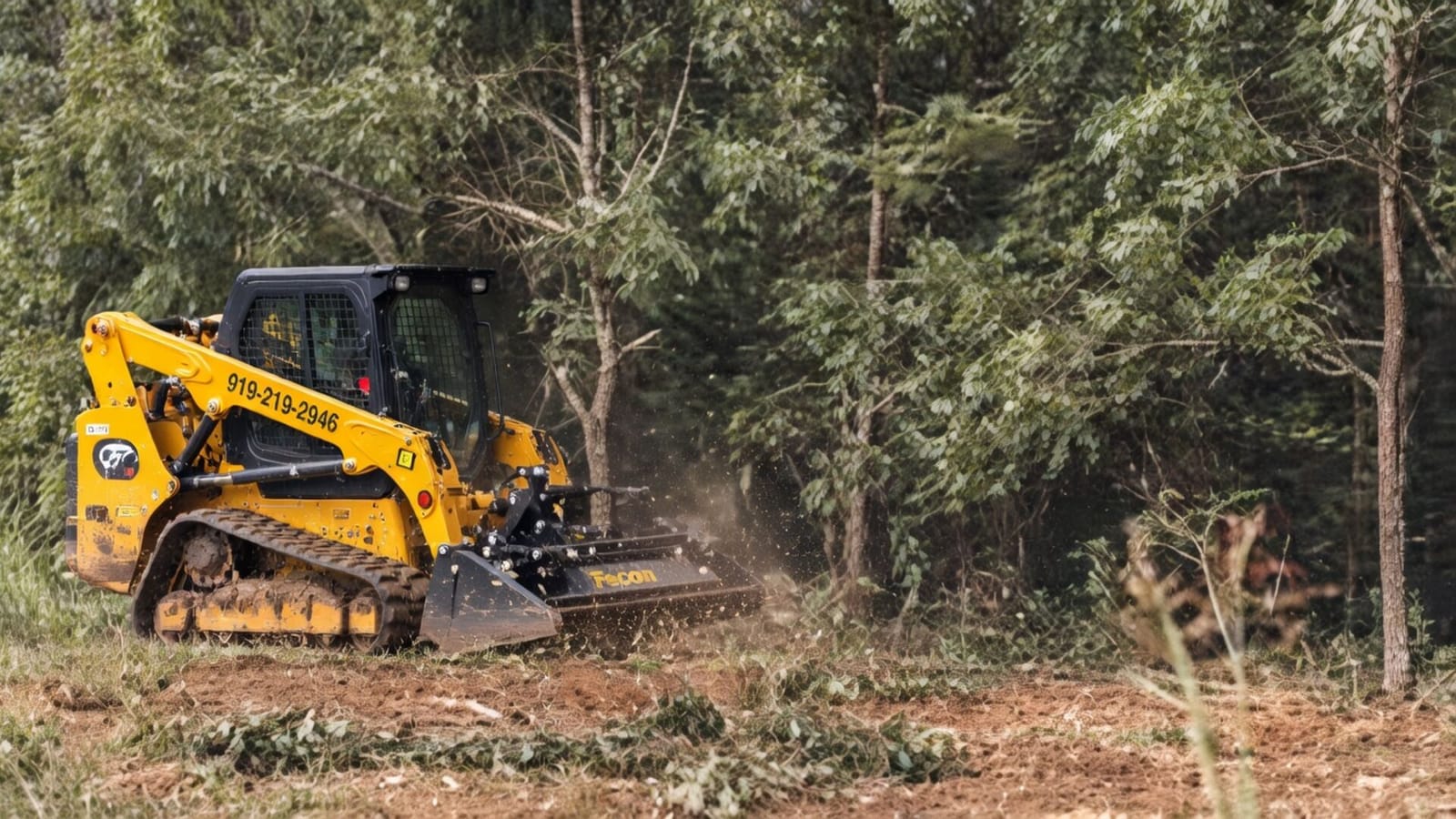 Cost Guide
Forestry Mulching Cost in Greenwood, AR (2026)
Forestry mulching in Greenwood, AR: $1,500 to $4,000 an acre. Turn a day rate into a per-acre price, plus slope and small jobs. Request a free quote.
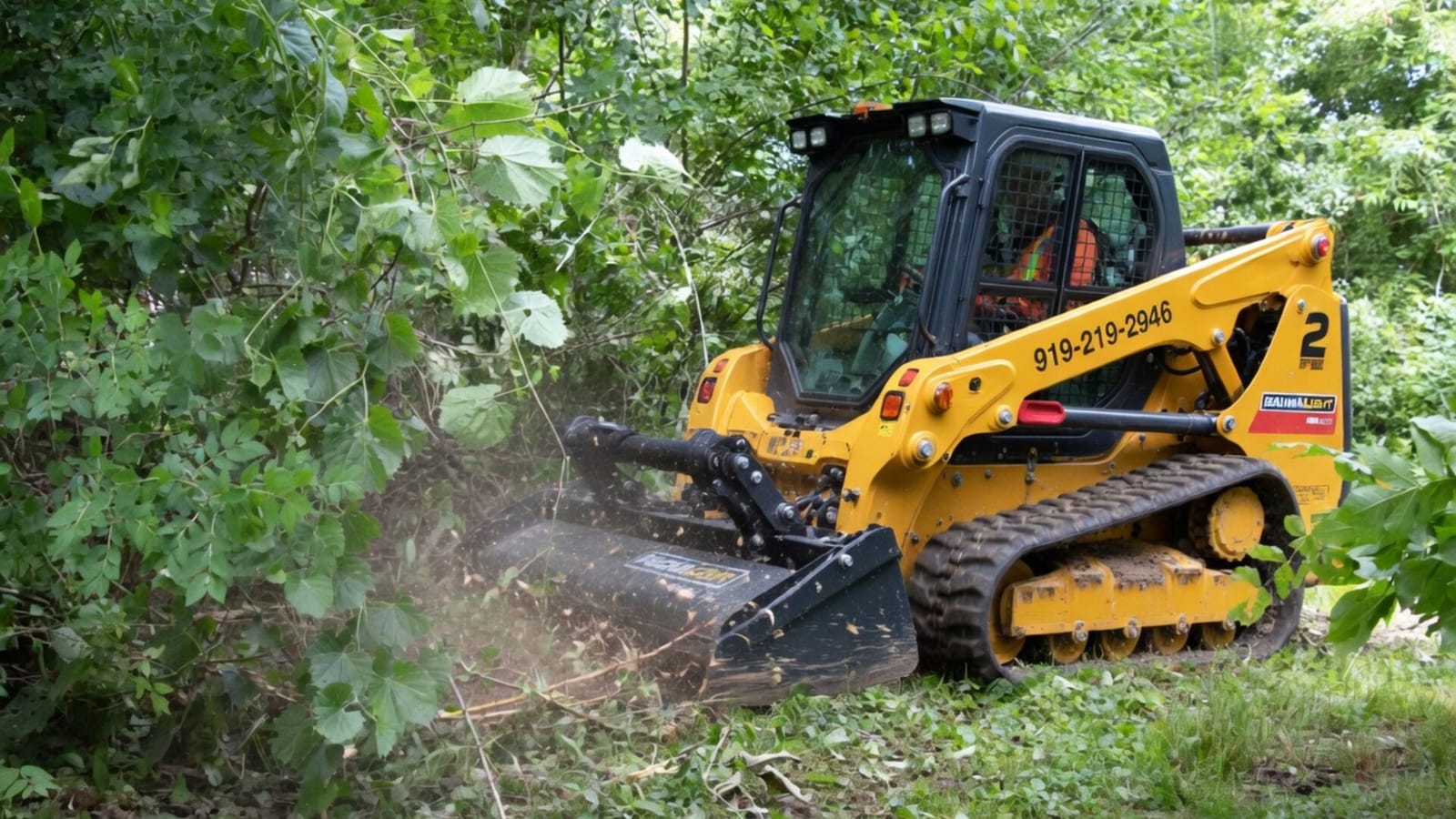 Guide
Bradford Pear Removal in Arkansas: Pasture Thickets and Cost
Bradford pear clearing in Arkansas costs $1,500 to $2,500 an acre for pasture edges and young thickets. Plan cutting and follow-up. Request a free quote.
Let's Get Started on Your Land
Request a free quote. We'll contact you to discuss your property, access, and the clearing you need.
Get a Free QuoteOr call us directly: (919) 525-3950