
Land Clearing Cost Per Acre in Arkansas (2026 Guide)
Cut Brush Team · September 23, 2026 · 7 min read

Land clearing in Arkansas generally costs $1,500 to $4,500 an acre. What is standing and what is under it decide where your tract lands.
At a glance:
- Fence lines, pasture edges, young cedar in grass: $1,500 to $2,500 an acre
- Mixed brush, small trees and closed cedar, mulched in place: $1,500 to $4,000 an acre
- Heavy timber cleared to a finish agreed in the quote: $2,500 to $4,500 an acre
- A house site (building spot, drive, utility corridor): $2,000 to $6,000 total
- Burn bans: county judges issue them, so burning piles depends on your county.
- Stormwater: clearing one acre or more falls under the state’s construction permit.
- Cedar: the cheap chemical treatment is not recommended once trees pass 12 feet, so bigger cedar has to be cut or mulched.
Request a free quote for land in North Central Arkansas around Batesville, Central Arkansas around Bryant, Northwest Arkansas around Bella Vista, White County around Beebe or anywhere else in the state, and our crew will contact you to talk through your property and the clearing you need.
The Short Answer, by What Is Standing
| What is on the acre | Per-acre range | Where you see it |
|---|---|---|
| Fence lines, pasture edges, young cedar in grass | $1,500 – $2,500 | Hay and pasture ground let go for a few seasons |
| Privet and understory beneath timber that stays | $1,500 – $3,500 | Pine and hardwood stands that have closed in underneath |
| Mixed brush, small trees and closed cedar, mulched in place | $1,500 – $4,000 | Old fields and woodlots unmanaged for ten years or more |
| Heavy timber cleared to an agreed finish | $2,500 – $4,500 | Building sites and tracts being opened to bare ground |
| House site, drive and utility corridor | $2,000 – $6,000 total | A house site cut out of a wooded parcel |
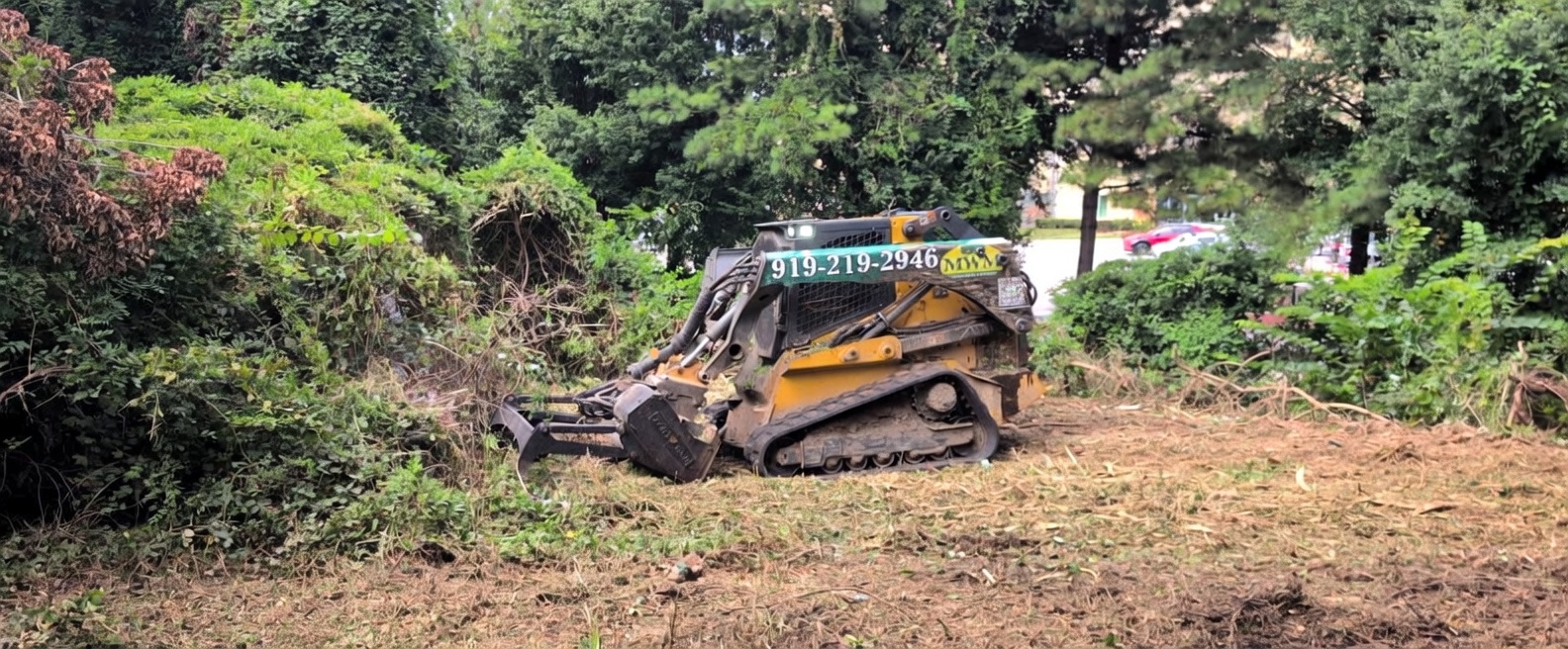
What the price includes. Forestry mulching grinds brush, small trees and stumps into mulch on site, with stumps flush with the ground and nothing hauled away. Full stump removal below grade and cut-and-haul for very large trees are discussed and priced in the quote. Grading and build pads are not part of our price: we clear to the ground so a builder can grade.
Where these numbers come from. These are our published ranges for Oklahoma City, East Texas around Tyler and Middle Tennessee around Nashville, which bracket Arkansas on three sides and share its cedar, privet and pine. Use them for budgeting.
All three markets carry a practical floor near $1,500 on small jobs, because hauling a tracked machine costs the same whether it works two hours or two days.
What Actually Moves the Number
What is under the surface. Ozark Highlands soils are often cherty, and chert at the surface wears and breaks mulching teeth. A careful operator slows down, and that time shows up in the price.
How big the cedar has grown. Every year of growth adds machine time, and the soil-applied cedar treatment is not recommended for trees taller than 12 feet. Cedar will not sprout from a stump cut below the lowest green branch, which is what a ground-level mulcher does. See our guides to clearing cedar around Oklahoma City and around Nashville.
Whether the brush resprouts. Privet is the opposite of cedar. Chinese privet may make up as much as 3 percent of forest biomass in Arkansas, and every control method needs follow-up treatment. One mulching pass is the start of a plan, so ask what happens the next season. Our East Texas privet guide covers the follow-up.
What happens to the material. Forestry mulching grinds everything where it stands, so there is no pile to load, haul or burn. Clear-and-haul still wins when stumps must come out for a foundation, but trucking is a real line item. For the lighter end of the scale, a bush hog on a tractor is often the cheaper tool.
Slope, access and the finish. Steep Ozark and Ouachita slopes slow every pass; in the Delta the problem is water, not grade. Name the finish (canopy kept, bare ground, or a maintenance pass) before collecting quotes.
Where in Arkansas Is Your Land?
North Central Arkansas around Batesville. Independence, Sharp, Izard, Jackson, Stone and Cleburne counties, where the Ozark foothills meet the White River and cedar is the usual problem. See land clearing around Batesville and the Batesville pricing guide.
Central Arkansas, Saline County. Around Bryant, Benton and the rest of Saline County, most jobs are wooded lots where the cost is in the understory and in which oaks and pines you keep. The Bryant land clearing page covers the local ground and the city stormwater permit, and the Bryant pricing guide lists the four per-acre bands.
Northwest Arkansas around Bella Vista. Benton, Washington and Carroll counties, where wooded lots sit on cherty limestone with common sinkholes and caves, and the city, the Property Owners Association and the state each have their own clearing rules. See land clearing around Bella Vista and the Bella Vista pricing guide.
White County around Beebe. Around Beebe, Searcy, Cabot and Lonoke, in White, Lonoke, Faulkner, Pulaski and Prairie counties, most clearing is pasture edges, fence rows and homestead tracts on silt loam that stays wet late in winter and into spring, so summer and fall are the firm months for a machine. Callery (Bradford) pear and Chinese privet fill the idle edges and resprout after one cut. See land clearing around Beebe and the Beebe pricing guide.
The Ozarks and Boston Mountains. Rocky, cherty ground and slope push toward the top of each band; young cedar in open grass stays near the floor.
The Arkansas River Valley. Much of the upland was cleared for pasture or hay, so the work is often fence lines and pasture edges, the lightest scope on the table.
The Ouachita Mountains. Folded ridges with loblolly and shortleaf pine. Slope and rock set the price as much as what is standing.
South Arkansas pine country. More than 75 percent remains wooded. Understory clearing beneath pine that is staying often lands in the lower half of the band.
The Delta. Flat, clayey, poorly drained soils. Wet clay ruts under a tracked machine, so schedules flex around rain.
Burning and Stormwater: What to Check Before Work Starts
Burning. County judges issue burn bans, and burning during one is a misdemeanor. Even with no ban, burning a ton or more of land clearing debris requires notice to the state forestry agency, and the landowner or their agent must be present. A quote that depends on burning depends on the weather and the county judge. Mulching never makes the pile.
Stormwater. The state’s construction stormwater permit covers clearing of one acre or more, or less when it is part of a larger common plan of development. From one to under five acres, coverage is automatic, but the notice must be posted and a stormwater plan kept on site. At five acres or more, a notice of intent must be filed at least ten business days before work begins. If you are clearing to build, settle your tier first.
Before work starts: if the plan involves burning, settle who checks for a county ban and files the notice.
Frequently Asked Questions
How much does it cost to clear one acre of wooded land in Arkansas?
Plan on $1,500 to $4,000 for a mixed wooded acre mulched in place, and up to $4,500 for heavy timber cleared to an agreed finish. A brushy acre of pasture edge can sit near $1,500.
Is forestry mulching cheaper than clearing and burning?
Usually, because one machine cuts and disposes of the material in one pass, with no burn bans or burn notice to deal with.
Does clearing land in Arkansas need a stormwater permit?
It can. The permit starts at one acre of disturbance, or less if the land is part of a larger common plan of development. Five acres or more means a notice of intent before work starts.
Will cedar grow back after it is cleared?
Not from the stump, if it is cut below the lowest green branch. Seedlings still arrive from nearby trees, so a light pass every few years beats letting a pasture close in.
Getting a Real Number
Ranges are for budgeting. The number you pay comes from someone standing on your ground.
Around Batesville, Bryant, Bella Vista, Beebe or anywhere else in Arkansas, request a free quote. Our crew will contact you to go over the property, the access, what you want the land to become and the finish you want. If you would rather talk it through, call (919) 525-3950.
For comparison with the state next door, see our Oklahoma cost per acre guide.
Sources
- Arkansas Game and Fish Commission, Ecoregions of Arkansas
- University of Arkansas Division of Agriculture, Pasture Weed Control in Arkansas
- University of Arkansas Division of Agriculture, invasive plant removal demonstration
- Arkansas Code § 20-22-302: notice for burning forest vegetation
- Arkansas DEQ, construction stormwater general permit ARR150000
More from the Cut Brush Blog
Keep reading for more tips and guides on land clearing.
 Cost Guide
Brush Hogging Cost Per Acre in Arkansas (2026)
Brush hogging in Arkansas runs $75 to $400 an acre with Cut Brush, set by how long the field has gone uncut. See what Ozark chert, briars and drought change.
 Cost Guide
Forestry Mulching Cost in Batesville, AR (2026)
Forestry mulching around Batesville, AR runs $1,500 to $4,000 per acre. How cedar size, chert and rock, slope and the road in move a quote on Ozark ground.
Cost Guide Forestry Mulching Cost in Arkansas (2026 Guide)
Forestry mulching in Arkansas runs $1,500 to $4,000 an acre with Cut Brush around Bella Vista, Batesville and Bryant. See what chert, cedar and pine change.
Comparing states? See land clearing costs by state.
Let's Get Started on Your Land
Request a free quote. We'll contact you to discuss your property, access, and the clearing you need.
Get a Free QuoteOr call us directly: (919) 525-3950