
Chinese Tallow Removal in Alabama: Plan, Sprouts, Cost
Cut Brush Team · October 31, 2026 · 7 min read

Chinese tallow, the popcorn tree, spread out of ornamental plantings, and it now fills ditches, fence rows and the edges of wooded lots across south Alabama.
Clearing it for good takes three things: opening the stand, treating the stumps or the sprouts through a licensed applicator, and walking the ground for several seasons. Thicket work on scattered tallow along a ditch or fence row typically costs $1,500 to $2,500 an acre, and a dense stand runs $1,500 to $4,000.
Where Tallow Grows in Alabama
Tallow occurs across the southern two thirds of Alabama and is on the state’s list of its ten worst invasive weeds. Loxley, Daphne and the rest of Baldwin County sit well inside that range, as do Mobile, Atmore and the Wiregrass around Dothan.
It is not a plant of one kind of ground. It invades stream banks, riverbanks and ditches as well as upland sites, and it grows in fresh and salty soils. It also tolerates flooding, drought and poor soil, which is why a vacant lot, an old pasture corner and a roadside ditch can all turn into the same thicket.
How to Recognize It
Tallow is easiest to spot from fall into winter. The leaves are broadly egg-shaped, two to three inches long, and turn yellow to red in autumn. By winter the dark seed capsules split open to show three white, wax-coated seeds that look like popcorn, which is where the name comes from. The seeds stay on the branches through early winter, so a bare tree hung with white dots is a strong sign of tallow. In early summer it carries slender yellow flower spikes.
How a Few Trees Become a Thicket
Seed does the first part. A young tree makes large seed crops by about age three, and the fruit is carried by birds and by moving water. A tallow on one side of a drainage ditch seeds the whole length of it downstream, and a neighbor’s untreated lot reseeds yours.
Roots do the second part. Tallow is an aggressive sprouter that regrows from both stumps and lateral roots. A single trunk becomes a clump of stems after it is cut, and shoots can come up some distance from the original trunk.
Left alone, an open lot or ditch edge fills with a wall of thin trunks, often under taller pines and oaks.
Why Cutting or Mowing Alone Falls Short
A saw, a mower or a bush hog makes the lot look clear for a season. Then the stumps and roots send up shoots, and the lot comes back as dense as before or denser. Because tallow sprouts from the stump and lateral roots, stem density can increase over time with repeated mowing, and a pasture mowed every summer can end up worse than it began.
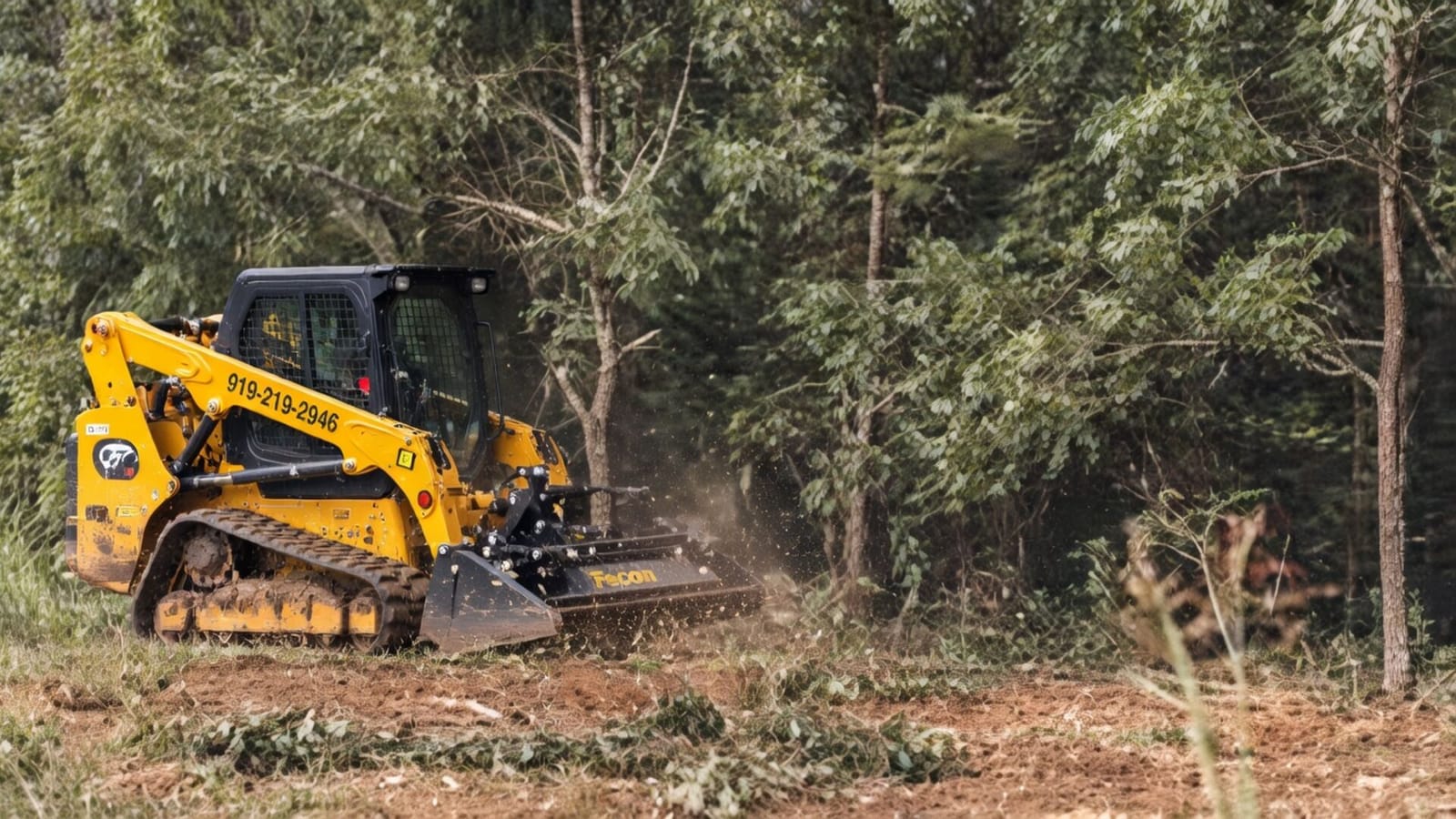
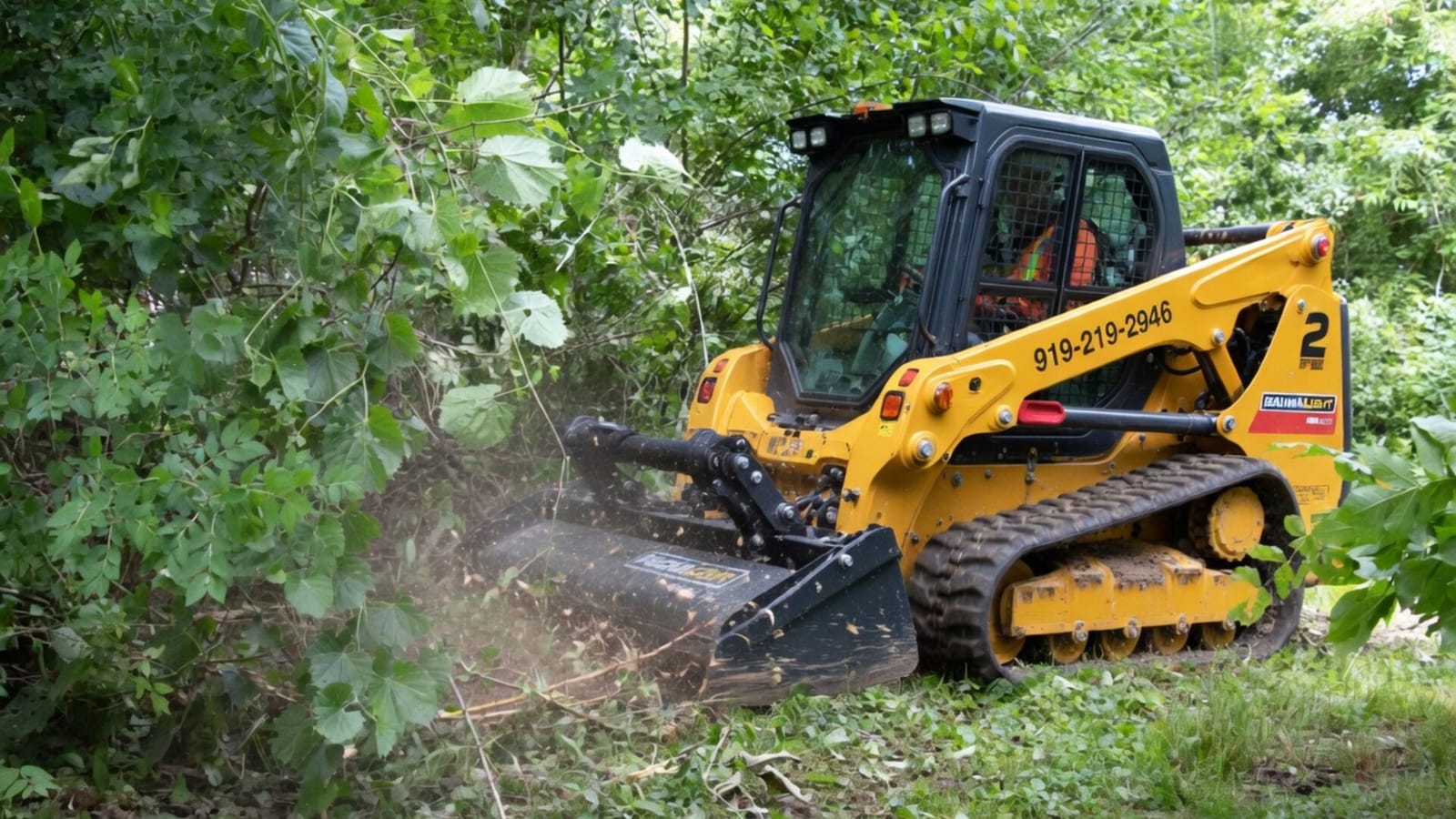
A forestry mulcher is a different tool, and a good first step. It opens a dense stand quickly, grinding trunks where they stand and leaving a chip layer with no pile to burn or haul. What it does not do is kill the roots, and follow-up herbicide treatment is still needed for adequate control, so the mulcher belongs at the front of a plan, not at the end of one.
A Removal Plan, Visit by Visit
- Walk the ground and mark the keepers. Walk the ditch lines, fence rows and lot edges, flag the oaks, pines and other trees you want left, and note any soft or standing-water corners the machine should stay out of.
- Pick the method for each stand. A few trees along a fence suit cutting with the stump treated right away. A solid thicket suits mulching with planned follow-up. One property can have both.
- Line up the applicator. Herbicide is a licensed applicator’s work, arranged by you and applied to the label; our crew does not apply it. Cut stumps are treated immediately after cutting, and a qualified service provider is the right person to choose among the herbicide options.
- Open the stand. Our crew mulches the thicket, works around every tree you flagged and leaves the chips where they fall. Nothing is piled, so there is nothing to burn.
- Treat the sprouts at the right time. Foliage sprays go on smaller plants from July to October, and the best window is late summer to early fall, before the leaves start to change color.
- Check back each season. Walk the ground every year for new shoots and seedlings. A treated lot beside an untreated ditch will keep getting seed, so this walk is part of the job, not an extra.
Mulching and treatment are two bills from two providers. Ask for them to be quoted as separate lines so you can see the whole plan.
Why Burning Is Not the Plan Here
Pushing tallow into piles and lighting them works against the calendar. Land-clearing burns are banned from May 1 to October 31 in Baldwin and Mobile counties, which is exactly when tallow is growing and sprouting. The rest of the year, the vegetation must be clean, burned on the land it came from, at least 500 feet from the nearest occupied house, and lit between 8 a.m. and 3 p.m. Mulched tallow leaves no pile, so none of those rules come into the job.
Tallow Around Mobile Bay, Baldwin County and Beyond
Loxley, Daphne and Baldwin County. Wooded lots are being opened for houses here, and each one sits beside a ditch or creek that can carry seed. The plan that fits a homesite is to open the thicket before the builder starts, then walk the lot and cut sprouts while they are soft. Our Loxley land clearing page lists the towns and the permit offices, and the Loxley pricing page has the tallow and thicket rate.
Mobile, Prichard and Mobile County. Lots near creeks and low ground can be soft. The machine works firm ground, so a soft corner may wait for a dry spell or be left out of the quote.
Atmore, Flomaton and the inland counties. Tallow along a fence line or ditch is the cheapest stage to clear, before the line thickens into a stand.
The Wiregrass. Around Dothan, the same plan applies to tallow in wet ditches and fence rows. Our Dothan land clearing page covers that ground.
What Tallow Removal Costs
Tallow along a ditch, fence line or lot edge, worked around the trees you keep, typically costs $1,500 to $2,500 an acre. A single row is priced as the share of an acre it covers. A dense stand over soft ground falls in the $1,500 to $4,000 forestry mulching band, and clearing a whole parcel to an agreed finish can run to $4,500.
| Tallow work | Cost | Notes |
|---|---|---|
| Scattered tallow along a fence, ditch or lot edge | $1,500 – $2,500 per acre | A row priced by the area it covers |
| Dense stand over firm or soft ground | $1,500 – $4,000 per acre | The forestry mulching band |
| One short row or a few trees | Minimum charge of about $1,500 | The floor for small jobs, billed instead of an acre rate |
| A return visit to cut sprouts | Priced per visit | Listed on its own line, booked only if you want it |
| Stump and sprout treatment | Priced by the applicator | Herbicide is the applicator’s work, not ours |
On every visit, tallow, brush, small trees and stumps become mulch on site, stumps finish flush with the ground and nothing is hauled away. Full stump removal below grade, and cutting and hauling very large trees, are discussed and priced in the quote. Grading and build pads are not part of our price: we clear to the ground so a builder can grade.
Stand density, the trees we work around, soft ground and how far apart the patches are decide where a job falls in its band. Our Loxley forestry mulching cost guide compares hourly and per-acre quotes, and the Alabama land clearing cost guide covers burning and stormwater across the state.
Frequently Asked Questions
Can I just mow tallow instead?
Mowing opens the ground for a season, then the stumps and roots sprout. Repeated mowing can leave more stems than you started with.
Will one pass with a mulcher clear it?
It opens the stand, but the roots survive. Plan on a return cut for the sprouts and a licensed applicator’s treatment.
When is the best time to treat sprouts?
Late summer into early fall, before the leaves change color. Cut stumps are treated right after cutting, whatever the season.
Can I burn the tallow I cut?
Not from May 1 to October 31 in Baldwin or Mobile County. The rest of the year the burn has to meet the distance and time rules, and mulching avoids the question.
Get Your Lot Back From Tallow
Request a free quote and we’ll contact you to discuss your property, access and the clearing you need. Your quote lists the first pass and any return cut as separate lines, so you can see what each season costs.
More from the Cut Brush Blog
Keep reading for more tips and guides on land clearing.
 Cost Guide
Forestry Mulching Cost in Loxley, AL (2026)
Forestry mulching around Loxley, AL: $1,500 to $4,000 an acre. Hourly bids compared, why burning is off the table, and wet ground. Request a free quote.
 Guide
Bradford Pear Removal in Alabama: Clearing Wild Thickets
Bradford pear removal in Alabama: clearing wild Callery pear from fields and fence rows at $1,500 to $2,500 an acre, then the sprouts. Request a free quote.
Let's Get Started on Your Land
Request a free quote. We'll contact you to discuss your property, access, and the clearing you need.
Get a Free QuoteOr call us directly: (205) 407-1661