Three Things That Decide a Dothan Job
Cogongrass travels on machines. The Alabama Forestry Commission lists
cogongrass as a federally listed noxious weed and reports it in all 67 Alabama counties. It
spreads through creeping rhizomes, and Alabama Extension advises cleaning equipment so those
rhizomes are not carried to the next site, notes that disking generally does not control it,
and warns that fire favors it. For a clearing job that means three things: patches get
flagged at the walk-through, they are worked last or left alone for herbicide treatment, and
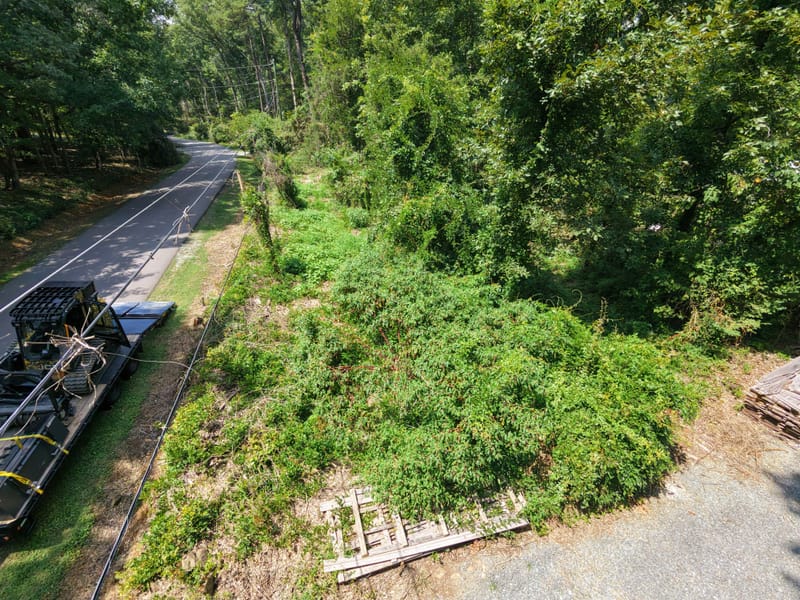
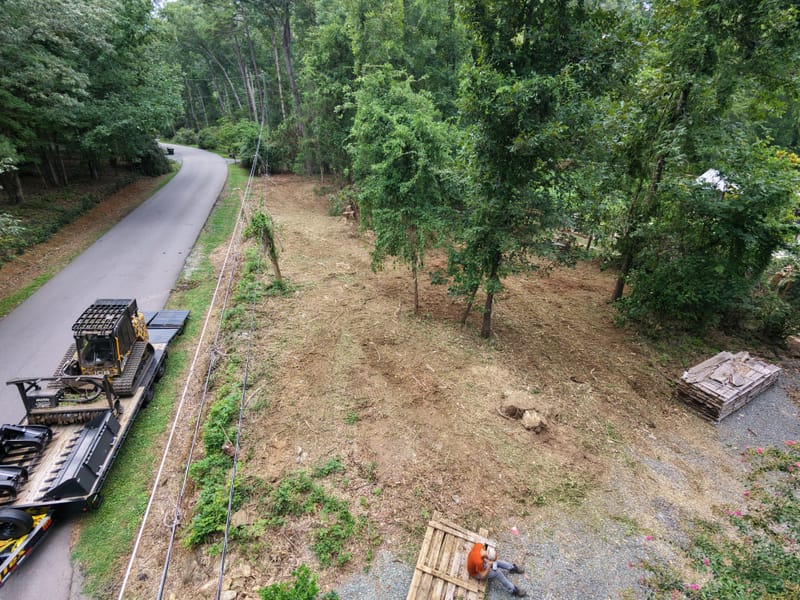
the machine is cleaned before it rolls onto your land and before it leaves. A mulching head
does not kill the plant; used carelessly it spreads it. The full order of work is in our
cogongrass and
land clearing guide.
Inside the city, commercial clearing needs a permit at any size. Dothan's
stormwater ordinance, section 83-22, requires a city permit before land disturbing activity
for non-residential development regardless of size, and for other work reaching an acre or
part of a larger plan that does. Clearing is named in the definition. The application carries
an erosion control plan in the format ADEM uses, and the city can require a bond of up to
$5,000 per acre. Agriculture, silviculture and minor residential work are excepted. Requirements vary by
parcel, scope and jurisdiction, and the governing authority makes the determination. The
sequence is in the
Dothan and Houston
County permit guide.
A burn pile in town needs a machine of its own. Under section 38-32 of the
Dothan code, material grown on a tract may be burned only in an air curtain destructor or
other approved device, at a site the fire official approves, with an open burning permit, on
days and hours the fire official sets. That is current as of September 2026. It changes the
arithmetic of a quote directly: renting and staging a burner, or loading and hauling, both
cost more than grinding the material where it stands. Outside the city the state burn permit
still applies above a quarter acre.