Clearing Eastern Red Cedar Around Nashville
Cut Brush Team · September 11, 2026 · 8 min read
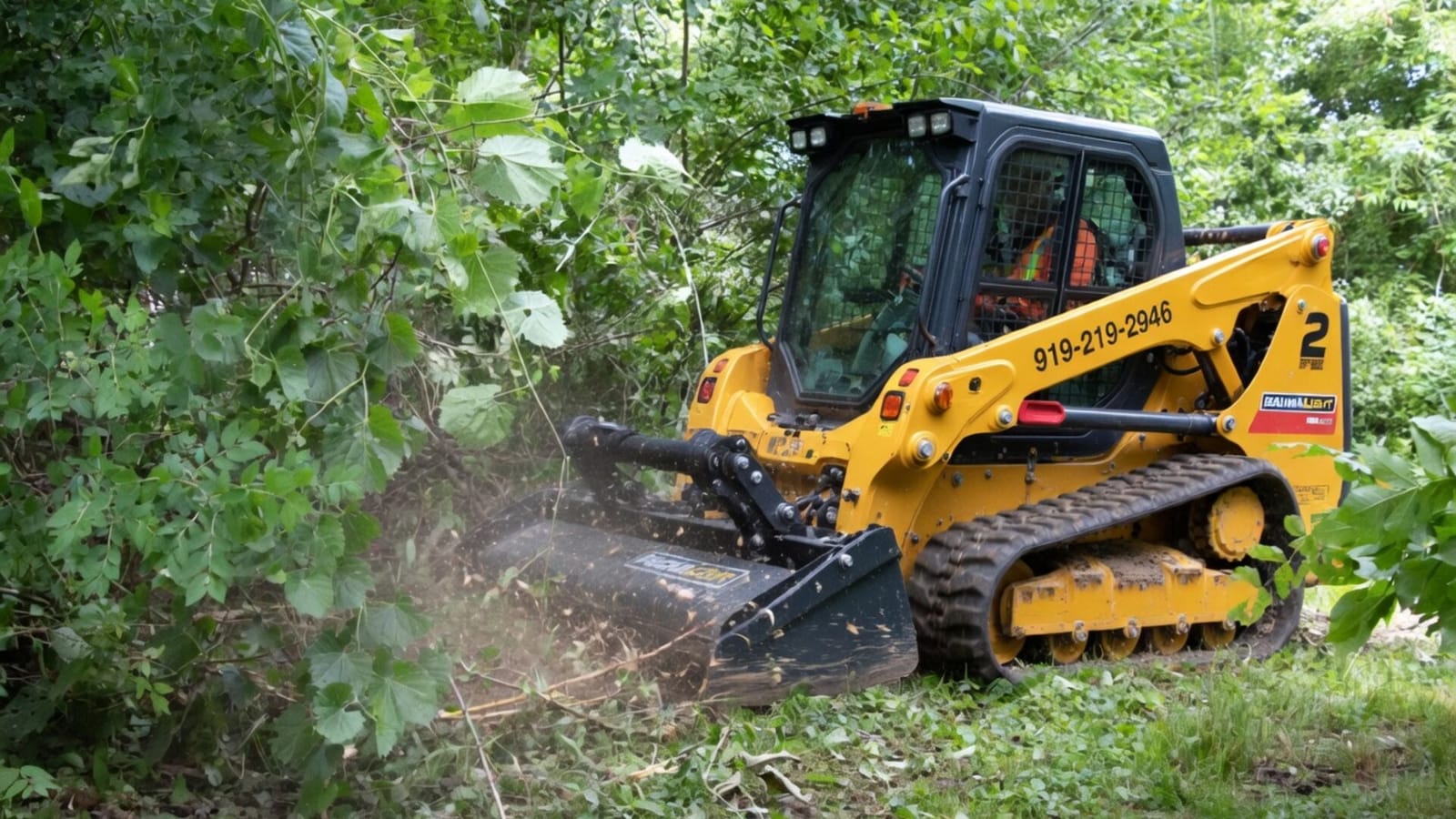
If a Middle Tennessee field stops being grazed, hayed or burned, cedar takes it. Eastern red cedar invades open areas that have been disturbed by fire or cleared for agriculture (University of Tennessee), and it holds hardest on exactly the poor, thin, rocky ground the Nashville Basin is made of. The useful news is the part almost nobody tells you: cedar does not resprout from a cut stump. Take it off properly and it is off. The shrubs growing underneath it are a different story, and that is the part that decides whether your pasture stays open.
Why Does Cedar Take Over Middle Tennessee Land So Fast?
Because the ground here suits it and almost nothing else competes.
The Central Basin is a limestone lowland, roughly 120 miles long, sitting 300 to 400 feet below the Highland Rim around it, with karst, sinkholes and outcropping rock throughout (USGS). Soil over that bedrock is often very thin, and in places it has eroded away completely, leaving exposed weathered slabs and gravel (TennGreen).
That is punishing ground for most trees and comfortable ground for a juniper. Eastern red cedar is not a true cedar at all, it is Juniperus virginiana, and it tolerates droughty, alkaline, shallow soils that oak and hickory struggle on. Add birds, which spread the seed along every fence line and tree row they perch on, and you get the pattern every landowner here recognises: cedar arriving first along fences and field edges, then marching inward.
The other half of the explanation is fire. The Central Basin’s cedar glades, a habitat concentrated in this region and supporting more than two dozen endemic or near endemic plants, are held open by shallow soil and historically by fire. Woody encroachment is the main way they degrade when fire is absent (Tennessee Encyclopedia). Land management agencies working glade habitat deal with the same problem by mulching the encroaching cedar. Your pasture is the agricultural version of that story.
Is Eastern Red Cedar an Invasive Species?
No, and this trips people up. Cedar is native to Tennessee and has been here far longer than any of the plants on the state’s prohibited list. Tennessee prohibits the propagation and sale of thirteen plants including bush honeysuckle, Chinese and European privet, multiflora rose and autumn olive (TN Dept of Agriculture). Cedar is not among them.
What cedar is instead is an aggressive native encroacher: a species that was always here but that spreads far beyond its historical range once grazing, mowing and fire stop. That distinction matters practically, because it means nobody is going to tell you that you must remove it, and it means the decision about how much to take is yours. Plenty of landowners keep cedar deliberately, for windbreaks, for winter cover, for screening along a road. The problem is rarely cedar existing. It is cedar closing.
How Do You Actually Clear Cedar?
There are three honest options and one very common mistake.
Forestry mulching takes standing cedar and the brush under it and grinds it in place, leaving the material as a mat. For scattered encroachment on a field edge or a thickening pasture this is usually the efficient answer, because the machine handles stem and brush in one pass and there is no pile to deal with afterwards. Cedar mulches cleanly, and the stems are typically well sized for a mulching head.
Cut and treat by hand works on small numbers. Cedar needs to be cut below the lowest live branch for a complete kill, which is the one technical detail worth remembering. Cut above a live limb and the tree can carry on from what is left. Cut below and it is finished, with no herbicide needed on the stump, which is unusual and genuinely convenient.
Heavy clearing with grubbing pulls the root ball out. It is appropriate when the ground is going into row crops or a building pad, and it is a bigger scope with a bigger number and a permit question attached.
The mistake is taking the cedar and leaving everything else. Which brings us to the part that decides whether the job holds.
What Comes Back After the Cedar Is Gone?
Cedar does not, but what was growing under it usually does.
Chinese and European privet is among the most common invasive shrubs in Tennessee forests and root sprouts vigorously after cutting. Bush and Amur honeysuckle behave similarly. Callery or Bradford pear is the third one to watch on field edges: its offspring revert to thorny wild types and form thickets (UT Arboretum).
So the realistic sequence on a Middle Tennessee pasture edge is this. The cedar comes off and stays off. The privet and honeysuckle underneath come back from the roots, faster than before because they now have light. If nothing addresses them, in five years the edge is closed again, just with different plants.
That is why a good quote on cedar ground separates the pass from the plan. The pass is the machine work. The plan is what happens to the resprouting shrubs: follow-up treatment, a maintenance pass on a schedule, or getting a competitive grass established quickly enough to shade them out. All three cost more up front than clearing and walking away, and all three hold far better.
What Do You Do With the Material Around Nashville?
This depends on your address more than most people expect, and inside Davidson County the answer is unusually restrictive.
Burning debris is prohibited in all of Davidson County, including leaves, brush, trash and debris, with one exception for land being cleared for development that holds permits from both the Health Department and the Fire Department (Metro Nashville). Asked whether a resident can get a permit to burn brush or leaves in a yard, the Fire Marshal’s Office answers no (Metro Fire Marshal FAQ).
Outside Davidson, in Williamson, Rutherford, Wilson, Sumner and Maury, the Tennessee Division of Forestry requires a free burn permit for debris burning from October 15 through May 15, and counties and municipalities may impose stricter rules that supersede the state programme (TN Division of Forestry). Requirements vary by parcel, scope and jurisdiction. Cut Brush can flag what commonly applies and help identify the right office. The governing authority makes the determination.
Cedar is resinous and burns hot, which is exactly why fire departments are careful about it. Where burning is not available, mulching in place is usually the simplest answer, because it turns the disposal problem into ground cover instead of a haul.
Does Clearing Cedar Need a Permit?
It can, and the trigger is about ground disturbance rather than trees.
Metro Water Services requires a grading permit once work disturbs more than 10,000 square feet of land or removes, deposits or disturbs more than 100 cubic yards of material. Tree cutting at or above existing ground level, and logging that leaves the stump, ground cover and root mat intact, are listed as not needing that grading permit, although a tree removal permit can still apply (Metro Water Services).
For cedar work that distinction is genuinely useful: a mulching pass that leaves the root mat in place sits on a different footing from grubbing the stumps out. Above one acre the state’s construction stormwater permit applies regardless of method. The detail is in our Nashville and Davidson County permit guide.
One more caution specific to this region. Cedar glades in the Central Basin carry rare and protected plants, including Pyne’s ground plum, a federally endangered species endemic to glade habitat on thin bedded limestone in the Stones River basin across Davidson, Rutherford and Wilson counties. If your ground has open limestone flats with unusual low-growing plants on them, that is worth a conversation with the state before clearing, not after. Whether any specific parcel holds glade habitat is a determination for the governing authority, not something a contractor decides.
Frequently Asked Questions
Will cedar grow back after I cut it?
Not from the stump, provided it was cut below the lowest live branch. Eastern red cedar is a conifer that does not resprout the way privet and honeysuckle do. What does come back is seedlings from the surrounding seed source, so open ground still needs grazing, mowing or a maintenance pass to stay open.
How much does cedar clearing cost around Nashville?
Cedar and understory work on a pasture edge typically runs $1,500 to $2,500 per acre, with a practical project floor near $1,500 that covers getting the machine to the property. Heavier stands and whole-tract work price higher. Full ranges are on the Nashville pricing guide, and the forestry mulching cost breakdown goes into what moves the number.
Is it better to clear cedar in winter?
Dormant season work has practical advantages: drier ground on the rim edge, better visibility through the understory, and easier identification of what is actually growing under the cedar. Cedar itself is evergreen so it can be worked year round. Outside Davidson County the burn permit season also runs October 15 to May 15, which matters if burning is part of your plan.
Should I keep any of the cedar?
Often yes. Cedar makes a genuinely good windbreak and winter cover for wildlife, and a row along a boundary or north-facing edge is worth keeping. The usual approach is taking it out of the open ground and off the glades while leaving deliberate blocks where it earns its place. Decide that before the machine arrives, because it is easy to mark and hard to undo.
Can a mulcher handle large cedar trees?
Up to a point. Mulching suits brush and small to medium stems; a mature cedar with a large trunk is tree work rather than mulching. On mixed ground the practical split is mulching the encroachment and handling the few large stems separately, and that gets sorted at the walk-through.
Get Your Middle Tennessee Cedar Cleared Properly
Cedar is one of the few clearing problems that genuinely stays solved, as long as the work goes below the lowest live branch and the resprouting shrubs underneath are part of the plan rather than an afterthought. What decides the job here is how thin the soil is, how much rock is in it, and what your address lets you do with the material.
See what the work costs on the Nashville pricing guide, read the local conditions on our Nashville land clearing page, then request a free quote and we will walk the ground with you.
More from the Cut Brush Blog
Keep reading for more tips and guides on land clearing.
 Guide
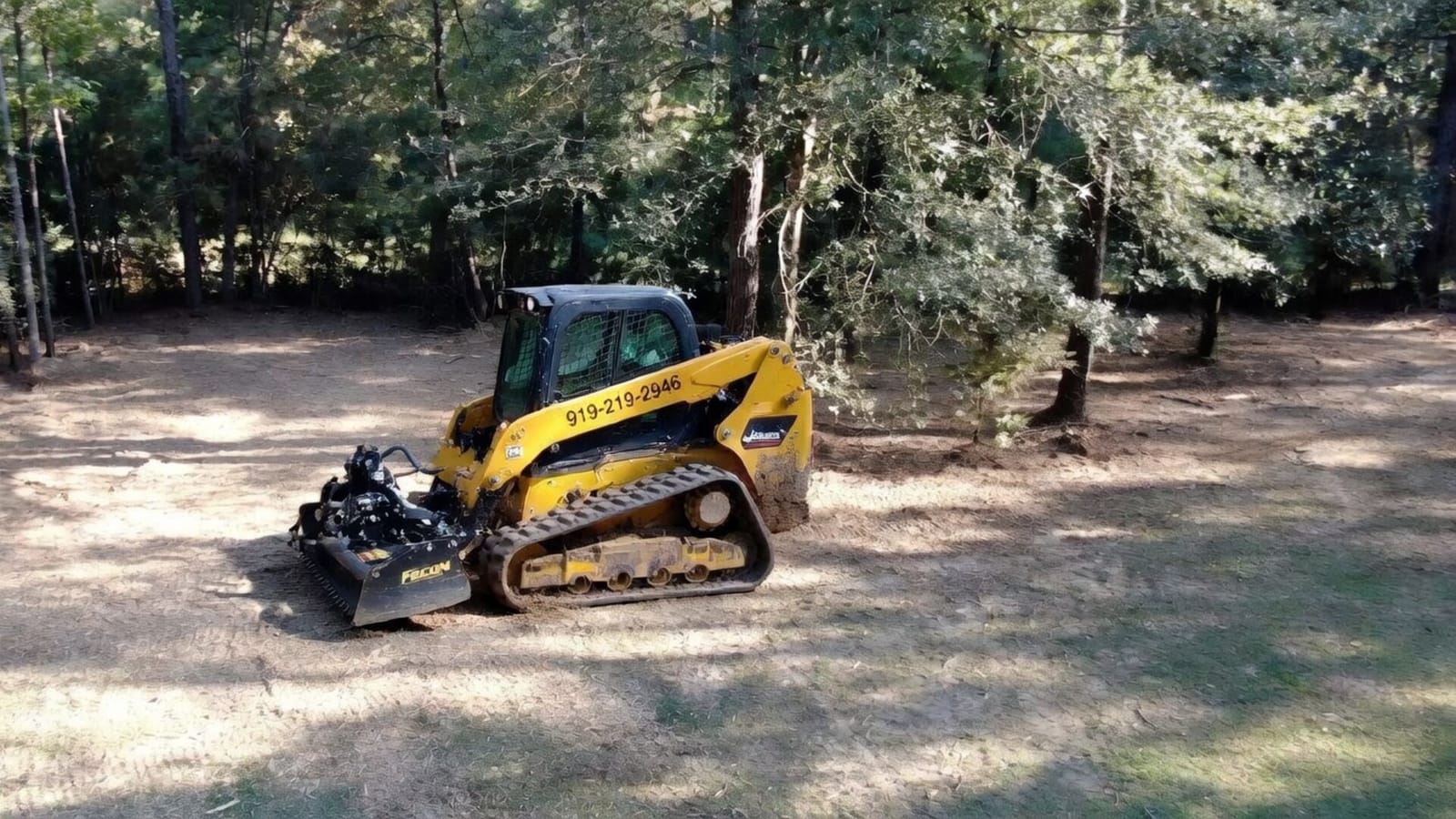
Guide Land Clearing Permits in Nashville & Davidson County
Nashville needs a grading permit once clearing disturbs 10,000 square feet or 100 cubic yards. Here are the thresholds, the offices and the burn rules.
 Cost Guide
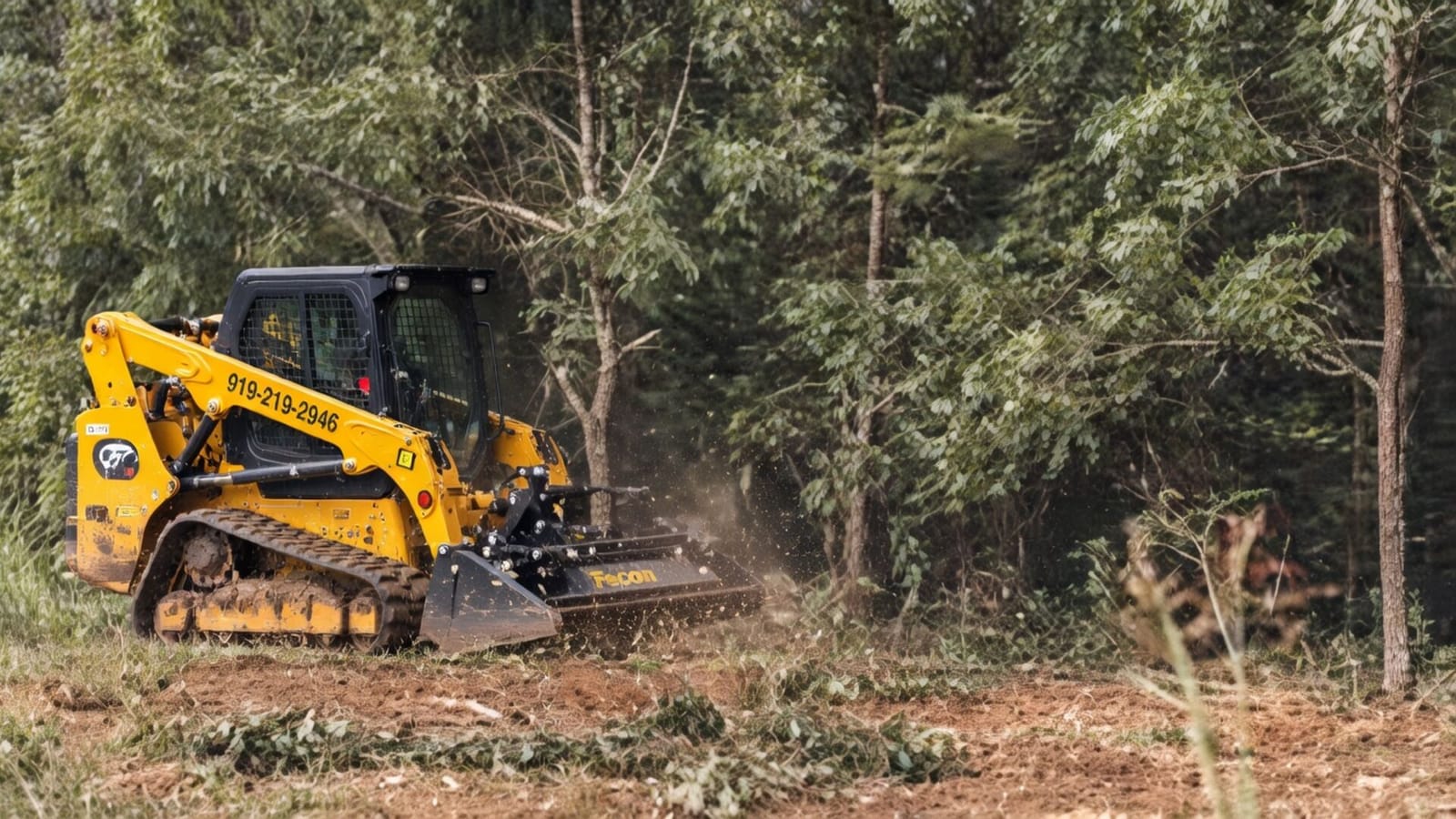
 Forestry Mulching Cost in Nashville, TN (2026)
Forestry mulching around Nashville runs $1,500 to $4,000 per acre. See what shallow limestone, brush type and Davidson County's burn ban do to the number.
Guide What Is Forestry Mulching? A Complete Guide
What is forestry mulching? See how a forestry mulcher grinds trees and brush into mulch in one pass, what it handles, and when to use it. Get a free estimate.
Ready to Get Started on Your Land?
Get a free, no-obligation estimate for property in Nashville & Middle Tennessee.
Get Your Free QuoteOr call us directly: (919) 525-3950