Forestry Mulching Cost in Nashville, TN (2026)
Cut Brush Team · September 11, 2026 · 9 min read
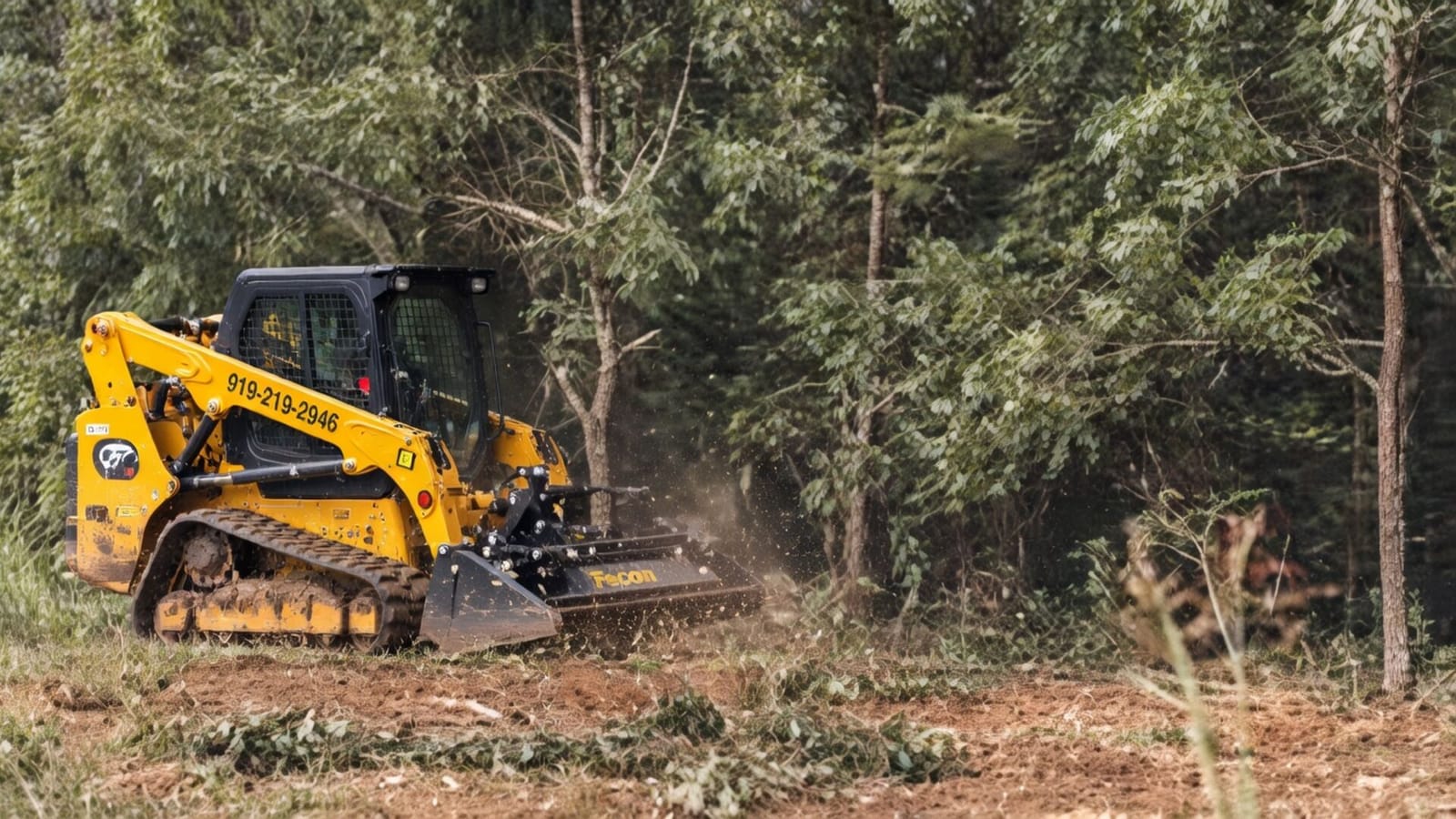
Forestry mulching around Nashville runs $1,500 to $4,000 per acre, and where your parcel lands inside that band has less to do with acreage than with two local facts most quotes never explain. The first is rock: the Central Basin is a limestone lowland, and across much of Davidson, Rutherford and Wilson the soil over it is thin enough that a mulching head is working at or near bedrock. The second is disposal. Burning debris is prohibited across all of Davidson County, so the question of what happens to the material is settled before the machine is chosen, not after.
This guide breaks down what a mulching number is actually made of here, where it diverges from the national calculators, and when mulching is the wrong purchase.
What Does Forestry Mulching Cost Per Acre Around Nashville?
Most mulching work quotes between $1,500 and $4,000 an acre. Light regrowth on workable ground sits near the floor. Heavy stems, tight work around trees you want kept, and shallow rock push toward the ceiling.
| Condition | Typical range | What the machine is doing |
|---|---|---|
| Light brush and saplings, open ground | $1,500 – $2,000 / acre | One fast pass, little maneuvering |
| Mixed understory beneath standing timber | $2,000 – $3,000 / acre | Working around keeper trees, slower lines |
| Heavy stems, cedar thickets, closed canopy | $3,000 – $4,000 / acre | Repeat passes, larger material, more wear |
| Whole-tract clearing with a named finish | $1,500 – $4,500 / acre | A different scope entirely, see below |
A practical floor near $1,500 per project applies regardless of size, because hauling a tracked machine to your parcel costs the same whether it cuts for one hour or eight. On small parcels the sensible move is bundling a fence line, a pasture edge and a brush patch into a single visit.
For third party context rather than a Cut Brush figure, published guides put general land clearing around this metro at roughly $1,500 to $5,000 per acre (landclearingdb) and statewide at $1,300 to $4,500 (OWNR OPS). Those are other people’s numbers for a broader scope; the ranges above are ours for mulching specifically.
Why Is Rock the Biggest Variable in Middle Tennessee?
Because the Nashville Basin is made of it. The Central Basin is an elliptical limestone lowland sitting some 300 to 400 feet below the Highland Rim that encircles it, with karst, sinkholes, caves and outcropping rock across the region (USGS). The soil over that bedrock is often very thin, and in places it has eroded away entirely, leaving exposed weathered slabs and gravel (TennGreen).
For a mulching head this matters in a very direct way. Teeth that touch rock wear fast and can chip, so an operator working shallow ground has to run the head higher and slower, which means more passes for the same finish. It also changes what “stumps ground flush” can mean: where bedrock is inches down, flush is whatever the rock allows.
Move west and south toward the rim edge, into western Williamson and Maury, and the ground deepens, softens and holds more water. That is the split that runs through this territory, and it is why two ten acre parcels the same distance from downtown can price differently by a thousand dollars an acre. A per-acre figure pulled from a national calculator has no way to know which side of it you are on.
What Does Davidson County’s Burn Ban Do to the Price?
It removes the cheapest disposal option, which is why mulching so often wins here on arithmetic rather than preference.
Metro states plainly that burning debris is prohibited in Davidson County, and that this includes leaves, brush, trash and debris. There is one exception: “areas that are being cleared for development, if they obtain a permit from the Health Department and the Fire Department” (Metro Nashville). Asked directly whether a resident can get a permit to burn brush or leaves in a yard, the Fire Marshal’s Office answers no (Metro Fire Marshal FAQ).
Step outside the county and the rule changes rather than disappears. The Tennessee Division of Forestry requires a free burn permit for debris burning from October 15 through May 15, and notes that some counties and municipalities impose stricter rules that supersede the state programme (TN Division of Forestry).
So the practical comparison on a Davidson County job is not mulching against burning. It is mulching against cutting, piling, loading and hauling to a disposal site. Mulching leaves the material on the ground as a mat and skips all of that, which is where the saving sits. On a Williamson or Wilson County parcel in the permit season the comparison is genuinely open, and it is worth running.
Mulching or Clearing: Which One Are You Actually Buying?
This is the single most common reason two quotes look different, and it is worth being precise about.
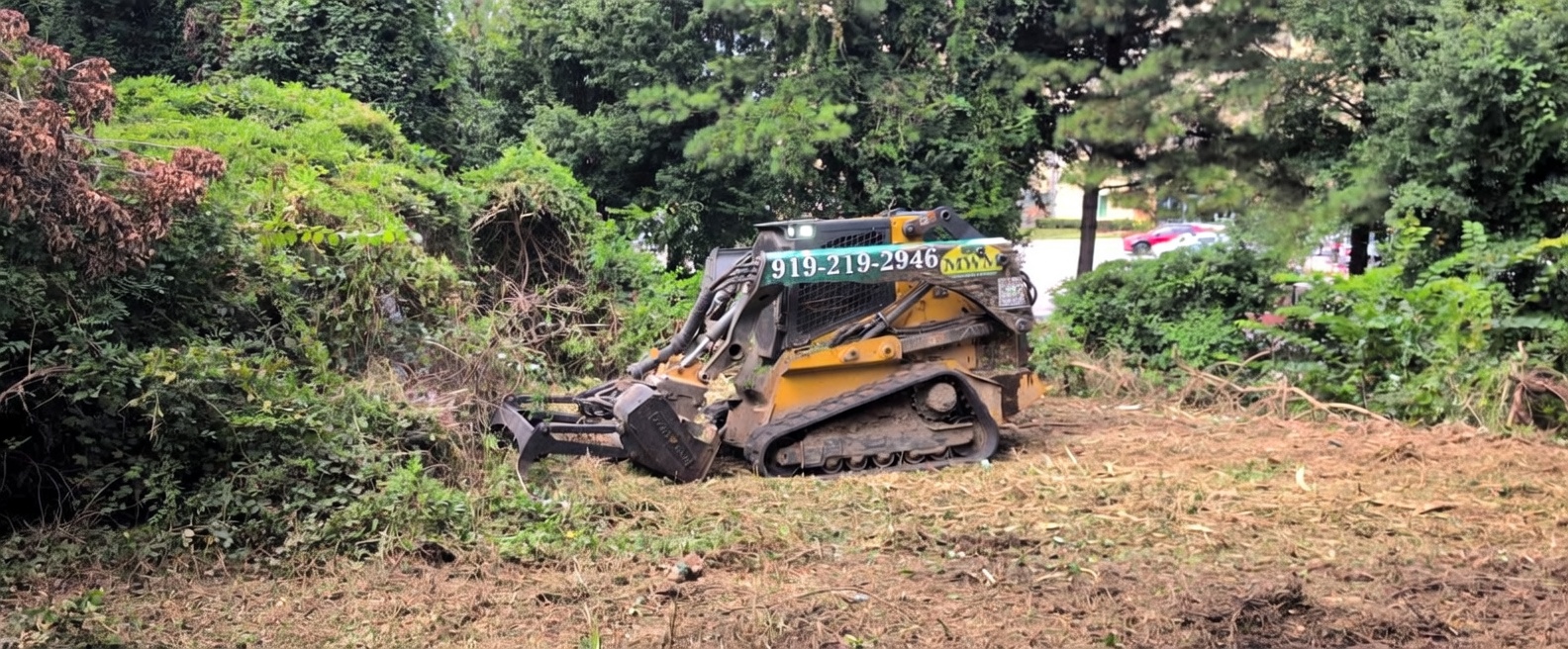
Forestry mulching is one tracked machine grinding standing brush and small trees in place. Stumps are ground flush rather than pulled, the material is left as a mat, and the ground is neither graded nor build ready. It is the right purchase for opening understory, taking back a pasture edge, reclaiming a fence line, or making a tract walkable and usable.
Land clearing is whole-tract work whose finish gets named in the quote: whether stumps are grubbed out, whether material is hauled off, whether a pad is graded. It runs $1,500 to $4,500 an acre here and it is a different job, not a premium version of the same one.
If you need a building pad, a drive or utility runs, mulching alone will not get you there and nobody should sell it to you as though it will. Full ranges for every service are on the Nashville pricing guide.
Does the Kind of Brush Change the Number?
Yes, and mostly through what happens after the machine leaves.
Eastern red cedar is the signature woody encroacher on basin ground, and it has one very useful property: it is a conifer that does not resprout from a cut stump. Cedar cleared properly is cleared. Chinese and European privet is the opposite, root sprouting vigorously after cutting, and bush honeysuckle behaves much the same way. Tennessee prohibits the propagation and sale of thirteen plants including bush honeysuckle, Chinese and European privet, multiflora rose and autumn olive (TN Dept of Agriculture).
A pasture edge carrying mostly cedar is a one-pass job. The same edge with privet underneath is a pass plus a plan, and the honest quote separates the two so you can see which you are buying. There is more on the cedar side of this in our guide to clearing eastern red cedar around Nashville.
Do Permits Change What You Pay?
They change the schedule more than the rate, but a job that starts before the paperwork is settled is a job that stops.
Metro Water Services requires a grading permit once work disturbs more than 10,000 square feet of land, a little under a quarter acre, or removes, deposits or disturbs more than 100 cubic yards of material. Metro separately lists tree cutting at or above existing ground level, and logging that leaves the stump, ground cover and root mat intact, as work that does not need that permit, though a tree removal permit can still apply (Metro Water Services).
Read that carefully and you will see why the method choice matters twice here: a mulching pass that leaves the root mat intact and a grub-and-grade on the same parcel can sit on opposite sides of a permitting line.
Above one acre the state’s construction stormwater permit applies on top, with a fee of $250 for one to five acres and $1,000 for five to twenty acres, and a Notice of Intent filed at least 30 days ahead (TDEC). Those are agency fees, not Cut Brush charges.
Requirements vary by parcel, scope and jurisdiction. Cut Brush can flag what commonly applies and help identify the right office. The governing authority makes the determination. The full picture is in our Nashville and Davidson County permit guide.
Frequently Asked Questions
How much does it cost to mulch one acre near Nashville?
Budget $1,500 to $4,000 for an acre of mulching, with light regrowth at the floor and heavy stems or shallow rock near the ceiling. A single acre will usually price close to the project floor because mobilization is the same whatever the size, so bundling work into one visit gets you more for the money.
Is forestry mulching cheaper than traditional land clearing here?
Usually, and the gap is wider in Davidson County than elsewhere because burning is off the table and hauling is the alternative. Mulching leaves the material on site as a mat, which removes the loading and hauling line from the quote entirely. It only stays cheaper if mulching actually gets you the finish you need.
Does mulching leave ground ready to build on?
No. Mulching grinds material in place and leaves a mat; the ground is neither graded nor build ready, and stumps are ground flush rather than pulled. If a pad, drive or utility run is the goal, that is clearing and site work, and the finish should be named in the quote before anyone starts.
Will the mulch mat cause problems?
Generally it helps, holding soil through rain and suppressing some regrowth as it breaks down. On thin basin soils that erosion control is worth more than it is on deep ground. Where a mat would be too deep for what you plan to do next, say pasture reseeding, that gets discussed at the walk-through rather than discovered afterwards.
How much does clearing cost elsewhere in Tennessee?
Our Tennessee cost per acre guide covers how vegetation density, slope and rock move a number across the state. Middle Tennessee’s distinguishing features are how often shallow limestone is the deciding factor and how often the disposal rule, rather than the vegetation, decides which method makes sense.
Can I get a price without a site visit?
You can get a rough range from acreage and photos. A firm written number takes a walk-through, particularly on basin ground where rock depth does not show up in an aerial view and is the thing most likely to move the price.
Get a Real Forestry Mulching Cost for Your Nashville Property
A per-acre band is a budgeting tool, not a quote. What turns forestry mulching cost in Nashville into one number is walking the ground: how close the rock sits, what is actually growing, whether the brush will come back, and what the address allows you to do with the debris.
Compare your project against the ranges on the Nashville pricing guide, read up on the local conditions on our Nashville land clearing page, then request a free quote. We walk the parcel with you and put the scope in writing, so the number you approve is the number you pay.
More from the Cut Brush Blog
Keep reading for more tips and guides on land clearing.
 Guide
Guide Clearing Eastern Red Cedar Around Nashville
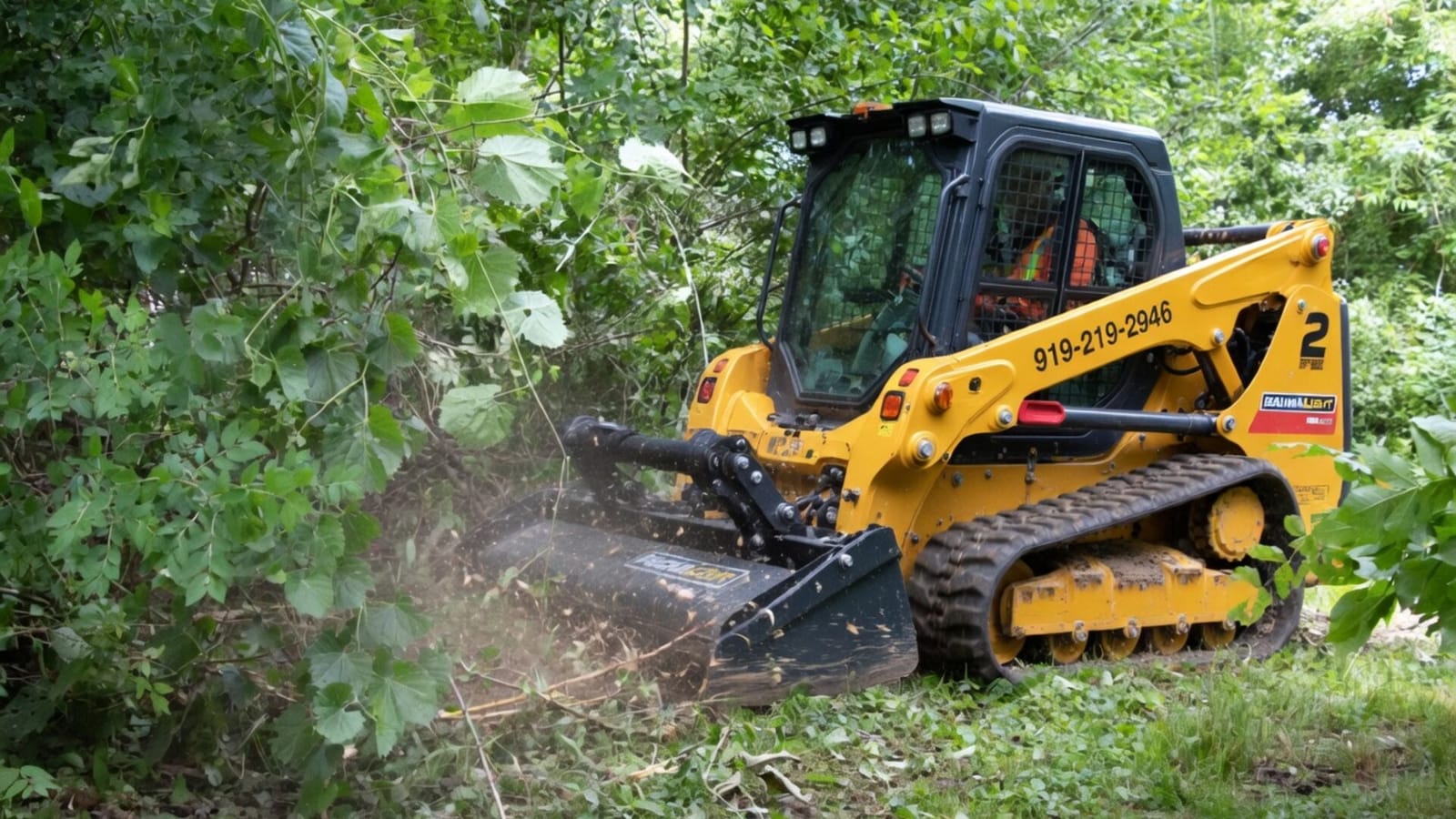
Eastern red cedar takes over Middle Tennessee pastures because it thrives on thin limestone soil. Here is how to clear it, and why it will not grow back.
 Guide
Guide Land Clearing Permits in Nashville & Davidson County
Nashville needs a grading permit once clearing disturbs 10,000 square feet or 100 cubic yards. Here are the thresholds, the offices and the burn rules.
 Comparison
 Bush Hogging vs Forestry Mulching: Which Do You Need?
Bush hogging vs forestry mulching: which handles your overgrown field? Compare costs, vegetation limits, and regrowth for Central NC land. Get a free quote.
Ready to Get Started on Your Land?
Get a free, no-obligation estimate for property in Nashville & Middle Tennessee.
Get Your Free QuoteOr call us directly: (919) 525-3950