Land Clearing Permits in Nashville & Davidson County
Cut Brush Team · September 11, 2026 · 11 min read
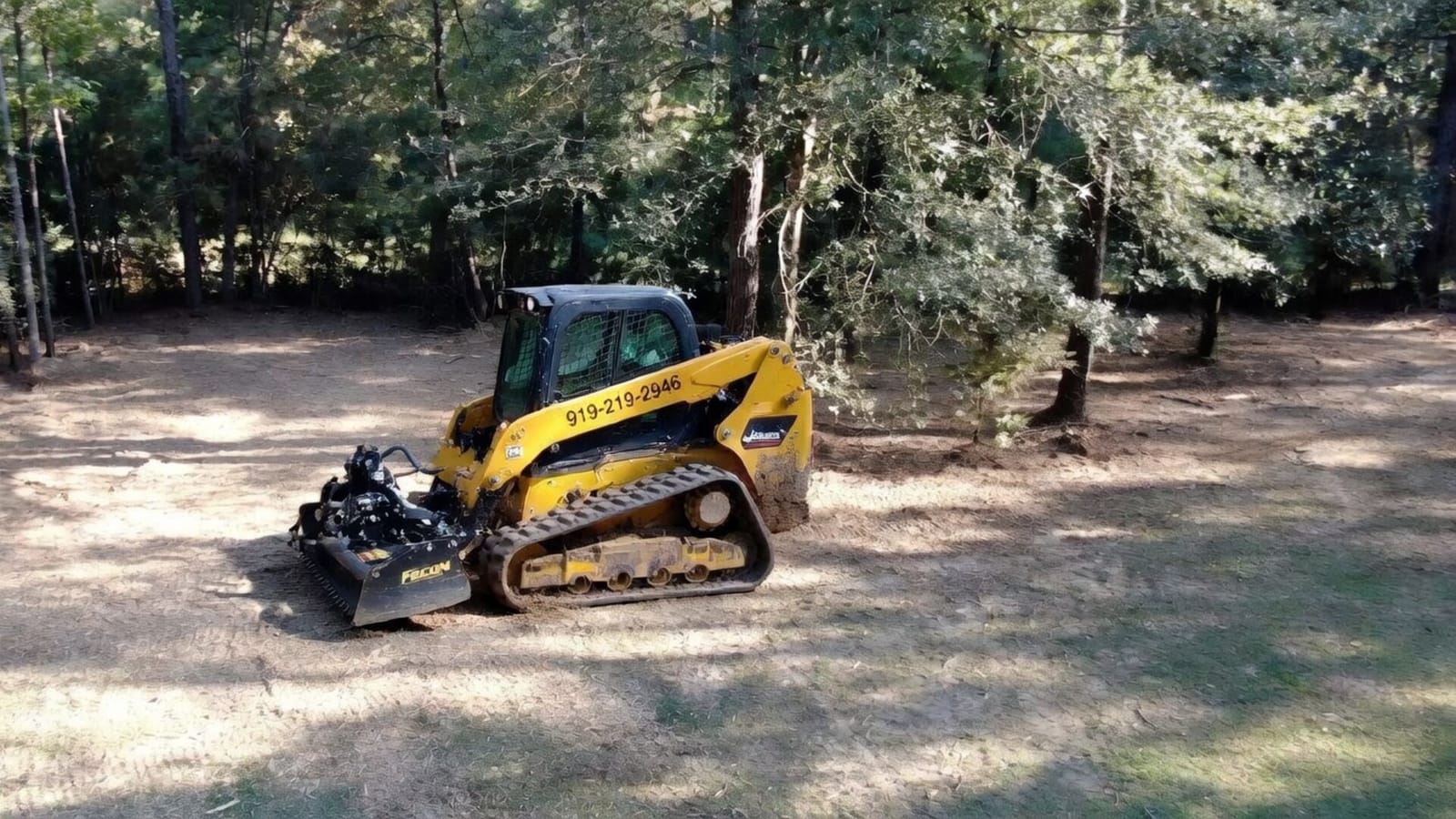
Most people clearing land around Nashville assume the permit question starts at an acre. In Davidson County it starts far earlier: Metro Water Services requires a grading permit once work disturbs more than 10,000 square feet of land, or removes, deposits or disturbs more than 100 cubic yards of material. Ten thousand square feet is a little under a quarter acre. A wooded half acre lot being grubbed and graded inside the city is permitted work, while the same job in most of the country would not be.
The second surprise usually lands right after: there is almost nowhere to burn what comes off. This guide sets out each threshold, which office holds it, and what the rules actually say, with the official source next to every one.
Do You Need a Permit to Clear Land in Nashville?
It depends on how much ground you disturb, not on how many trees come down.
The Metro grading permit is issued by the Metro Water Services Stormwater Division. Work stays outside the permit only if it remains inside every one of the exemption criteria, which are conjunctive rather than a menu. The two thresholds that matter most for clearing are:
- No more than 10,000 square feet of land exposed or disturbed
- No more than 100 cubic yards of material removed, deposited or disturbed
Additional criteria cover fill depth (no more than five feet at its deepest point), final slope (no steeper than one foot vertical to three feet horizontal), and stabilization of bare areas (Metro Water Services).
Crucially, Metro’s own list of work that does not require a grading permit includes:
- “Tree cutting at or above existing ground level (with tree removal permit)”
- “Logging operations leaving the stump, ground cover, and root mat intact (with tree removal permit)”
That wording is worth reading twice, because it is the most useful sentence in Nashville land clearing. The grading permit attaches to ground disturbance, not to vegetation removal. Cutting material off at or above grade and leaving the root mat undisturbed is treated differently from grubbing stumps and moving dirt.
One caveat Metro states directly: activities exempt from the grading permit “must comply with all stormwater regulations including erosion and sediment control guidelines.” Exempt from the permit is not exempt from the rules.
Where Does That Leave Forestry Mulching?
On the lighter side of the line, in most cases.
Forestry mulching grinds standing brush and small trees in place, leaves the material as a mat, and grinds stumps flush rather than pulling them. The root mat stays. That profile sits much closer to Metro’s “tree cutting at or above existing ground level” description than to a grub-and-grade.
That is not a guarantee for any particular job, and nobody should treat it as one. Scope creeps, parcels differ, and floodplain ground loses exemptions. But it does mean that on a Davidson County parcel the choice between mulching and full clearing is not only about finish and price. It can also be the difference between two permitting paths. Requirements vary by parcel, scope and jurisdiction. Cut Brush can flag what commonly applies and help identify the right office. The governing authority makes the determination.
What About the Tennessee State Permit?
Above an acre, the state comes in on top of whatever Metro requires.
The TDEC Construction General Permit applies at one acre or more of clearing, grading or excavation, or under an acre where the work is part of a larger common plan of development. A Notice of Intent goes to the TDEC field office at least 30 days ahead, with a stormwater pollution prevention plan prepared first (TDEC).
Fees, which are agency charges and not contractor costs:
| Disturbed area | TDEC fee |
|---|---|
| Under one acre | No fee |
| One to five acres | $250 |
| Five to twenty acres | $1,000 |
The thirty day notice is the part that catches projects. It is a scheduling constraint, not a cost one, and it is the single most common reason a clearing job in this metro starts later than the owner planned.
Do You Need a Tree Removal Permit in Nashville?
Sometimes, and the dividing line runs along property type.
Metro Code 17.40.470 sets out the tree removal permit procedure, which is an application to Nashville’s urban forester including a survey of the parcel. Metro’s Urban Forestry page states that an approved landscape plan is required before a building permit “for developments other than single-family or duplex properties” (Metro Urban Forestry), which is the same distinction the tree requirements generally follow. The Urban Forester can be reached at (615) 862-6886.
In practice that means a commercial, multifamily or mixed use site carries tree obligations a single family lot generally does not. Trees in the public right of way, and protected or heritage trees tied to a site or subdivision plan, are treated separately again. Because sources disagree on how far Metro’s tree density requirements reach into single family lots, this guide does not state a density figure. Ask the urban forester about your specific parcel; they make the determination.
Can You Burn Brush in Nashville?
No, not as an ordinary landowner, and this is the rule that most changes how a job gets planned here.
Metro states it plainly: “burning debris is prohibited in Davidson County. This includes the burning of leaves, brush, trash or debris.” There is exactly one exception: “The only areas allowed to burn brush or other yard waste are those areas that are being cleared for development, if they obtain a permit from the Health Department and the Fire Department” (Metro Nashville).
Asked separately whether a resident can get a burn permit for brush or leaves in a yard, the Fire Marshal’s Office answers “No.” Bonfire permits for organizations go through Metro Health’s Air Pollution Control Office on (615) 340-5653, not the Fire Marshal (Metro Fire Marshal FAQ).
Metro’s alternative for households is collection: brush and yard waste are picked up on a rotating schedule, and free drop off is offered. That works for a few limbs. It does not answer an acre of cleared brush, which is why mulching in place carries more weight here than in most markets.
What Are the Burn Rules Outside Davidson County?
Different, and seasonal rather than absolute.
Across the rest of this territory, Williamson, Rutherford, Wilson, Sumner and Maury counties, the Tennessee Division of Forestry requires a free burn permit for debris burning from October 15 through May 15. Permits are obtained online at tn.firesponse.com or by phone on 877-350-BURN (TN Division of Forestry).
The state adds an important qualifier: “some counties or municipalities have their own more restrictive burning regulations that supercede TDF’s burn permit program requirements.” In this territory a long list of cities do exactly that, and the state publishes which ones: Brentwood, Franklin and Nolensville in Williamson; La Vergne, Murfreesboro and Smyrna in Rutherford; Lebanon and Mt. Juliet in Wilson; Gallatin, Hendersonville, Millersville, Portland and Whitehouse in Sumner; and Columbia, Mt. Pleasant and Spring Hill in Maury. Fairview, in Williamson County, is listed as “NO OUTDOOR BURNING ALLOWED”, the same entry Davidson County carries (TN county and municipality list).
So the answer to “can I burn this” is an address question and a date question, never a regional one.
| Where | Burning rule |
|---|---|
| Davidson County | No outdoor burning allowed. One exception for development clearing holding Health and Fire permits |
| Fairview (Williamson) | No outdoor burning allowed |
| Cities running their own programme | The city rule supersedes the state permit; ask the city |
| Elsewhere in Williamson, Rutherford, Wilson, Sumner, Maury | Free state permit required Oct 15 to May 15 |
There is also a separate air quality layer that applies year round and catches people out. TDEC permits burning leaves, branches, tree limbs, twigs, woody vegetation, yard trimmings and clean untreated wood. It prohibits tires, plastics, paper and cardboard, asphalt shingles, building material and construction debris, household trash, and notably “most vegetation not grown on site”, with fines up to $25,000 under Tennessee Air Pollution Control Regulations 1200-03-04 (TDEC). That last item matters if you were planning to haul cleared brush to a friend’s field and burn it there.
What Do the Surrounding Counties Require?
Every jurisdiction below sits on top of the state permit, never instead of it, and the thresholds are genuinely inconsistent from one line on a map to the next.
| Jurisdiction | Land disturbance trigger | Office |
|---|---|---|
| Williamson County | 1 acre, or less in a common plan, or where the work threatens water, public health or safety | County Engineering Division, (615) 790-5809 |
| Brentwood | Effectively any grading: the code bars any land disturbing activity that modifies existing grade, “including, but not limited to, clearing, stripping, grading, excavation, transporting and filling” | Planning department, engineering review |
| Rutherford County | 1 acre of clearing, grading or excavation | County Planning and Engineering, (615) 898-7732 |
| Murfreesboro | 1 acre. An individual one or two family dwelling, or a structure on less than an acre, is covered by the building permit instead | City Engineering |
| Wilson County | 1 acre, plus a stormwater permit for every new home, mobile home or accessory dwelling unit regardless of lot size | County Stormwater Department, (615) 443-2120 |
| Mt. Juliet | 5,000 square feet | Storm Water Department, (615) 754-2552 |
| Hendersonville | Commercial and industrial work under an acre needs a permit; other uses under an acre outside a common plan do not, though erosion control and buffer rules still apply | Public Works |
Sources: Williamson County stormwater regulations, Brentwood Ordinance 2024-09, Rutherford County, Murfreesboro stormwater code, Wilson County, Mt. Juliet stormwater plan, Hendersonville Title 18.
Franklin, Gallatin, Sumner County, Columbia, Spring Hill and unincorporated Maury County all have their own arrangements that this guide does not state a number for, either because published figures conflict or because a threshold could not be confirmed. That is not the same as there being none. Call the office that covers your address and ask what applies to your scope before you book a machine.
Which Office Do You Call?
For a Davidson County parcel, the sequence is usually:
- Metro Water Services Stormwater Division for the grading permit question, using the 10,000 square feet and 100 cubic yards thresholds as your first test.
- Metro Urban Forestry, (615) 862-6886, if the property is anything other than a single family or duplex residence, or if protected or right of way trees are involved.
- TDEC if the disturbed area reaches an acre, or if the parcel is part of a larger development.
- Metro Health Air Pollution Control, (615) 340-5653, only if the site qualifies for the development clearing burn exception.
Outside Davidson, the county or city engineering or stormwater office holds the local land disturbance question, and the state burn permit is a separate call again. The table above gives the offices and numbers for the jurisdictions whose thresholds could be confirmed.
Cut Brush can flag what commonly applies and help identify the right office. We do not make determinations, we do not inspect for protected species, and we work to whatever permit the owner holds.
Frequently Asked Questions
Do I need a permit to clear half an acre in Nashville?
Very possibly. Half an acre is about 21,780 square feet, well past Metro’s 10,000 square foot disturbance threshold, so a job that grubs and grades that area would need a grading permit. A job that cuts material at or above ground level and leaves the stump, ground cover and root mat intact is listed as not needing one, though a tree removal permit may still apply. The governing authority decides.
Can I clear my own land without a permit in Davidson County?
Doing the work yourself does not change the thresholds. The grading permit attaches to the disturbance, not to who owns the machine. The same 10,000 square feet and 100 cubic yards tests apply, as does the state permit above an acre and the countywide burning prohibition.
How long does the permitting add to my timeline?
The item to plan around is the state’s thirty day Notice of Intent for jobs at an acre or more. Metro grading permit review adds its own time on top. If you have a date you need the ground ready by, start the paperwork conversation well before you book a machine.
Is there a fee to clear land in Nashville?
There is no single clearing fee. The TDEC construction stormwater permit costs $250 for one to five acres and $1,000 for five to twenty, with no fee below an acre. Metro permit fees were not verified for this guide, so ask the issuing office directly. None of these are contractor charges. What clearing itself costs is on the Nashville pricing guide.
What happens if I burn brush anyway?
Metro’s position is that the Fire Department will extinguish the fire and advise that open burning is not allowed. Outside Davidson, burning without a required state permit during the October to May window is an offence in its own right. Neither is worth the risk when mulching in place turns the material into ground cover instead.
Does mulching avoid the permit entirely?
Not automatically, and it should not be sold that way. Mulching’s profile, cutting at or above grade and leaving the root mat intact, matches the description Metro lists as not requiring a grading permit, which is why it often sits on the lighter side. Scope, parcel and jurisdiction still decide, and floodplain ground loses exemptions. Our forestry mulching cost guide covers how the method choice affects the price as well as the paperwork.
Get the Permit Question Settled Before You Clear
The rules around Nashville are not complicated once you know where the lines fall: 10,000 square feet or 100 cubic yards for the Metro grading permit, one acre for the state, a tree permit that turns on property type, and a burning prohibition inside Davidson County with a single narrow exception. What causes trouble is finding all four out after a machine is already booked.
Cut Brush flags what commonly applies to your scope and helps identify the right office, and the governing authority makes the determination. See what the work costs on the Nashville pricing guide, check the wider statewide picture in our Tennessee cost per acre guide, read the local conditions on our Nashville land clearing page, then request a free quote.
More from the Cut Brush Blog
Keep reading for more tips and guides on land clearing.
 Guide
Guide Clearing Eastern Red Cedar Around Nashville
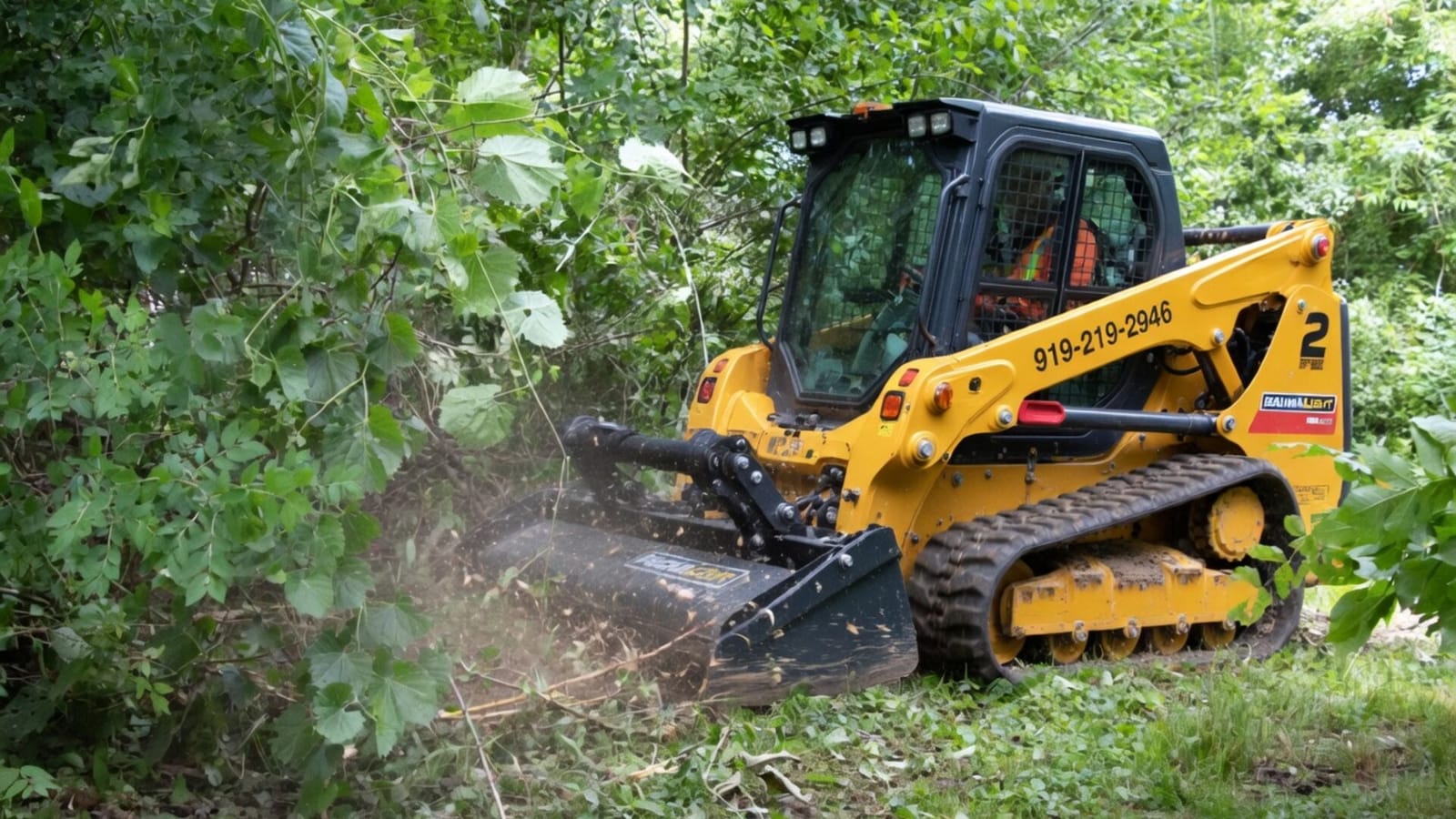
Eastern red cedar takes over Middle Tennessee pastures because it thrives on thin limestone soil. Here is how to clear it, and why it will not grow back.
 Cost Guide
 Forestry Mulching Cost in Nashville, TN (2026)
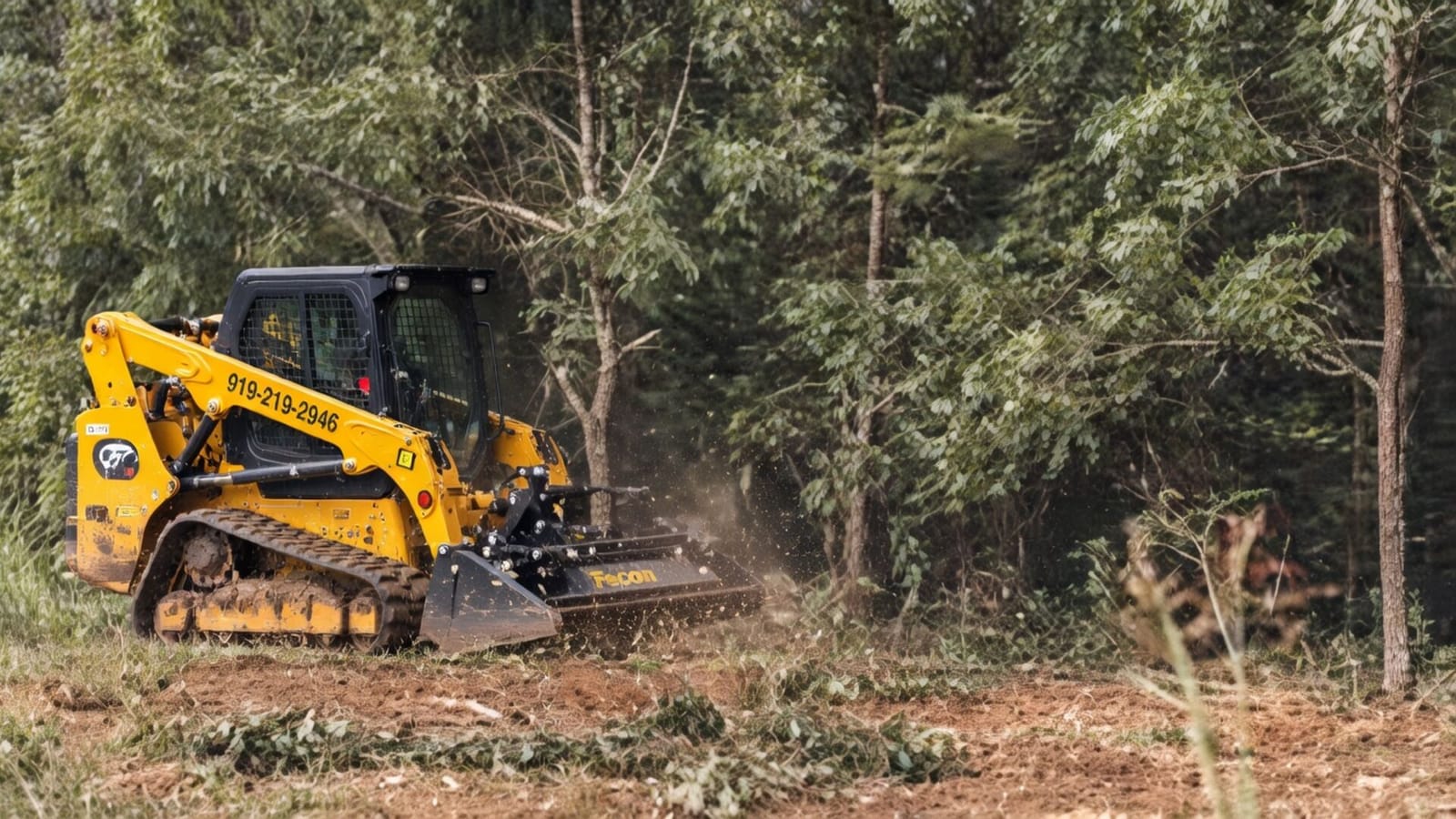
Forestry mulching around Nashville runs $1,500 to $4,000 per acre. See what shallow limestone, brush type and Davidson County's burn ban do to the number.
Guide What Is Forestry Mulching? A Complete Guide
What is forestry mulching? See how a forestry mulcher grinds trees and brush into mulch in one pass, what it handles, and when to use it. Get a free estimate.
Ready to Get Started on Your Land?
Get a free, no-obligation estimate for property in Nashville & Middle Tennessee.
Get Your Free QuoteOr call us directly: (919) 525-3950