Forestry Mulching Cost in Charleston, SC (2026)
Cut Brush Team · September 12, 2026 · 6 min read
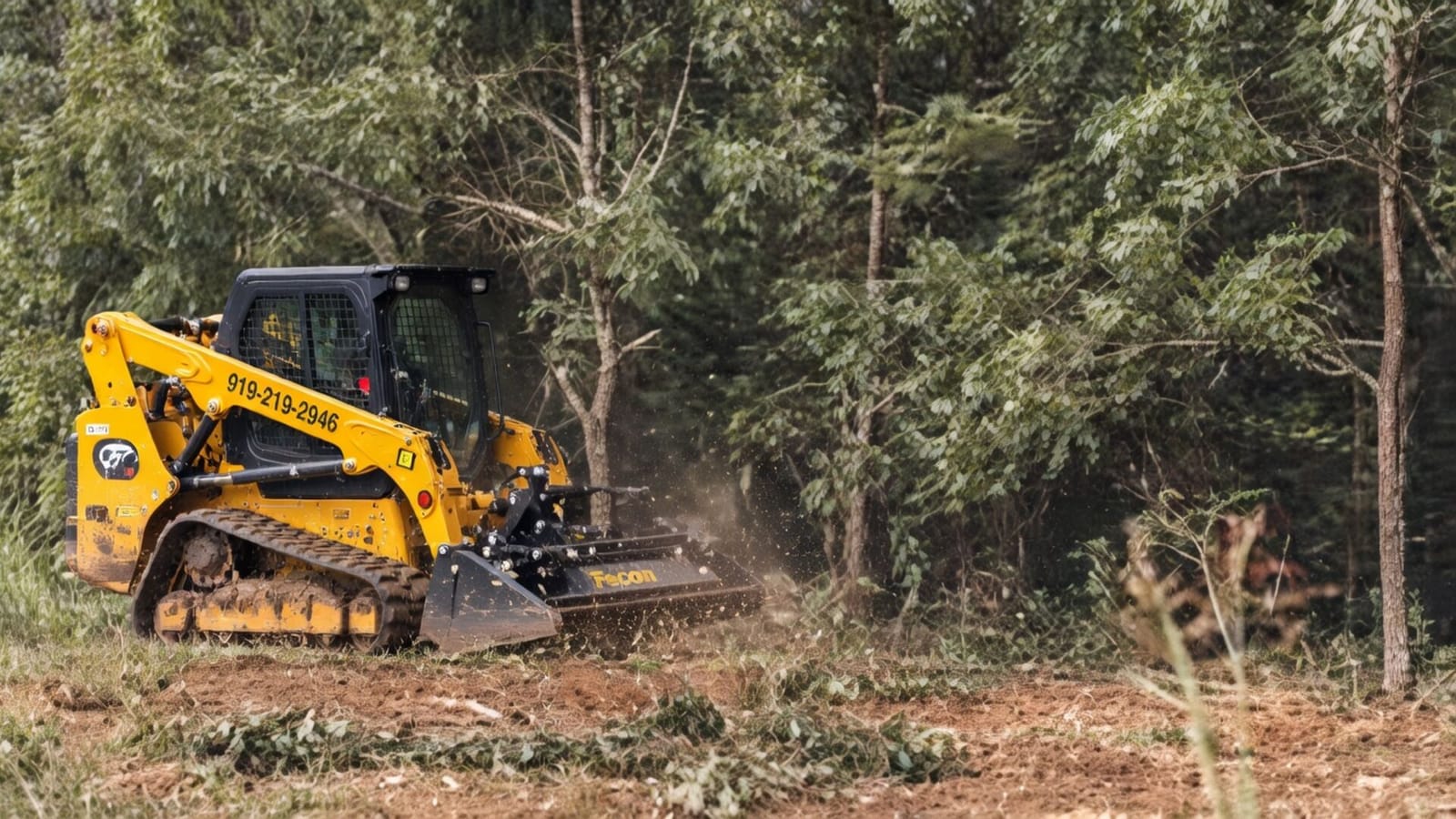
Forestry mulching around Charleston runs $1,500 to $4,000 per acre. Light regrowth on a dry sand ridge sits at the floor. A decade of closed-in understory on a pine flat sits at the ceiling. The variable that moves a Lowcountry number most is not the timber and not the acreage: it is water, because the month your ground is workable decides how fast the machine travels and how much of the day is spent getting to it.
Here is how that band breaks down, and where mulching stops being the cheaper option.
What Does Forestry Mulching Cost Per Acre Near Charleston?
| Condition | Range | Why it prices there |
|---|---|---|
| Light brush and saplings, well-drained ground | $1,500 – $2,000 / acre | One fast pass, little steering |
| Mixed understory beneath standing pine | $2,000 – $3,000 / acre | Working around keeper trees, slower lines |
| Long-idle ground with arm-thick stems | $2,500 – $3,500 / acre | Real grinding time per square foot |
| Wet flats, tight access or heavy selective work | $3,000 – $4,000 / acre | Matting, staging and a slower machine |
These are the ranges Cut Brush quotes across Charleston, Berkeley, Dorchester and Colleton counties. Whole-tract clearing with stumps out and a graded finish is a different job and a different band, set out on the Charleston pricing guide.
Why the Water Table Sets Your Price Here
Two soils tell the whole story, and they sit near each other.
Well-drained Wando sand on the coastal terraces carries its seasonal high water table 48 to 72 inches down, and only from January to March (USDA official series description). Poorly drained Yonges soils on the flats carry theirs within 10 inches of the surface for about six months in most years, November through April (USDA).
That is a four-foot difference in the same week, sometimes across one property line. On the dry side a mulcher walks and grinds continuously. On the wet side the same machine leaves ruts, needs wider tracks or matting under it, and covers less ground per hour. Nothing about the vegetation changed; the cost per acre did.
It also inverts the usual advice. Most of the South clears in the dormant season. On Lowcountry flats the dormant season is when the ground is least able to carry a machine, so the cheaper window is often late summer and autumn. We say which window we would rather be on your parcel before you sign anything, and the reasoning is in our guide to clearing wet Lowcountry ground.
What Is Actually Growing Out There
Age beats species as a price driver, with one exception worth naming. Chinese tallow has spread widely on coastal ground, and it grows fast: seedlings put on up to 13 feet a year, a mature tree sets around 100,000 seeds annually, and cutting alone will not finish it because the stump sprouts (Clemson Home and Garden Information Center).
For pricing, that matters twice. Tallow-dominated ground left ten or twelve years carries thicker stems than its age suggests, which pushes the grinding time up. And because the stumps resprout, a single mulching pass is a reset rather than an ending. If the tract is heavily in tallow, the honest scope is a pass now and a maintenance pass later, or a pass plus stump treatment by a licensed applicator. Pricing one visit as though it were permanent is how a cheap quote becomes an expensive year.
The Permit Line That Catches People Out
Mulching is still land disturbance. Charleston County requires a stormwater permit for any land-disturbing activity over 5,000 square feet, roughly an eighth of an acre, and it is a prerequisite to the building permit (Charleston County Stormwater Management). Municipalities run their own programs.
This does not change a per-acre rate, but it changes the calendar, and a job that starts before the paperwork is settled is a job that stops. Requirements vary by parcel, scope and jurisdiction, and the governing authority makes the determination. The thresholds and the offices are laid out in the Charleston land clearing permit guide.
When Mulching Is No Longer the Cheaper Choice
Mulching wins on arithmetic when the material can stay on the ground. It stops winning in three situations.
If you need a building pad, a drive or utility runs, you need stumps out and the surface graded, which is clearing and site work rather than mulching. If the stems are genuinely large, grinding time overtakes the cost of taking them down and hauling them off. And if the finish has to be bare, mown-height ground rather than a mulch mat, mulching is the wrong tool no matter what it costs.
Burning is the other alternative people ask about. South Carolina law requires you to notify the Forestry Commission before burning outdoors, a requirement that applies in unincorporated areas, and a firebreak has to be cleared around the site (S.C. Forestry Commission). City ordinances can regulate burning separately. It is a process rather than a free disposal route, which is much of why mulching in place keeps winning here.
Frequently Asked Questions
Is mulching cheaper than bulldozing around Charleston?
Usually, because there is no pile to build, no burn to manage and nothing to haul. The exception is a job that needs stumps out and a graded surface anyway, where you would be paying for the mulching and then paying for the clearing.
How many acres can you mulch in a day?
On open, dry ground with light regrowth, several. On a wet flat with heavy stems and trees to work around, considerably less than one. Access and ground conditions decide this far more than acreage does.
Does the mulch have to be removed afterwards?
No. The mat is left down on purpose. It holds the surface, slows runoff and breaks down over time, which is useful on ground that moves water the way coastal soils do.
How do Charleston prices compare with the rest of the state?
They sit inside the same statewide band. Vegetation, terrain and disposal move a number the same way anywhere in South Carolina; what is particular here is how much of the figure is decided by drainage and by the trees that have to stay.
Get a Written Number for Your Own Ground
A range is a budget, not a quote. What turns it into a figure is someone standing on the parcel, seeing how it drains, counting what has to stay and saying which month it wants.
Conditions across the wider market are on the Charleston land clearing page, and when you are ready, request a free quote. We walk the ground, put the scope in writing, and name the finish you are buying.
More from the Cut Brush Blog
Keep reading for more tips and guides on land clearing.
 Guide
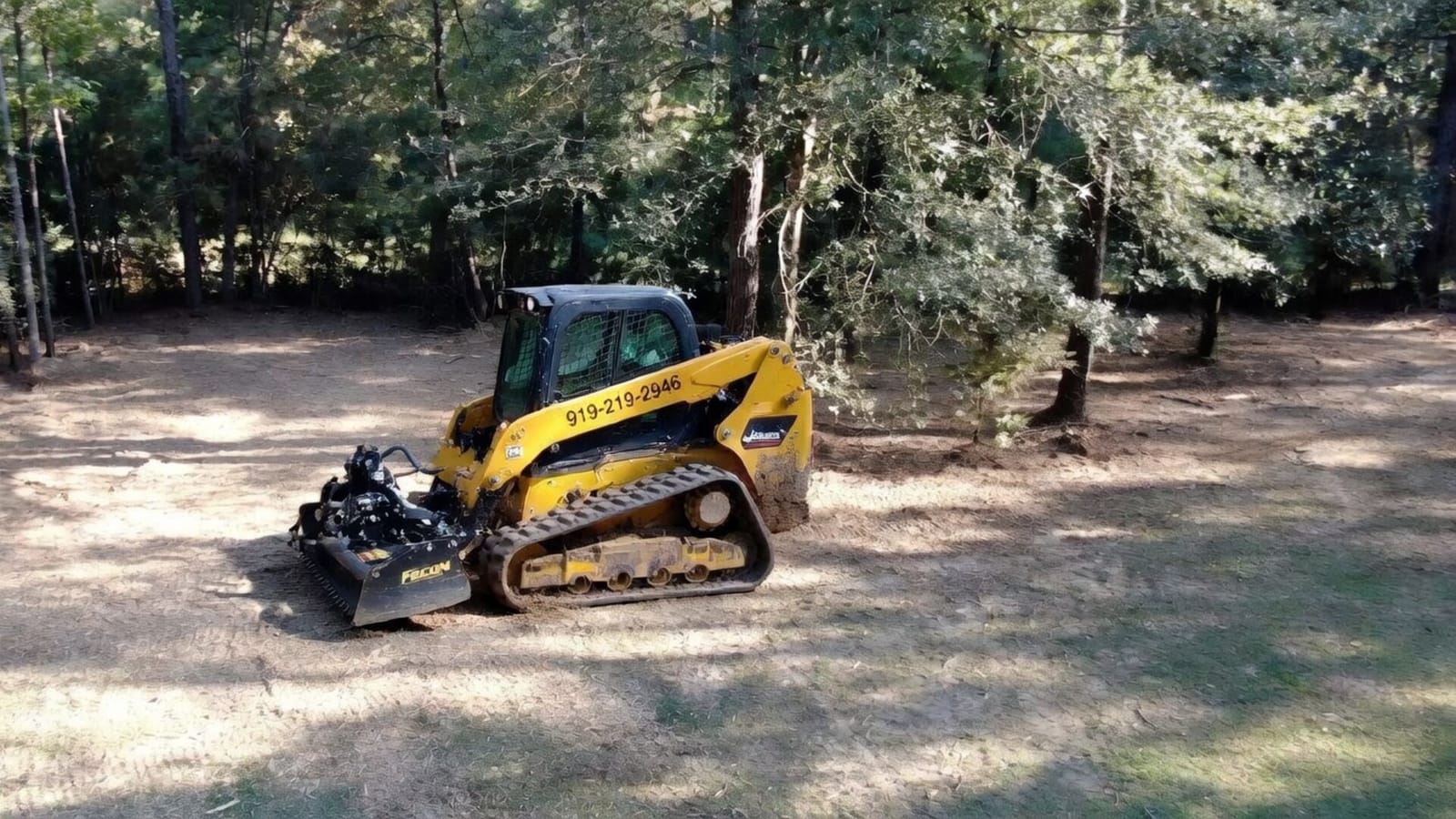
Guide Land Clearing Permits in Charleston & Charleston County
Charleston County's land disturbance trigger is 5,000 square feet, not an acre. Here are the thresholds, the grand tree rules and the coastal critical area.
Guide Clearing Wet Lowcountry Ground Around Charleston
Charleston parcels can differ by four feet of water table across one line. Here is how that changes the season, the machine and the finish on a clearing job.
 Comparison
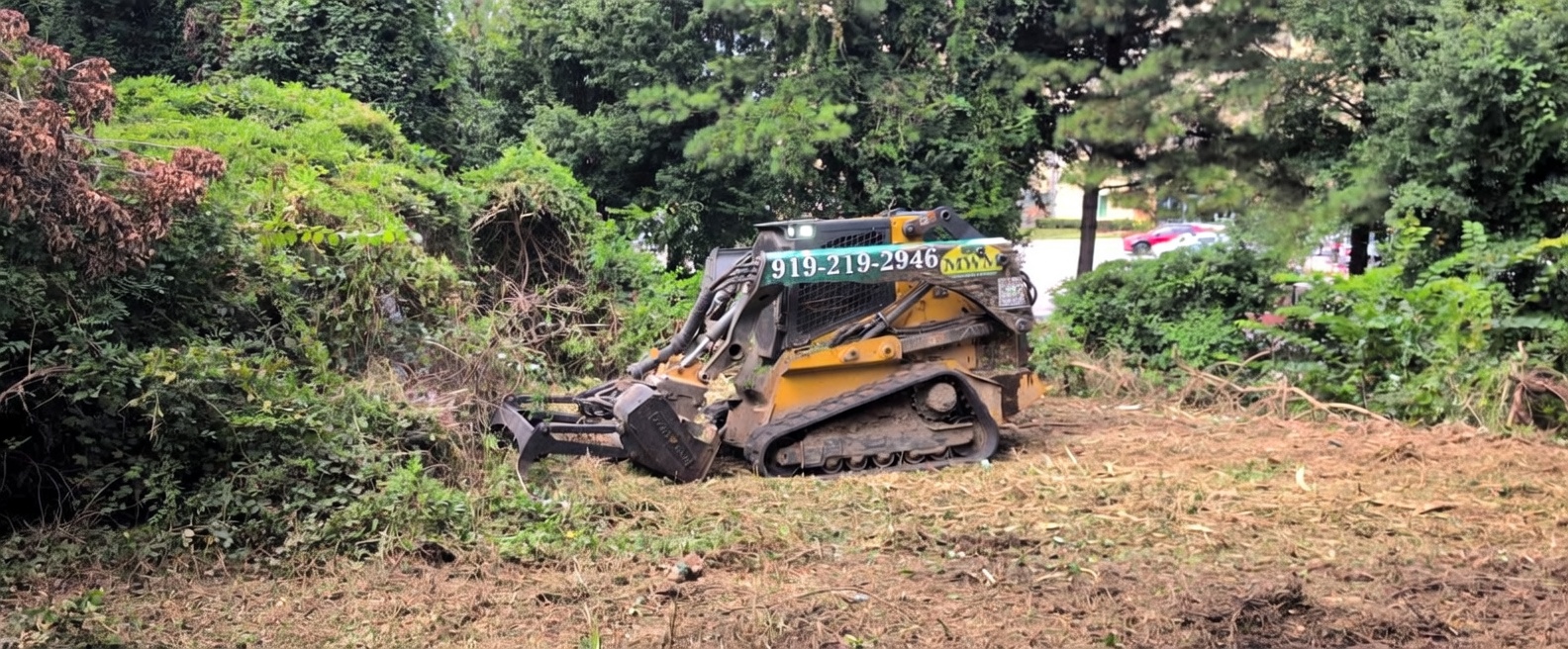
 Bush Hogging vs Forestry Mulching: Which Do You Need?
Bush hogging vs forestry mulching: which handles your overgrown field? Compare costs, vegetation limits, and regrowth for Central NC land. Get a free quote.
Ready to Get Started on Your Land?
Get a free, no-obligation estimate for property in Charleston & the Lowcountry.
Get Your Free QuoteOr call us directly: (919) 525-3950