
Forestry Mulching Cost in Georgia (2026 Guide)
Cut Brush Team · October 9, 2026 · 8 min read

Your Georgia woods closed in while nobody was watching: palmetto and gallberry under the pines, privet along the branch, sweetgum filling the old field. You want it open again without a burn pile or a line of dump trucks. Forestry mulching in Georgia runs $1,500 to $4,000 an acre with Cut Brush, and our crews work out of Savannah, Atlanta, Augusta, Columbus, Albany and Valdosta.
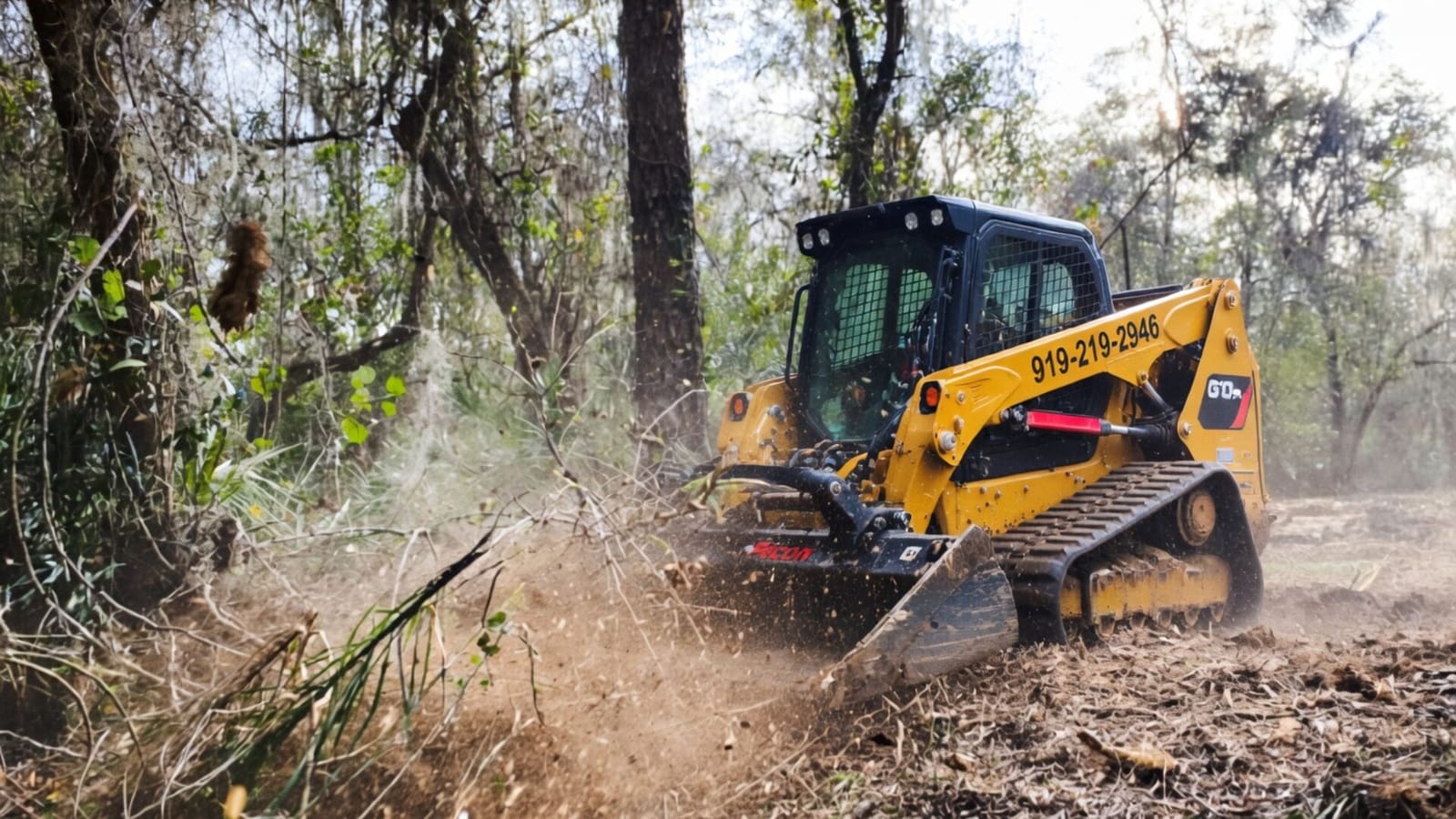
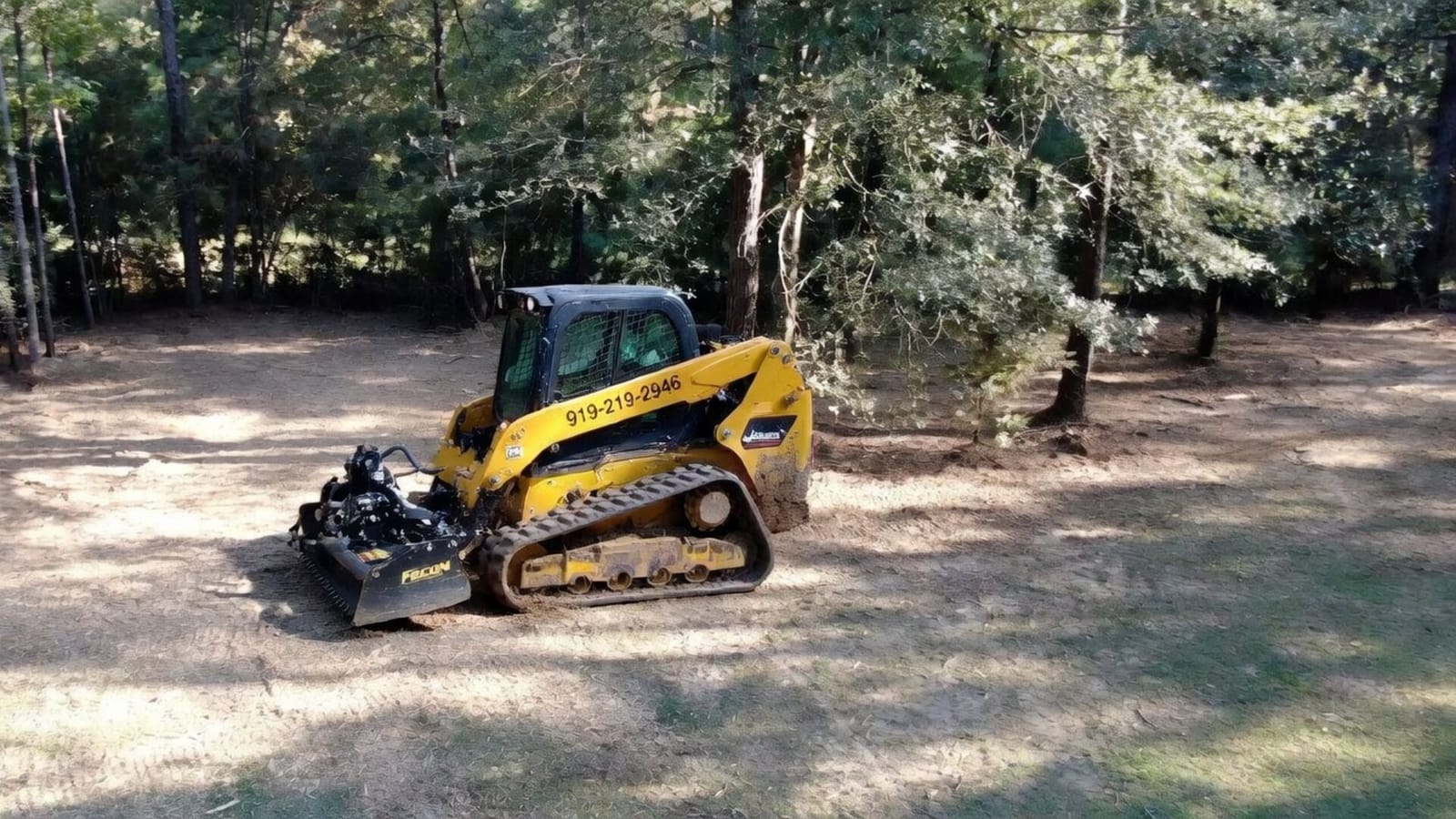
Forestry mulching is one tracked machine with a drum head that grinds brush and small trees where they stand, takes stumps down flush, and leaves the chips as a mat. Nothing gets piled, burned or hauled, and in Georgia that saves more than most people expect.
At a glance:
- $1,500 to $4,000 an acre is our mulching price in all six Georgia markets, with a floor near $1,500 on a small tract.
- 54 counties cannot burn land-clearing debris from May 1 to September 30 under the state’s summer ban, including metro Atlanta, Richmond and Columbia. Mulch never needs burning.
- Outside the ban, burning land-clearing debris takes a Georgia Forestry Commission permit that is good only for the day it is issued.
- Cogongrass gets reported to the GFC before any machine goes near it. The commission treats a confirmed patch at no cost to you.
- On the coast, a 25-foot buffer from the marsh line comes off the job before we price it.
We walk your land, put one written price in front of you, and do the work with our own crews.
How Much Does Forestry Mulching Cost in Georgia?
What is standing on your ground decides which of our prices applies, and where inside it you land.
| What is standing on your land | Our price per acre | What it looks like when we leave |
|---|---|---|
| Briars, sprouts and the shrub layer under pines you are keeping | $1,500 – $2,500 | An open floor under the trees, canopy left alone |
| Palmetto flats, privet bottoms, saplings and small trees across the whole area | $1,500 – $4,000 | Stumps ground flush, a chip mat over the soil |
| Timber coming off for a house site, with stumps and debris taken out | $1,500 – $4,500 | Open ground, finish written into the quote |
Where these numbers come from. Those are the understory, forestry mulching and land clearing rows on our Savannah pricing page, and every one of our Georgia markets publishes the same three bands. Inside the mulching band, a few years of regrowth prices low and a decade of closed-in flatwoods prices toward the top. The floor near $1,500 is there because trailering a tracked carrier to your gate costs the same for half an acre as it does for three.
What Changes the Price of a Georgia Mulching Job
Growth that comes back from the roots. The Georgia Forestry Commission calls Chinese privet widespread and common throughout all of Georgia, and it returns from sprouts as well as seed. In the commission’s own field trials, from the mountains down to the Coastal Plain, most privet stands took two treatments to kill. Chinese tallow, common in South Georgia, lines ditches and stream banks and shrugs off salty soil and flooding. We open either one in a single visit; keeping it gone takes a follow-up spray from an applicator you hire, because we do not apply herbicide.
Cogongrass changes the order of work. The GFC finds it mostly in south Georgia and tells landowners not to mow or disk through or near a known or suspected patch, since the machine carries seed and root pieces to new ground. A drum head would do the same, so we stay out until the commission has treated it. Our Valdosta cogongrass guide lays out that sequence.
Which side of the burn line you are on. In the 54 ban counties, a summer job has two ways to get rid of the brush: grind it or truck it. Mulching drops the truck. Outside the ban, burning needs a one-day GFC permit, piles, a burn day, and in some counties an air curtain destructor for machine-cleared debris. Grinding in place usually still comes out cheaper.
How wet the flatwoods are. Around Savannah and Valdosta, soils of the Leon series hold a water table 6 to 18 inches down for one to four months in most years, and at the surface for weeks in low flats. A carrier that crosses that ground easily in a dry October can rut it in a wet August. Our rate does not change, but a soft week means fewer acres a day, which moves a tract up its band.
Trees you want kept. Every pine or oak that stays is a trunk the head works around instead of through. A stand already thinned to good spacing prices near the floor. A pine thicket where you want scattered hardwoods saved prices high.
Forestry Mulching Costs Across Georgia
The Piedmont: Atlanta, Canton, Woodstock and Newnan. Red clay of the Cecil series, more than 60 inches deep to bedrock, on slopes up to 25 percent. Privet and vine fill the creek bottoms. Wet clay on a grade slows every pass, so a dry autumn is when Piedmont acres come in low. Fulton, Cobb, Gwinnett, Cherokee and Coweta are all on the summer burn list. Local detail is in our Atlanta forestry mulching cost guide.
The Fall Line: Columbus, Hamilton, Cusseta and Buena Vista. North of the line the clay comes back. South of it, Lakeland sand runs deeper than 80 inches and drains fast, under blackjack oak, turkey oak and scattered longleaf. Sand carries a machine in almost any week, so on the sandhills the stem count sets the price, not the weather. Muscogee County sits outside the burn ban. See our Columbus forestry mulching cost guide.
South Georgia: Albany, Tifton, Valdosta and Hahira. The Tifton series, typed in Tift County, sits on gentle ridges with ironstone nodules making up 5 to 25 percent of the top layers, the pebbles a drum meets when it works at grade. Oak and sweetgum creeping in under pine that has gone years without fire set the price here more than the ground does. This is also where cogongrass turns up most.
The coast: Savannah, Pooler, Richmond Hill and Rincon. Flat, wet flatwoods under palmetto, gallberry and wax myrtle, with the marsh at the edge. That low woody layer is packed near the ground, so it takes more passes than its height suggests. Chatham County is outside the summer ban, and the marsh buffer can take a strip of the tract out of the job. Our Savannah forestry mulching cost guide covers the coast in detail.
Pro tip: If your lot drops toward the marsh, ask the state’s Coastal Resources Division where the jurisdictional line sits before you book a mulcher. The 25-foot buffer is measured from that line, and knowing it tells you how many acres you are actually paying for.
Permits and Burning Rules in Georgia
The summer burn ban. From May 1 to September 30, the 54 listed counties cannot burn yard or land-clearing debris. Agricultural burning and prescribed forestry burning are exceptions to the ban, so a neighbour’s field burn in June does not mean your brush pile is allowed.
Burn permits the rest of the year. Statewide, burning land-clearing debris needs a GFC permit, by phone at 1-800-GA-TREES or online, and it is good only for the day issued. Hand-piled leaves and limbs need none.
The marsh buffer. The Georgia EPD coastal marshland field guide sets a 25-foot buffer measured horizontally from the marsh-upland line. For land disturbance below the two-meter elevation, the owner asks DNR’s Coastal Resources Division to set that line. Agricultural work is exempt.
Cost share. Two Georgia Forestry Commission programs can cover part of a mulching bill. The Southern Pine Beetle program pays $130 an acre for non-commercial pine thinning on 10 to 50 acres, up to $10,000 a project and never more than 75 percent of your documented cost. The Invasive Plant Control Program pays $60 an acre on practices of at least 3 acres, for owners of 10 or more forested acres, but only where herbicide is part of the treatment. Both open short sign-up windows, so ask your county GFC forester when the next one runs before we schedule.
Land disturbance permits are set by your county or city; our Georgia land clearing cost per acre guide has the thresholds. You file, and the issuing office decides.
Frequently Asked Questions
How much does it cost to mulch one acre in Georgia?
Between $1,500 and $4,000 in every Georgia market we serve, and on a single acre the floor near $1,500 often sets the price. Open regrowth on dry sand sits at the floor. Ten years of palmetto on wet flatwoods, or a privet wall in a Piedmont creek bottom, sits near the top.
Is forestry mulching cheaper than burning brush in Georgia?
In the 54 ban counties, burning is off the table from May through September, so mulching is up against hauling, and it usually wins. Outside the ban, a burn still means piling, a one-day permit and waiting on weather, and mulching tends to come out ahead.
Can you mulch land that has cogongrass on it?
Not until the patch is dealt with. The GFC advises against running equipment through cogongrass and treats confirmed patches at no charge. Once that is done, we mulch the rest of the tract and keep the machine out of the infested ground.
Is mulched land ready to build on?
No. Stumps are ground flush and the chips stay as a mat, so the ground is open but not graded. Pad work belongs to a dirt contractor after we hand over; our Georgia land clearing and grading cost guide shows who does each step. Lighter work under trees you keep is in our Georgia underbrush removal cost guide.
Get a Forestry Mulching Quote in Georgia
Pick the nearest of our six Georgia areas below and request a free quote. Our crew will contact you to talk through the tract, the way in from the road and what you want the ground to look like when we leave, along with any cogongrass you suspect, any marsh or creek it runs down to, and the trees you want kept. Then we will walk the land at no charge and hand you one written number.
Land on the other side of the state line? Our Alabama forestry mulching cost guide and South Carolina forestry mulching cost guide cover those states.
Sources
More from the Cut Brush Blog
Keep reading for more tips and guides on land clearing.
 Cost Guide
Forestry Mulching Cost in Savannah, GA (2026)
Forestry mulching around Savannah runs $1,500 to $4,000 per acre. See what palmetto flatwoods, wet ground and the city tree rules do to the number.
 Guide
Clearing Palmetto and Gallberry Flatwoods Around Savannah
Pine flatwoods around Savannah grow a dense layer of palmetto, gallberry and wax myrtle on wet ground. How to clear it, when, and what comes back.
 Cost Guide
Land Clearing Cost Per Acre in Georgia (2026)
Land clearing cost per acre in Georgia runs $1,500 to $4,500. See how red clay, slope, regrowth and the summer burn ban move the number. Free quotes.
Comparing states? See land clearing costs by state.
Let's Get Started on Your Land
Request a free quote. We'll contact you to discuss your property, access, and the clearing you need.
Get a Free QuoteOr call us directly: (919) 525-3950