Forestry Mulching Cost in Denver, CO (2026)
Cut Brush Team · September 12, 2026 · 6 min read
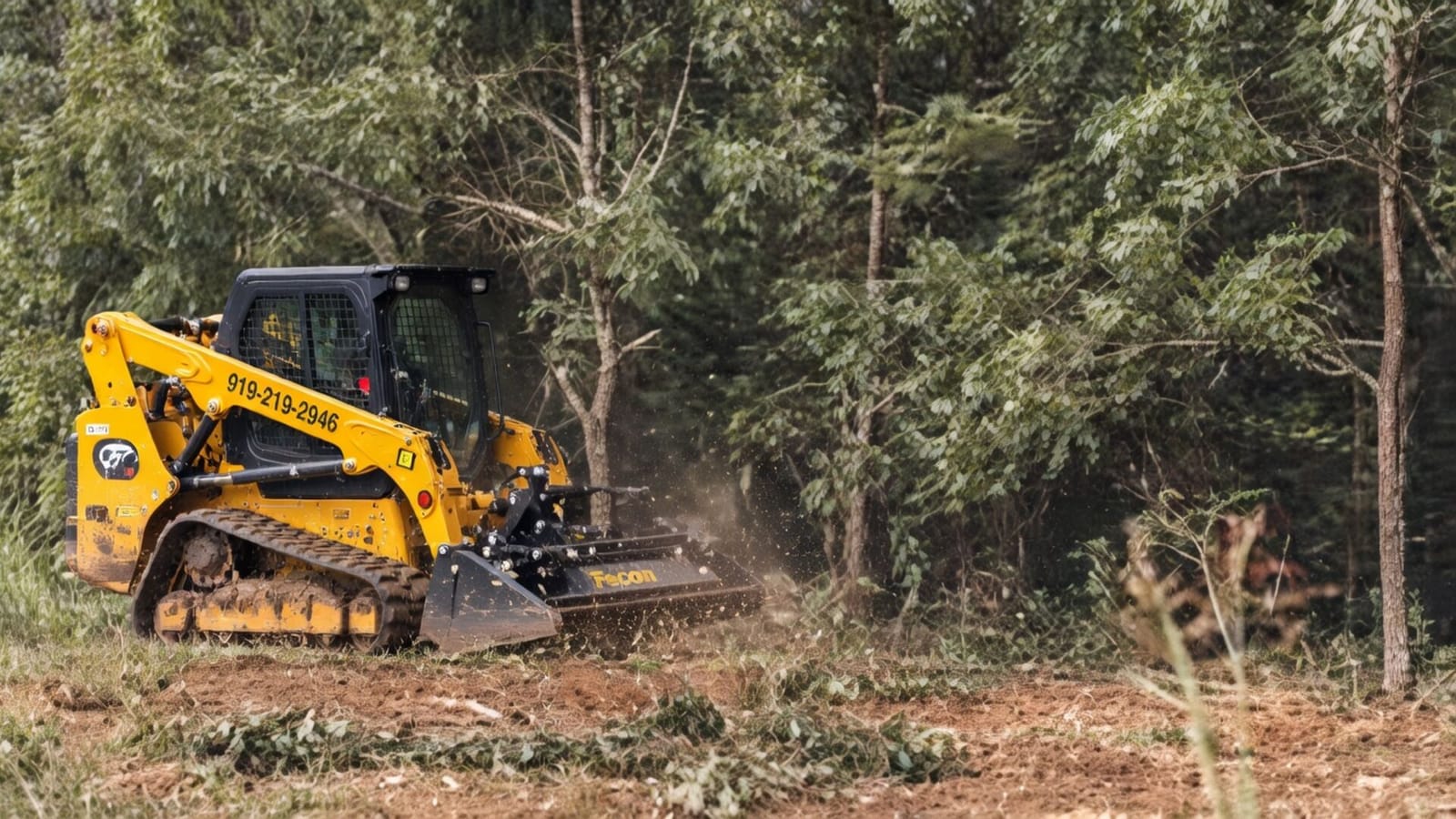
Forestry mulching around Denver runs $1,500 to $4,000 per acre. Open field growth on flat, easy ground sits at the floor. A closed thicket of Gambel oak on a foothills grade sits at the ceiling. The variable that moves a Front Range number most is neither acreage nor a single species count. It is where the parcel sits: elevation, slope and how the machine gets there change the hour count before a stem is cut.
Here is how that band breaks down, and where mulching stops being the cheaper answer.
What Does Forestry Mulching Cost Per Acre Near Denver?
| Condition | Range | Why it prices there |
|---|---|---|
| Light brush and saplings, flat and accessible | $1,500 – $2,000 / acre | One fast pass, easy approach |
| Understory beneath standing timber | $2,000 – $3,000 / acre | Around keeper trees, slower going |
| Closed Gambel oak thicket, foothills grade | $3,000 – $4,000 / acre | Dense stems, steep access, more passes |
| Whole-parcel clearing to a named finish | $1,500 – $4,500 / acre | A different scope entirely, see below |
A practical floor near $1,500 per project applies whatever the size, because getting a tracked machine onto a property and off again costs the same whether it cuts for an hour or a day. Under two acres, bundle a fence line, a field edge and a back corner into one visit. These are budgeting bands, and the walk-through that turns one into a written figure is free.
Why Elevation and Access Set the Hour Meter
A parcel in Evergreen, Conifer or Morrison is not a Denver suburban lot with a better view. Reaching it means climbing a foothills grade, sometimes on a narrow gravel drive, and a tracked machine working that ground moves slower than the same machine on flat acreage. The reverse shows up out on the plains past Watkins, Byers and Deer Trail: the terrain is easy, but the distance to reach it adds to the day.
So two five-acre parcels with the same amount of brush on them can price differently once one of them sits on a slope with a long, tight approach. Tell us the address and how the site is reached, and that gets factored before a crew is booked, not discovered once one is standing at the gate.
Mulching or Clearing: Which One Did You Actually Price?
This is the most common reason two quotes look nothing alike.
Forestry mulching is one tracked machine chipping standing brush and small trees where they stand. Stumps are cut flush rather than dug out, the material stays down as a mat, and the ground is neither graded nor ready to build on. It is the right method for opening foothills understory, winning back a field edge, cutting trails or making a parcel walkable.
Land clearing is whole-parcel work whose ending gets named in the quote: whether stumps come out, whether material leaves the property, whether a pad is cut and held. It runs $1,500 to $4,500 per acre, and it is what you need if the land is headed for a house, a drive or a utility run. What each method is right and wrong for is on our Denver services page.
Mulching is usually cheaper because it deletes the loading and hauling line. It only stays cheaper if it gets you the finish you need, so ask any bidder which of the two they priced, in writing.
What the Debris Costs When It Does Not Stay
The mat is not a bonus, it is a line item you avoided. Cut, pile, load and haul is four operations. Mulching is one, and nothing leaves the property.
Burning looks like the free alternative and rarely is. Colorado’s statewide open burning rule, Regulation No. 9, runs through the state health department, and local fire districts layer their own burn permits and conditions on top. That is process and equipment, not a zero, and it is one more reason chipping in place has become the default on Front Range acreage.
Hauling is the third option and the one owners underbudget, especially off a foothills grade, where loaded trucks move slower and a soft shoulder can end the trip before it starts.
Will the Oak Grow Back?
Some growth here does, and Gambel oak is the one that catches people off guard. Colorado State Forest Service management guidance states plainly that Gambel oak resprouts aggressively after being cut, mowed, or burned, because the plant reproduces mainly through an extensive root system rather than from acorns (Colorado State Forest Service).
So a mulching quote for foothills ground separates the first knockdown from a follow-up pass rather than implying one visit ends it. Russian olive and tamarisk, both Colorado List B noxious weeds along Front Range streams and ditches, behave similarly and are treated the same way in a quote. A maintenance pass a year or two later costs a fraction of re-clearing a closed thicket. Cut Brush applies no herbicide, so a chemical step is arranged with a licensed applicator.
Where the Permit Line Sits in Your Budget
Permits change your calendar rather than our rate, and in Denver the answer depends on which side of the city you are on. Inside Denver, construction work is permitted through a Construction Activities Stormwater Discharge Permit, and whether a given project needs one is a determination for DOTI; work disturbing one or more acres may also need a separate state permit (City and County of Denver). Step outside the city into unincorporated Jefferson County and the line moves to half an acre for a grading permit (Jefferson County).
Requirements vary by parcel, scope and jurisdiction, and the governing authority decides. Our Denver and Jefferson County permit guide sets each threshold beside its source.
Frequently Asked Questions
How much does it cost to mulch one acre near Denver?
Budget $1,500 to $4,000 for an acre, with light brush on flat ground at the floor and a dense Gambel oak thicket on a foothills grade at the ceiling. A single acre usually prices close to the project floor, because mobilisation costs the same at any size.
Does the foothills location always cost more?
Not always, but access usually matters more than acreage does. A small, easy-to-reach lot in Golden can price lower than a larger, harder-to-reach parcel in Conifer. Slope and the approach road are worth mentioning when you request a quote.
Do you haul the chips away?
Not with mulching, and that is the point of the method. The material is spread as a mat, which protects the surface and holds ground together on a slope. If you need bare soil to plant into, that is a clearing scope.
Get a Real Number for Your Denver Property
What turns forestry mulching cost in Denver into one figure is somebody standing on the ground: how it sits on the slope, what is growing on it, and what the parcel is for.
Compare every range on the Denver pricing guide, read the conditions on our Denver land clearing page, then request a free quote. We put the scope in writing, so the number you approve is the number you pay.
More from the Cut Brush Blog
Keep reading for more tips and guides on land clearing.
 Cost Guide
 Land Clearing Cost Per Acre in Colorado (2026 Guide)
Land clearing cost per acre in Colorado runs $1,500 to $4,500. See how elevation, Gambel oak and Front Range access move the number. Free quotes.
County Guide Land Clearing Permits in Denver & Jefferson County (2026)
Do you need a permit to clear land in Denver? The rules split by jurisdiction: Denver's own trigger, its tree license, and Jefferson County's line.
Guide Defensible Space & the Home Ignition Zone in the Denver Foothills
Defensible space around a Denver foothills home follows three zones out from the structure. Here is what each zone actually calls for, with distances.
Ready to Get Started on Your Land?
Get a free, no-obligation estimate for property in Denver & the Front Range.
Get Your Free QuoteOr call us directly: (919) 525-3950