
Forestry Mulching Cost in Colorado (2026 Guide)
Cut Brush Team · October 9, 2026 · 9 min read

Your hillside has closed up with Gambel oak, the ponderosa has a skirt of young fir under it, or a fence line has disappeared into Russian olive, and you want it opened without a burn pile. Forestry mulching in Colorado runs $1,500 to $4,000 an acre with Cut Brush. That is what our crew charges across Denver, Jefferson, Douglas, Elbert, Adams and Arapahoe counties, and around Colorado Springs across El Paso, Teller and Fremont counties.
At a glance:
- Our band: $1,500 to $4,000 an acre to mulch, and $1,500 to $2,500 for regrowth and understory work beneath trees you keep. Small jobs carry a $1,500 minimum charge.
- Oak comes back: Gambel oak sprouts from its roots after mulching, so a yearly mow of the regrowth belongs in the plan.
- Winter burn ban: open burning is prohibited in Adams, Arapahoe, Boulder, Broomfield, Denver, Douglas and Jefferson counties from November 1 to March 31, though the state notes some exemptions may apply.
- Jefferson County burning: forest management burn permits exist only at 6,400 feet or higher, and none are issued under Stage 1 or Stage 2 fire restrictions.
- Stormwater: disturbing an acre or more can bring in Colorado’s construction stormwater permit, and unincorporated Jefferson County starts its grading permit at half an acre.
Around Colorado Springs, our crew works from our Colorado Springs market; the regional notes below cover the rest of the state.
How Much Does Forestry Mulching Cost in Colorado?
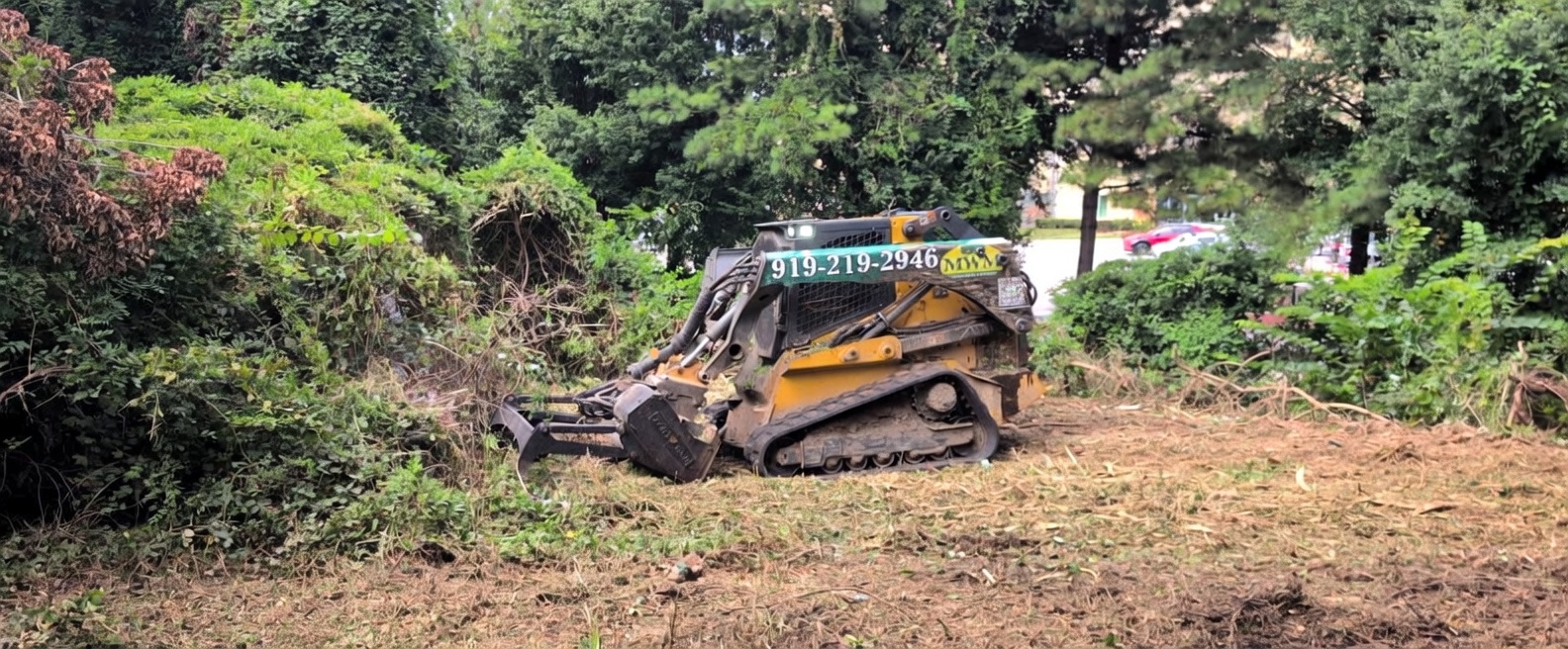
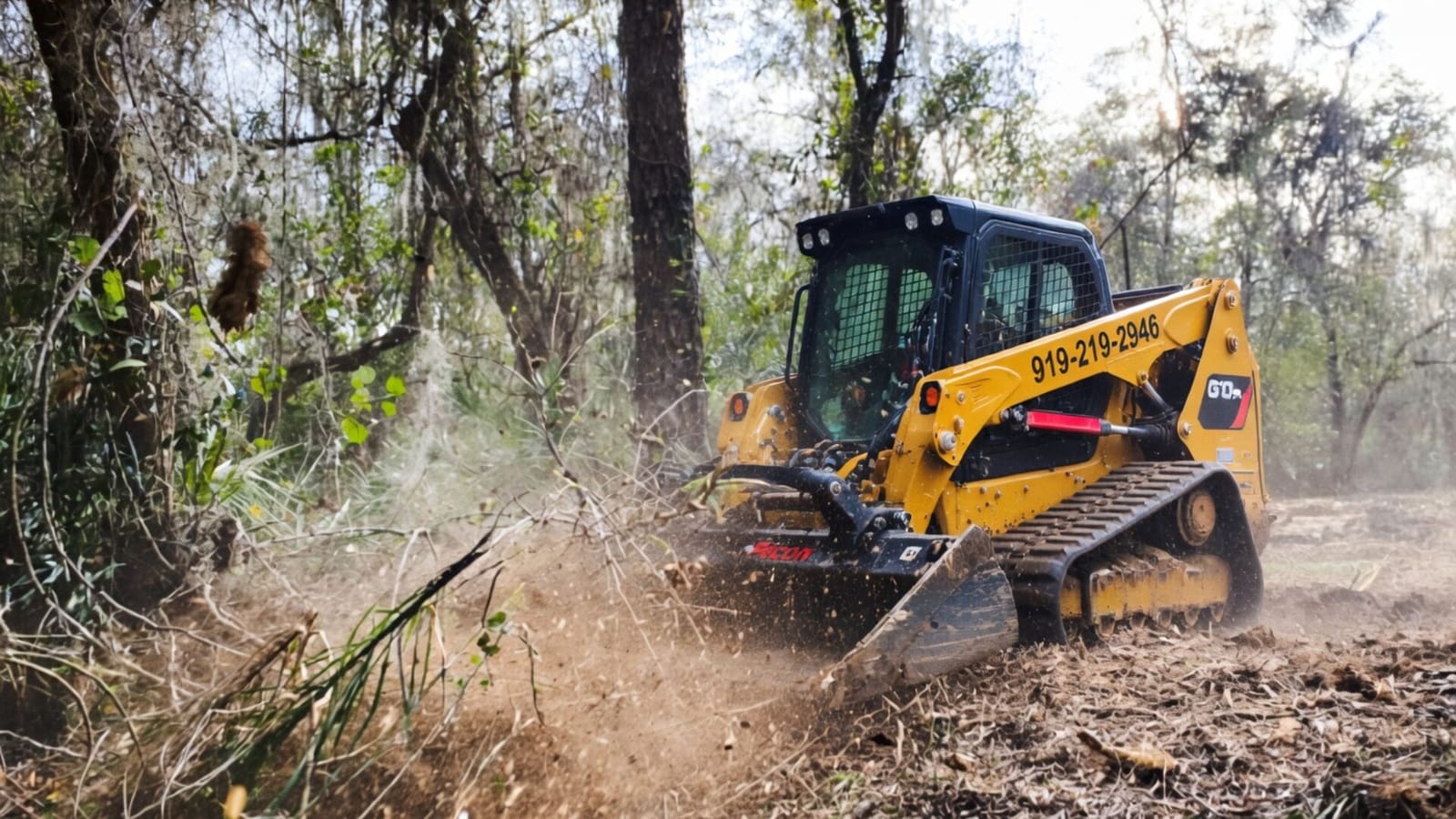
Forestry mulching is one tracked machine with a drum head grinding brush and small trees where they stand. Brush, small trees and stumps are ground into mulch on site, stumps finish flush with the ground, and nothing is hauled away. Full stump removal below grade and cut-and-haul for very large trees are discussed and priced in the quote; grading and build pads are not part of our price. What is standing decides where your acre lands:
| What is on the land | Our price per acre | What it looks like after |
|---|---|---|
| Oak sprouts, Russian olive or a fence line under trees you are keeping | $1,500 – $2,500 | Field edge or lot corner open again, canopy left standing |
| Shrubs and young trees on flat, open plains ground | $1,500 – $4,000, bottom of the band | Growth chipped into a mat, stumps flush with the grass |
| A closed Gambel oak thicket on a foothills grade | $1,500 – $4,000, top of the band | Thicket ground to chips; roots still alive underneath |
| A whole wooded parcel cleared to a named finish | $1,500 – $4,500 | Whole-parcel clearing rather than mulching |
| A quarter acre or a single lot corner | $1,500 minimum charge | Same trailer trip as a larger job |
Where these numbers come from. Every band above is copied from our Denver pricing page, the price list our Colorado crew quotes from. The minimum charge covers getting a tracked machine up a drive and back, which costs about the same for a quarter acre as for ten; it is the least a job costs, not a fee added on top. For the metro-only version of this math, see our Denver forestry mulching cost guide.
What Changes the Price of a Colorado Mulching Job
Oak that grows back from the root. CSU Extension places Gambel oak between 6,000 and 9,000 feet and notes it seldom grows from acorns; nearly every new stem rises from a deep, spreading root system. Its oak management page says suckering normally follows mastication, even when the whole overstory comes off, and that bare treated ground can invite weeds. So when we price a Castle Rock thicket we price the knockdown and talk about the follow-up in the same visit, because one pass never ends an oak stand.
What Douglas County asks of its residents. The county’s Gambel oak page calls machine mastication a quick, cost-effective way to treat large areas of oak, says grasses and wildflowers come back within a season or two, and asks owners to mow treated ground every year before the shoots get too woody for a lawnmower. That yearly mow is cheap next to mulching the same thicket again five years on.
Granite under the duff. West of the metro, the Sphinx soil series was described about a mile and a half west of Pine. It sits 8 to 20 inches above weathered Pikes Peak granite, carries 35 to 80 percent angular rock and runs on slopes up to 70 percent. That gravel chips carbide teeth. Our operator lifts the head, slows down and makes extra passes, and those hours are what carry a foothills acre toward $4,000.
Pine with beetles in it. The Colorado State Forest Service reports mountain pine beetle moving through Front Range ponderosa, with flight season starting in July, and says an infested tree is best removed by the following spring. It also warns against moving infested wood anywhere but a secure drop site. Jefferson County’s slash yards take beetle logs only at Tincup Ridge, and only before June 15 or after September 30. We schedule infested pine between fall and early summer and want a plan for those logs before the machine arrives.
How close the chips sit to the house. The State Forest Service’s Home Ignition Zone guide wants chipped slash kept 30 feet or more from a home, with gaps of at least 3 feet between chip patches so the layer never runs continuous. Near the house we spread thinner or send some material away, and that shows up in the number.
Pro tip: Point out any pine with pitch tubes or browning needles when we talk about your property. An infested tree has to be dealt with before the July flight, and catching it at the quote means one trip up your drive instead of two.
Forestry Mulching Costs Across Colorado
Jefferson County foothills. Evergreen, Conifer, Pine and Morrison sit on granite slopes under ponderosa and Douglas fir. Rock and grade set the price here, beetle timing sets the calendar, and burning is not a cheap way out, since county burn permits stop below 6,400 feet.
Douglas and Elbert counties. Around Castle Rock, Larkspur, Franktown and Elizabeth the Peyton series, first described in Douglas County, formed in arkose from the Dawson and Arapahoe formations between 5,600 and 8,000 feet. It treats the teeth far better than foothills granite, so oak density and resprouting decide the number. Residents can take their own brush to the county’s GreenWorks yard in Sedalia, though it refuses stumps, roots and contractor loads.
The plains east of Denver. From Brighton out through Bennett, Strasburg, Byers and Deer Trail most of our mulching is shelterbelts, fence rows and lot corners. The ground is easy and the drive is long, so these jobs sit near the bottom of the band. If the growth is grass and weeds instead of woody stems, a mower costs far less; see our Colorado brush hogging cost guide.
Colorado Springs and the Black Forest. In the Black Forest, the Kettle series is a deep, fast-draining arkose sand under scattered ponderosa. Our crew covers El Paso, Teller and Fremont counties through our Colorado Springs market, and the Colorado Springs pricing page carries the same bands.
The Western Slope. Piñon and juniper often root in shallow sandstone such as the Travessilla series, typically 4 to 10 inches deep, and the State Forest Service advises against cutting or processing piñon and juniper from April through October, while the piñon ips beetle is flying. That makes it winter work. Tell us where the land is and our crew will tell you what we can do.
Burning and Permit Rules in Colorado
Most owners price a burn pile before they price a mulcher, and in Colorado the burn usually loses. The state’s small pile and slash permit allows up to 50 piles a calendar year, none bigger than 8 by 8 by 8 feet, each out cold by sunset; anything larger needs a smoke management permit. Delegated counties, Denver, Jefferson, El Paso, Larimer, Mesa and Weld among them, issue their own permits, every other county applies to the state, and no permit is issued in a county under a fire ban. The metro winter prohibition sits on top, with the state’s note that some exemptions may apply.
Jefferson County’s open burning page adds its own layer: below 6,400 feet, tree slash counts as household rubbish; above it, a permit costs $80 and takes 10 to 15 working days, and most fire departments allow burning only with snow on the ground.
On permits for the ground itself, the state stormwater permit can apply from an acre of disturbance, and unincorporated Jefferson County counts clearing toward its half-acre grading line. Our Denver and Jefferson County permit guide lays out both. Cut Brush does not file permits, and grading and build pads are not part of our price: we clear to the ground so a builder can grade. Our Colorado land clearing and grading cost guide shows who takes each phase after we leave.
Frequently Asked Questions
How much does forestry mulching cost per acre in Colorado?
With Cut Brush, $1,500 to $4,000 an acre, and $1,500 to $2,500 for understory work under trees you keep. Light plains brush sits low in the band and a closed oak thicket on foothills granite sits near the top. Small jobs carry a $1,500 minimum charge.
Will Gambel oak grow back after mulching?
Yes, from the roots. CSU Extension says suckering normally follows mastication, and Douglas County advises mowing treated ground every year while the shoots are still soft. Budget the follow-up when you budget the first pass.
Can I burn the brush instead of mulching it near Denver?
Not from November 1 to March 31 in the seven metro counties, apart from the exemptions the state allows. In Jefferson County, burn permits exist only at 6,400 feet or higher, cost $80, and are never issued under Stage 1 or Stage 2 restrictions.
Is mulching cheaper than clearing a Colorado lot?
Usually, because the chips stay and nothing is trucked away. Mulching runs $1,500 to $4,000 an acre with us; whole-parcel clearing runs $1,500 to $4,500, and full stump removal or hauling very large trees is discussed and priced in the quote. Our Colorado land clearing cost per acre guide walks through the clearing side.
Do you mulch near Colorado Springs or on the Western Slope?
Yes around Colorado Springs: our crew covers El Paso, Teller and Fremont counties through our Colorado Springs market. On the Western Slope, tell us where the land is and our crew will tell you what we can do, and remember the piñon season: no cutting or processing from April through October.
Get a Forestry Mulching Quote in Colorado
Request a free quote and we’ll contact you to discuss your property, access and the clearing you need, whether your land is around Denver and the Front Range, around Colorado Springs and the Pikes Peak area, or anywhere else in Colorado.
Sources
More from the Cut Brush Blog
Keep reading for more tips and guides on land clearing.
 Cost Guide
Forestry Mulching Cost in Denver, CO (2026)
Forestry mulching around Denver runs $1,500 to $4,000 per acre. See what elevation, foothills access and resprouting Gambel oak do to the hours on your land.
 Cost Guide
Brush Hogging Cost Per Acre in Colorado (2026)
Brush hogging runs $75 to $400 an acre with Cut Brush around Denver, with a $250 to $500 minimum. See how oak sprouts, rock and fire rules move a Colorado job.
 Cost Guide
Underbrush Removal Cost in Colorado (2026 Guide)
Underbrush removal runs $1,500 to $2,500 an acre with Cut Brush around Denver. See how defensible space zones, Gambel oak and county codes shape a Colorado job.
Comparing states? See land clearing costs by state.
Let's Get Started on Your Land
Request a free quote. We'll contact you to discuss your property, access, and the clearing you need.
Get a Free QuoteOr call us directly: (919) 525-3950