
Tamarisk (Saltcedar) Removal in Colorado: A Plan That Holds
Cut Brush Team · October 31, 2026 · 7 min read

Tamarisk, also called saltcedar, is cleared in Colorado by cutting or mulching the stand, having a licensed applicator treat the stumps, and checking the ground for sprouts over the next few seasons. Cutting alone does not finish it. A forestry mulcher brings a river-bottom or ditch-bank stand down and leaves the ground covered in chips; the treatment and the follow-up are what keep it down. Clearing tamarisk from a bank, field edge or bottom corner typically costs $1,500 to $2,500 an acre.
This guide covers where tamarisk takes hold in Colorado, how to recognize it, why one cutting fails, a removal plan that lasts, what the Grand Valley around Fruita adds, and what the work costs.
Why Tamarisk Takes Over Colorado Rivers and Ditches
Tamarisk is a List B noxious weed in Colorado, the list for weeds the state wants eradicated, contained or suppressed depending on how widespread they are locally. It was brought in from central Asia, northern Africa and southern Europe for ornament and to hold stream banks, and it has since spread along floodplains, riverbanks, streambanks, marshes and irrigation ditches.
It does best where water is close to the surface. Seedlings survive on saturated soil with a high water table and open sun, which describes river margins and wet ditch banks. On a ranch or an acreage, that means the ditch that carries water to a field, the bank along a lane and the wet ground below a homesite.
Two traits make a stand hard to ignore:
- Seed. A mature plant can produce up to 600,000 seeds a year, and the seeds travel on wind and water. One seeding stand restocks the banks around it.
- Root pieces. Tamarisk reproduces vegetatively as well, so a bank worked with machinery can sprout from the pieces left behind.
Why a Stand Is Worth Clearing
- Salt. Tamarisk raises the salinity of the surface soil, which leaves the ground unfriendly to native plants and to the grass you may want back.
- Water. It uses a great deal of water, and a solid wall of it makes a ditch bank hard to walk, clean and maintain.
- Crowding. It crowds out native streamside plants.
How to Recognize Tamarisk
From a distance it reads as a feathery shrub or small tree, often in thick clumps, 5 to 20 feet tall. The leaves are small and scale-like, so the branches look more like a juniper’s than a broadleaf tree’s. Saplings and stems carry reddish-brown bark, and from late spring into summer it carries pink to white flowers in narrow, finger-like clusters. A stand in bloom shows a pink haze along the bank.
It has no thorns, which separates it from the thorny, silvery-leaved shrub that often grows beside it on the same water. If you are not sure what you have, your county weed office or CSU Extension can confirm it from a sample or a photo.
Why One Cutting Fails
Picture a ditch bank cut back with a chainsaw in the fall. By the next summer it is feathery and green again, often with more stems than before.
Cutting removes the top. The crown and the roots are untouched, and tamarisk regrows from stem and root fragments, so the cut stump is where the plant restarts. Seed already on the ground keeps germinating too. That is why the cut is paired with a stump treatment: cutting combined with an herbicide treatment works best.
Even opening up a large stand with a bulldozer or fire does not end it. Those methods have to be followed by treating the resprouts once they reach about 3 to 6 feet tall.
None of this makes machine work pointless. It means the machine is the first step, not the whole job, and the stump treatment and the follow-up are what finish it.
A Removal Plan That Holds: Clear, Treat, Check
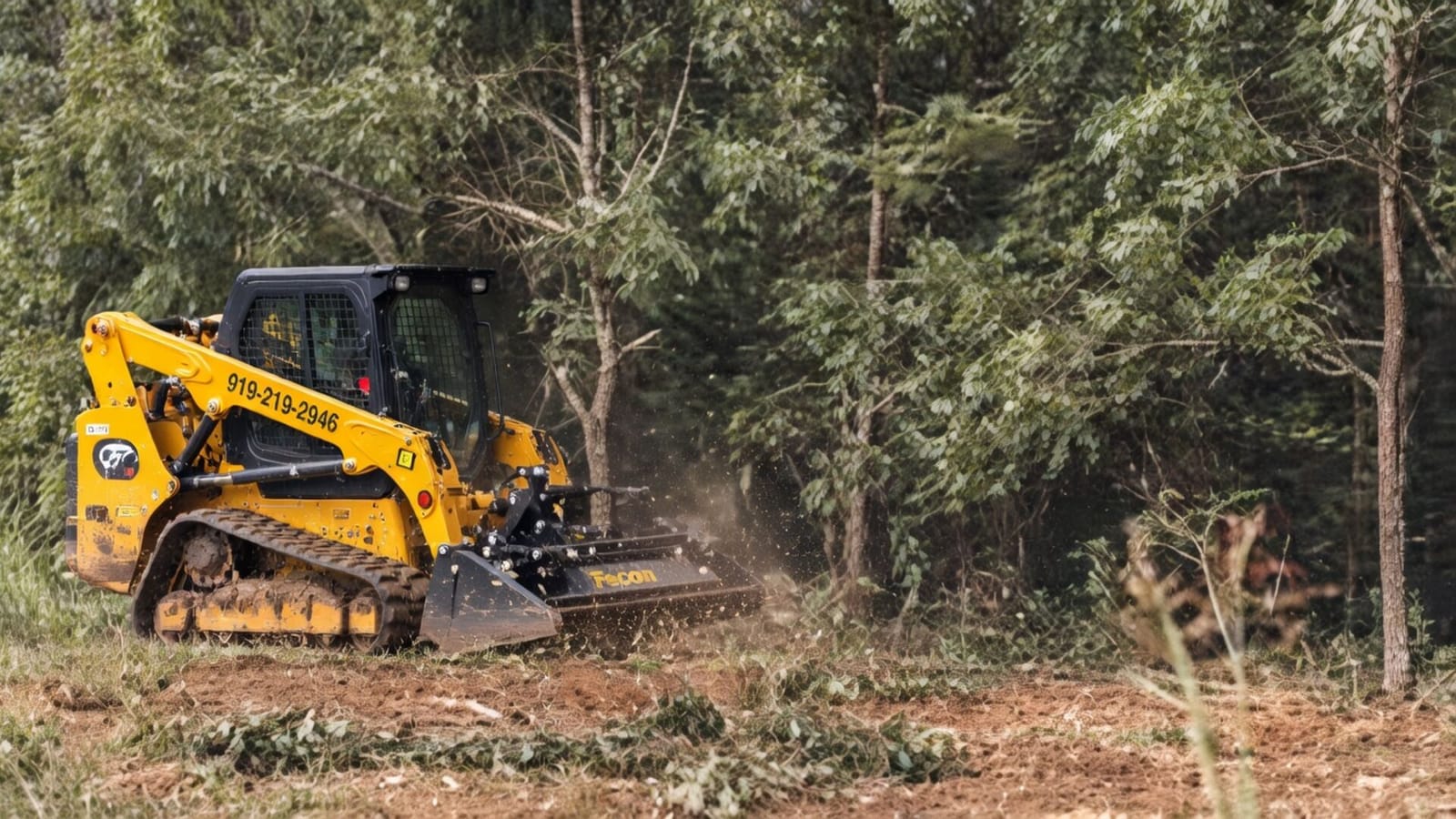
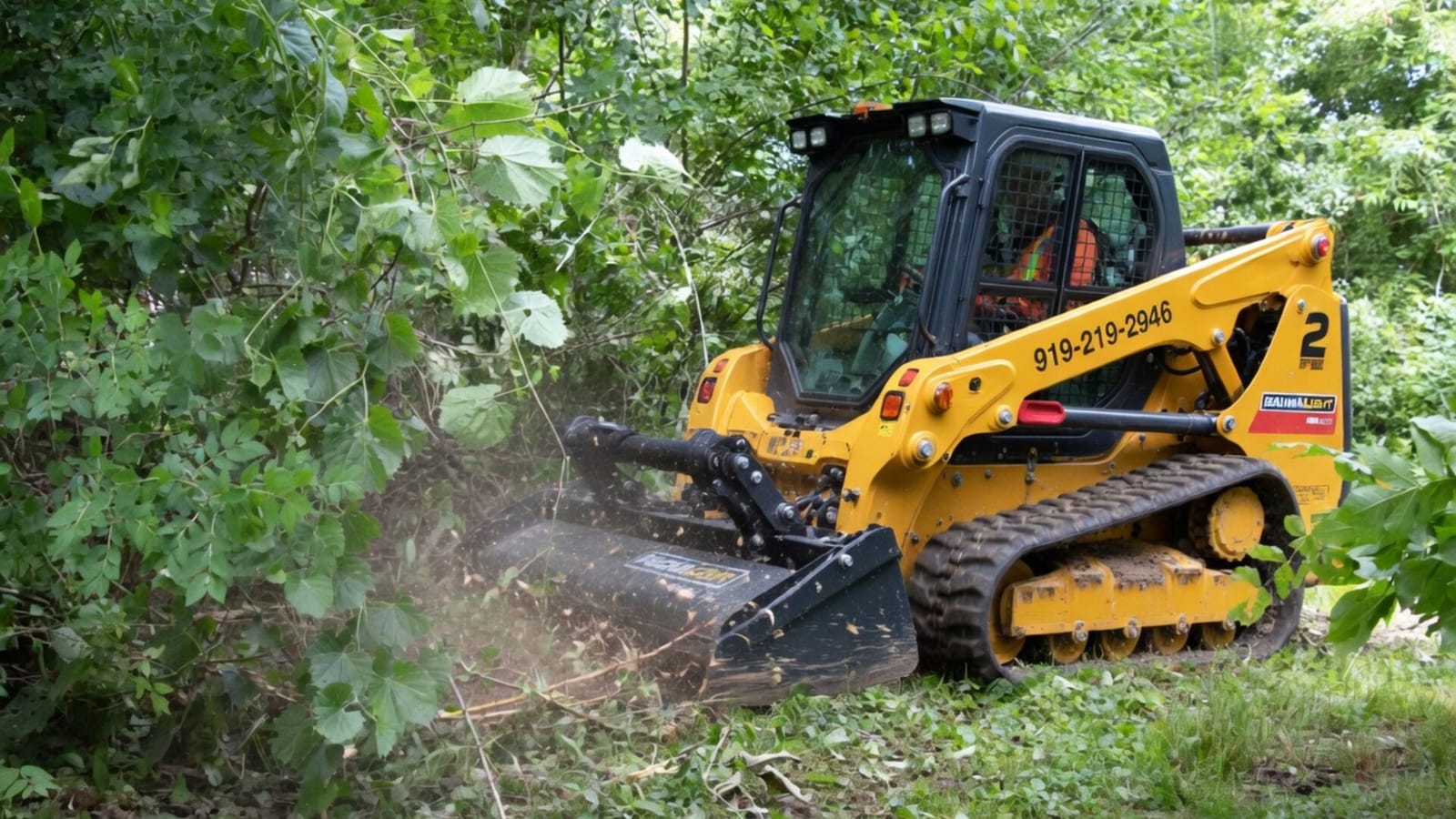
Step one: bring the stand down. A tracked forestry mulcher grinds tamarisk into a chip layer where it stood. It steers between the cottonwoods and any other trees you want kept and leaves stumps low and easy to reach. Nothing is piled, so there is no burn question. Narrow banks are worked lengthwise, and soft ground is worked when it will carry the machine.
Step two: treat the stumps. Stump treatment is a licensed applicator’s work, arranged by the landowner and following the product label; our crew does not apply herbicide. Line the applicator up before the cut, so the stumps are treated while they are fresh, and ask for the treatment quoted as its own line so you see the whole plan.
Step three: check back. Sprouts can show in the same growing season, and the follow-up on a managed stand runs the same season and for several years afterwards. Walk the bank each season, pull young plants by hand while they are small, and spot-treat anything green. On a long bank, a light second mulching pass can cost less than treating hundreds of sprouts one at a time.
Step four: put something there. Bare, salty ground invites the next seeding. Grass seed, willow stakes and cottonwood cuttings reduce the chance of reinvasion, so cutting and treatment work best when replanting is planned alongside them.
Work with your neighbors. A cleared bank below an untreated stand keeps seeing seedlings. If a ditch runs through several properties, clearing the whole run at once spreads the trip cost and slows the reseeding.
Tamarisk in the Grand Valley
Around Fruita, Grand Junction and Palisade, the Colorado River bottoms and the ditches that branch from it are tamarisk country. Mesa County’s weed plan lists tamarisk as a List B weed with a goal of suppression, treated on designated county parcels, which means the county works specific sites rather than every bank.
Plan for the ground after the tamarisk is removed. Native replanting and follow-up maintenance belong alongside cutting and treatment. Discuss suitable replacement plants and the follow-up with the people handling that work before clearing starts.
Three local points shape a private job:
- Burning. Residential burn permits in Mesa County cover clean, dry trimmings under an inch in diameter, and outside Grand Junction only in the spring (1 March to 31 May) and fall (1 September to 31 October) seasons, as of 31 October 2026. A tamarisk stand of thick trunks does not fit that description. Mulching leaves nothing to burn.
- Ditches. An irrigation ditch may belong to a ditch company with its own rules for its bank. Find out who owns the bank before any machine works it.
- Permits. Whether a job needs anything from the city, the county or another authority depends on the parcel and the scope. Requirements vary by parcel, scope and jurisdiction, and the governing authority makes the determination.
Our crew covers the Fruita, Grand Junction, Clifton and Palisade area from the Fruita land clearing page, and the same plan applies to a river bottom or ditch elsewhere in the state.
What Tamarisk Removal Costs
Clearing tamarisk from a ditch bank, fence line or field edge, with the trees you are keeping left standing, falls in Cut Brush’s $1,500 to $2,500 per acre band. Bank work is narrow, so it is priced by the acreage the strip adds up to; a bank 10 feet wide and 4,356 feet long is one acre. A dense, old stand across a wide river bottom moves into forestry mulching at up to $4,000 per acre. Where an acre lands depends on how thick and how big the stand is. $1,500 is the minimum charge for a project, a floor rather than a fee added on top.
The mulching price grinds the trees and stumps into mulch on site, with stumps flush with the ground and nothing hauled away. Full stump removal below grade and cut-and-haul for very large trees are discussed and priced in the quote. The stump treatment is a separate cost from a separate provider, and our crew does not price it.
Frequently Asked Questions
How do I get rid of tamarisk for good?
Cut or mulch the stand, have a licensed applicator treat the stumps right after, and check the bank every season for several years. Cutting alone lets it sprout back.
Is tamarisk a noxious weed in Colorado?
Yes. It is a List B species, which means it is to be eradicated, contained or suppressed depending on local infestations.
Can I burn the tamarisk I cut?
Only within what your burn permit allows. Mesa County’s residential permit covers trimmings under an inch in diameter, so thick trunks fall outside it. Mulching leaves nothing to burn.
Can a mulcher clear tamarisk next to water?
Yes, when the ground will carry the machine. Soft ground beside the river or a ditch is worked once it firms up, and the quote names anything that cannot be reached safely.
Get Your Bank Back
If tamarisk has taken a river bottom, a ditch or a field edge, request a free quote. We’ll contact you to discuss your property, access and the clearing you need, and our crew puts the scope on paper, including what is and is not treated.
Read more: the bands on the Fruita pricing page, the local ground on the Fruita land clearing page, and statewide figures in the Colorado land clearing cost guide.
More from the Cut Brush Blog
Keep reading for more tips and guides on land clearing.
 Cost Guide
Forestry Mulching Cost in Fruita, CO (2026)
Forestry mulching in Fruita, CO: $1,500 to $4,000 an acre. How day, hourly and per-acre quotes compare, plus tamarisk and river ground. Request a free quote.
 Guide
Russian Olive Removal in Colorado: Clear, Treat, Then Watch the Sprouts
How to remove Russian olive in Colorado: why one cutting fails, the clear, treat and watch plan, Eagle, Garfield and Larimer notes, and cost per acre.
Let's Get Started on Your Land
Request a free quote. We'll contact you to discuss your property, access, and the clearing you need.
Get a Free QuoteOr call us directly: (919) 525-3950