
Forestry Mulching Cost in Hopewell, VA (2026)
Cut Brush Team · November 3, 2026 · 6 min read

Forestry mulching around Hopewell, Virginia costs $1,500 to $4,000 an acre, and lighter old-field regrowth runs $1,500 to $2,500 an acre. Where your land falls depends on how long it has been left: a field idle for a few seasons holds small stems a mulcher clears quickly, while one left for many years has turned into young woods that take far longer to grind.
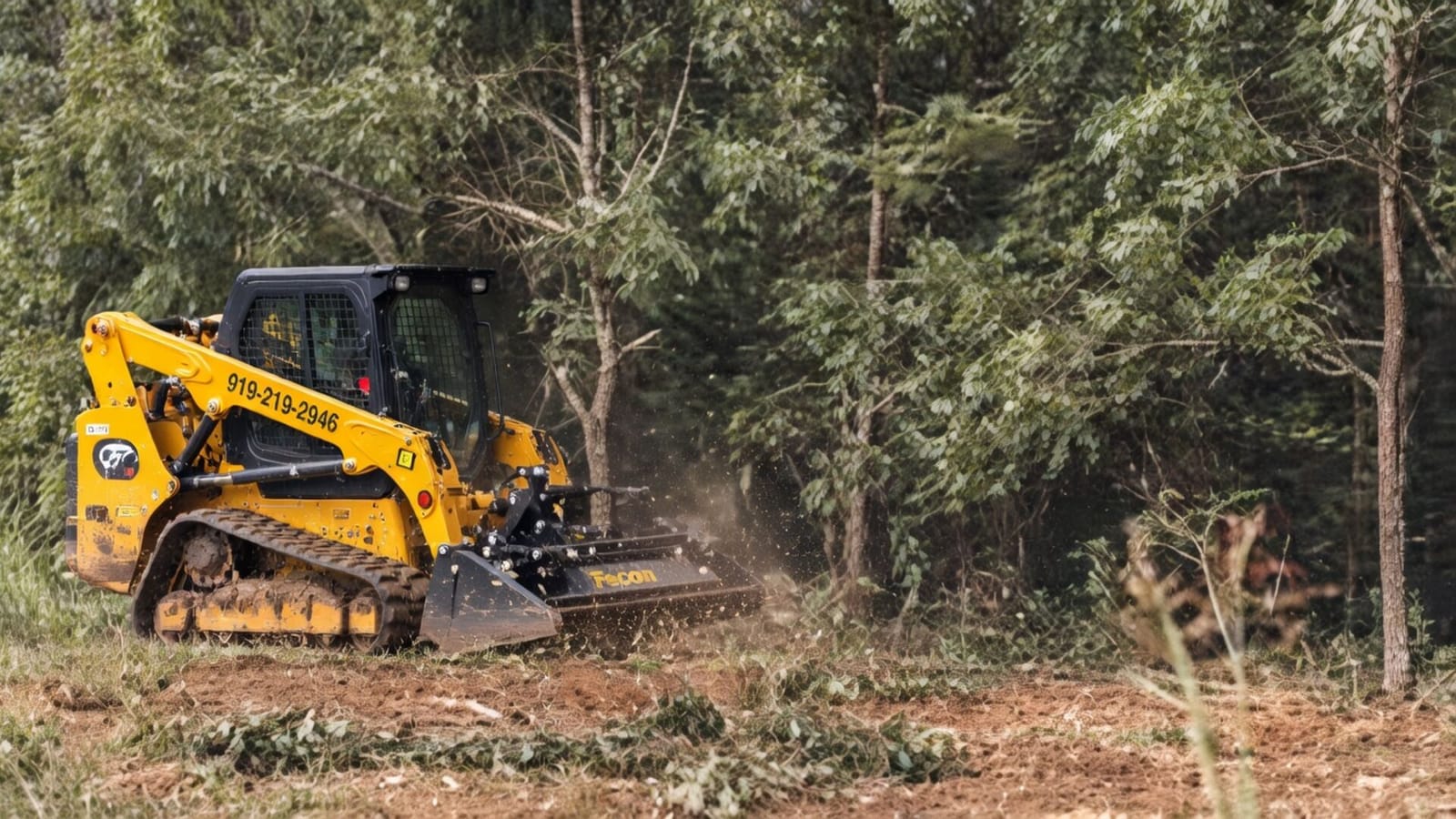
Whatever the band, the result is the same kind of ground. Forestry mulching grinds brush, small trees and stumps into mulch on site, with stumps left flush and nothing hauled away. Taking stumps out below grade, or cutting and hauling very large trees, is discussed and priced in the quote. Grading and build pads are not part of our price: we clear to the ground, and a builder grades. Jobs too small to reach it on acreage pay a minimum charge of about $1,500, which takes the place of the acre rate rather than adding to it.
What Mulching and Clearing Cost Per Acre Here
Most land people want back around Hopewell, Prince George and Chester is one of three kinds of ground, and each has its place in the bands.
| What is standing | Per-acre price | What moves it within the band |
|---|---|---|
| Old field with a few seasons of sweetgum, mimosa and briars | $1,500 – $2,500 | Stem count, and whether sprouts need a return visit |
| Young woods: saplings and small trees packed tight | $1,500 – $4,000 | Trunk size and how closely they stand |
| Mature woods cleared to an agreed finish | $1,500 – $4,500 | Trunk size, stand density and the finish agreed |
The bands are the same from Colonial Heights to Waverly, and each has its own row on the Hopewell pricing page.
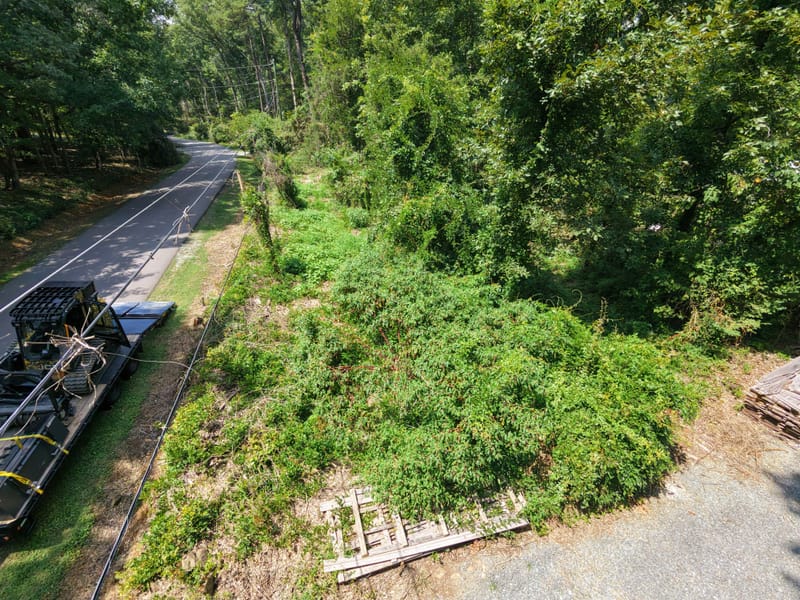
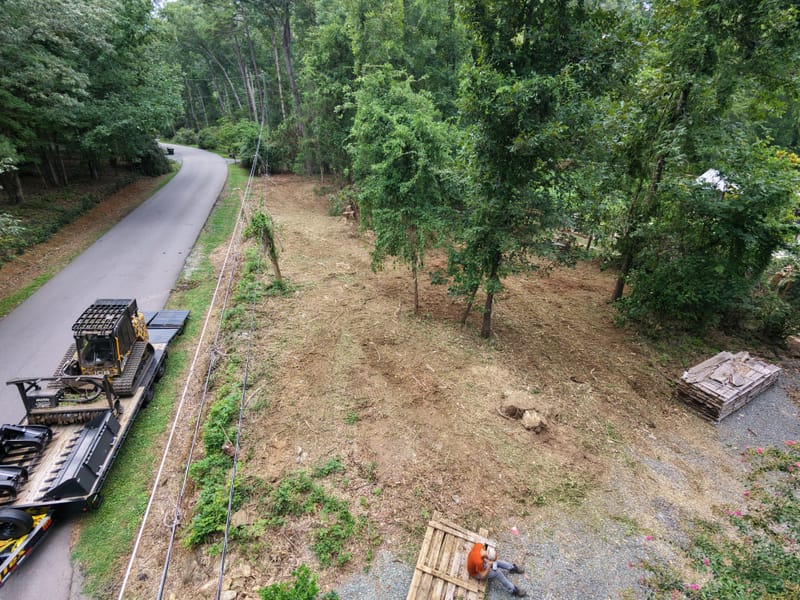
How Many Acres a Mulcher Clears in a Day
There is no single number, because the machine moves at the pace the growth allows. On an open old field with light brush and small saplings, a day often covers about one to two acres. Medium growth, where the stems are thicker and closer, runs slower. A dense stand of young trees runs closer to half an acre, and so does a day that starts with ground too soft to work.
What slows the head down:
- Stem size and spacing. A field of finger-thick sweetgum goes fast; trunks a few inches across, standing shoulder to shoulder, do not.
- Trees you keep. Every flagged tree is a slow pass around it.
- Wet ground. Low ground near the James, the Appomattox and their creeks can stay soft after rain, and a tracked machine waits for it to firm up rather than rut it.
How Long Five Acres Take
Using the same rough pace, five acres of light old-field regrowth is roughly three to five working days. Five acres of medium growth takes longer, and a dense young stand is closer to two working weeks, with rain days falling in between.
Because we price by the acre, the day count changes our schedule, not your bill. Five acres of light regrowth in the $1,500 to $2,500 band totals $7,500 to $12,500, and that total holds if the job takes two days or four.
Comparing a Day-Rate or Hourly Quote
A quote by the day or the hour needs one conversion before it can sit next to ours. Take the rate times the days or hours quoted, then add the trailer or mobilization charge: that is the full job cost. Split the full job cost across the acres, and the result is a per-acre number you can compare with our band.
For example, a quote that totals $6,000 with the trailer charge included works out to $2,000 an acre if it clears three acres, and $4,000 an acre if it clears one and a half. One quote can be a bargain or expensive depending on how much ground it covers, so find out how many acres the days are meant to clear and what happens to the bill if the work runs over.
We do not sell by the day or the hour. Our per-acre band is the figure to hold any time-based quote against.
Sprouts, River Buffers and the Summer Burn Ban
Sprouts add visits, not a new band. Mimosa sends up sprouts from its roots after it is cut, and trees cut in February have regrown to an average of 54 inches by the end of June. Sweetgum regrows from root sprouts as well. The opening pass is priced within the mulching or regrowth band, and every sprout trip appears separately, which shows plainly what a season of follow-up costs. The Virginia mimosa tree removal guide lays out the visits.
Buffers change the acres, not the rate. Inside Hopewell, a 100-foot buffer runs along both sides of any stream that flows year-round, and removing vegetation there needs the Director of Development’s review and approval. Buffer ground is left out of the quote unless the city approves the work, which can shrink the acres you pay for. Requirements vary by parcel, scope and jurisdiction, and the governing authority makes the determination.
No pile means no wait. Burning debris from clearing is prohibited from May 1 through September 30 in Hopewell, Prince George, Chesterfield, Colonial Heights and Petersburg. Mulching leaves nothing to burn, so the season does not hold the job.
Frequently Asked Questions
Will my lot be done in a day?
That depends on how many acres sit inside the clearing line and what grows on them. Light old-field regrowth may reach one to two acres in a day; a thick young stand or soft bottom can take several days for the same ground. Since the quote is written in acres, extra days do not raise the price.
Why does an old field cost less than woods?
Smaller stems grind faster. A field caught within a few seasons sits in the regrowth band, while the same field left to become young woods moves into the mulching band.
Why is there a minimum charge?
Getting a tracked mulcher on a trailer to your property costs the same for a quarter acre as for two. When the acreage would bill under $1,500, the minimum is charged instead of the acre rate, never on top of it.
Ask for a Hopewell Quote
Request a free quote and we’ll contact you to discuss your property, access and the clearing you need. You see the line, the finish and the total in writing first.
For the towns in our Tri-Cities area and the permit offices that govern them, see the Hopewell land clearing page. Statewide figures sit in the Virginia land clearing cost guide.
More from the Cut Brush Blog
Keep reading for more tips and guides on land clearing.
 Cost Guide
Land Clearing Cost Per Acre in Virginia (2026 Guide)
Land clearing cost per acre in Virginia runs $1,500 to $4,500. How terrain, Bay Act disturbance limits and the burn calendar move a quote, region by region.
 Guide
Mimosa Tree Removal in Virginia: Plan and Cost per Acre
Mimosa tree removal in Virginia: $1,500 to $2,500 an acre for old-field and fence row work, why a cut tree sprouts back and the visits that follow. Free quote.
 Cost Guide
Forestry Mulching Cost in Virginia (2026 Guide)
Forestry mulching in Virginia costs $1,500 to $4,000 an acre. See how Bay Act buffers, Valley sinkholes, summer burn bans and big trees move your quote.
Let's Get Started on Your Land
Request a free quote. We'll contact you to discuss your property, access, and the clearing you need.
Get a Free QuoteOr call us directly: (571) 520-9081
 Quick answers from Cut Brush