
Forestry Mulching Cost in Virginia (2026 Guide)
Cut Brush Team · November 9, 2026 · 9 min read
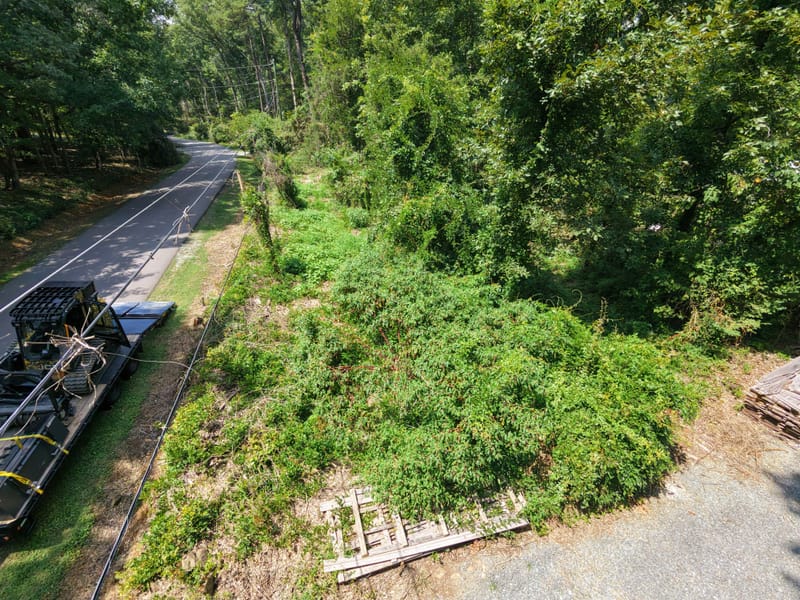
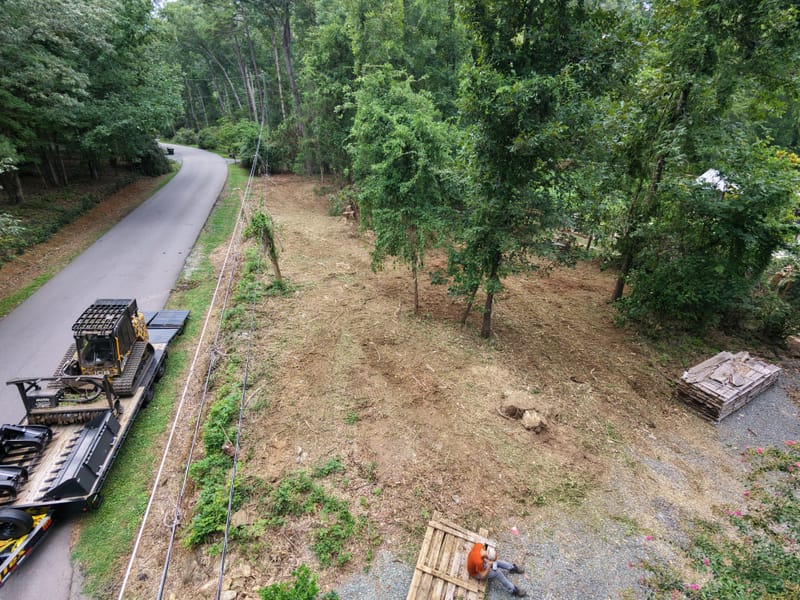
Forestry mulching in Virginia costs $1,500 to $4,000 an acre, and lighter regrowth, fence rows and vine thickets run $1,500 to $2,500 an acre. Those two bands are printed on all ten of our Virginia pricing pages, from the Northern Neck to the Blue Ridge Plateau. Where your acre lands inside them comes down to stem size, the ground, and whether a Bay Act buffer or a sinkhole sits in the way.
At a glance:
- Grown-up woods and old fields, mulched in place: $1,500 to $4,000 an acre
- Fence rows, field edges and invasive thickets: $1,500 to $2,500 an acre
- Small jobs: a minimum charge of about $1,500, billed in place of the acre rate, never on top of it
- What a mulching head takes: stems up to 6 to 8 inches and a wide range of stumps; bigger trees are felled first
- Burn rules a mulched job never meets: no open burning before 4 p.m. from February 15 to April 30 near woods, and no burning of clearing debris from May 1 to September 30 in the Northern Virginia, Fredericksburg, Richmond, Hampton Roads, Roanoke and Winchester areas
Our crews mulch land across Virginia from ten markets: Luray and the Shenandoah Valley, Hopewell, Smithfield, King George, Rocky Mount, Buena Vista, Hillsville, Emporia, South Boston and Warrenton.
How Much Does Forestry Mulching Cost in Virginia?
| What is standing on the acre | Our price per acre | What it looks like in Virginia |
|---|---|---|
| Idle field filling with Virginia pine, cedar and briars | $1,500 – $2,500 | A Piedmont or Northern Neck pasture left alone a few seasons |
| Fence rows and edges taken by an invasive | $1,500 – $2,500 | Ailanthus in the Page Valley, autumn olive around Hillsville, wisteria on the Northern Neck |
| Woodlot closed in underneath, pole-size trees | $1,500 – $4,000 | Mixed pine and hardwood that has not been thinned in years |
| Cutover tract with slash and low stumps | $1,500 – $4,000 | Land logged and now headed for pasture or a house site |
| Trees past 8 inches across | Priced in your quote | Felled first; the mulcher handles the tops and everything under them |
Where these numbers come from. Every row is a published band from our Virginia pricing pages, such as the Luray pricing page, and the mulching row reads the same in all ten markets. The lighter band is the same price everywhere but carries a local name for the growth it covers, from Tree of Heaven & Old-Field Clearing in Luray to Kudzu & Bottomland Brush in Emporia. For clearing to bare soil, the Virginia land clearing cost guide covers the wider band.
What Moves a Virginia Mulching Price
Stem size, and the 6-to-8-inch line. A mulching head pushes over and grinds stems up to about 6 to 8 inches and grinds out stumps of many sizes. Below that line, time per acre follows how many stems there are. Above it, a tree is felled before the head can finish the job, and that is where a homesite with big oaks to fell starts climbing the band.
Topsoil you cannot buy back. Virginia ground carries at best a few inches of topsoil, and a bulldozer nearly always strips it. A mulcher leaves that layer where it is, under a mat of chips, which matters most when the cleared ground is going back to grass. A dozer bid has to be weighed with the cost of getting grass to grow on what it leaves.
Sinkholes in the Valley. The Valley and Ridge country around Luray and Buena Vista is karst over limestone and dolomite, and state law bars dumping waste into a sinkhole. Our crew flags every depression before the machine moves, never pushes brush into one, and leaves the chips where they fall. Working around those spots adds time that a level field south of the James never sees.
The buffer along tidal water. In a Bay Act area, a buffer of at least 100 feet runs landward of tidal wetlands and tidal shores and along both sides of every stream that flows year-round, and clearing inside it is held to narrow exceptions such as dead trees, thinning, and a path or sight line with replanting. On a waterfront tract near Smithfield or King George, the buffer can pull a wide strip out of the clearing line, and the quote shows where.
Forestry Mulching Costs Across Virginia
Coastal Plain south of the James. Around Smithfield, Hopewell and Emporia the land is close to level, so slope rarely moves a price. Water does. Low ground stays soft after rain, Emporia sits on the fall zone with a wide Meherrin floodplain, and Bay Act buffers trim waterfront acreage. A soft spot changes when we schedule, not what we charge.
The Northern Neck. King George sits between the Potomac and the Rappahannock, on ground that is somewhat hilly and drains well, which keeps a tracked machine moving. The whole county is a Tidewater locality, so ask about the Bay Act lines before any work near the rivers or their creeks. Old fields here go to Virginia pine, sweetgum and red cedar.
The Piedmont. From South Boston and Rocky Mount north to Warrenton, the land is gently rolling upland that rises into foothill ridges toward the Blue Ridge. Virginia pine seeds into abandoned fields fast, so a pasture idle for a few years is often lighter-band work, and once those pines reach pole size the same field is priced on the mulching band.
The Shenandoah Valley. Around Luray, Page County lies between the Blue Ridge and Massanutten, and Buena Vista sits on the Maury River with the Blue Ridge above it. Long parallel ridges put slope at the foot of many tracts, and the karst underneath puts sinkholes in the open fields between them. Ailanthus fence rows and old fields are the usual work.
The Blue Ridge Plateau. South of Roanoke Gap the Blue Ridge widens into a broad plateau, and around Hillsville Carroll County is gently rolling mountain country, where old farmland at Crooked Creek runs from 2,400 to over 3,000 feet. Much of the work is former pasture going to autumn olive, which sprouts back after a cut, so the first pass and the return cuts are priced as separate lines.
Permits and Burning Rules for a Virginia Mulching Job
A mulched acre leaves no pile, and in Virginia that settles two calendars at once. From February 15 to April 30, open burning within 300 feet of woods or dry grass that could carry fire to the woods waits until 4 p.m. Breaking that rule is a Class 3 misdemeanor with a fine of up to $500, and whoever lit the fire pays to put it out if it escapes. Some localities set stricter rules on top.
The second calendar is local. From May 1 to September 30, debris from land clearing cannot be openly burned in Virginia’s five emissions control areas: Northern Virginia, Fredericksburg, Richmond, Hampton Roads, and Roanoke and Winchester in the west. Around Hopewell, the city, Prince George, Chesterfield, Colonial Heights and Petersburg are all on that list; around Smithfield, so are Isle of Wight County, which takes in the town, and Suffolk. Page, Rockbridge, Carroll, Franklin, Halifax, Greensville, King George and Fauquier counties are not, though some of our territories reach listed places such as Fredericksburg, Manassas and Roanoke County, so check the address against the list.
Erosion and sediment rules start at 10,000 square feet of disturbance, or 2,500 in a Chesapeake Bay Preservation Area, and King George, Isle of Wight, Prince George and Hopewell are all Tidewater localities. Clearing for bona fide agricultural use is exempt, and a timber harvest stays exempt only if the land is replanted or converted to agricultural or improved pasture use. Your local program decides whether a job qualifies, so ask before the work is booked.
Pro tip: On a Tidewater tract, ask your county or town for its Bay Act map before the walk-through. If the buffer crosses your clearing line, the open ground can be priced at the mulching rate and the buffer kept to what the rule allows, instead of finding out after the machine is unloaded.
Frequently Asked Questions
Why do some Virginia mulching prices look lower than the quotes I get?
Figures like $850 an acre are old ones, not jobs priced today, and the $1,650 that often appears beside them was the cost of clearing with a dozer, not mulching. Neither reflects what it costs to bring a tracked mulcher to a Virginia property now. Our current band is $1,500 to $4,000 an acre, with lighter regrowth at $1,500 to $2,500.
How do I compare an hourly quote with a per-acre price?
One Virginia acre can take a mulcher anywhere from about an hour to a full eight-hour day, so an hourly rate means little until you know how many acres it is meant to finish. Take the full bid, trailer charge included, divide it by those acres, and hold the result against our band. We price by the acre, so extra machine time on a thick acre does not change your bill.
Can you mulch around the big trees I want to keep?
Yes. Flag the trees you want kept before work starts, and the head works the brush and small stems around them. Clearing under a canopy you are keeping is its own job, priced as underbrush removal in Virginia.
Can a mulcher clean up slash and stumps after logging?
Yes. Slash and low hardwood stumps are good mulching work, and the chips stay on the ground instead of going to a burn pile. If the land is headed for pasture, say so at the walk-through: a harvest keeps its erosion control exemption only if the land is replanted or turned into pasture or cropland, and your local program makes that call.
Is my job too small to bother with?
No. A small job is billed at the minimum of about $1,500 instead of the acre rate, so a single fence row or a half-acre homesite gets the same machine as a 20-acre tract.
Get a Forestry Mulching Quote in Virginia
Request a free quote and our crew will contact you to discuss the property, the access and the clearing you need. Pick the nearest area below to get started. If the job is mostly open field, our Virginia brush hogging cost guide may fit better, and if the ground needs a graded pad after clearing, see land clearing and grading costs in Virginia.
Sources
- Virginia Cooperative Extension, Options for Clearing Land: Pasture Establishment
- Virginia Administrative Code 9VAC25-830-140: development criteria for Resource Protection Areas, including the 100-foot buffer
More from the Cut Brush Blog
Keep reading for more tips and guides on land clearing.
 Cost Guide
Forestry Mulching Cost in Luray, VA (2026)
Forestry mulching in Luray, VA costs $1,500 to $4,000 an acre. How to compare a day-rate bid, why five acres can take two days or five, and sprout visits.
 Guide
Tree of Heaven Removal in Virginia: Plan and Cost per Acre
Tree of heaven removal in Virginia: how to tell it from sumac, why a cut stand comes back thicker, the seasons that wear it down and the cost per acre.
 Cost Guide
Land Clearing Cost Per Acre in Virginia (2026 Guide)
Land clearing cost per acre in Virginia runs $1,500 to $4,500. How terrain, Bay Act disturbance limits and the burn calendar move a quote, region by region.
Comparing states? See land clearing costs by state.
Let's Get Started on Your Land
Request a free quote. We'll contact you to discuss your property, access, and the clearing you need.
Get a Free QuoteOr call us directly: (571) 520-9081
 Quick answers from Cut Brush