
Forestry Mulching Cost in Sabattus, ME (2026)
Cut Brush Team · October 16, 2026 · 5 min read

Forestry mulching around Sabattus, Maine costs $1,500 to $4,000 an acre, and clearing barberry or brush beneath trees that stay costs $1,500 to $2,500. On a lot near Sabattus Pond, though, the rate is only half the sum. The other half is how many of your acres the town lets a machine work, and on pond frontage that is often fewer than the deed shows.
Those figures include grinding brush, small trees and stumps into mulch on site, stumps left flush and nothing hauled away. Full stump removal below grade, and cutting and hauling very large trees, are discussed and priced in your quote. Grading is not part of our price: we clear to the ground so a builder can grade. The minimum charge of about $1,500 is where small jobs start; it replaces an acre rate on tiny jobs and is never added to one.
Why a Pond Lot Prices Differently
The Sabattus Shoreland Zoning Ordinance applies to all land within 250 feet of any great pond. Under Maine law a great pond is any natural inland water over 10 acres, or over 30 acres if it was formed or enlarged artificially, and Sabattus Pond covers 1,962 acres. The front and back of a pond lot are governed differently, so a quote treats them differently.
Picture the zone as three bands running back from the water:
| Distance from the pond | What the ordinance allows | How we price it |
|---|---|---|
| First 100 feet (the buffer strip) | Selective tree cutting only; low growth and the forest floor stay | Not mulched; any tree work is quoted separately |
| 100 to 250 feet | Up to 40 percent of tree volume in ten years; cleared openings capped | Mulching band, on the ground the caps leave |
| Past 250 feet | Outside the shoreland zone | The normal per-acre bands |
What the Buffer Strip Leaves Standing
Within 100 feet of the pond, the ordinance keeps a buffer of trees and other growth. No cleared opening may be larger than 250 square feet. Trees can be thinned only while a well-distributed stand remains, scored by a point system on each 25 by 50 foot plot, and the cut over any decade is held to 40 percent of the volume in trees 4 inches thick or more.
The rule that settles the mulching question is this one: growth under 3 feet tall, the leaf litter and the forest duff “shall not be cut, covered, or removed”, apart from a footpath or a permitted use. A mulcher does exactly what that bans. It cuts the low layer and spreads chips over the duff. So on the strip nearest the water, a quote from us is either selective tree work or nothing, and the per-acre mulching rate does not apply there.
For scale, a lot with 200 feet of frontage holds 20,000 square feet of buffer, a little under half an acre.
Behind the Buffer: Two Caps
From 100 feet back to the edge of the zone, two limits shape the job.
Tree volume. Over any ten-year stretch, the trees taken out may total at most 40 percent of the volume in stems 4 inches or thicker, and trees cut for a house or drive count against that share.
Cleared openings. Outside the General Development district, every cleared opening in the zone together (house, drive, lawn, septic area and land cleared before) may not exceed 25 percent of the lot area inside the zone, or 10,000 square feet, whichever is greater. On that same 200-foot lot, if it runs at least 250 feet back, the zone holds 50,000 square feet, so the openings cap is 12,500 square feet, minus whatever is already open.
Mulching brush and saplings under trees you keep can still fit inside these limits. A field that has grown back to shrubs and young trees gets no exemption: the ordinance regulates it as woody growth. Some districts also need a permit from the Code Enforcement Officer before clearing. Requirements vary by parcel, scope and jurisdiction, and the governing authority makes the determination.
The same 250-foot reach runs along the Sabattus River (or its 100-year floodplain, if wider), Curtis, Maxwell, Fisher and Barker brooks and freshwater wetland edges, so a lot far from the pond can still be in the zone.
Renting a Mulcher Instead of Hiring the Job
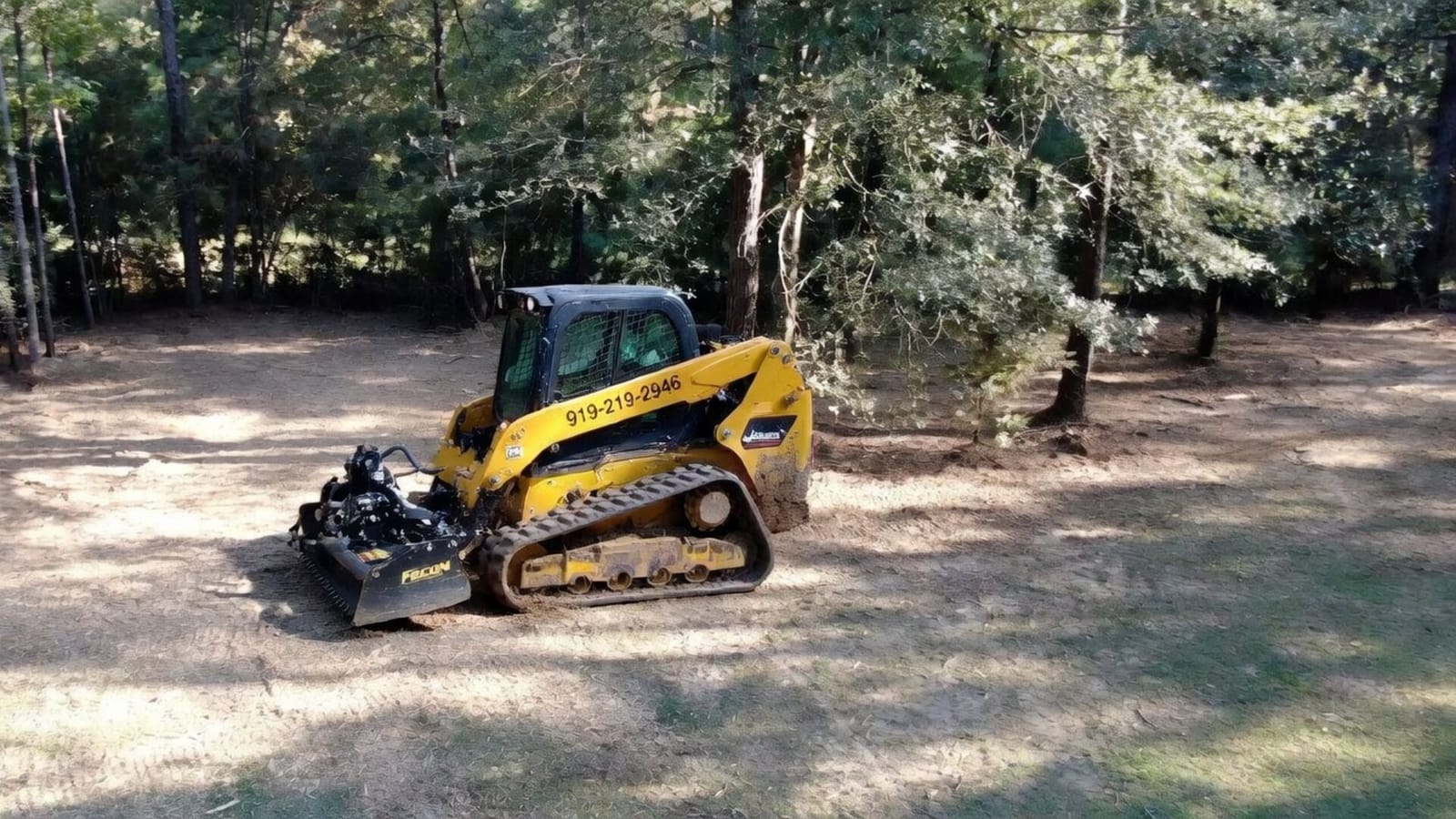
Some owners price a weekend rental of a mulching head and tracked carrier first. The rental covers the machine and leaves the rest with you: hauling it to the lot, learning to run the head without catching a stone wall or a buried rock, wear on the teeth, and the time. It also leaves the shoreland rules with you. A rented machine run into the buffer strip breaks the same ordinance a hired one would, and the owner answers for it.
Hiring puts the machine, the operator and the planning around the zone in one written price. Our Sabattus pricing page lists all four bands to set beside a rental quote.
When the Job Is One Wall Line
Many jobs here are small: a stone wall at the back of a field gone to barberry, or one corner of a yard. Those start at the minimum charge, since bringing the machine out costs the same for a short strip as for a full day. Adding every edge and corner on the property to one visit makes that minimum go further. Barberry sprouts back after cutting, so the return visit is listed on its own line; our Maine barberry removal guide explains the visits.
Frequently Asked Questions
Can I mulch right down to the water on Sabattus Pond?
No. In the first 100 feet, low growth and the forest floor must stay uncut and uncovered, so that strip is not mulched.
Is renting a forestry mulcher cheaper than hiring the job?
The rental line can look lower, but the operator time, transport, tooth wear and the shoreland rules stay with you.
Does an old field near the pond count as clearing?
Yes. The ordinance treats a field that has grown back to shrubs and trees as woody growth, so the buffer and the caps apply to it.
Get a Price for Your Sabattus Land
Request a free quote and we’ll contact you to discuss your property, access and the clearing you need. The quote sets out the method and the finish for each part of the lot.
Also useful: the town list and pond rules on our Sabattus land clearing page, and Tree Growth land, stormwater and burning in the Maine land clearing cost guide.
More from the Cut Brush Blog
Keep reading for more tips and guides on land clearing.
 Cost Guide
Land Clearing Cost Per Acre in Maine (2026 Guide)
Land clearing in Maine: $1,500 to $4,500 an acre. Brush, trees and lot prep, with stumps left flush, around Sabattus. Request a free quote for your land today.
 Guide
Japanese Barberry Removal in Maine: Plan and Cost
Japanese barberry removal in Maine: $1,500 to $2,500 an acre for understory clearing, plus sprout visits after cutting. Request a free quote.
Let's Get Started on Your Land
Request a free quote. We'll contact you to discuss your property, access, and the clearing you need.
Get a Free QuoteOr call us directly: (919) 525-3950