
Forestry Mulching Cost in Warrenton, VA (2026)
Cut Brush Team · November 3, 2026 · 6 min read

Forestry mulching around Warrenton and the rest of Fauquier County costs $1,500 to $4,000 an acre, and shrubby edges and lighter understory work run $1,500 to $2,500 an acre. Where your acre lands in that range comes down to how tightly the growth is packed, and around here that usually means how much bush honeysuckle has filled in under the trees.
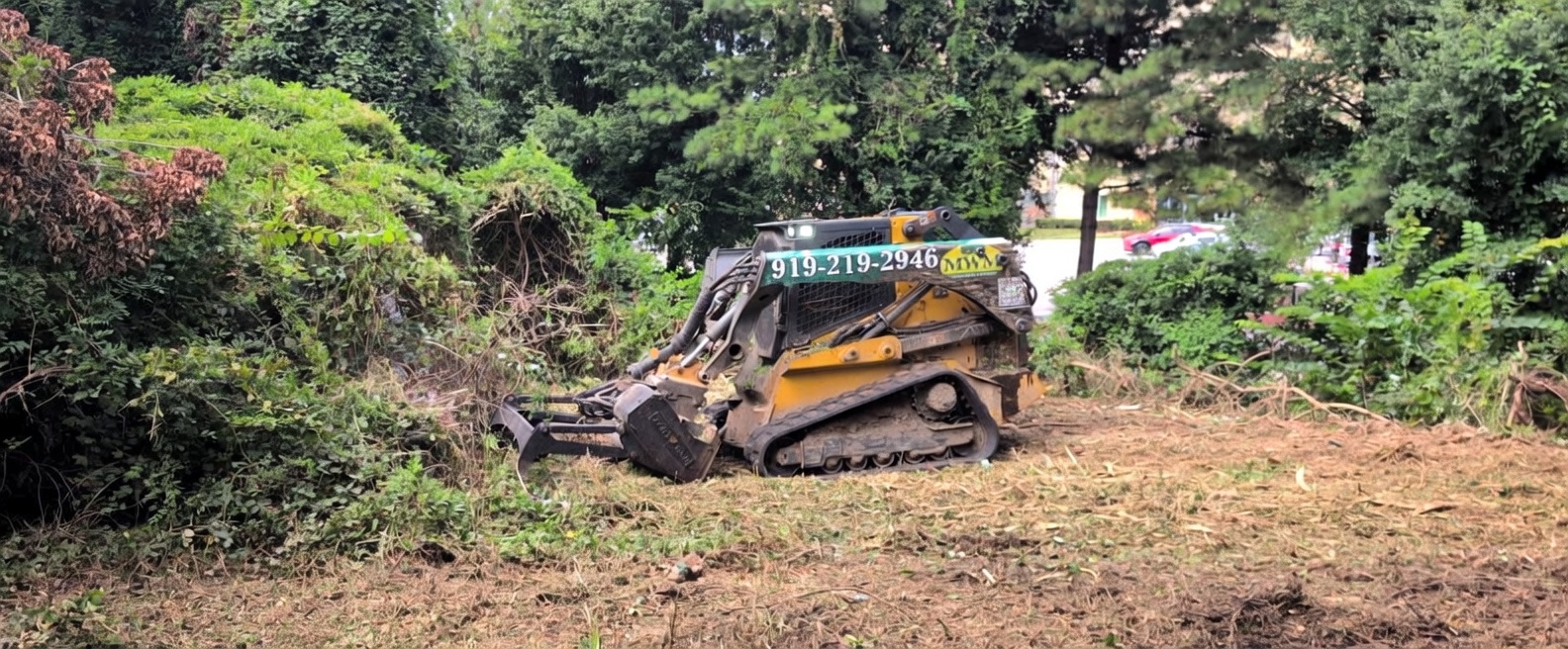
All of those prices buy the same finish. The machine reduces brush, small trees and their stumps to chips on the spot, the stumps end level with the ground, and nothing is trucked off your land. If you want stumps dug out below grade, or very big trees felled and hauled away, we talk it through and price it in the quote. Grading sits outside our price: we clear to the ground and your builder takes it from there. A small job pays a minimum charge of about $1,500 in place of the acre rate, never on top of it.
How Much Ground a Mulcher Covers in a Day
A day of machine time can finish two acres or barely half of one, depending on stem count and stem size.
| What is standing | Rough ground covered in a day | What slows the machine |
|---|---|---|
| Open field gone to briars and scattered saplings | About 1 to 2 acres | Hidden fence wire, rock, wet spots |
| Wood line with a solid honeysuckle layer under trees | Around an acre or less | Working between keeper trunks |
| Closed-in woodlot of saplings and small timber | Closer to half an acre | Stem size, how tight the stand is |
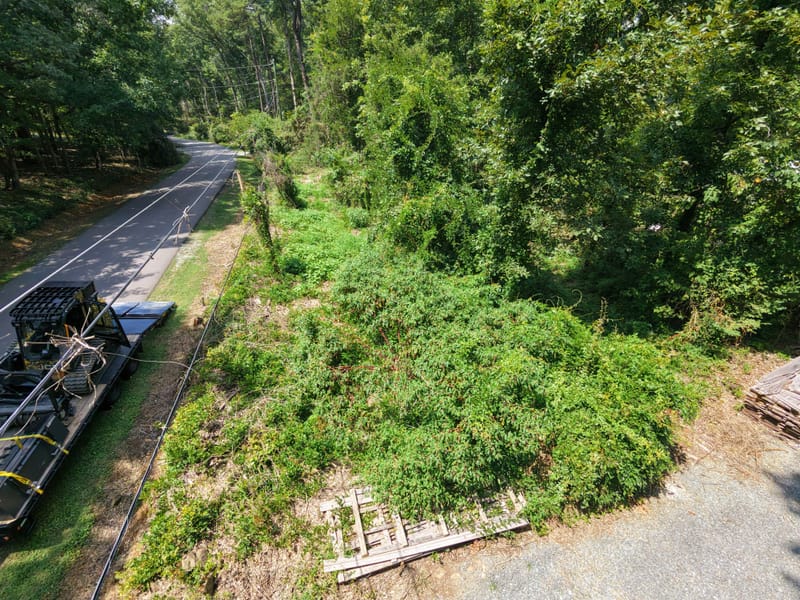
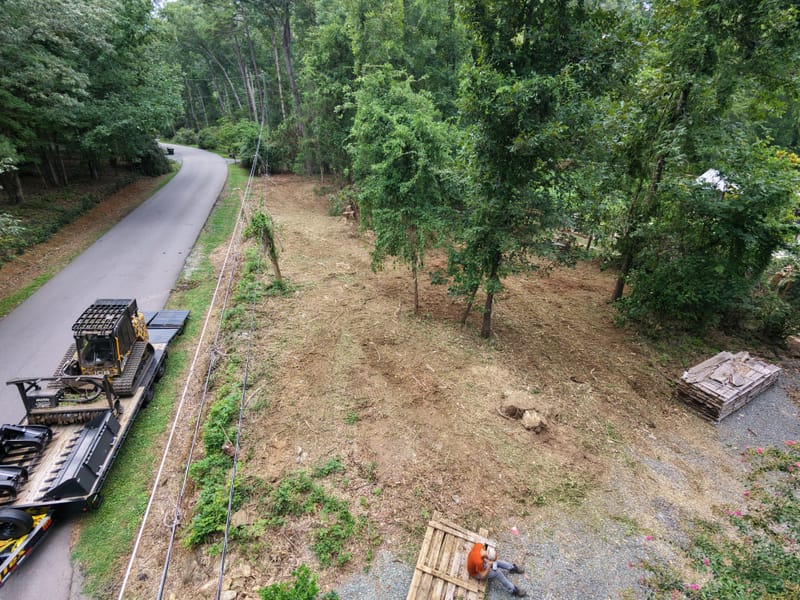
The middle row is the common Fauquier case. Bush honeysuckle grows most along roadsides, forest edges, pastures and abandoned fields, and shrubs under trees take longer than open briars because the operator steers around every trunk you keep.
Our price is set by the acres inside your line, so the calendar is our concern. Opening two acres of honeysuckle wood line and pasture margin near Marshall at $1,500 to $2,500 an acre comes to $3,000 to $5,000, however long the shrubs take to chew through.
Comparing a Day or Hourly Bid With an Acre Price
If a bid comes to you as a day rate or an hourly rate, turn it into a per-acre figure before you compare it with ours. The arithmetic runs one way:
- Multiply the rate by the days or hours the bid expects.
- Add the trailer or mobilization charge to get the job total.
- Divide that total by the acres the job will actually clear.
Set that figure beside our band. Leaving out the trailer charge, or multiplying the rate by acres, gives a meaningless number.
Then ask how many acres the quoted days are meant to finish and how extra time is billed. A day rate looks cheap until a dense honeysuckle acre takes twice as long as planned. Our price names the acres and the finish, so a slow day is our problem, not yours.
Renting a Mulcher for a Week or Hiring the Work
Renting appeals on a big property. Before you price a week, list what a rental leaves out:
- Hauling. Someone has to tow the machine to the farm and back, with a truck and trailer rated for it.
- Learning curve. A mulching head on a skid steer covers ground slowly in new hands, and a week goes fast on a dense acre.
- Wear and damage. Teeth wear down on rock and buried wire, so read the rental terms for who pays when something breaks.
- The follow-up. One pass does not finish honeysuckle. The return visits in spring and late summer still have to happen, rental or not.
Hiring puts one price on the acres you choose, with the machine, operator, transport and finish included. Weigh a rental week, your own days included, against that.
Honeysuckle Edges Add Return Visits
The shrub that fills most Fauquier wood lines resprouts from its roots. Brush cutting is done during the growing season, usually twice a year, once in early spring and again in late summer or early fall, and a cut made in winter while the shrubs are dormant only encourages vigorous resprouting. A heavy stand can take three to five years of that before it gives up.
So a honeysuckle job is priced in two parts: the knockdown inside the mulching or forest-edge band, and each lighter recut as a separate line you can book or skip. Budget the knockdown and the first year of recuts together; a single pass with nothing after it usually means a thicker stand by next summer. Our Virginia bush honeysuckle removal guide lays out the plan year by year.
Permits and Spring Burning in Fauquier
Two rules can change when a job starts, not the acre rate. Inside the town, most work disturbing 2,000 square feet or more needs a Land Disturbance Permit from the Town of Warrenton first. Elsewhere in the county, a Fauquier County land disturbing permit is required once disturbance passes 10,000 square feet. Requirements vary by parcel, scope and jurisdiction, and the governing authority makes the determination.
Burning is the other timing question, and mulching sidesteps it. From February 15 through April 30, open burning is banned before 4 p.m. when the fire is within 300 feet of woods or dry grass that could carry it there. A cut-and-pile job waits on those hours; a chipped thicket leaves nothing to burn.
Frequently Asked Questions
Can one day finish my wood line?
Only if the acres inside your line fit in a day. Open briars can go one to two acres a day; a closed-in woodlot can take a day or more per acre. The quote is in acres, so the schedule never moves the price.
Is renting a mulcher cheaper than hiring?
Sometimes, on open ground and with your own time counted as free. Add hauling, wear, your days on the machine and the recuts honeysuckle needs, then compare that with a per-acre price for the same ground.
What does the minimum charge cover?
Bringing the machine out and doing a small job, such as one grown-in fence row. It replaces the acre rate whenever the acre rate would come to less than $1,500 and is never added to it.
Request a Warrenton Quote
Request a free quote and we’ll contact you to discuss your property, access and the clearing you need. The clearing line, the finish and the price are agreed in writing before the machine comes off the trailer.
For more detail, the four bands are on the Warrenton pricing page, the towns and local rules are on the Warrenton land clearing page, and statewide figures are in the Virginia land clearing cost guide.
More from the Cut Brush Blog
Keep reading for more tips and guides on land clearing.
 Cost Guide
Brush Hogging Cost Per Acre in Virginia (2026 Guide)
Brush hogging a Virginia field costs $75 to $400 an acre, set by how many summers since the last cut. The visit minimum, the sapling line and July 1 hay timing.
 Guide
Bush Honeysuckle Removal in Virginia: Plan and Cost per Acre
Bush honeysuckle removal in Virginia: $1,500 to $2,500 an acre for edge and understory clearing, with growing-season recuts over three to five years.
 Cost Guide
Forestry Mulching Cost in Virginia (2026 Guide)
Forestry mulching in Virginia costs $1,500 to $4,000 an acre. See how Bay Act buffers, Valley sinkholes, summer burn bans and big trees move your quote.
Let's Get Started on Your Land
Request a free quote. We'll contact you to discuss your property, access, and the clearing you need.
Get a Free QuoteOr call us directly: (571) 520-9081
 Quick answers from Cut Brush