Land Clearing Permits in Houston & Harris County
Cut Brush Team · September 12, 2026 · 6 min read
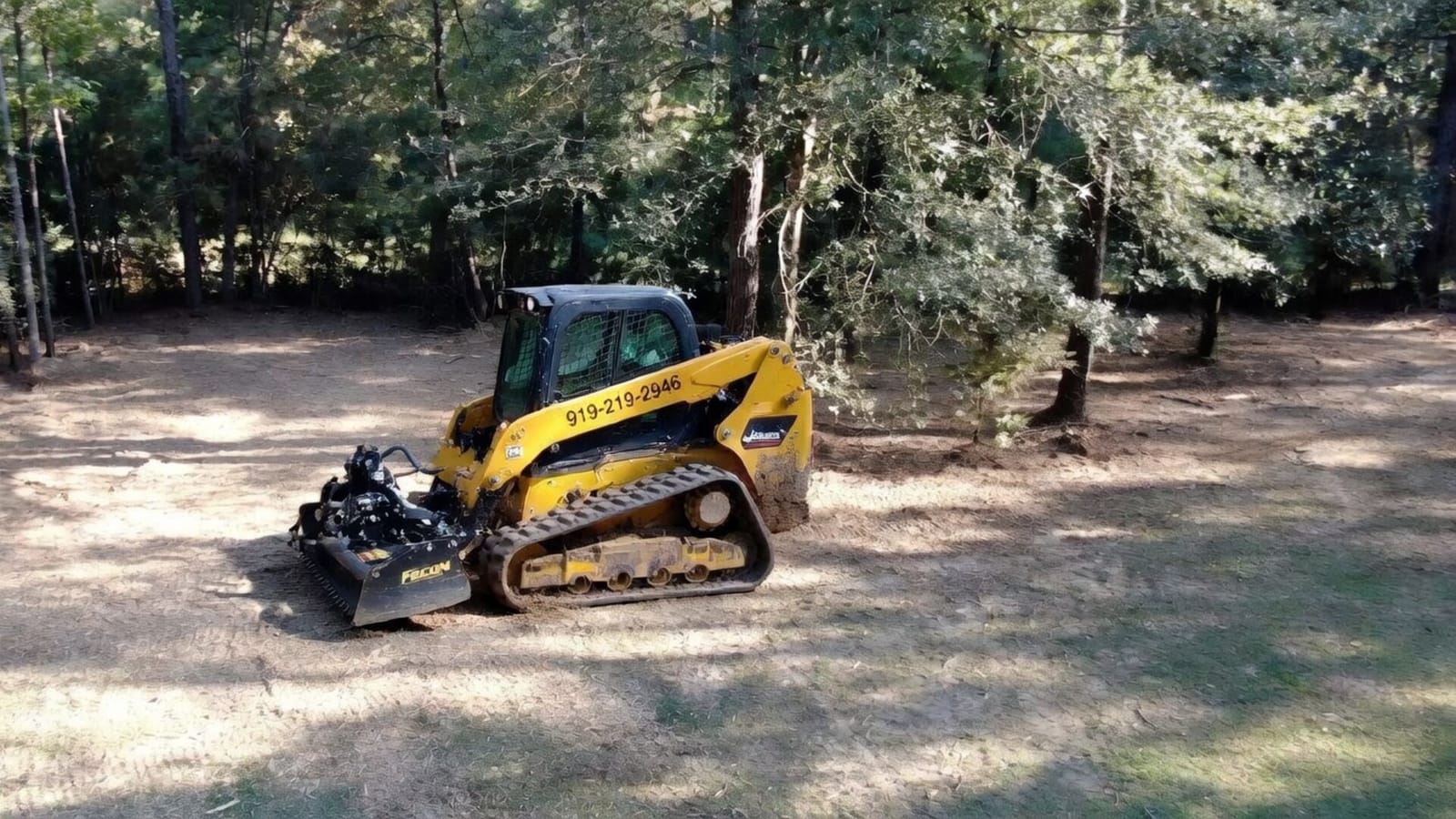
Most people clearing land around Houston assume the permit question starts at an acre. In unincorporated Harris County it starts earlier than that. The Office of the County Engineer states that a permit is needed for all development within Harris County, and it defines development broadly enough to take in filling, grading, paving and excavation, with no acreage floor written underneath. Work in the floodplain then needs a second permit on top.
This guide sets out each trigger, which office holds it, and what the rules actually say, with the official source beside every one.
Does Harris County Require a Permit to Clear Land?
The county’s own wording is short: a permit is needed for all development within Harris County. Development is defined as any man-made change to improved or unimproved real estate, including but not limited to buildings or other structures, mining, dredging, filling, grading, paving, excavation or drilling operations, or storage of equipment or materials.
Read that list carefully, because the distinction that matters is in the detail. The word “clearing” is not one of the enumerated items; filling, grading, excavation and paving are, along with the storage of equipment or materials. So the real question is not “am I clearing?” but “does the work I am buying involve any of those?” A grubbing and grading job plainly does. A mulching pass that grinds standing growth without moving dirt is a different proposition, and the county decides that, not the contractor. Civil development plans are dropped off at the Office of the County Engineer, 1111 Fannin Street, 8th Floor, Houston, TX 77002.
| What you are doing | Who holds the answer |
|---|---|
| Filling, grading, paving or excavation in unincorporated Harris County | Harris County Office of the County Engineer, Permits Division |
| Any work in the floodplain | Harris County Permits Division, floodplain development permit |
| Disturbing one acre or more anywhere in Texas | TCEQ construction stormwater general permit |
| Removing a tree on city property or in a setback inside Houston | City of Houston Urban Forestry |
| Burning what you cut | TCEQ |
The Floodplain Permit Is a Separate Question
This is the one that surprises people who have already dealt with the county once. A floodplain development permit is required for all work in the floodplain, and the county lists grading, filling, paving, construction and other projects in the Special Flood Hazard Area as covered.
If a structure is going in inside a Special Flood Hazard Area, the elevation paperwork is specific: two Elevation Certificates, one before the slab is poured and one for the post-construction finished floor, certified by a Texas Registered Professional Surveyor, Engineer or Architect. That is a survey and engineering task, not something a clearing contractor supplies. The Harris County Permits Division can be reached on (713) 274-3900. The takeaway for a clearing customer is sequencing: find out early whether any part of the work sits below flood elevation, because that changes who has to be involved and how long the front end takes.
Above One Acre, the State Comes In
Texas layers its own stormwater requirement on top of anything local. The TCEQ Construction General Permit TXR150000 covers construction activity disturbing at least one but less than five acres, including a smaller site that forms part of a common plan of development meeting that threshold.
At that tier the requirements are process rather than fees. The operator prepares and implements a Stormwater Pollution Prevention Plan, posts a copy of the site notice at the site and keeps it there for the duration, and delivers the signed construction site notice to the operator of the municipal storm sewer system receiving the discharge at least two days before construction activities begin. Provided the conditions are met, TCEQ states that no notice of intent, notice of termination or fee is required. Two days is not a long lead time, but it is a real one, and it is the step most often discovered after a start date has already been promised.
Two Rules That Catch People Out
A tree on city property or in a setback needs its own permit. Inside Houston, a permit is required to remove any tree on city property, which the city defines to include rights of way, medians, parks and other city property, or a setback. The permit must be kept on the premises and publicly posted 20 days before the tree is removed or trimmed, which is a schedule item rather than a formality. Urban Forestry sits at 901 Bagby Street.
The debris usually cannot be burned. Land clearing and open burning for commercial development typically do not meet a TCEQ exception, and that includes clearing and burning for any purpose related to a business or a subdivision development, with TCEQ requiring an alternative method such as trench or air-curtain burning in those cases. Whether a particular burn qualifies is TCEQ’s determination and its regional office is the place to confirm it. In practice this is why clearing around Houston is planned around mulching in place or hauling off, and the cost consequence of that is covered in our Houston forestry mulching cost guide.
Frequently Asked Questions
Do I need a permit to clear a small residential lot?
Possibly, and lot size is not the deciding factor in unincorporated Harris County, because the permit requirement for development carries no acreage floor. What matters is what the work involves and where the parcel sits relative to the floodplain and the city limits. Requirements vary by parcel, scope and jurisdiction, and the governing authority makes the determination.
Who pulls the permit, me or the contractor?
The floodplain and development permits sit with the property owner or the engineer of record, working through the Office of the County Engineer. Cut Brush does not present itself as handling your permitting in house, because that is not where those applications originate. What we do is flag what commonly applies, help identify the right office, and work to the permit you hold.
Does a forestry mulching pass avoid the permit question?
Sometimes it changes the question, and it is worth asking rather than assuming. Mulching grinds standing growth and leaves the root mat and ground surface largely undisturbed, which is a different activity from the filling, grading and excavation the county enumerates. Whether that distinction applies to your parcel is the county’s call, and we are happy to help you put the question to the right desk before anything is booked.
What about wetlands?
If any part of the parcel is wet, raise it early. Federal jurisdiction over wetlands is separate from county permitting and is administered by the US Army Corps of Engineers, which means a determination request rather than a form a contractor fills in. It is outside the scope of this guide, and outside ours.
Getting a Straight Answer for Your Parcel
Nothing on this page is a determination about your property. Requirements vary by parcel, scope and jurisdiction, and each office above decides on its own criteria. What a contractor can usefully do is tell you which desks your project touches before you commit to a date.
Cut Brush covers Harris, Fort Bend, Brazoria, Waller, Chambers and Galveston counties from the Houston land clearing hub, with per-acre ranges on the Houston pricing guide. Request a free quote and we will walk the ground and be clear about where our scope ends and a permit office or an engineer begins.
More from the Cut Brush Blog
Keep reading for more tips and guides on land clearing.
 Guide
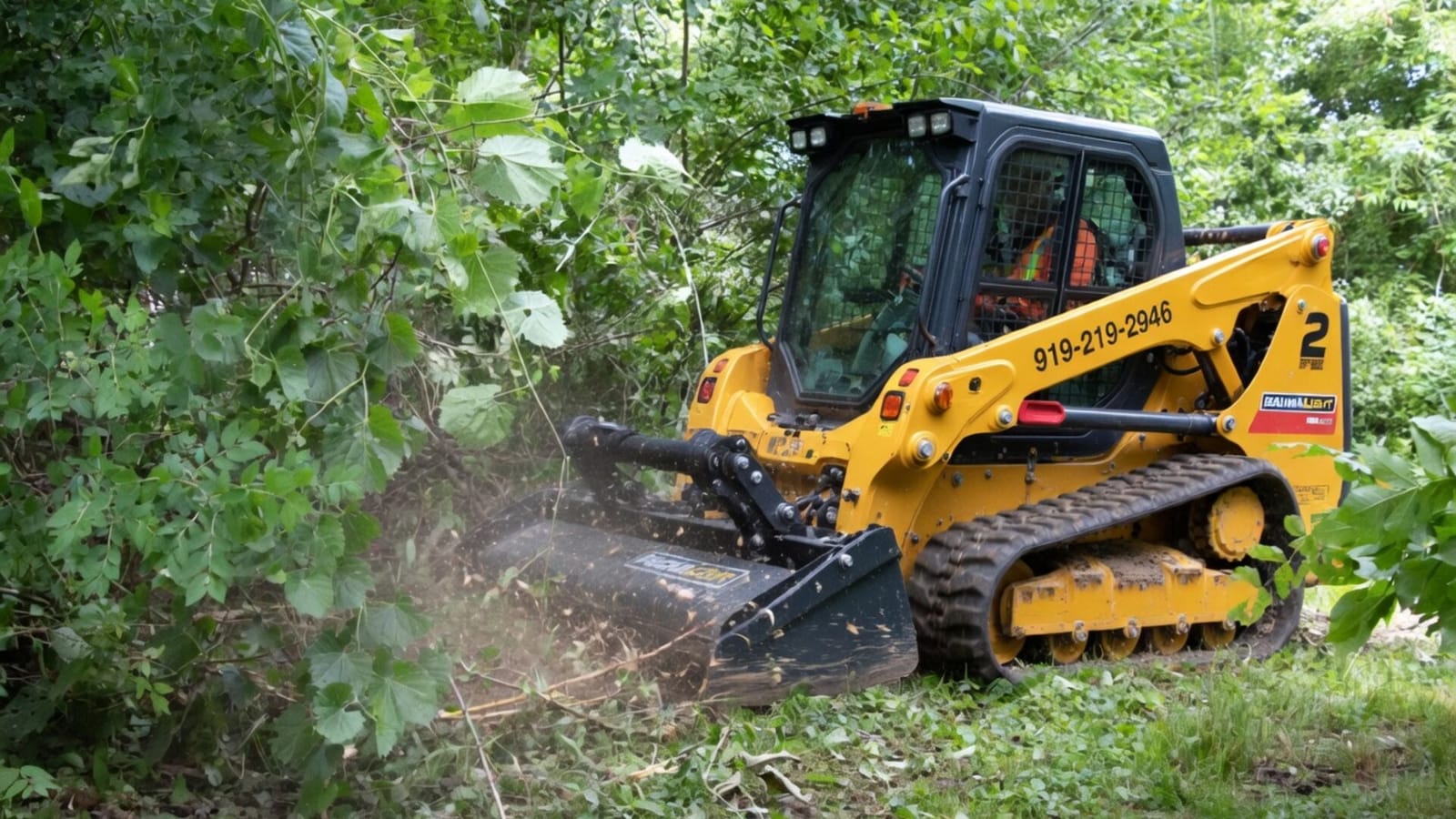
Guide Clearing Chinese Tallow Around Houston
Chinese tallow is why Houston-area land stops being prairie. What a mulching pass achieves, what it does not, and how to plan the follow-up honestly.
 Cost Guide
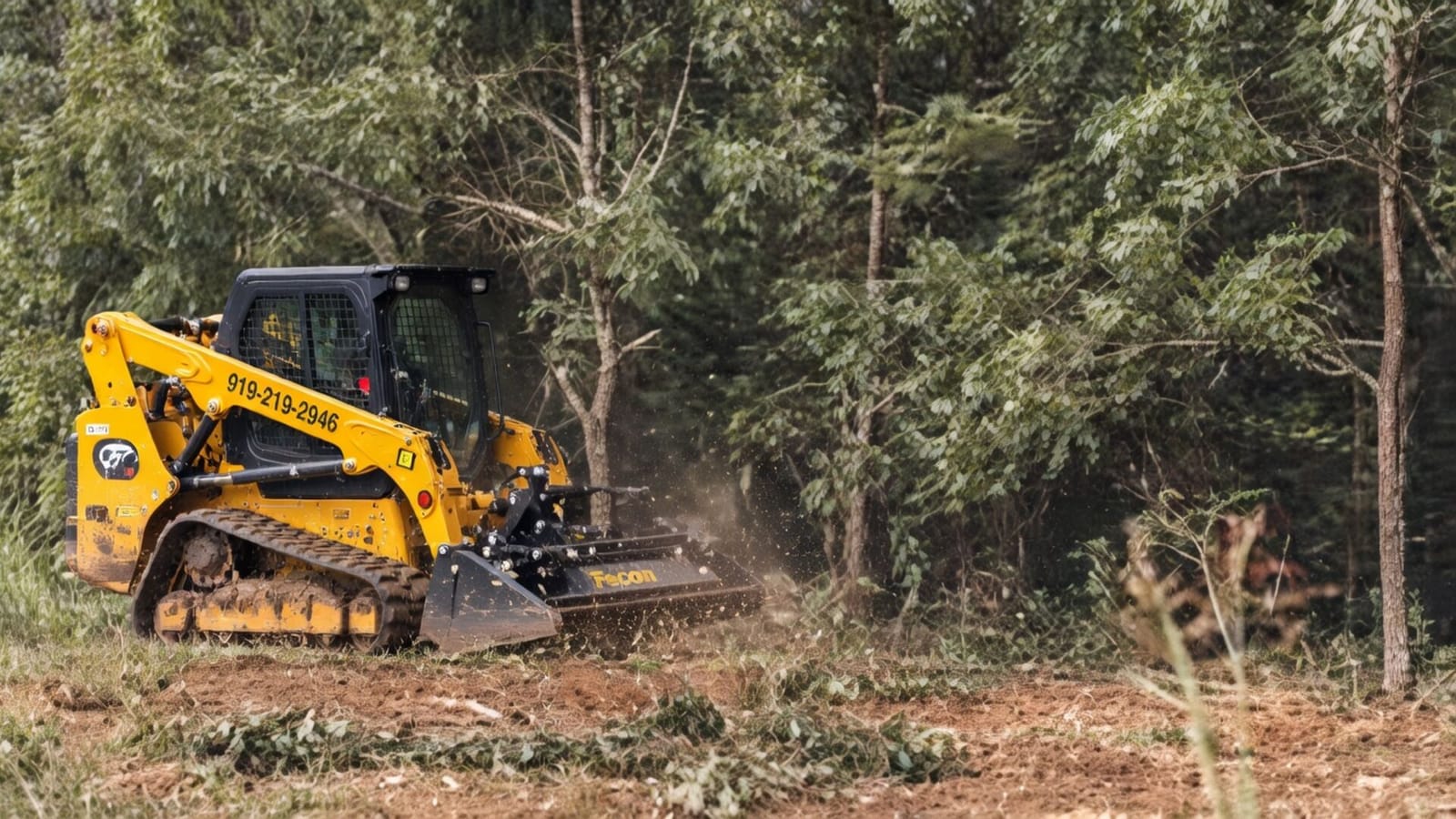
 Forestry Mulching Cost in Houston, TX (2026)
Forestry mulching around Houston runs $1,500 to $4,000 an acre. Why disposal rules and flat, slow-draining ground decide where a parcel lands in that band.
Guide What Is Forestry Mulching? A Complete Guide
What is forestry mulching? See how a forestry mulcher grinds trees and brush into mulch in one pass, what it handles, and when to use it. Get a free estimate.
Ready to Get Started on Your Land?
Get a free, no-obligation estimate for property in Houston & the Texas Gulf Coast.
Get Your Free QuoteOr call us directly: (919) 525-3950