Forestry Mulching Cost in Houston, TX (2026)
Cut Brush Team · September 12, 2026 · 5 min read
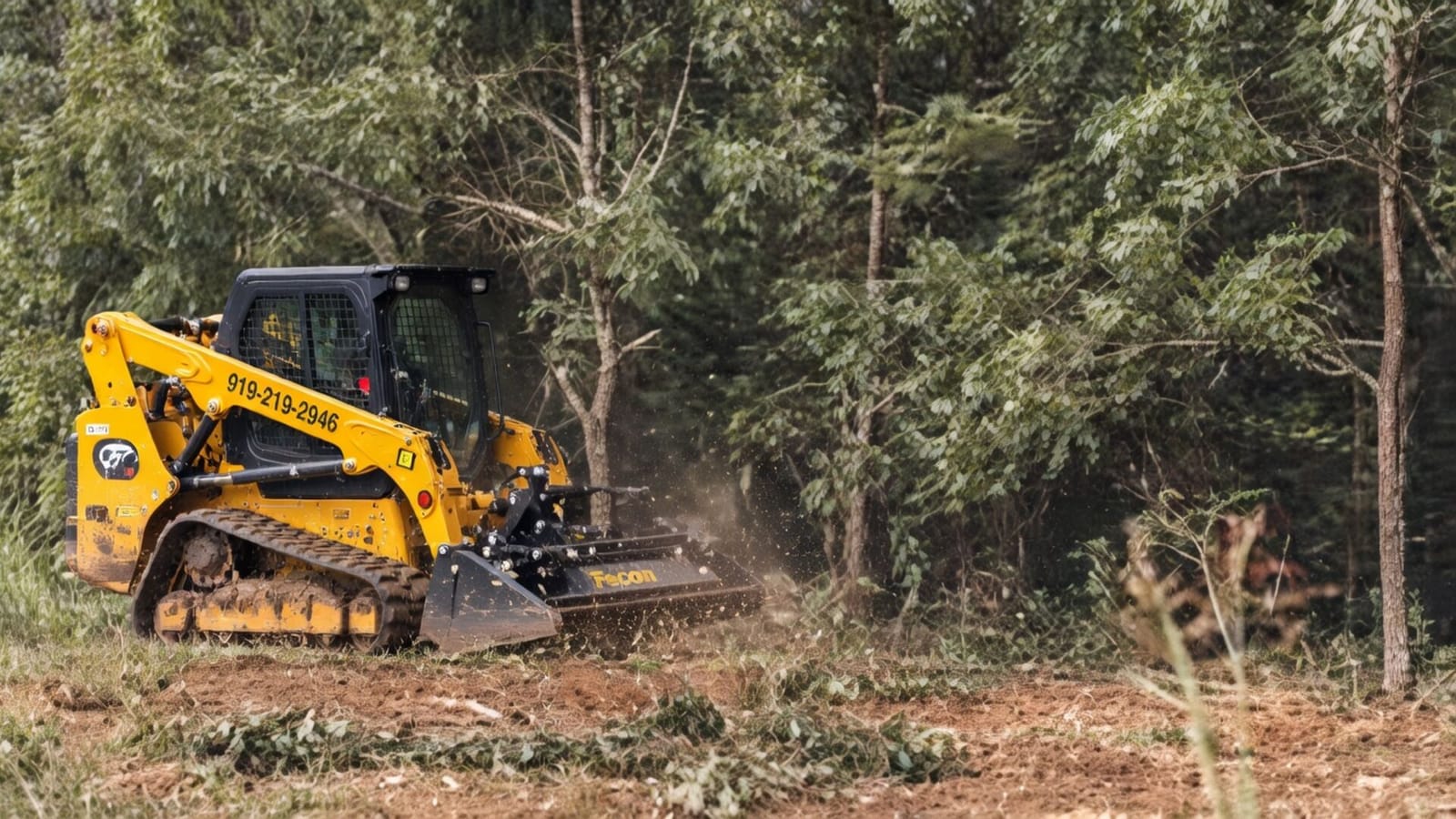
Forestry mulching around Houston runs $1,500 to $4,000 per acre. Scattered regrowth sits near the floor of that band and a closed thicket sits near the ceiling. What decides where your parcel falls is not slope and it is not rock, because this side of Texas has very little of either. It is how much of the cut material has to physically leave your property, and the burn rules largely settle that for you before anyone quotes.
What the Band Actually Covers
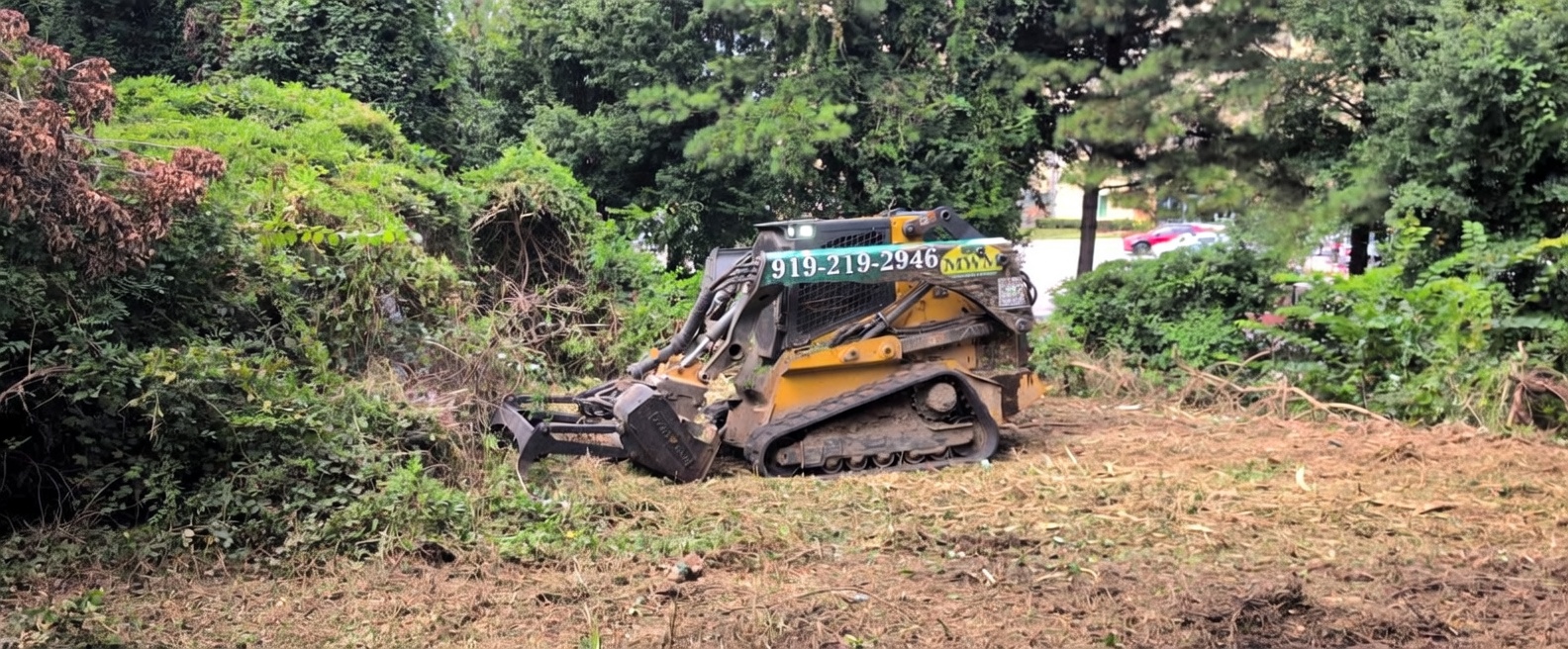
Forestry mulching is one tracked machine with a grinding head working through standing brush and small trees where they stand. Stumps are ground flush rather than pulled. The material stays on the ground as a mat, so when the machine leaves the ground is open and walkable but neither graded nor build ready. That definition is what separates this figure from a land clearing figure. Cut Brush quotes four kinds of work around Houston, and the full set of ranges is on the Houston pricing guide:
| Work | Range |
|---|---|
| Forestry mulching | $1,500 – $4,000 / acre |
| Brush and understory work | $1,500 – $2,500 / acre |
| Land clearing | $1,500 – $4,500 / acre |
| Lot and homesite prep | $1,500 – $4,500 / acre equivalent |
There is a practical floor near $1,500 on very small parcels. That is the cost of getting a machine onto the ground, and a quarter acre does not reduce it.
Why Disposal Decides the Number Here
In most of the country, clearing debris ends up in a pile and the pile gets burned. Around Houston that route is usually closed. Land clearing and open burning for commercial development typically do not meet a TCEQ exception, and that includes clearing and burning for any purpose related to a business or a subdivision development, with TCEQ requiring an alternative method such as trench or air-curtain burning where burning happens at all. Whether a specific burn qualifies is TCEQ’s determination, and the agency’s regional office is the place to confirm it.
Follow that through and the arithmetic changes. Mulching has no disposal cost, because the material never becomes a pile; it is ground where it stood and left as cover. Traditional clearing on the same acre answers the disposal question with a truck, and haul-off is a separate line on our quotes rather than something folded quietly into a per-acre rate. That is why mulching in place is the default method here rather than the premium option: it is often the only disposal plan that does not depend on somebody else’s permission.
What the Ground Does to the Price
Texas Parks and Wildlife describes this ecoregion as a nearly level, slowly drained plain less than 150 feet in elevation, taking 30 to 50 inches of rain a year spread fairly evenly through the calendar. Two consequences show up in a quote.
Flat ground is efficient ground: a machine on a level tract spends its hours cutting rather than fighting grade, with no ledge or caliche to wear a head out on. Timing is the other half. On a slowly drained plain rain becomes standing water rather than runoff, and saturated ground slows a tracked machine and can move a start date. If your project has a hard deadline, say so at the walk-through so the schedule is built around the weather instead of ignoring it.
What Moves the Number Inside the Band
Stem size and density, not acreage. Ten open acres of scattered brush is a quicker job than two acres of sealed thicket. Per-acre rates also fall as tracts get larger, because setup and travel are spread across more ground.
Whether the growth comes back. Much of what is standing on an unmanaged acre here is introduced rather than native, and Chinese tallow in particular can reproduce in as little as three years. On that ground you are buying a pass plus a plan, not just a pass. Our guide to clearing Chinese tallow around Houston explains what a single pass does and does not achieve.
Access. A tract a trailer can back into off a county road prices below one behind a gate and a mile of two-track. Low limbs, narrow culverts and soft approaches burn hours before any clearing begins.
What cannot stay. Construction debris, old fencing and anything already piled is quoted as haul-off, separately and visibly.
What the Price Does Not Include
Permit costs are real around Houston, and they are not Cut Brush charges. They are paid to a governing body and sit outside our per-acre band entirely. The Harris County Office of the County Engineer states that a permit is needed for all development within Harris County and defines development broadly enough to take in filling, grading, paving and excavation, and work in the floodplain needs a separate floodplain development permit. Requirements vary by parcel, scope and jurisdiction, and the governing authority makes the determination. The full sequence is in our Houston and Harris County permit guide.
Frequently Asked Questions
How much does it cost to clear one acre near Houston?
Most clearing work quotes between $1,500 and $4,500 an acre. Mulching specifically runs $1,500 to $4,000. Understory and fence line work beneath trees that stay is the cheapest per acre; whole-tract clearing with a graded finish is the most expensive.
Is mulching cheaper than clearing and hauling?
Usually, once the whole job is counted: one machine, one pass, no loading, no tipping fees, no waiting on a burn decision. What it does not give you is graded, build-ready dirt. If that is what the project needs, you are buying land clearing rather than mulching.
Does the mulch mat cause problems?
Not normally. On flat, slow-draining ground the mat holds soil in place through heavy rain and breaks down over a season or two. Where a pad or a drive is going in, moving the mat is part of that scope.
How does this compare with the rest of Texas?
The Gulf Coast sits inside the statewide picture rather than apart from it, with disposal and drainage taking the role that cedar density and rock play further west. Our Texas land clearing cost per acre guide covers the state-level ranges.
Getting a Forestry Mulching Quote in Houston
Ranges are for budgeting. The number for your parcel comes from walking it, and that walk-through is free anywhere across Harris, Fort Bend, Brazoria, Waller, Chambers or Galveston County. Bring two things: what you want the land to do afterwards, and whether anything on it has to be trucked away. Compare the ranges on the Houston pricing guide, then request a free quote.
More from the Cut Brush Blog
Keep reading for more tips and guides on land clearing.
 Guide
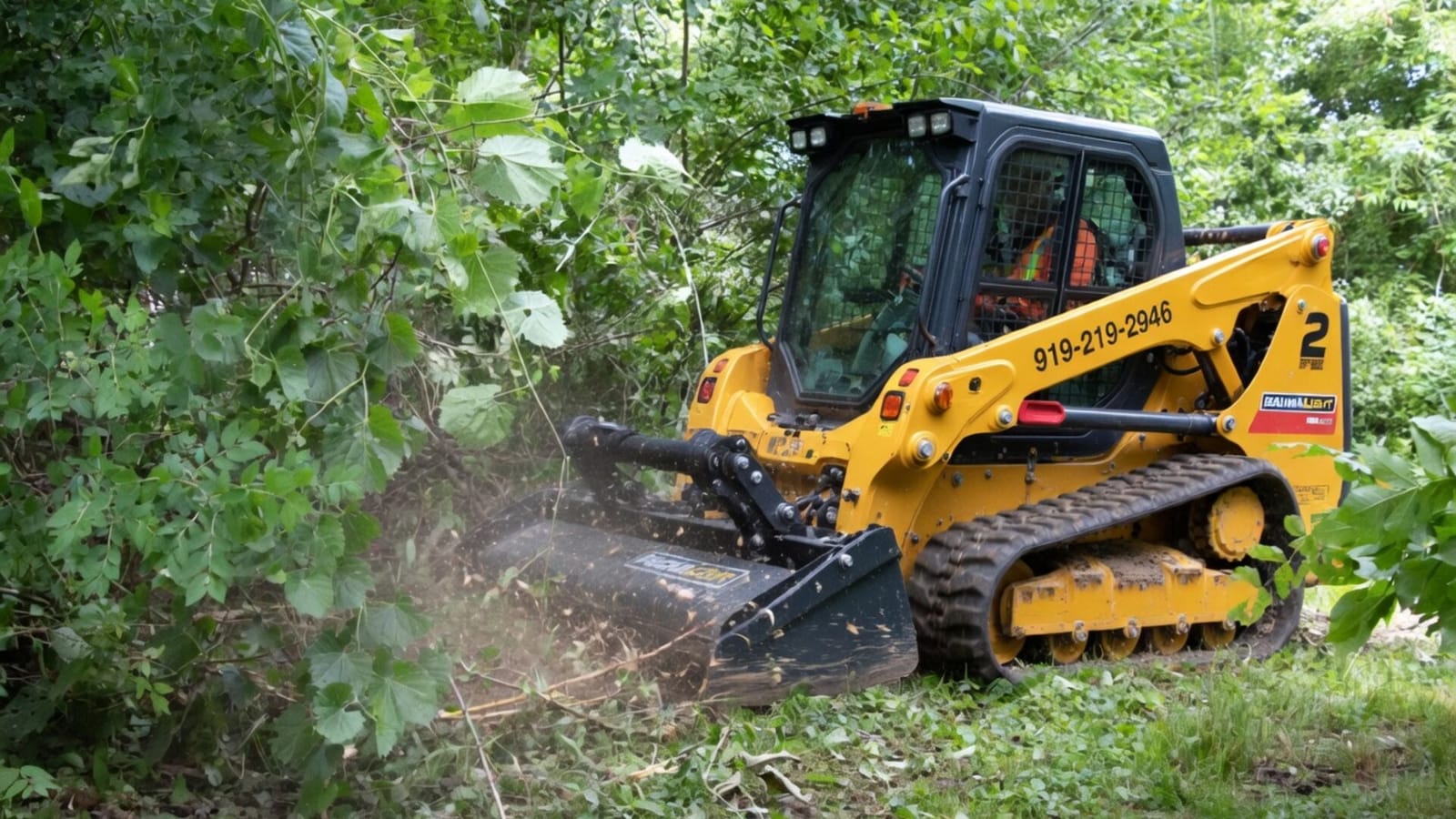
Guide Clearing Chinese Tallow Around Houston
Chinese tallow is why Houston-area land stops being prairie. What a mulching pass achieves, what it does not, and how to plan the follow-up honestly.
 Guide
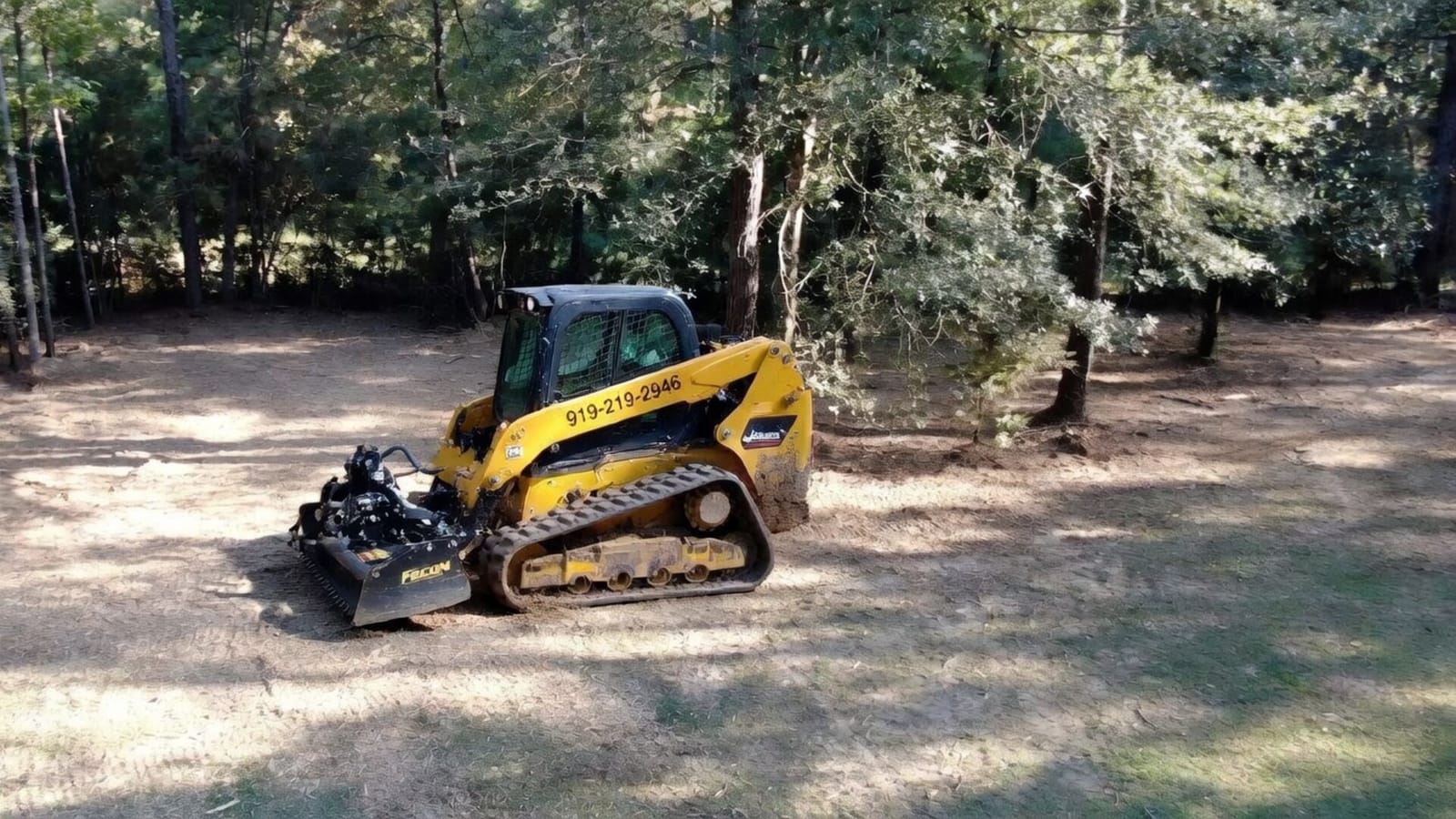
Guide Land Clearing Permits in Houston & Harris County
Harris County needs a permit for all development, with no acreage floor. Here are the triggers, the offices that hold them, and the debris rules.
 Comparison
 Bush Hogging vs Forestry Mulching: Which Do You Need?
Bush hogging vs forestry mulching: which handles your overgrown field? Compare costs, vegetation limits, and regrowth for Central NC land. Get a free quote.
Ready to Get Started on Your Land?
Get a free, no-obligation estimate for property in Houston & the Texas Gulf Coast.
Get Your Free QuoteOr call us directly: (919) 525-3950