
Land Clearing Permits in Louisville, KY (and Across the River)
Cut Brush Team · September 12, 2026 · 6 min read
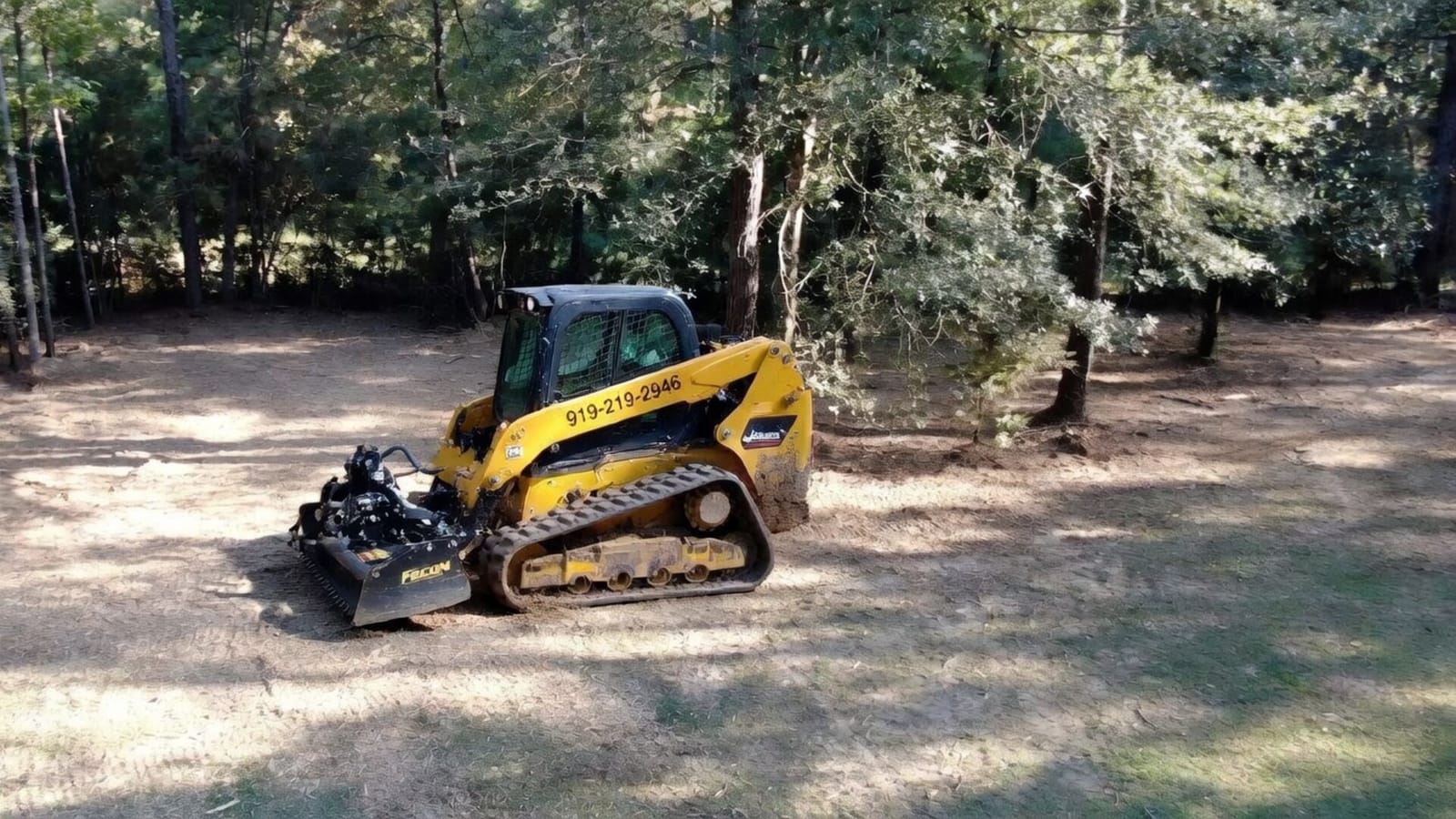
Most permit questions open with “how many acres.” Around Louisville the first number that matters is far smaller than an acre, and the second thing that matters is which side of the Ohio River you are standing on. Inside Louisville and Jefferson County the disturbance category turns at 2,000 square feet. In Clark and Floyd counties, Indiana, state coverage starts at one acre. Those two figures are a factor of twenty apart for the same brush.
Every threshold below carries its official source. Requirements vary by parcel, scope and jurisdiction, and the authority makes the determination.
Louisville’s Line Is 2,000 Square Feet
Land disturbance permitting inside Louisville and Jefferson County runs through the Metropolitan Sewer District rather than a planning counter. MSD’s published rule is that all land disturbance “in excess of 2,000 square feet require a Site Disturbance Permit from MSD.”
Two thousand square feet is not much ground. It is a patch roughly 45 feet on a side. A driveway corridor, a shed pad plus its approach, or a decent bite out of a back lot can all reach it without anybody feeling like they are doing construction.
The Small Site Disturbance Permit is the instrument for work above that line and below an acre, covering “2,000 ft² to 0.99 acres.” It expects an erosion prevention and sediment control plan prepared by a certified plan preparer, a Notice of Construction identifying the responsible party, and a person on site holding current erosion prevention and sediment control certification. Projects in a floodplain or affecting drainage can pull a professional engineer into the design.
Source: Louisville MSD, Small Site Disturbance Permit.
What Changes at One Acre in Jefferson County
At an acre the Large Site Disturbance Permit takes over, defined simply as an “Area of Disturbance: One acre or greater.”
Three things change. Plans “that consist of land disturbing activities in excess of one acre must be prepared by a Professional Engineer,” so the drawings stop being something a certified preparer can produce. Post-construction water quality practices come into scope under MSD’s design manual. And the state joins in: submittals include proof of a Notice of Intent sent to the Kentucky Division of Water, which is the general construction stormwater coverage.
Source: Louisville MSD, Large Site Disturbance Permit.
The practical read for a landowner is that the Kentucky-side jump in effort happens at an acre, but the jump into any permit happens at 2,000 square feet. Plenty of residential clearing jobs land between the two.
Across the River It Starts at an Acre
Indiana runs a single statewide instrument. The Construction Stormwater General Permit applies to construction activity “that results in the disturbance of one (1) acre or more of total land area,” and also to smaller areas where the project is “part of a larger common plan of development or sale.” That last clause catches individual lots inside a subdivision being developed in pieces.
One piece of history worth knowing, because older contractor advice still uses the old name: Indiana stopped administering the construction stormwater programme under Rule 5 (327 IAC 15-5) on 18 December 2021, and coverage is now issued under the general permit instead.
Source: IDEM, construction land disturbance permitting.
Local offices in Clark and Floyd counties still administer their own drainage and erosion rules on top of the state permit, and city limits add their own. The state number is the floor, not the whole answer.
The Counties In Between Run Their Own Programmes
Between Louisville Metro and the Indiana line, this service area also covers Oldham, Bullitt and Shelby counties, and each of those is a separate jurisdiction with its own ordinance and its own counter.
We deliberately do not publish thresholds for them. Second-hand numbers for a county programme are exactly the kind of detail that goes stale quietly and costs somebody a stop work order, so the right move on a parcel in Crestwood, Mount Washington or Shelbyville is a phone call to the county before work is scheduled. Cut Brush can flag what commonly applies and help identify the right office. The governing authority makes the determination.
Burning the Debris Is Two Different Rules
If the plan involves burning what comes off the tract, the answer changes at the river.
Kentucky. Forest fire hazard seasons run 15 February to 30 April and 1 October to 15 December. During those windows “it is illegal to burn anything within 150 feet of any woodland or brushland between the hours of 6 a.m. to 6 p.m.”, which is the practical restriction for most clearing debris, since clearing debris is nearly always near woodland. What may be burned at all is limited separately by air quality regulation, and local fire districts can be stricter. Source: Kentucky Energy and Environment Cabinet, read 12 September 2026.
Indiana. Residential open burning is not allowed in Clark or Floyd counties at all, “due to federal requirements for controlling ground-level ozone pollution.” Those two counties sit inside the group singled out for that reason. Source: IDEM, exempt burning activities, read 12 September 2026.
This is the clearest single reason mulching has taken over as the default method in this market. Material processed where it stands and left as chip creates no pile, so the burn calendar never enters the schedule.
Frequently Asked Questions
Do I need a permit to clear a quarter acre in Jefferson County?
A quarter acre is about 10,890 square feet, which is well past the 2,000 square foot line and well under an acre, so it falls in Small Site territory: a plan from a certified preparer, a Notice of Construction, and a certified responsible person on site. Confirm with MSD for your parcel, because a floodplain or a drainage issue can change the answer.
Does forestry mulching need a permit?
It depends on disturbed area rather than method, so the same thresholds apply. What differs in practice is that mulching leaves the soil surface covered instead of stripped, which is usually a better starting position in an erosion control conversation. Nobody should treat that as an exemption, and the jurisdiction decides.
Who pulls the permit, me or the contractor?
Permits attach to the property and the person developing it, so they generally belong to the owner. We will tell you which office the work points at and what the submittal usually asks for, and we work to the plan once it exists.
My property is right on the river. Which rules apply?
Whichever state the parcel sits in, and the difference is real: 2,000 square feet inside Louisville Metro against one acre in Clark and Floyd counties. Tell us the county on the quote form and that question gets settled before anything is scheduled.
Get the Permit Question Settled Before You Price the Work
A permit does not change our rate. It changes your start date, and in this market it changes it differently depending on an address.
See what each method involves on the Louisville services page, compare the ranges on the Louisville pricing guide, and read the local conditions on our Louisville land clearing page.
More from the Cut Brush Blog
Keep reading for more tips and guides on land clearing.
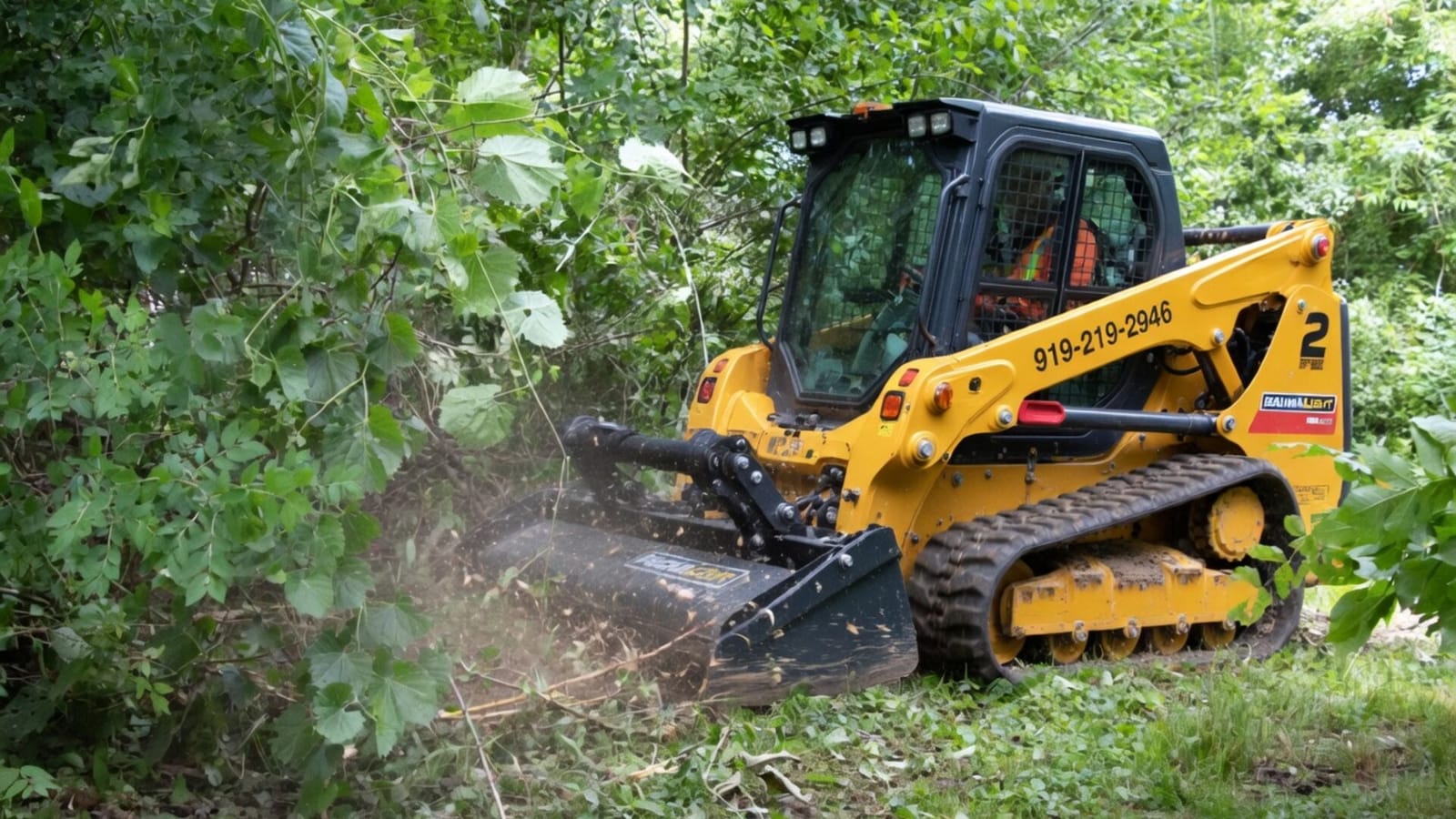 Guide
Guide Bush Honeysuckle Removal Around Louisville
Bush honeysuckle is what most Louisville woodlots are actually full of. Here is what it does, why one cut never finishes it, and how clearing should be planned.
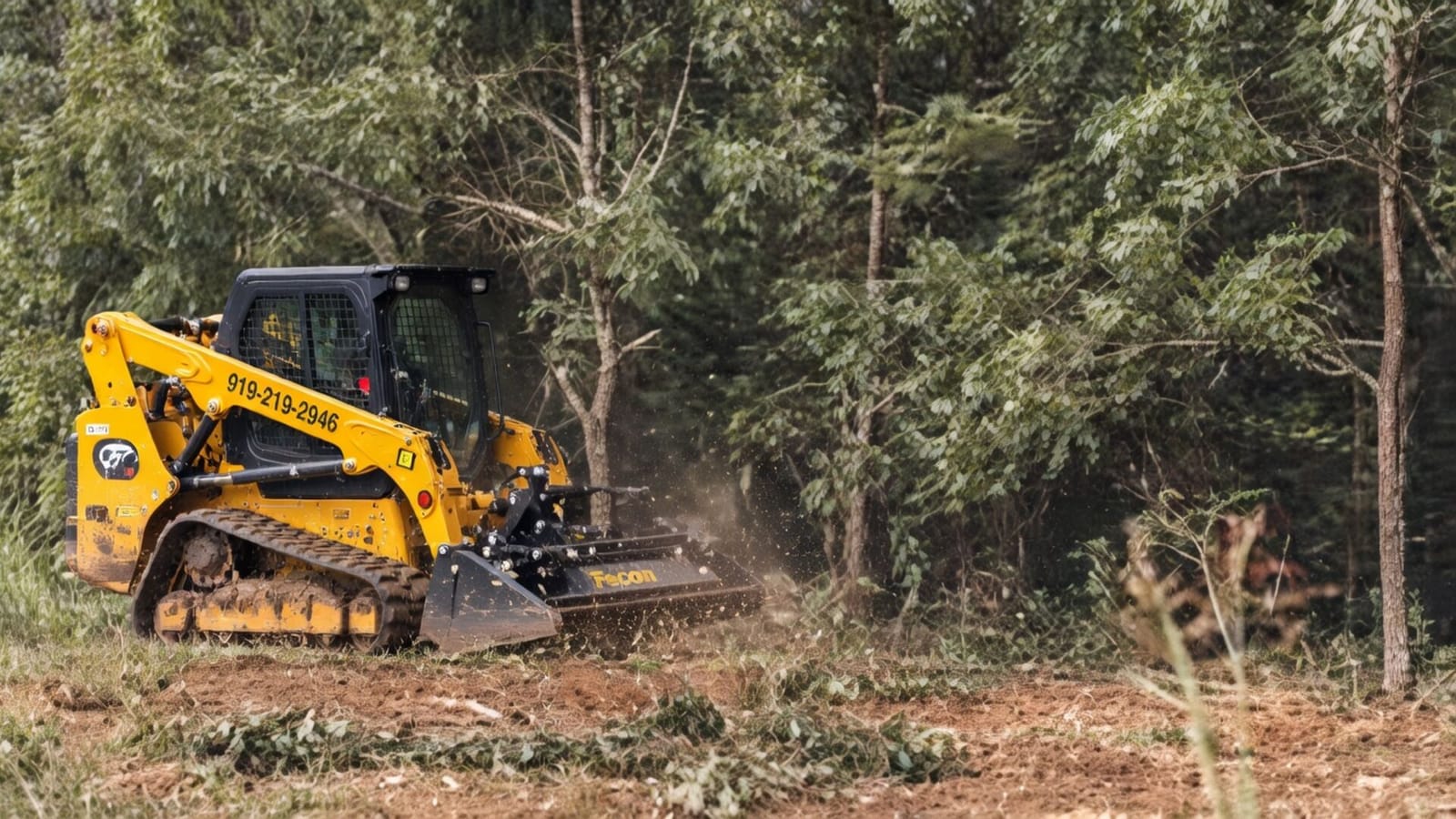 Cost Guide
 Forestry Mulching Cost in Louisville, KY (2026)
Forestry mulching around Louisville runs $1,500 to $4,000 per acre. See what river bottom, tableland and knob slope each do to the hours on your tract.
Cost Guide Land Clearing Cost Per Acre in Kentucky (2026)
Land clearing cost per acre in Kentucky runs $1,500 to $4,500. See how terrain, regrowth, the burn calendar and local permit rules move the real number.
Ready to Get Started on Your Land?
Get a free, no-obligation estimate for property in Louisville & Southern Indiana.
Get Your Free QuoteOr call us directly: (919) 525-3950