
Land Clearing Cost Per Acre in Kentucky (2026)
Cut Brush Team · September 12, 2026 · 7 min read
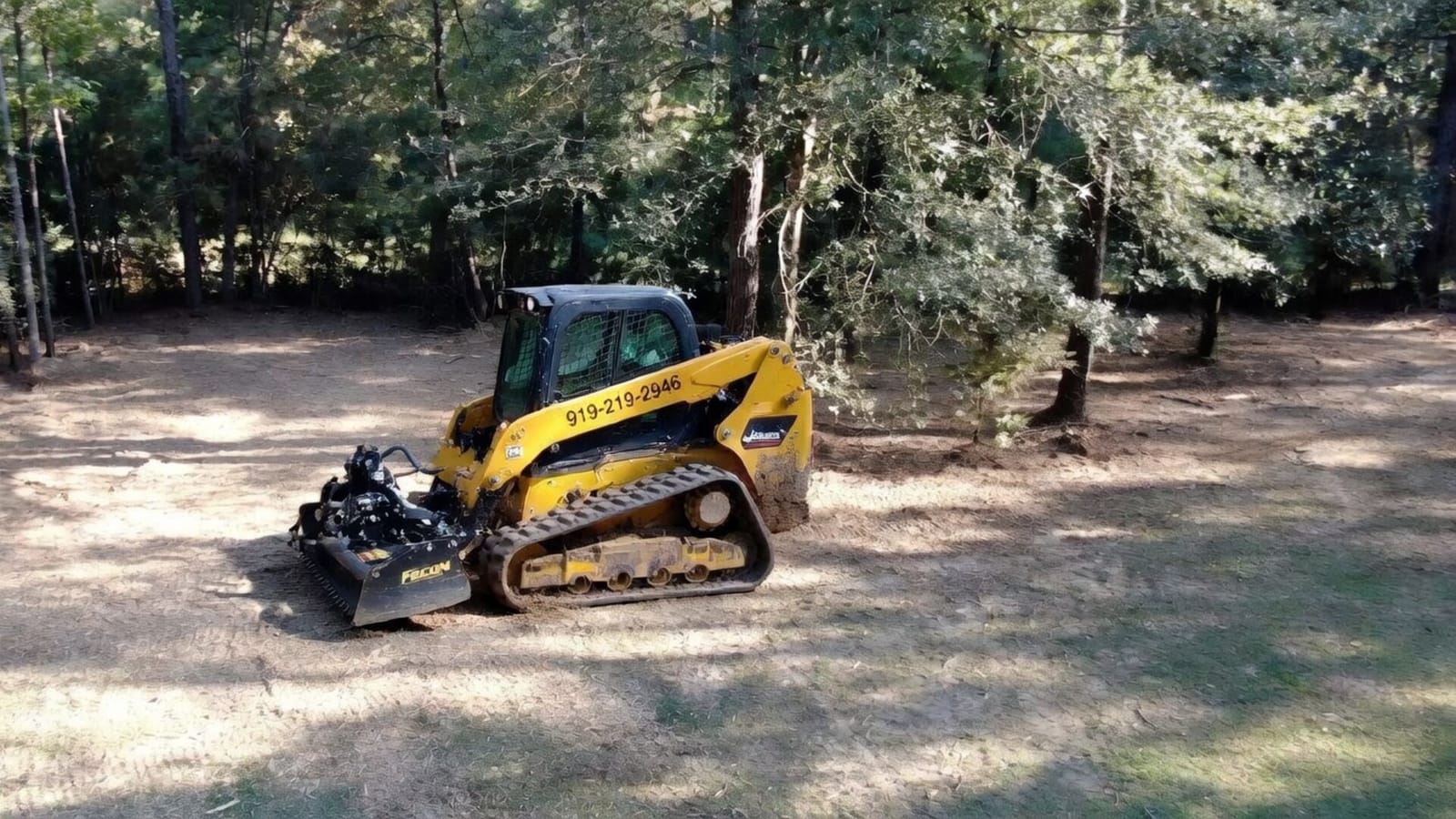
You rang three contractors about a few acres in Kentucky and the numbers came back thousands of dollars apart. Land clearing cost per acre in Kentucky runs $1,500 to $4,500 for most work, and where a particular tract lands inside that band comes down to four things a phone call cannot see: what is standing on it, how much of that grows back from the root, how the ground lies underneath, and what the law in that specific county lets you do with the material once it is cut.
That last one catches more Kentucky landowners than any of the others, because the commonwealth has one state rule and a great many local ones. This guide covers the statewide picture: the bands, what moves them, and where to go for the local detail.
How Much Does It Cost to Clear an Acre in Kentucky?
Most Kentucky clearing work prices between $1,500 and $4,500 per acre in 2026. These are the four bands Cut Brush quotes, and they are the same wherever in the state the tract sits:
| Type of work | Cost per acre | What you get |
|---|---|---|
| Forestry mulching | $1,500 – $4,000 | Standing shrub and small stems reduced to chip on the spot, stumps cut flush, nothing hauled |
| Regrowth and understory work | $1,500 – $2,500 | Field edges, boundary lines and the shrub layer under a stand you are keeping |
| Land clearing | $1,500 – $4,500 | Whole-tract work to a named finish: which stems go, whether stumps come out, whether material leaves |
| Lot and homesite preparation | $1,500 – $4,500 per acre equivalent | Building envelope, drive corridor and utility lines cleared and handed over in a stated condition |
A practical floor near $1,500 per project sits under all four, because trailering a tracked machine to a property costs the same whether it works for two hours or ten. That is why a half-acre job and a one-acre job on the same tract often quote within a few hundred dollars of each other, and why bundling several small scopes into one visit is the cheapest ground anybody buys.
Why the Same Acre Costs Different Money in Different Parts of Kentucky
Kentucky is not one landscape and its clearing prices are not one number.
Terrain does most of the work. In the Knobs, the belt of hill country that borders the Outer Bluegrass, the Kentucky Geological Survey describes hundreds of steep sloping, often cone-shaped hills whose slopes are mostly shales of the Mississippian-age Borden Formation, less resistant to erosion than the harder caps above them (KGS). A machine on that ground works short lines and turns constantly. The same machine on a level Bluegrass field runs long passes and rarely stops. Same brush, same acre, different hour count.
Soil decides how much stabilisation is part of the job. Much of Kentucky’s better upland ground formed in a loess mantle over limestone residuum, with the upper 20 to 45 inches of the profile developed in that wind-blown silt (USDA official series description for Crider). Silt on a slope with nothing holding it is a repair bill. Ground that keeps its roots and a cover layer is not, which is the whole argument for grinding material in place on any slope worth the name.
Regrowth decides what year two costs. Where the occupant is woody invasive shrub rather than timber, the plant is still alive at the crown after a plain cut. That is a real cost even when it is absent from the first invoice, and a quote that never mentions it has priced a knockdown rather than a result.
The Burn Calendar Is a Statewide Cost Factor
Kentucky sets two forest fire hazard seasons every year: 15 February to 30 April and 1 October to 15 December. During them it is illegal to burn anything within 150 feet of any woodland or brushland between 6 a.m. and 6 p.m. (Kentucky Energy and Environment Cabinet, read 12 September 2026). What may be burned at all is limited separately by air quality regulation, and local fire districts can be stricter than the state.
Add those two windows together and roughly five and a half months of the year carry a daytime restriction on exactly the kind of burning a clearing job generates, since clearing debris is nearly always sitting next to woodland. A project that budgeted on burning piles can stall or quietly turn into paid trucking.
This is the clearest reason forestry mulching has become the default method across the state. Material processed where it stands and left as chip never becomes a pile, so the calendar never enters the schedule and the loading, hauling and tipping lines never enter the quote.
Mulching Against Clear and Haul
The method decision moves more money than any single site factor.
Forestry mulching is one tracked carrier doing the cutting and the disposal in the same pass. Traditional clearing cuts, rows up and removes, which means more machines, trucking, and either a burn permit conversation or a tipping fee. Mulching runs $1,500 to $4,000 per acre; full clearing reaches $4,500 before any haul-off.
Traditional clearing still wins when the endpoint is genuinely build-ready ground with stumps out and grades cut. Mulching leaves the root network in the soil and chip on the surface, which is exactly what you want on a hillside and exactly what a footing does not want. If a house, shop or drive is the plan, that is clearing plus site work, priced as two things.
Permits: One State Rule, Many Local Ones
State-level construction stormwater coverage in Kentucky comes in at one acre of disturbance: Louisville MSD’s large-site permit, which applies to an “Area of Disturbance: One acre or greater”, requires proof of a Notice of Intent submitted to the Kentucky Division of Water (Louisville MSD). What varies enormously is what the local jurisdiction requires below that.
The most striking example is the largest city. Inside Louisville and Jefferson County, the Metropolitan Sewer District requires a Site Disturbance Permit for land disturbance “in excess of 2,000 square feet” (Louisville MSD). That is a patch about 45 feet on a side, and it is one of the lowest thresholds anywhere we work. Other Kentucky counties set their own lines, some of them far higher, and a few have no local programme below the state acre at all.
The takeaway is not a number. It is that the county, not the state, usually decides whether your job needs paperwork, so the call to make before scheduling is a local one. Requirements vary by parcel, scope and jurisdiction, and the governing authority makes the determination.
Clearing Around Louisville?
Greater Louisville is the part of Kentucky we cover directly, and it is genuinely its own case, for two reasons. The disturbance threshold in the hub county is unusually low, and the service area crosses a state line, so Clark and Floyd counties in Southern Indiana answer to a different rulebook with a one-acre starting point rather than the Kentucky-side 2,000 square feet.
Start on our Louisville land clearing page for the local conditions, and get the per-acre bands and what moves them on the Louisville pricing guide. If the method question is what you are weighing, the Louisville forestry mulching cost breakdown takes the mulching figure apart, and the Louisville permit guide sets both states’ thresholds beside their official sources.
Frequently Asked Questions
How much does it cost to clear one acre of wooded land in Kentucky?
Plan on $2,500 to $4,000 for a mixed hardwood acre cleared by mulching, and up to $4,500 where heavy timber, steep ground or awkward access stack up together. An acre of shrub and sapling with no real timber in it can come in near $1,500. The parcel decides, and a walk-through is what turns the band into a figure.
Is there a cheaper time of year to clear land in Kentucky?
Not in the rate, but there is a better time for the result. Dry ground carries a machine better and marks up less, and the two forest fire hazard seasons restrict daytime burning near woodland for about five and a half months of the year. If your plan depends on burning debris, the calendar matters a great deal; if you are mulching, it barely matters at all.
What is the minimum cost to clear a small lot?
About $1,500, because mobilisation does not shrink with the job. Most owners of small parcels get better value by combining work, so a boundary line, a field corner and a brush patch all get handled in one visit rather than three.
Can I get a firm price without a site visit?
Not one worth signing. Aerial imagery hides stem size, wet ground, rock and how the land actually falls, which are the four things that set the hours.
Get a Firm Number on Your Kentucky Clearing Job
Statewide, the number is a band: $1,500 to $4,500 per acre, with mulching topping out nearer $4,000. Turning that into a figure takes somebody standing on the ground.
Request a free quote and we will come and look, put the scope in writing, and tell you what grows back before you commit to anything.
More from the Cut Brush Blog
Keep reading for more tips and guides on land clearing.
 Cost Guide
 Forestry Mulching Cost in Louisville, KY (2026)
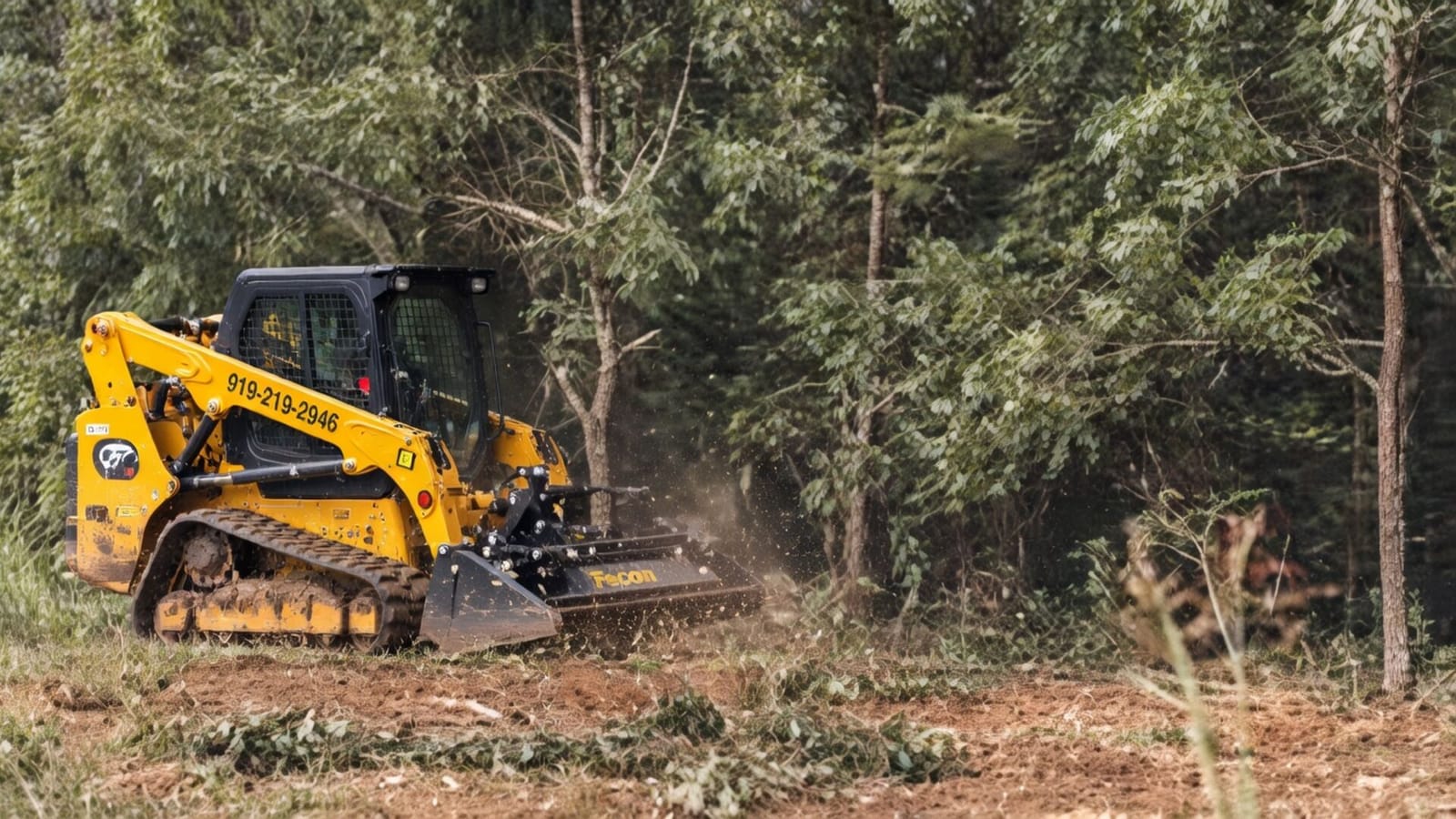
Forestry mulching around Louisville runs $1,500 to $4,000 per acre. See what river bottom, tableland and knob slope each do to the hours on your tract.
 Guide
Guide Bush Honeysuckle Removal Around Louisville
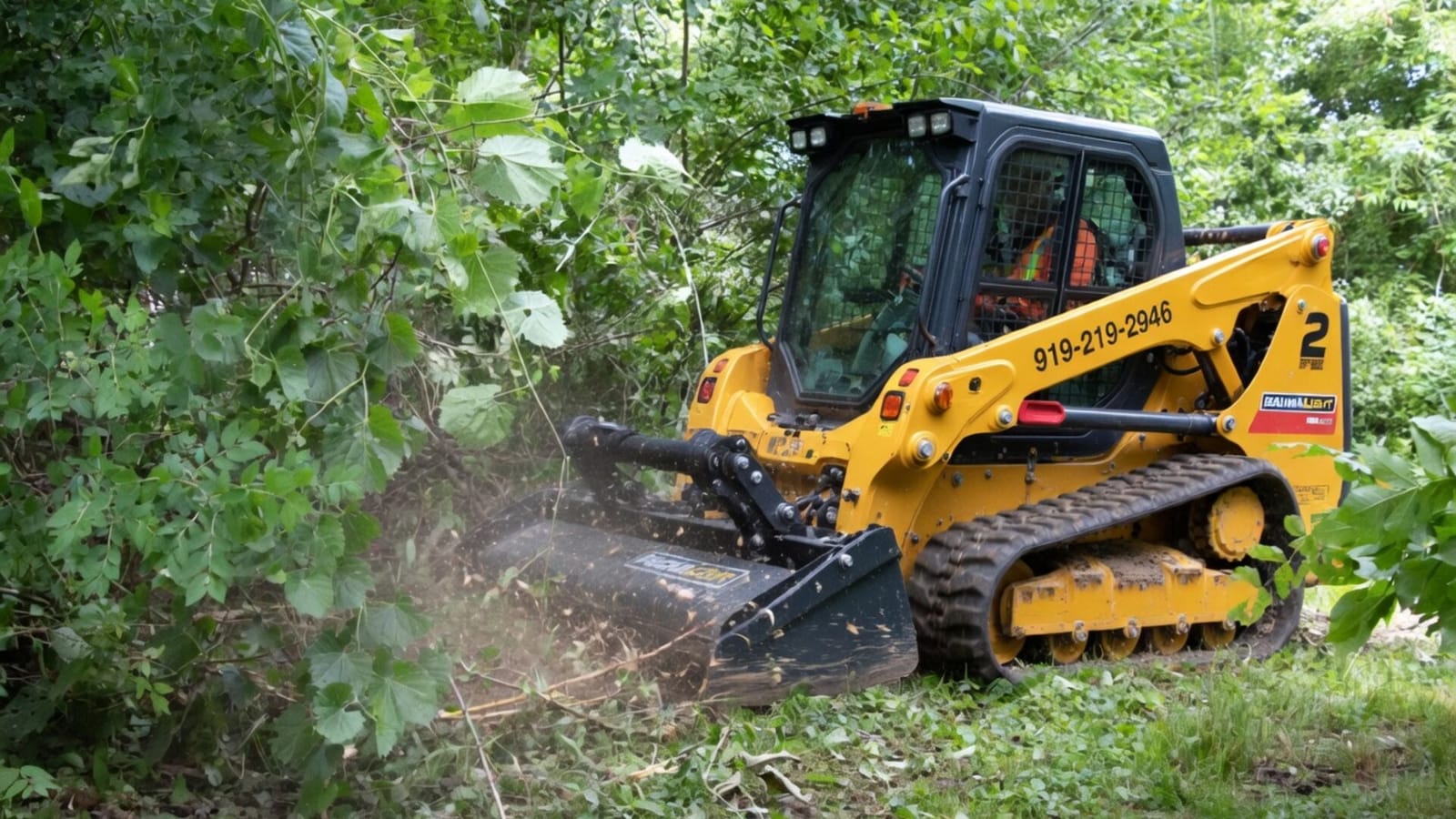
Bush honeysuckle is what most Louisville woodlots are actually full of. Here is what it does, why one cut never finishes it, and how clearing should be planned.
Guide Land Clearing Permits in Louisville, KY (and Across the River)
Louisville changes category at 2,000 square feet of disturbance, not an acre, and Indiana starts at an acre. Here are both thresholds and their sources.
Ready to Get Started on Your Land?
Get a free, no-obligation estimate for property in Louisville & Southern Indiana.
Get Your Free QuoteOr call us directly: (919) 525-3950