Land Clearing Permits in Savannah & Chatham County
Cut Brush Team · September 24, 2026 · 6 min read
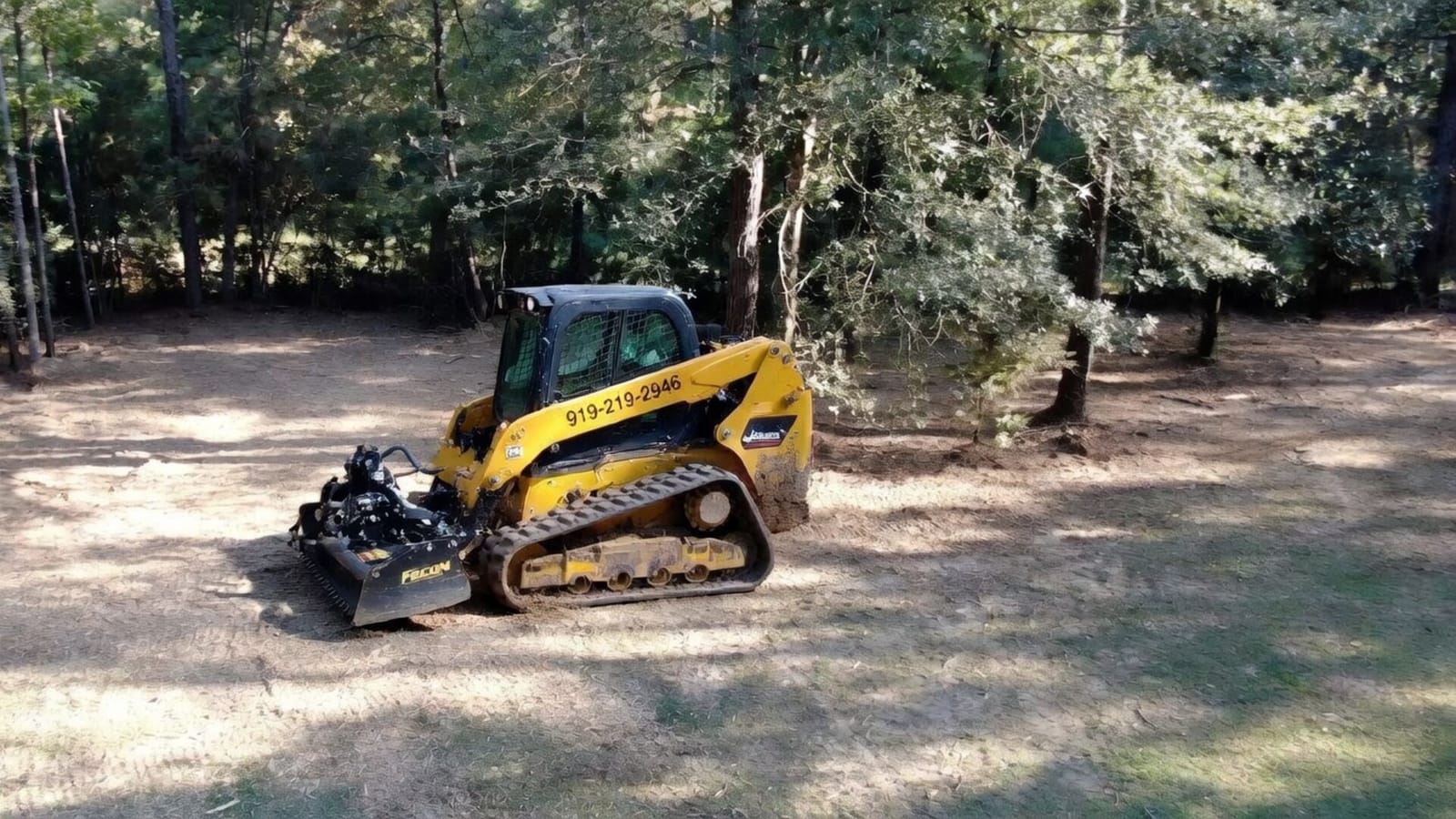
Inside Savannah city limits, clearing usually needs a permit long before you reach an acre, because the city counts removing any tree two inches in diameter or larger as clearing. Outside the city, unincorporated Chatham County runs its own three-permit system built around keeping canopy. And anywhere near the marsh, a state buffer line decides how close the work may go.
Three sets of rules around one city. Each threshold below carries its official source.
City of Savannah: Two Inches Is the Line
The City of Savannah’s published Landscape and Tree Protection Ordinance starts from the tree rather than the acre. It defines clearing as “the removal of trees or other vegetation of two inches dbh or greater”, where dbh is the trunk diameter at breast height, and says a property owner shall not clear, or allow clearing, without first obtaining a clearing permit (City of Savannah).
The same ordinance lists which trees are protected:
- On undeveloped property, any tree greater than two inches dbh.
- On developed property, any tree of 12 inches dbh or more, except on single-family residential lots.
- Any tree in a wetland, whatever its size.
- Trees kept or planted to meet the ordinance’s Tree Quality Points, and trees designated as specimen or exceptional trees.
There are exemptions. Lots with an existing single-family home or duplex are exempt from the permit requirement until the use changes, as is land zoned and used for agriculture while that use continues. The ordinance also lets the administrator approve underbrushing of trees or other vegetation up to four inches in diameter where enough tree cover remains.
For a landowner, the practical reading is this. On a vacant city lot, almost every stem a mulching head would take is a protected tree, so the clearing permit and a plan for what stays come before the machine. Developed parcels are held to 1,600 Tree Quality Points per acre, counted from trees kept and trees planted. The version the city publishes is dated March 2017, and the city’s online code has since renumbered the chapter, so confirm the current text with the city before relying on any single figure.
City of Savannah: The Land Disturbance Step
Tree permits are one track. Soil is another.
The city’s site development instructions say that where the disturbed area of a project is one acre or greater, or within 200 feet of state waters, an Application for Land Disturbing Activity Permits goes to the Georgia Coastal Soil and Water Conservation Commission first, and “a site permit will not be issued without this approval.” The city also charges an erosion control fee of $40 per disturbed acre (City of Savannah). Figures as published in September 2026.
The 200 foot clause matters more than it looks on this coast. Ditches, canals and tidal creeks run through a lot of Savannah land, so a small job can land inside that distance without anyone thinking of it as waterfront.
Unincorporated Chatham County: Three Permits and a Canopy Goal
Outside city limits, Chatham County’s Land-Disturbing Activities Ordinance applies to all land in the unincorporated county (Chatham County). It is administered through the Department of Engineering, with trees reviewed by the County Arborist.
The ordinance defines land-disturbing activities to include clearing, grading, excavating and filling, and it groups the permits into three: Clearing and Grubbing, Grading, and Development. They can be issued one at a time, or all the work can be authorized by a Development Permit.
Its stated purpose includes keeping a minimum of fifty percent canopy cover across unincorporated Chatham County, which the ordinance puts at approximately 18 large trees per acre, or 1,600 Tree Quality Points per acre. Timber harvesting or clear cutting on land not zoned and used for agriculture needs a land-disturbing permit first, together with a harvest and reforestation plan prepared by a registered forester and reviewed by the County Arborist.
Exemptions include land zoned for agriculture while it is used that way, and single-family lots recorded before the ordinance was enacted. In new residential subdivisions, a land-disturbing permit is a prerequisite for a building permit on a lot, with a plot plan showing the trees to be protected.
The Marsh Buffer: A State Line on the Ground
Along the coast a separate state rule applies whatever the city or county says.
Georgia keeps a 25 foot buffer along coastal marshlands, measured horizontally from the line where marsh meets upland, as set under the Coastal Marshlands Protection Act. No land disturbance belongs in that buffer without a variance, although agricultural activity is exempt. For any proposed land disturbance below the 2 meter elevation, state guidance says the owner should contact the DNR Coastal Resources Division for a jurisdictional determination, which fixes where that line sits (Georgia EPD).
The Coastal Resources Division says anyone near the saltmarsh contemplating clearing land must contact the department, that its staff flag the marsh and upland boundary, and that those determinations are typically valid for one year (Georgia DNR Coastal Resources Division).
On Wilmington Island, around Thunderbolt and along the tidal creeks of Bryan County, the order is simple: find the line, then write the scope.
Burning Is a Separate Question
Permits govern soil and trees. Burning the cut material is another agency.
Chatham, Effingham, Bryan, Liberty and Bulloch counties are not on the Georgia EPD summer open burning ban list, so the May 1 to September 30 ban that covers Atlanta and Augusta does not reach them (Georgia EPD). Land-clearing debris still needs a Georgia Forestry Commission notification or permit for the day, and local rules can be stricter. Grinding in place avoids the question, which is covered further in our Savannah forestry mulching cost guide.
Frequently Asked Questions
Do I need a permit to clear brush on my Savannah lot?
It depends on the lot and the size of the stems. On undeveloped city land, anything two inches in diameter or larger counts as a protected tree and clearing it needs a permit. A lot with an existing single-family home is exempt from the tree permit requirement. Ask the city about your specific parcel.
Does forestry mulching count as clearing?
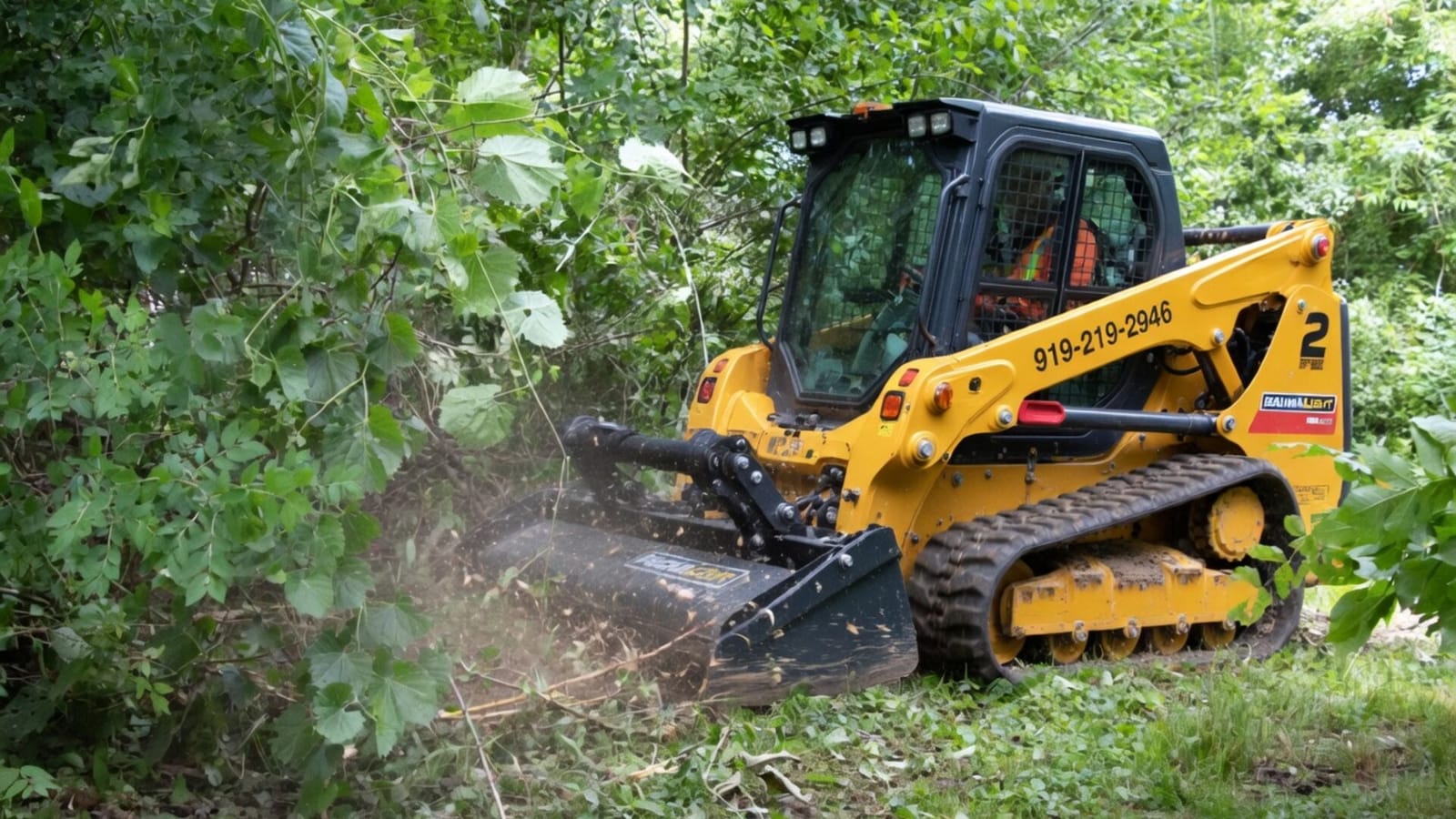
Inside Savannah, if it removes trees or vegetation two inches in diameter or larger, the ordinance’s definition of clearing covers it, whatever the machine. Underbrushing of smaller growth may be approved by the administrator.
Who pulls the permit, me or the contractor?
Settle it in the contract before work starts. Cut Brush can flag what commonly applies and help identify the right office, and we work to the permit you hold. Requirements vary by parcel, scope and jurisdiction, and the governing authority makes the determination.
Settle the Permit Question Before You Price the Work
City, county and marsh each have their own line, and the cost of guessing is a stopped job or a fine.
Ranges are on the Savannah pricing guide, local conditions on our Savannah land clearing page, and when you are ready, request a free quote. We walk the parcel, put the scope in writing, and say which office we think you need.
More from the Cut Brush Blog
Keep reading for more tips and guides on land clearing.
 Cost Guide
 Forestry Mulching Cost in Savannah, GA (2026)
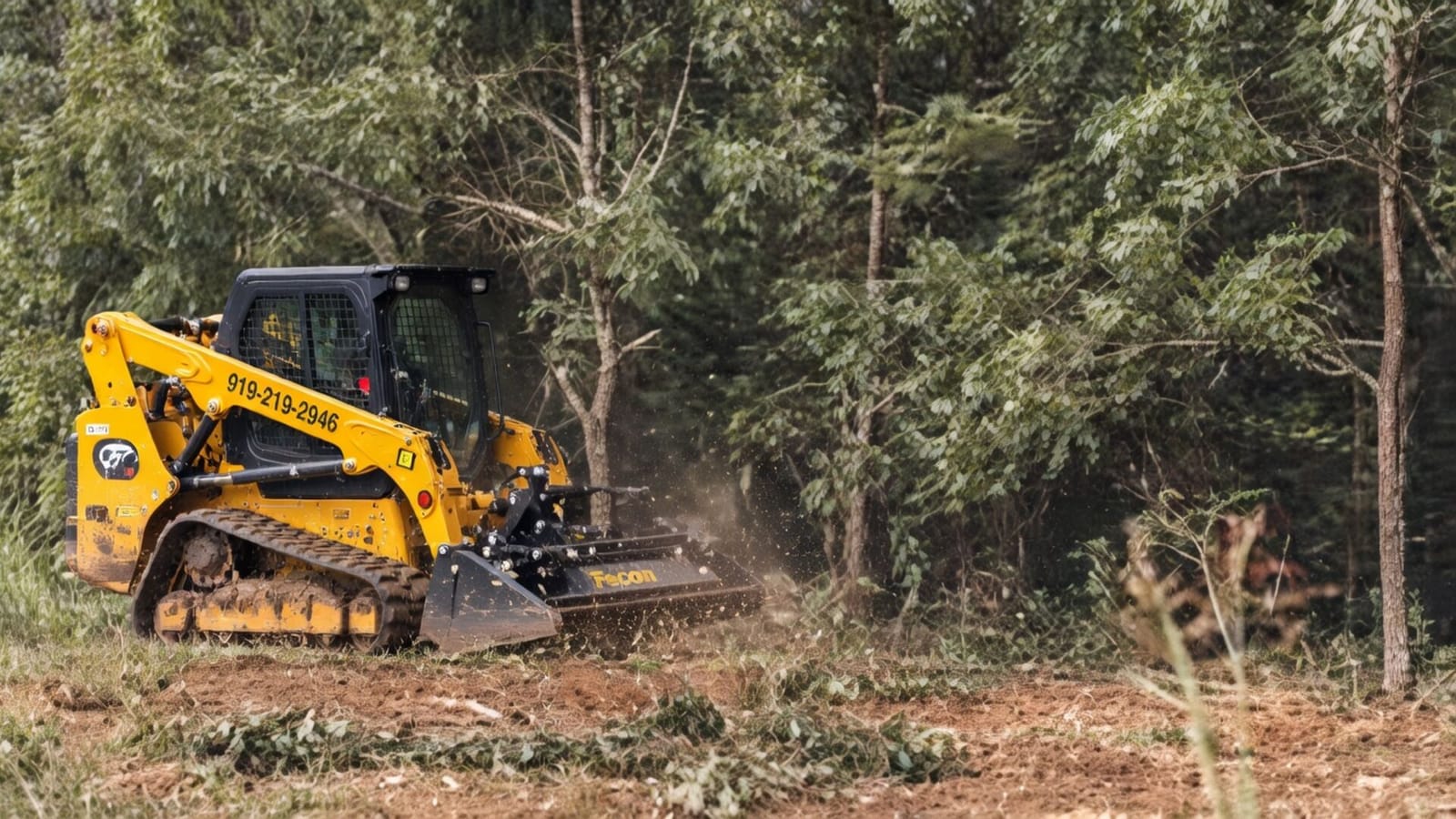
Forestry mulching around Savannah runs $1,500 to $4,000 per acre. See what palmetto flatwoods, wet ground and the city tree rules do to the number.
 Guide
Guide Clearing Palmetto and Gallberry Flatwoods Around Savannah
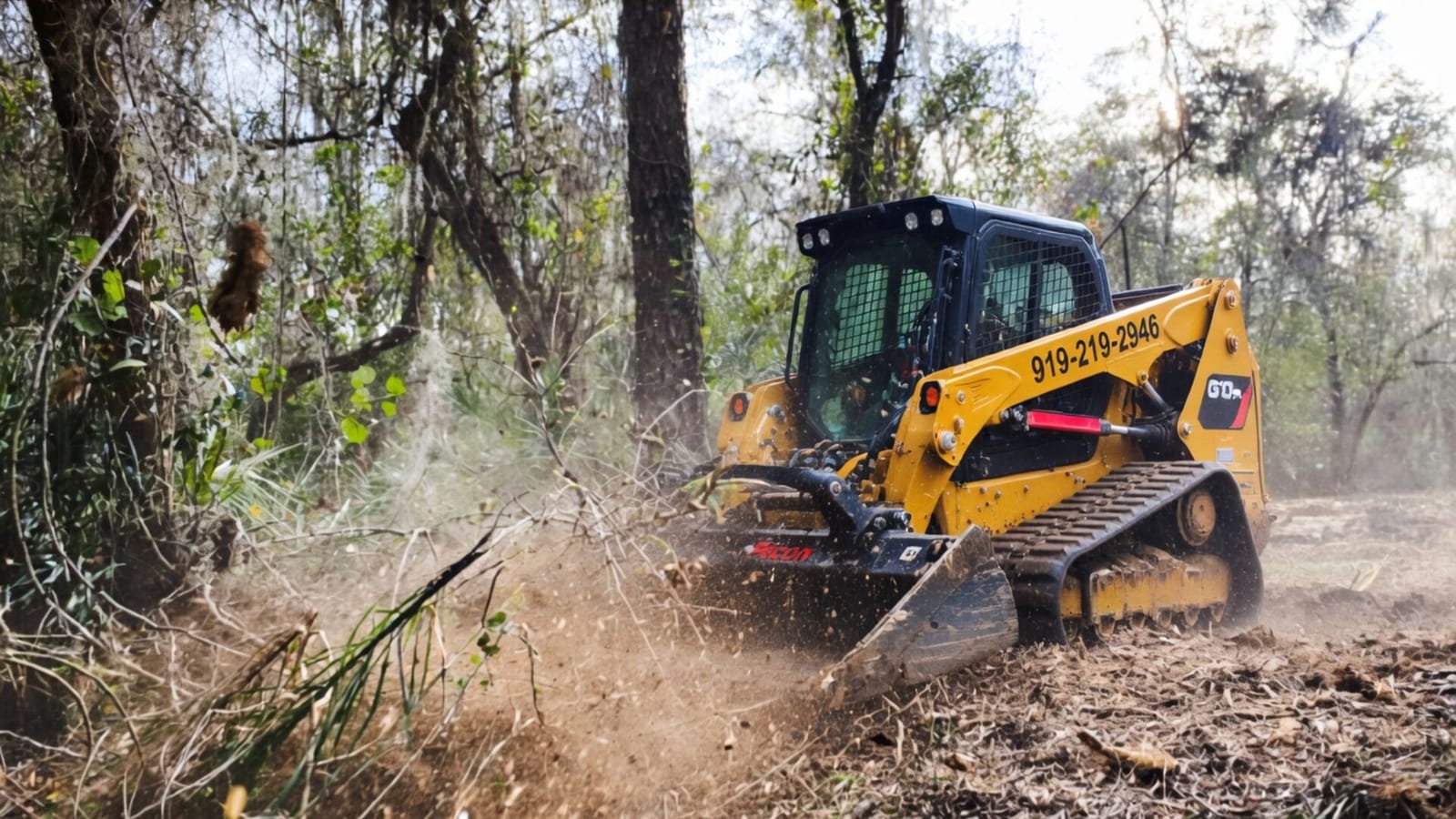
Pine flatwoods around Savannah grow a dense layer of palmetto, gallberry and wax myrtle on wet ground. How to clear it, when, and what comes back.
 Guide
Guide Wisteria Removal in Georgia: Save the Trees, Stop Regrowth
Wisteria removal in Georgia starts with cutting vines off the trees you want to keep. See how it spreads, why one cutting fails, and what clearing costs.
Ready to Get Started on Your Land?
Get a free, no-obligation estimate for property in Savannah & Coastal Georgia.
Get Your Free QuoteOr call us directly: (919) 525-3950