
Wisteria Removal in Georgia: Save the Trees, Stop Regrowth
Cut Brush Team · October 1, 2026 · 9 min read
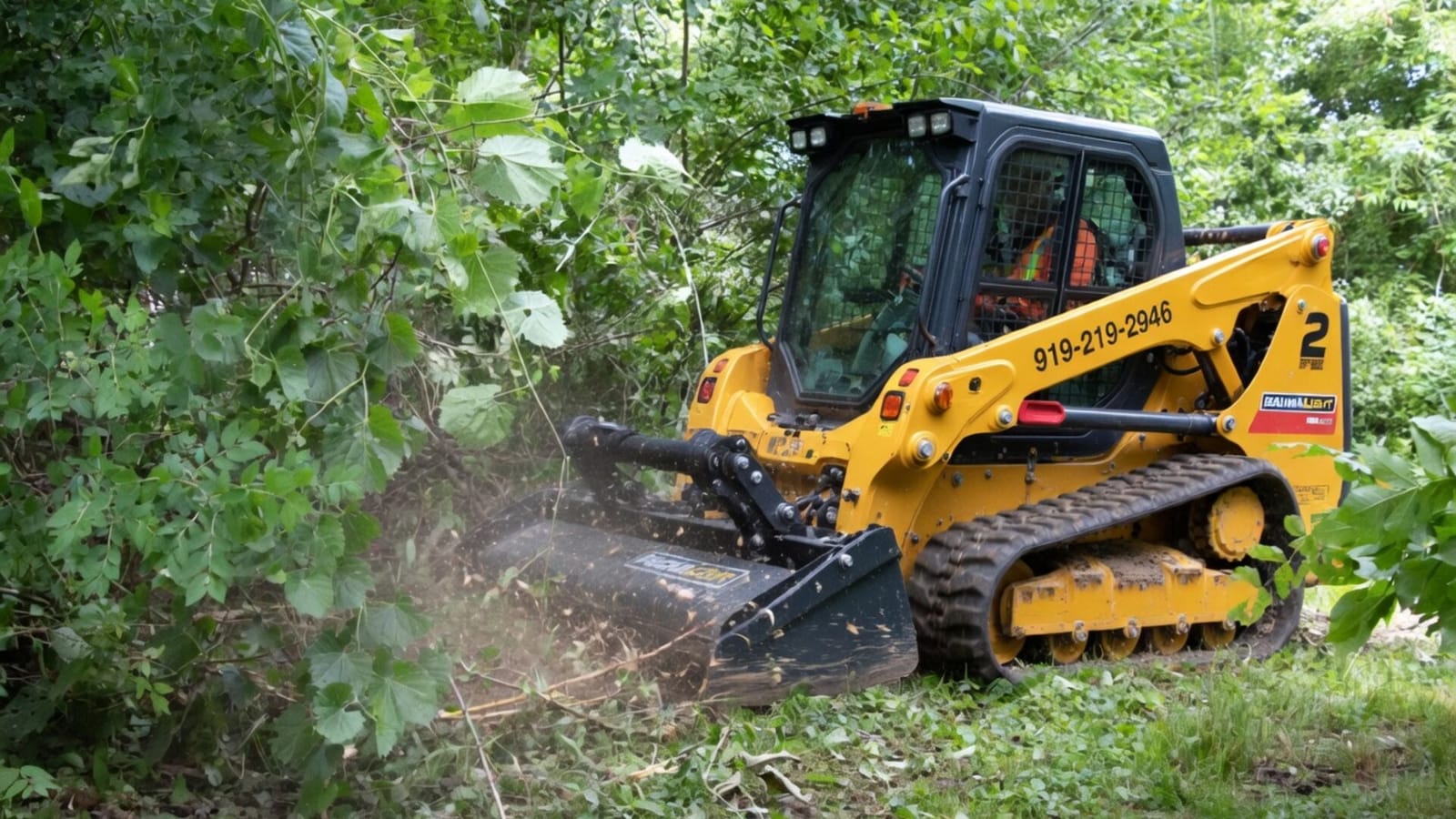
Every April the woods along the back of the property turn purple, and for two weeks it looks like a postcard. Then the flowers drop and you notice what is underneath: trunks wrapped in woody vines as thick as your wrist, an oak leaning under the weight, and a carpet of runners spreading across the ground toward the yard. Wisteria removal in Georgia is mostly about the trees, because by the time most people call, the vine has already chosen which ones it is going to kill.
This guide covers how to tell the invasive wisteria from the native one, how it takes over a property, why cutting it once never holds, the order of work that saves the trees, what clearing costs per acre, and how the job changes across the state.
How Do You Tell Invasive Wisteria From the Native Kind?
The wisteria running wild in Georgia woods is almost always Asian: Chinese, Japanese or a hybrid of the two. Alabama Extension names three: Chinese (Wisteria sinensis), Japanese (Wisteria floribunda) and their hybrids (Wisteria x formosa), all of which “are invasive plants in the United States.” In Georgia, Chinese wisteria sits in Category 1 on the Georgia Invasive Species Council list, the most invasive tier, according to UGA Extension in Paulding County.
Georgia also has a native, American wisteria. Three things separate them:
- Bloom time. Trees Atlanta notes that the Japanese and Chinese species “bloom in April/May,” while American wisteria “blooms in June/July.”
- Leaflets. UGA Extension in Dougherty County counts “7 to 13 leaflets” on Chinese wisteria and “13 to 19 leaflets” on Japanese.
- Size. The Asian vines become trunks of their own, up to 10 inches across and 70 feet long. The native one stays a modest vine.
If the vine is the size of a small tree and flowered in spring, it is the invasive one.
How Does Wisteria Take Over a Property?
It climbs, it strangles, and it runs along the ground. Alabama Extension notes wisteria “is known to climb trees to heights of 70 feet or more, causing ecological damage by girdling trees, even mature hardwood trees.” The vine wraps the trunk like a cable and tightens as the tree grows, cutting off its own host.
Up top, the vine spreads across the canopy and shades out the tree’s leaves. Down below, Trees Atlanta describes “wisteria spreading on the forest floor”: runners crawl across the ground and root as they go, which is how one old planting by a home site becomes an acre of vine.
Most Georgia infestations trace back to a person. Wisteria was planted on porches, arbors and old home sites for generations, and the vines outlived the houses. If there is an old chimney, a foundation or a row of daffodils in your woods, look for wisteria nearby.
Why Doesn’t Cutting It Once Work?
Because the roots and runners survive, and they resprout. UGA Extension warns that “any root pieces remaining in the soil may resprout to produce new plants.” Cut the vines back once, and a ring of new shoots comes up around every root crown and along every runner.
That is why UGA’s mechanical advice is a schedule, not an event: “cut climbing or trailing vines as close to the root as possible,” then keep “cutting sprouts every few weeks until the fall.” The goal is to make the plant spend its stored energy on new shoots and never let them pay it back.
Pulling vines down out of the canopy is the other common mistake. Trees Atlanta is direct: “Do not attempt to pull vines down that are above your reach.” Wisteria cables can bring dead limbs down with them. Cut at the base and let the vine die in place; “cutting at the base will kill the vine above the cut, and they will eventually dry up and fall off.”
What Is the Right Order for Wisteria Removal?
Save the trees first, then clear the ground, then starve the roots. The sequence Cut Brush quotes:
- Cut every vine at the base of every tree you want to keep. This is the step that saves the trees, and it comes first. Vines left in the canopy die and fall over the following months.
- Mulch the ground layer. A forestry mulcher grinds the runners, the vine-choked brush and the dead saplings underneath into a chip layer. It opens the ground so every root crown and runner can be found.
- Cut the regrowth on a schedule. New sprouts are cut back every few weeks through the growing season, the cadence UGA recommends, so the roots never refill.
- Decide what to do with the trees that are too far gone. Trunks already girdled or leaning may be safer down than standing. Those are marked at the walk-through, with the owner, before any cutting starts.
The first visit makes the property usable again. The follow-ups are what keep it that way, so they are written into the quote from the start.
Cut Brush does mechanical work only. Trees Atlanta’s own method pairs cutting with herbicide on the fresh cuts; in Georgia that treatment is licensed pesticide contractor work, and a licensed applicator can be scheduled alongside the clearing.
Pro tip: Cut the vines at the base in late winter, before the leaves come out. You can see every cable against the bare trunks, and the tree gets a full season of light back before summer.
How Much Does Wisteria Removal Cost in Georgia?
Clearing a wisteria-choked understory typically runs $1,500 to $2,500 per acre, the brush and understory band on our Augusta pricing page. The bands are the same in every Georgia market. Follow-up sprout cutting is priced per visit. Here is what moves the number:
| Cost factor | What it does to the price |
|---|---|
| Vine density on the ground | Scattered runners price near the bottom; a solid vine mat with brush inside it prices in the upper half |
| Trees to save | Every tree that keeps its place gets its vines cut by hand at the base, which adds time per tree |
| Trees too far gone | Girdled or leaning trees that need to come down can shift part of the job to land clearing at $1,500 – $4,500 per acre |
| Access | Old home sites at the end of a field road or behind a creek add setup time |
| Parcel size | Getting equipment to the site sets a practical floor near $1,500; the per-acre cost drops as acreage rises |
| Follow-up schedule | Priced per visit through the growing season, usually for two or more seasons |
For how this compares with other clearing work, see the Georgia land clearing cost guide.
Forest landowners may qualify for help. The Georgia Forestry Commission’s Invasive Plant Control Program lists wisteria among its eligible species and pays $60 per acre, up to $10,000 and 75 percent of documented cost, for at least 3 treated acres on a property with at least 10 acres of forest land. The practice uses “herbicides or a combination of mechanical and herbicide treatments,” so mulching can be one part of a qualifying plan. The 2026 sign-up closed on 3 July.
Wisteria Around Augusta, Atlanta and the Rest of Georgia
The vine is the same statewide. What changes is the ground, the calendar and what else is growing with it.
Augusta and the CSRA. Wisteria here follows the statewide pattern: old home sites, fence rows and hardwood bottoms along the Savannah River and its creeks. Richmond and Columbia counties are inside the state’s summer open burning ban from 1 May to 30 September, which per Georgia EPD prohibits “burning yard and land-clearing debris”; Burke County is not. If the 2024 storm left vine-covered trees down on your land, our storm-damaged land guide covers that cleanup. Start at land clearing around Augusta.
Metro Atlanta. Wisteria often shares the woods with kudzu, Chinese privet and Japanese honeysuckle, and the summer burn ban covers all six counties Cut Brush serves. If the vine on your slope has big three-part leaves and no woody trunk, it is kudzu, which needs a different plan: see our Georgia kudzu removal guide and the metro Atlanta service page.
Columbus. The Chattahoochee Valley mixes Piedmont clay and Coastal Plain sand. Wisteria turns up on the same old home sites and creek edges as anywhere in the state. See land clearing around Columbus.
Savannah, Albany and Valdosta. On the Coastal Plain, wisteria is usually one vine among several on an old home site or a hardwood creek bottom. The order of work does not change: cut at the base, clear the ground, cut the regrowth. See land clearing around Savannah.
Frequently Asked Questions
Will my wisteria grow back after I cut it?
Yes, from the roots and runners, unless the regrowth is cut back again and again. UGA Extension recommends cutting sprouts every few weeks until fall. Plan on at least two growing seasons of follow-up for an established vine.
How much does wisteria removal cost in Georgia?
Clearing a wisteria-filled understory typically runs $1,500 to $2,500 per acre, with follow-up visits priced separately. Small jobs carry a practical floor near $1,500. If girdled trees have to come down, that part can price as land clearing at $1,500 to $4,500 per acre.
Should I pull the vines out of the trees?
No. Cut them at the base and leave the upper vines to die and fall on their own. Pulling heavy wisteria out of a canopy can bring dead limbs down with it.
Can wisteria kill a mature tree?
Yes. The vine girdles trunks and shades the crown, and Alabama Extension notes it damages “even mature hardwood trees.” Cutting the vines at the base early saves trees that still have healthy crowns.
Is all wisteria in Georgia invasive?
No. American wisteria is native and blooms in June and July. The vines that flower in April and May and grow trunks as thick as small trees are Chinese, Japanese or hybrid, and those are the invasive ones.
When is the best time to remove wisteria?
Cut the vines off trees in late winter, when every cable is easy to see. Clear the ground in late winter or early spring, then cut sprouts through the growing season.
Get the Wisteria Off Your Trees and Keep It Down
Whether the vine is strangling an oak at an old home site near Waynesboro, carpeting a creek bottom outside Evans or climbing the pines at the back of a lot in Canton, every season it is left alone costs another tree. Cut Brush quotes wisteria removal across Georgia the way the plant requires: vines cut at the base of every tree worth saving, the ground cleared, and a written schedule of follow-up visits, all priced before any work starts.
More from the Cut Brush Blog
Keep reading for more tips and guides on land clearing.
 Guide
Guide Clearing Storm-Damaged Land Around Augusta
Two seasons on, CSRA property still carries broken timber and the thicket that grew through it. What that changes about clearing, and what to ask a bidder.
 County Guide
 Land Clearing Permits in Augusta & Across the River
Augusta permits grading first and lists exemptions second. Here are the Richmond, Columbia and South Carolina thresholds, with the source beside each one.
Guide Kudzu Removal in Georgia: Cost and a Plan That Lasts
Kudzu removal in Georgia takes more than one cutting. See why it regrows, the multi-visit plan that drains the root crowns, and what it costs per acre.
Where is your property?
Cut Brush runs 6 service areas in GA. Pick the one nearest you and the quote form comes to the right crew.
Ready to Get Started on Your Land?
Get a free, no-obligation estimate for property in Augusta & the Central Savannah River Area.
Get Your Free QuoteOr call us directly: (919) 525-3950