
Brazilian Pepper Tree Removal in Florida: Owner's Guide
Cut Brush Team · August 26, 2026 · 8 min read

There is a shrubby tree with bright red berries taking over a corner of your fence line, and every time you cut it back it returns twice as thick. If you are anywhere in the Ocala and Marion County area we cover, from a pasture edge near Summerfield to a vacant lot in Silver Springs Shores, there is a fair chance you are looking at Brazilian peppertree, and Brazilian pepper tree removal is a different job than cutting an ordinary volunteer tree. This is Florida’s most widespread invasive tree, it is prohibited under state law, and it is built to survive exactly the kind of casual cutting most landowners throw at it.
Ocala sits near the northern edge of the plant’s comfortable range, which is the good news: stands here are still beatable in a way South Florida’s are not. This guide covers how to identify it (and why you should not grab it bare-handed), why cutting alone fails, what actually kills it, and the disposal rules that surprise people.
How Do You Identify a Brazilian Pepper Tree?
Look for compound leaves, a peppery smell when crushed, and clusters of bright red berries in fall and winter. Brazilian peppertree grows as a dense, multi-trunked shrub or small tree, often forming a tangled thicket rather than a single clean trunk.
| Feature | What you will see |
|---|---|
| Leaves | Compound, 3 to 13 leaflets with a winged central stalk; smell peppery when crushed |
| Berries | Bright red, pea-sized, in dense clusters, showiest in fall and winter |
| Form | Multi-stemmed shrub or small tree, arching branches, thicket-forming |
| Where it shows up | Fence lines, pasture edges, ditch banks, vacant lots, disturbed ground |
| The tell | It stays glossy green and holds red berries when much else looks dormant |
One warning before you touch it: Brazilian peppertree is in the same plant family as poison ivy and poison oak. The sap and crushed leaves cause skin rashes and irritation in plenty of people, and burning it can put irritating compounds in the smoke. Wear gloves and sleeves, and do not run a weekend chainsaw session on it without knowing how you react.
Around Ocala, thickets show up most along fence lines and under power line runs, and there is a reason: birds eat the berries and perch on wires and fence posts, planting the next generation in a neat row. If you see one tree, walk the whole fence.
Why Doesn’t Cutting a Brazilian Pepper Tree Kill It?
Because the root system treats cutting as pruning. Cut a Brazilian peppertree at the base and the stump resprouts, often with more stems than it had before. Knock it down with a mower or a light tractor and root fragments left in the soil can send up new shoots. This is why the fence line you “cleared” two summers ago in Belleview is now a hedge.
Effective removal pairs mechanical work with treatment:
- Cut-stump treatment. Cut the trunk low and treat the fresh-cut stump immediately with an appropriate herbicide so the root system dies instead of resprouting. Timing matters: the cut surface needs treatment within minutes, not days.
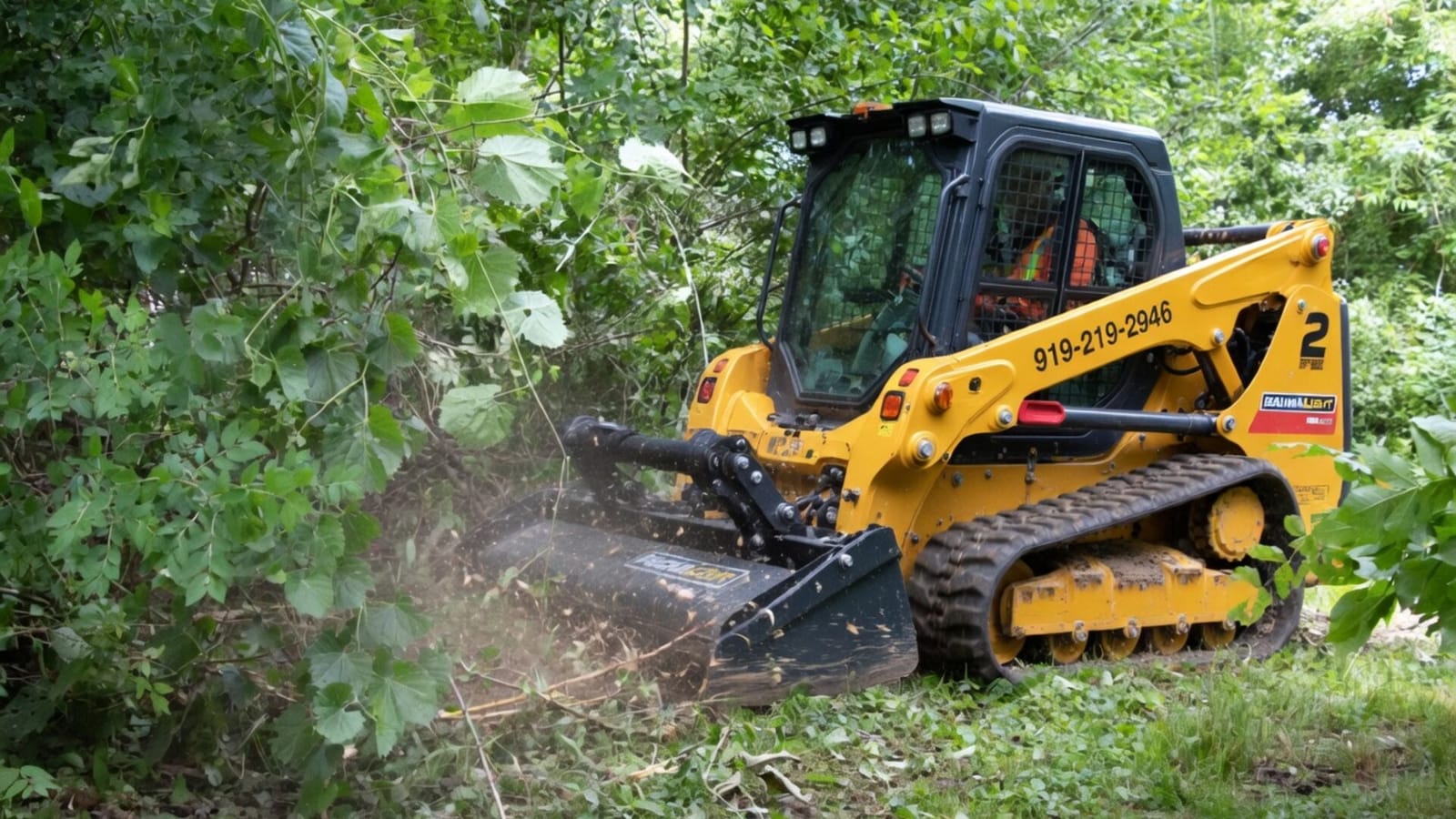
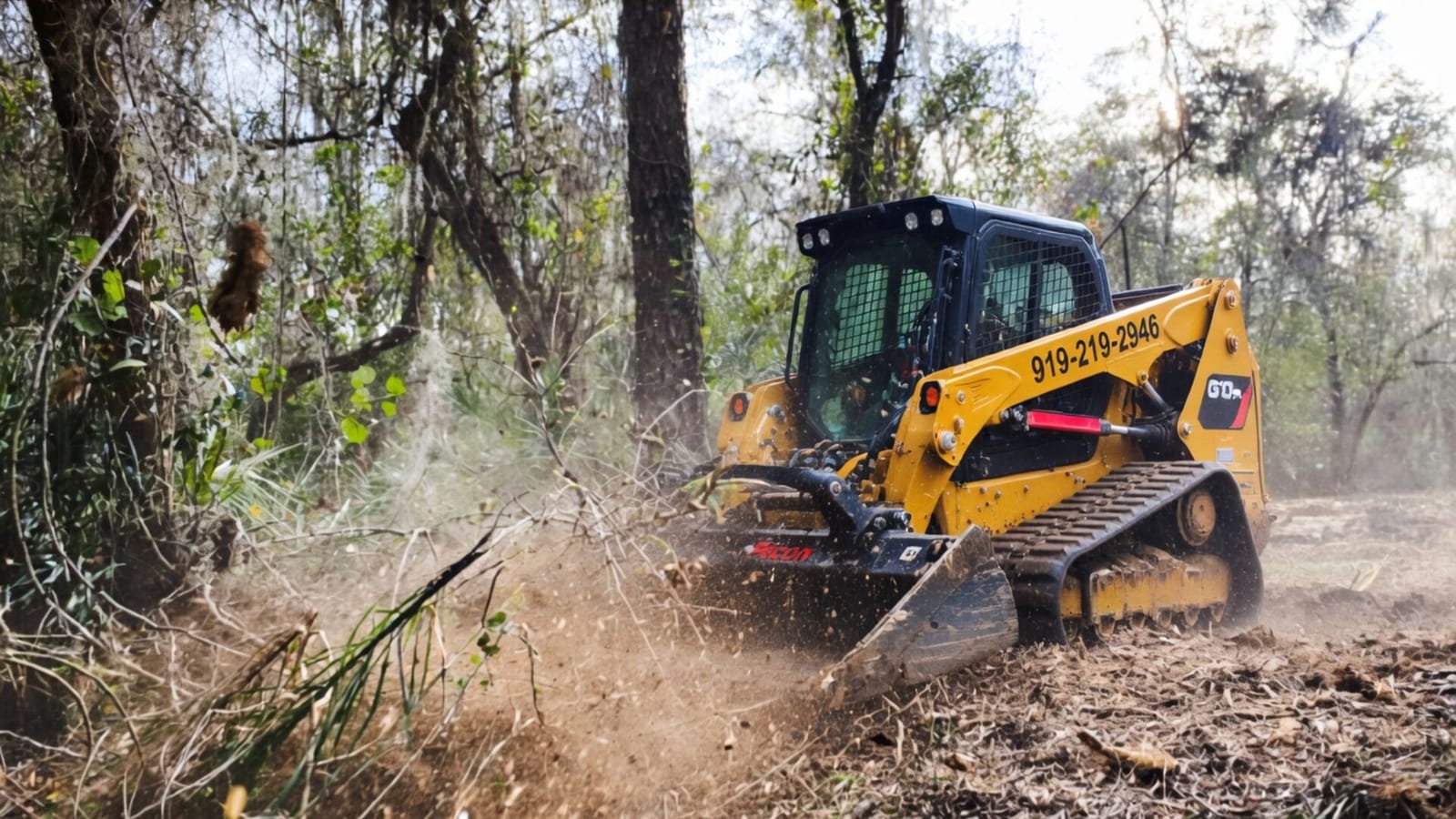
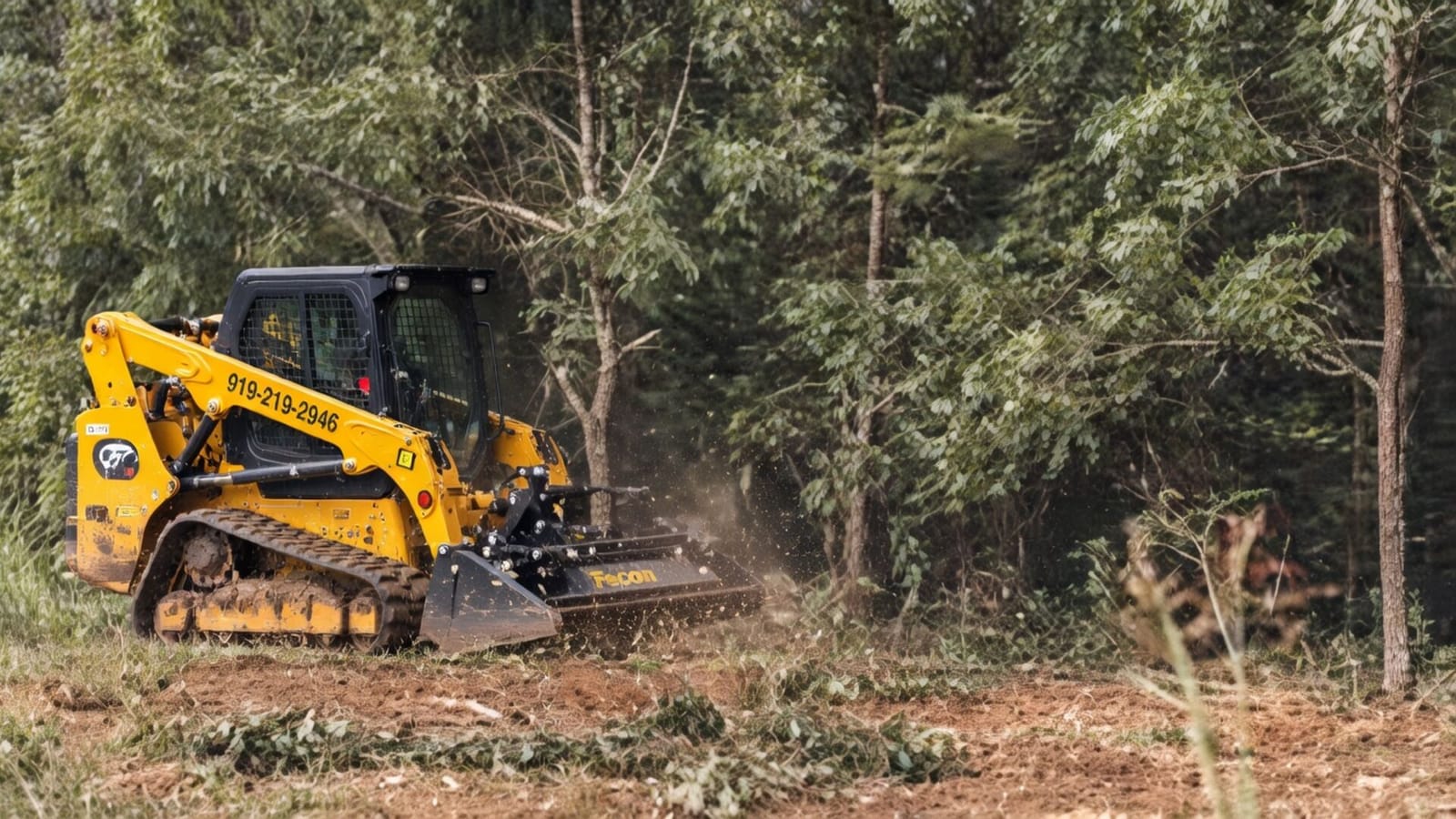
- Machine clearing for thickets. Once a stand is a wall of interlocked stems, hand work becomes impractical. A mulching machine or brush clearing crew in Ocala takes the thicket to grade in a fraction of the time, then the regrowth flush that follows gets treated while it is small and vulnerable.
- Follow-up passes. One visit is never the whole job. Plan on rechecking the area over the following seasons and treating sprouts and berry-planted seedlings before they mature.
For heavy infestations woven through other vegetation, forestry mulching clears the whole tangle at once and leaves the ground covered in mulch instead of bare sand, which also makes the follow-up sprouts easy to spot.
Pro tip: In Marion County, check your fence lines in December and January. Brazilian peppertree holds glossy green leaves and red berries while native trees stand bare and brown, so a winter walk of the property line finds every plant in twenty minutes, including the small ones you will miss in June.
What Are the Rules on Brazilian Pepper in Florida?
Brazilian peppertree is prohibited under Florida law: it is illegal to sell or transplant it. It also sits on the state’s highest-concern invasive plant lists. In practice, that shapes removal in a few ways for a Marion County landowner.
Do not sell, give away, or transplant any part of the plant, and do not move berry-laden branches around casually; every red cluster is a packet of viable seed. Keep cut material on site for mulching or proper disposal rather than hauling loose brush with ripe berries down the road in an open trailer.
If you plan to burn debris instead, remember the general Florida rules: piles over 8 feet across need Florida Forest Service authorization and suppression equipment on hand, and smaller yard-waste piles carry setback requirements. With this species, mulching in place avoids both the smoke-irritation question and the seed-spreading question, which is why it is our default recommendation.
We keep this section deliberately general: exact list statuses and local requirements can change, so for anything beyond routine private-land removal, confirm current rules with the county or your UF/IFAS extension office before you start.
When Is It a Chainsaw Job vs a Machine Job?
A single tree or a handful of them is a hand job: cut, treat the stumps, bag or chip the berries, done in an afternoon. The math changes when the plant has had a few years.
Call in a machine when:
- The stand is a continuous thicket you cannot walk through
- It runs the length of a fence line or ditch bank
- Stems are woven into fences, other trees, or structures
- The area also carries palmetto, vines, or other brush that needs clearing anyway
Machine clearing of mixed invasive brush around Ocala typically prices in the $1,500 to $2,500 per acre brush-clearing band, with denser mixed work climbing higher; the full breakdown by vegetation type is in our Florida land clearing cost per acre guide. Since Brazilian pepper rarely grows alone, most owners fold its removal into a broader fence line or pasture-edge cleanup rather than paying for it as a standalone job. If cogongrass has moved into the same pasture, and in Marion County it often has, our cogongrass removal guide covers that half of the problem.
Frequently Asked Questions
How do I get rid of a Brazilian pepper tree permanently?
Cut it and treat the stump immediately with an appropriate herbicide, then recheck the spot for sprouts over the next few seasons. Cutting alone fails because the roots resprout. For thickets, machine clearing followed by treatment of the regrowth is the reliable sequence, and it is how the contractors we work with handle fence-line stands from Summerfield to Citra.
Is Brazilian pepper the same as Florida holly?
Yes, “Florida holly” is an old nickname for the same plant, and it fooled a lot of people into planting it decades ago. The red winter berries look festive, but it is a prohibited invasive, not a holly, and it should come out. If a previous owner planted one near a homesite in Ocklawaha or Weirsdale, expect bird-planted seedlings within berry-flight distance.
Can Brazilian pepper trees hurt you?
They can irritate you. The species is in the poison ivy family, and its sap and crushed foliage cause rashes in sensitive people; smoke from burning it can be irritating too. Wear gloves and long sleeves for hand work, or keep your distance entirely and let a brush clearing crew handle a large stand mechanically.
Does Brazilian pepper grow in Marion County?
Yes, though Marion County is near the northern edge of its strong range, so stands here tend to be younger and smaller than the monster thickets further south. That is exactly why acting early pays: a fence-line stand near Belleview that costs a morning to clear today becomes a multi-day machine job after five more berry seasons.
What does invasive tree removal cost in Florida?
Folded into general brush or land clearing, most invasive-heavy work around Ocala runs $1,500 to $2,500 per acre, with dense mixed vegetation pricing higher. Standalone single-tree removal is usually a small flat job. Our Ocala pricing guide lists the full per-acre bands, and your matched contractor’s walk-through turns them into one firm number.
Should I report Brazilian pepper on my property?
You are not required to report it on private land, but your UF/IFAS extension office is a good call anyway: they can confirm the ID from photos and advise on herbicide choice and timing for your situation. For the removal side, get a free quote from a qualified local contractor who will look at it during the walk-through.
Get Brazilian Pepper Off Your Property for Good
Brazilian pepper tree removal rewards doing it once, properly: clear the stand, treat the regrowth, and walk the fence line each winter afterward. Cut Brush connects owners across the Ocala area, including Belleview, Summerfield, Silver Springs Shores, Dunnellon, and the rural east county, with local contractors who clear invasive thickets, fence lines, and pasture edges.
The contractor we match you with will identify what you have, tell you honestly whether it is a hand job or a machine job, and put a firm written price on it that you can check against the typical Ocala ranges in our pricing guide. Get a free quote and we respond within 24 hours.
Related Services
Learn more about the services mentioned in this article.


More from the Cut Brush Blog
Keep reading for more tips and guides on land clearing.
 Guide
Guide Cogongrass Removal in Florida: Control Guide for Landowners
Cogongrass removal in Florida takes clearing plus repeat treatment. Learn ID, control steps, and costs for Marion County pastures. Get matched with a local pro.
 Cost Guide
 Palmetto Removal Cost in Florida (2026 Per-Acre Guide)
Palmetto removal cost in Florida runs $1,500 to $4,500 per acre depending on density. See Ocala-area pricing by method and get matched with a local pro.
 Guide
Guide Gopher Tortoise Rules Before Clearing Land in Ocala
What Ocala and Marion County owners should know about the 25-foot gopher tortoise rule, preliminary checks, FWC permits, and authorized agents.
Ready for a Free Quote?
Get a free, no-obligation quote from a qualified local contractor in Ocala & Marion County. Cut Brush will connect you with the right local expert.
Get Your Free QuoteOr call us directly: (919) 525-3950