Bush Honeysuckle Removal Around Indianapolis, IN
Cut Brush Team · September 12, 2026 · 5 min read
If you own wooded acreage around Indianapolis, the shrub you cannot walk through is almost certainly Asian bush honeysuckle, and Indiana law says you may not haul it off the property. That single sentence changes how the job gets planned here, because the disposal plan that works in most states is unavailable in this one.
Here is what is actually growing in your woods, what the state rule says, and what a realistic clearing plan looks like.
Why Honeysuckle Owns So Many Central Indiana Woodlots
Indiana carries 4.8 million acres of forestland, 21 percent of the state land base, and about 83 percent of it is privately owned. Just over 72 percent of that forestland is classified as oak and hickory (Indiana DNR, forest facts). Oak and hickory stands let a good deal of light reach the floor, and in this part of the state that opening is filled by a shrub that arrived from somewhere else.
Purdue Extension calls Amur honeysuckle “one of Indiana’s most troublesome invasive shrubs” and “widespread across the state” (Purdue FNR). On the farm woodlots and fence rows that make up most of the wooded ground in Marion, Hamilton, Boone, Hendricks, Johnson and Hancock counties, it does not arrive as scattered bushes. It arrives as a wall, thick enough that owners stop walking their own back acres.
The Rule That Decides What Happens to the Brush
Indiana’s Terrestrial Plant Rule designates 44 plants as invasive pests and makes it illegal to sell, gift, barter, exchange, distribute, transport or introduce them in the state. It took effect on 18 April 2019. Amur honeysuckle is on that list, and so is autumn olive, the other shrub commonly filling old fence lines here. The rule does not prohibit possession (Indiana DNR, terrestrial plant rule), which is the practical distinction: the material can stay where it is, but loading it onto a truck is a different matter.
Burning is not the easy way out either. IDEM requires its approval before tree waste from a clearing operation is burned where the work follows a change in land use, and the exemption it does give covers maintenance burning of vegetation from farms, tree farms, drainage ditches and agricultural land in an unincorporated area (IDEM open burning).
So both of the usual exits are closed or gated. What remains is processing the material where it grew, which is how most honeysuckle work in this market ends up being done.
Cut It and It Comes Back
Nobody clears honeysuckle once. It resprouts from the cut stem, and even small plants pulled by hand will re-root if they are left lying on the soil, which is why Purdue advises hanging them on a branch instead.
Purdue researchers compared two approaches directly: the cut stump method, where stems are cut and the stump treated, against a mulching head on a skid steer. They found “no difference in the growth and recovery of the native plants” between the two. They also found that “the mulching head treatment resulted in a greater abundance of garlic mustard, a non-native invasive biennial herb” (Purdue FNR, Asian bush honeysuckle).
That is worth knowing before anyone promises you a one-visit fix. A mulching pass takes the wall down and gives you your woods back. It does not end the seed bank, and on a floor suddenly full of light something will take the space.
What a Mulching Pass Actually Leaves You
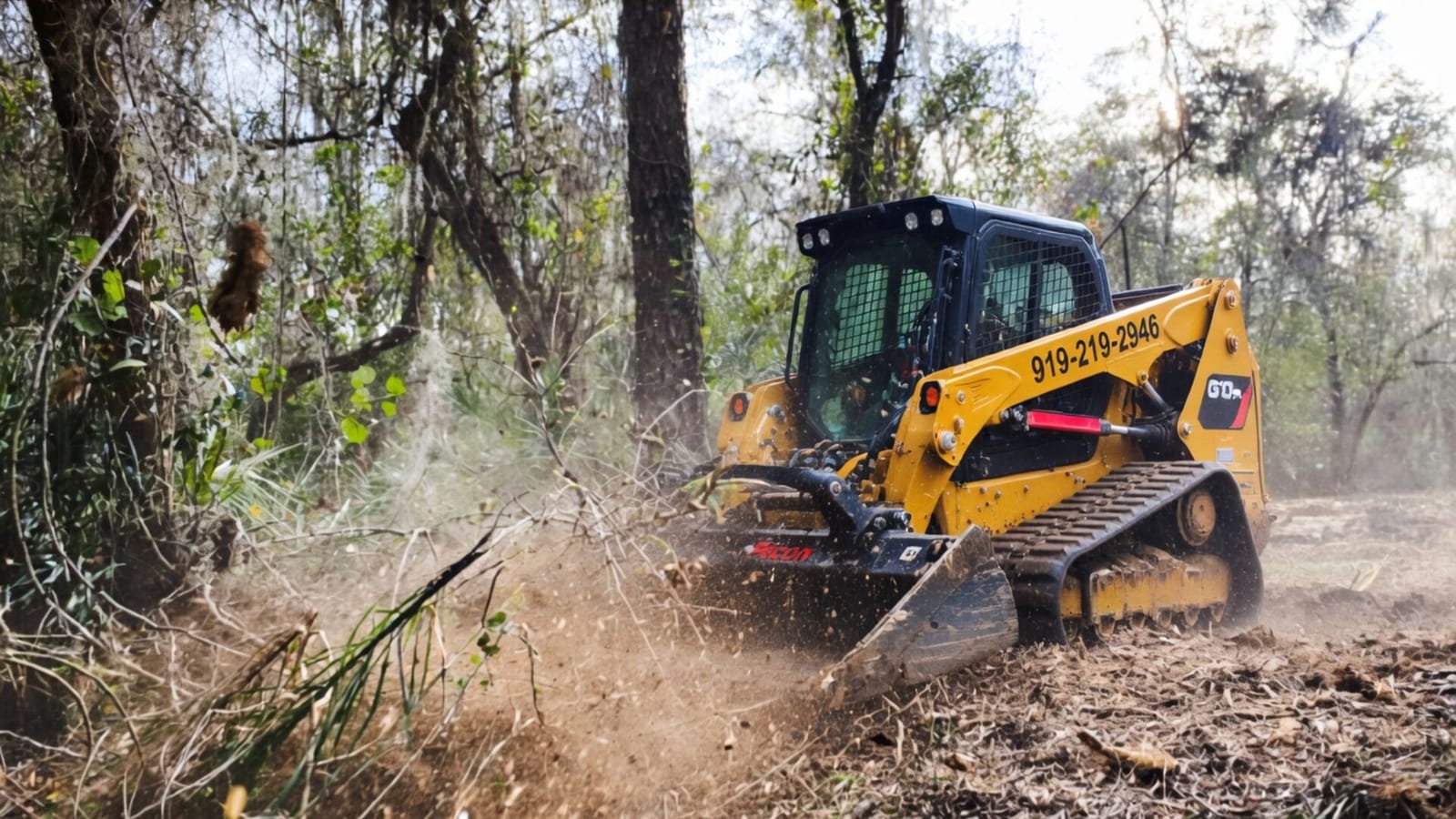
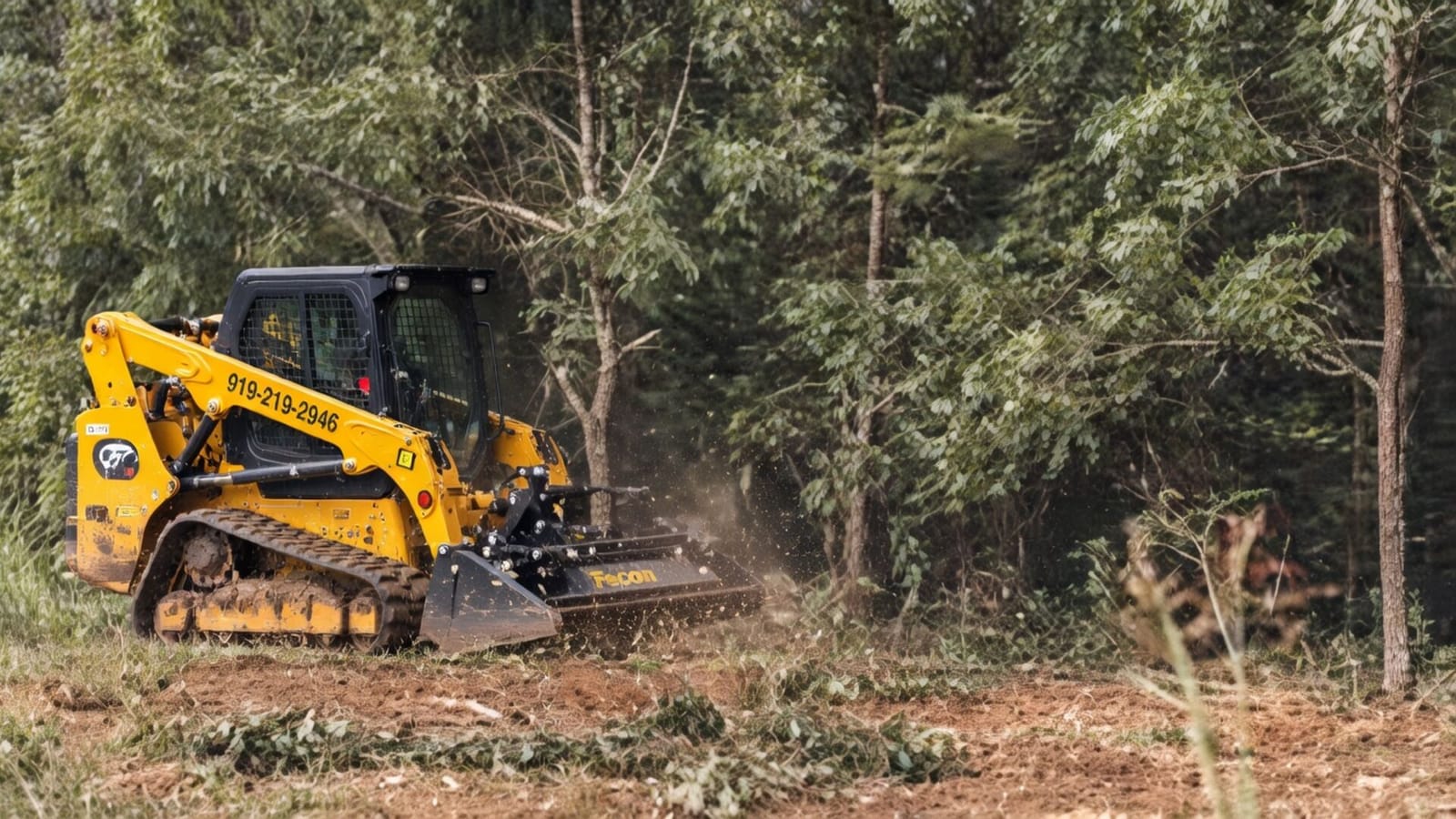
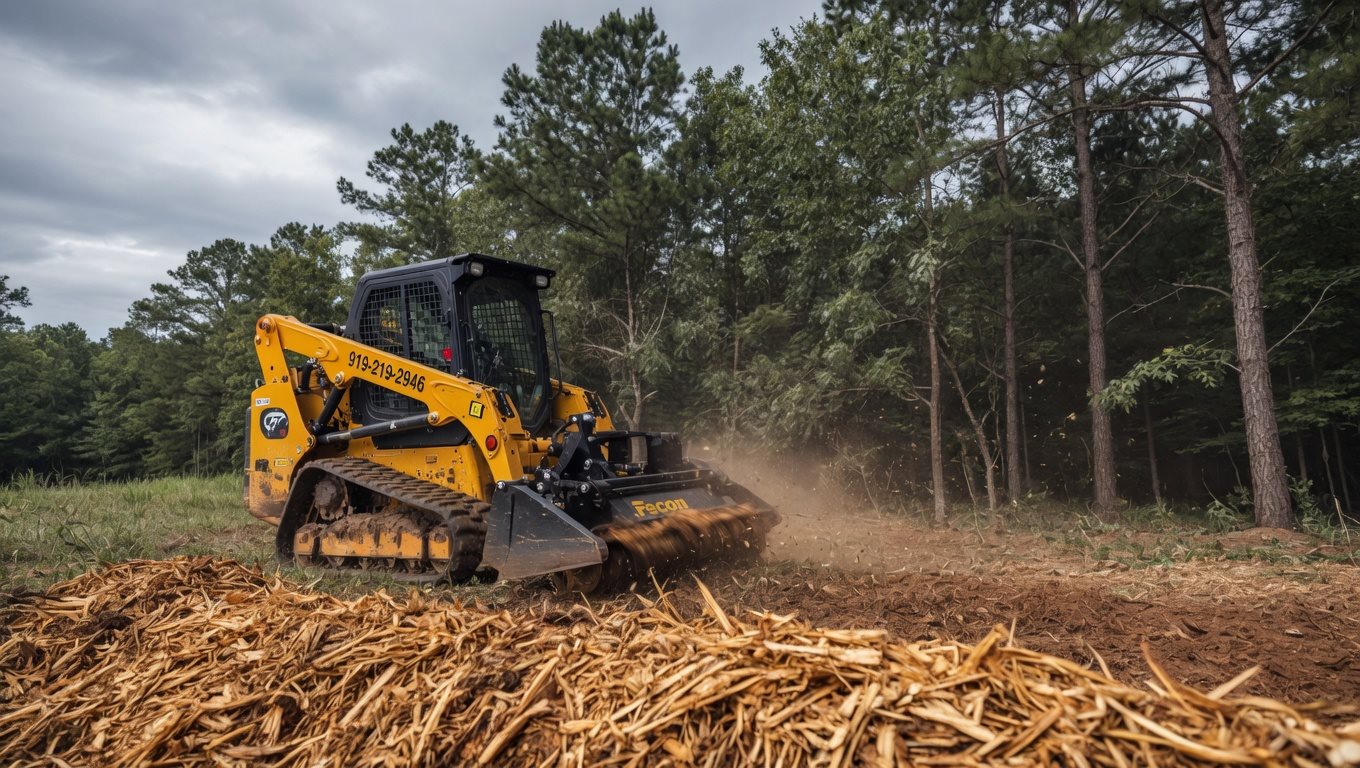
A tracked carrier with a rotary head processes the shrub layer on the spot and leaves the material across the soil as chip. Stumps are cut flush rather than pulled, so the root network stays in place, which on these soft, seasonally wet soils is how a machine keeps working without churning the ground.
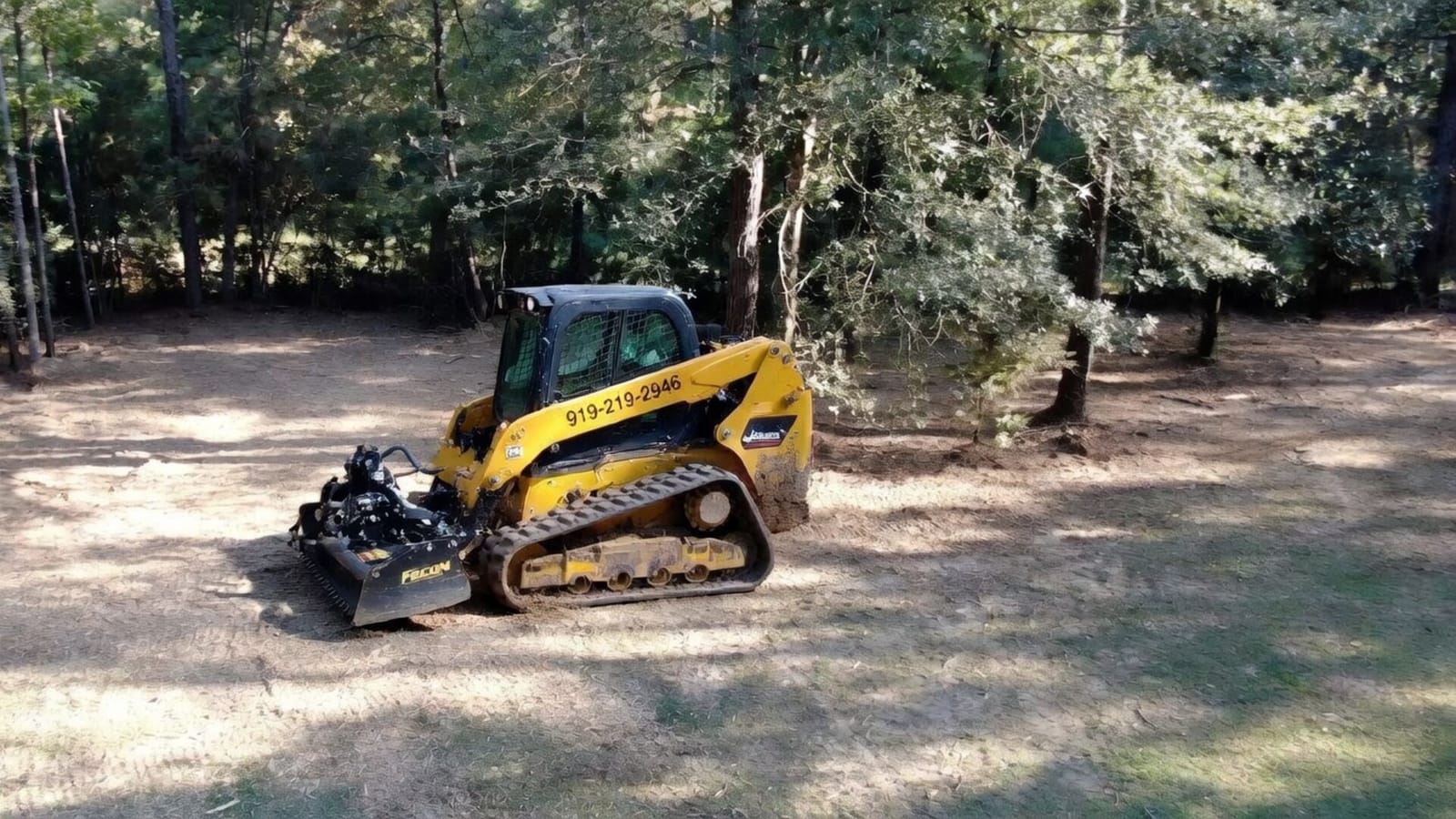
What you get on the day is the thing most owners are actually buying: sightlines through the trees, a floor you can walk, room to set trail cameras or run a mower, and no burn pile to watch. What you do not get is sterile ground. Plan on a follow-up pass, and plan on watching what comes up in the first two springs.
A Realistic Plan for Acreage
Three steps keep the cost sensible.
First, decide what you want the woodlot to be. Walkable and open under the canopy is understory work. Open ground with no canopy is whole-tract clearing at a different price. Both are on the Indianapolis pricing guide.
Second, do it in the right order. Clear the ground you will actually use, get it opened, then extend outward in later passes rather than taking everything at once and letting half of it close in again.
Third, book the return before you need it. A maintenance pass on ground already opened is the cheapest work we do, and it is much cheaper than re-clearing a thicket that came back for four years.
Frequently Asked Questions
Can I just have the honeysuckle hauled away?
Not lawfully, if it is one of the listed species. The state rule bars transporting designated invasive plants, and Amur honeysuckle is designated. Processing the material on site avoids the question entirely.
Is winter a good time to clear honeysuckle?
It works well. Brush out of leaf processes faster, and the ground is often firmer than in spring. The main constraint on these soils is how much water they are holding, which our forestry mulching cost guide covers.
Will native plants come back on their own?
Often, at least partly. The Purdue comparison found no difference in native recovery between cut stump treatment and a mulching head, but it did find more garlic mustard after mulching, so the first two springs are worth watching.
Get Your Woodlot Walkable Again
Honeysuckle is not a mystery, it is a volume problem with a legal constraint attached to the disposal end.
See what we take on across the market on our Indianapolis land clearing page, read how understory work is scoped on the services page, then request a free quote.
More from the Cut Brush Blog
Keep reading for more tips and guides on land clearing.
 Guide
Guide Land Clearing Permits in Indianapolis & Marion County, IN
Indiana gates land clearing at one acre, Marion County adds a drainage permit below that, and a buried field tile can add a third office. The thresholds.
 Cost Guide
 Forestry Mulching Cost in Indianapolis, IN (2026)
Forestry mulching around Indianapolis runs $1,500 to $4,000 per acre. What wet till plain ground and Indiana disposal rules do to the hours on your tract.
 Cost Guide
 Land Clearing Cost Per Acre in Indiana (2026 Guide)
Land clearing cost per acre in Indiana runs $1,500 to $4,500. What oak and hickory stands, wet till plain soils and three statewide rules do to a quote.
Ready to Get Started on Your Land?
Get a free, no-obligation estimate for property in Indianapolis & Central Indiana.
Get Your Free QuoteOr call us directly: (919) 525-3950