Land Clearing Cost Per Acre in Indiana (2026 Guide)
Cut Brush Team · September 12, 2026 · 7 min read
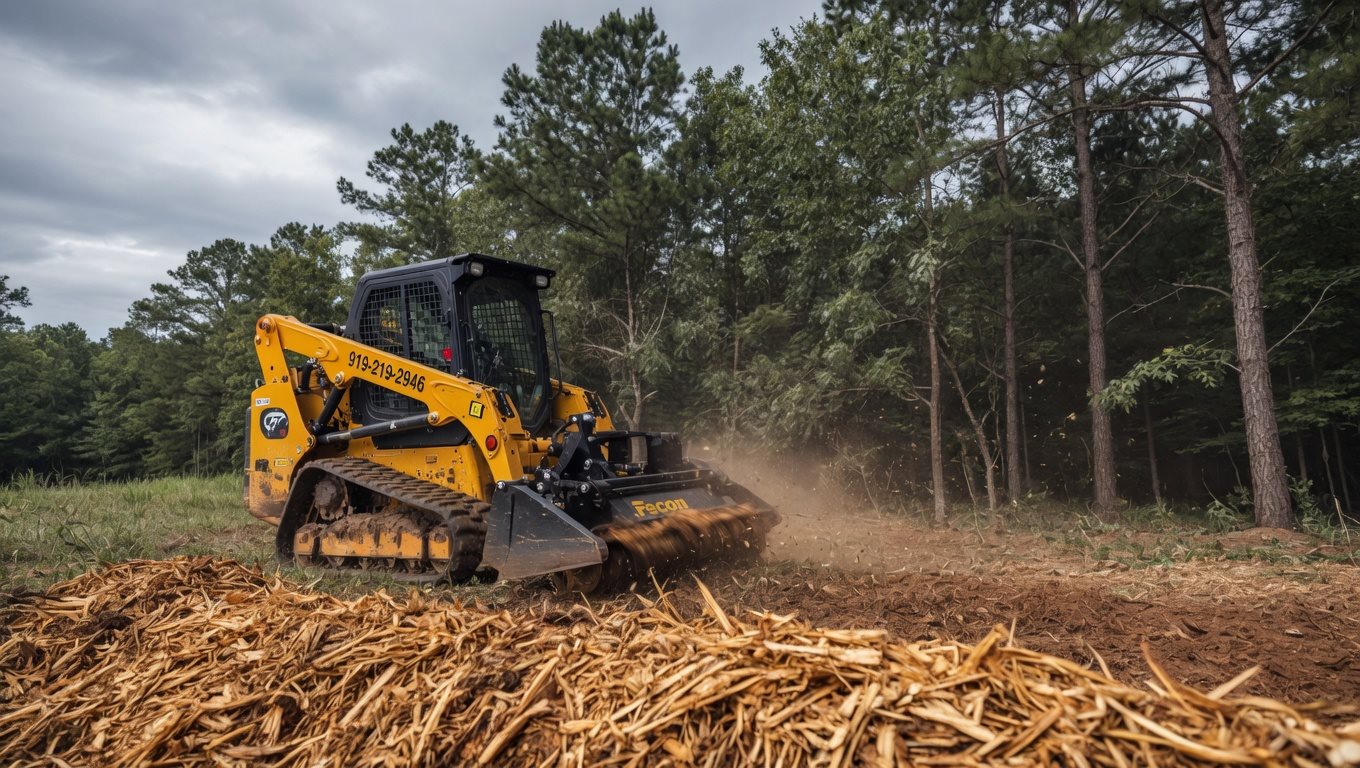
Land clearing cost per acre in Indiana generally runs $1,500 to $4,500. Where a particular tract lands inside that band has less to do with acreage than most people expect, and more to do with three things: what is standing on it, how much water the ground holds, and what the law lets you do with the material once it is cut.
Indiana is unusual on that last point, and it is the part out-of-state calculators get wrong.
The Short Answer, by What Is Standing
| What is on the acre | Per-acre range | Where you see it |
|---|---|---|
| Understory beneath a standing woodlot | $1,500 – $2,500 | Farm woodlots and fence rows filled with invasive shrub |
| Light brush and regrowth on firm ground | $1,500 – $2,000 | Field edges and pasture going back after a few idle years |
| Forestry mulching, general range | $1,500 – $4,000 | Standing brush and small stems processed in place |
| Whole-tract clearing, or a lot prepared for building | $1,500 – $4,500 | Anything cut for a house, a barn, a lane or open field |
There is also a practical floor near $1,500 on small jobs, which is what it costs to get a tracked machine onto a property regardless of how little ground there is to cover. Lot and homesite preparation is quoted on the same $1,500 to $4,500 basis, per acre equivalent, because the work is measured by the envelope rather than by the parcel.
What Actually Moves the Number
1. Indiana woods are mostly oak and hickory, and mostly privately held
The state carries 4.8 million acres of forestland, 21 percent of its land base, and 4.6 million acres of that is timberland. About 83 percent is privately owned, and just over 72 percent of Indiana forestland is classified as the oak and hickory type (Indiana DNR forest facts).
That matters for a quote in a specific way. Oak and hickory stands let light onto the floor, so the commonest job in this state is not felling timber. It is taking out the shrub layer that filled in underneath while the canopy stayed. That is the cheapest work on the table, and it is why so many Indiana quotes land nearer $2,000 than $4,000.
2. Whether the ground drains
On the glacial till plains that carry much of Indiana, the soils were built to hold water rather than shed it. The USDA describes the Crosby series, which occupies the slight swells across those plains, as somewhat poorly drained with a perched seasonal high water table between 0.5 and 2.0 feet down through winter and spring (Crosby series). The Brookston series, which fills the shallow depressions, is poorly drained, with water standing from half a foot above the surface to a foot below it for part of a normal year (Brookston series).
Ground like that is a different job in March than in September. Where Indiana land is not level, the question flips: access and grade start deciding the hours instead, and a quote that ignores how a trailer reaches the tract is guessing at half of it.
3. Whether the overstory is staying
“Cleared” means at least four different things: mulched and walkable with the canopy kept; selectively cleared around chosen trees; cleared to bare soil with stumps out; or a maintenance pass on ground opened a few years ago. Those are four prices, and the last one is the cheapest work we do. Naming the finish before the walk-through is the single easiest way to keep a quote accurate.
4. Method, and what happens to the material
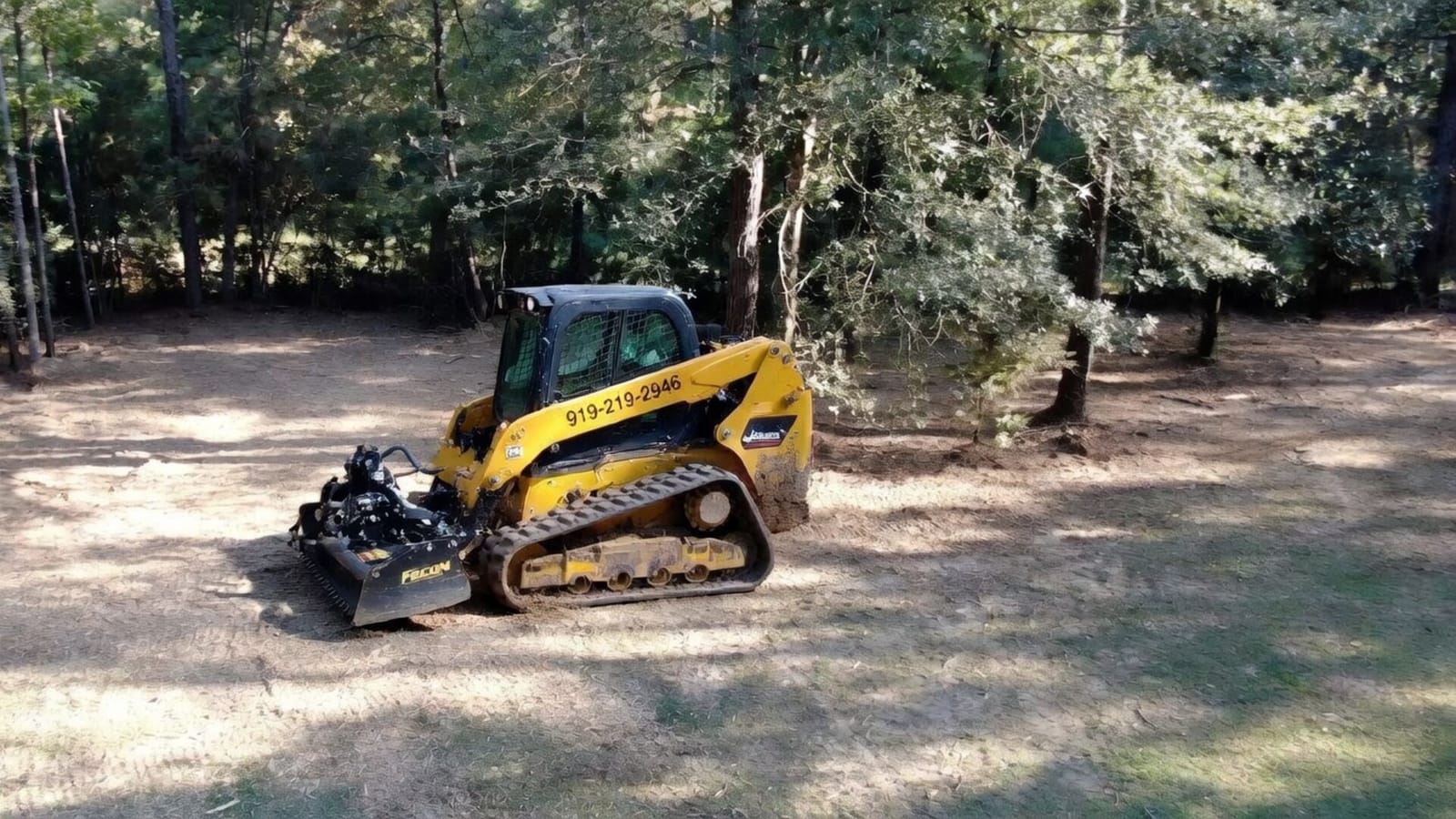
Traditional clearing has two halves, cutting and disposal. Forestry mulching removes the second: the material is processed where it stands and left across the soil as chip, so there is no pile, nothing to load, and no tipping fee. On soft, seasonally wet ground the root mat left in place is also what keeps a machine working without churning the surface.
Clear and haul still wins where a site is being cut to grade or an owner wants nothing left on top. It simply costs more, and in Indiana it costs more than it does elsewhere, for the reason in the next section.
Three Rules That Apply Anywhere in Indiana
One acre is the state permit line. IDEM’s Construction Stormwater General Permit covers construction activity, defined to include clearing, grading, excavation and other land-disturbing activities, once a project disturbs one acre or more of total land area, and it also reaches smaller work that forms part of a larger common plan of development or sale (IDEM). Local government often has a lower threshold of its own.
Burning clearing debris is not automatic. IDEM requires its approval before tree waste from clearing operations is burned where the work follows a change in land use. The exemption that exists covers maintenance burning of vegetation from farms, orchards, nurseries, tree farms, cemeteries, drainage ditches and agricultural land in an unincorporated area, attended at all times, and local ordinances may be stricter (IDEM open burning).
You may not haul the commonest brush off the property. Indiana’s Terrestrial Plant Rule designates 44 plants invasive pests and makes it illegal to sell, gift, barter, exchange, distribute, transport or introduce them, effective 18 April 2019. Possession is not prohibited. Amur honeysuckle and autumn olive, the two shrubs most often making an Indiana woodlot impassable, are both on the list (Indiana DNR).
Put together, those three rules are why mulching in place is the default method in this state rather than one option among several. Requirements vary by parcel, scope and jurisdiction, and the governing authority makes the determination. All three verified 12 September 2026.
Where in Indiana Is Your Land?
The bands above hold statewide. What moves inside them changes by region, and so does the office that has to say yes first.
Central Indiana. Level glacial till, a seasonal water table close to the surface, farm woodlots full of invasive shrub, and a permit stack that can run to three offices: the state above an acre, a Marion County drainage permit below it, and the county surveyor wherever a regulated drain crosses the work. Start with land clearing in Indianapolis and the Indianapolis pricing guide, see what we take on across the Indianapolis services page, and read the thresholds in our Indianapolis and Marion County permit guide.
Southern Indiana. Clark and Floyd counties, across the river from Louisville, are covered from that market rather than from Indianapolis, and the ground and the rulebook are both different: Knobstone slopes instead of level till, and a one-acre state starting point instead of the 2,000 square feet that applies on the Kentucky side. Start with land clearing in Louisville and the Louisville pricing guide.
If your property sits elsewhere in Indiana, call and we will tell you which of our service areas reaches it before anyone quotes.
When to Book
Late summer through hard frost is usually the best value across the state, and neither reason is about demand. The seasonal water table on Indiana’s till plain soils is at its lowest then, so a machine covers more ground in an hour and leaves a cleaner surface behind it. And brush out of leaf processes faster than brush in full leaf. If your tract includes low ground, flexible timing genuinely improves both the result and the price.
Frequently Asked Questions
Is forestry mulching cheaper than clearing and hauling in Indiana?
Usually, and by more than in most states, because hauling and burning both run into rules here. Mulching also deletes the loading and disposal line entirely.
Does clearing an acre always need a state permit?
Not always. The state trigger is one acre of disturbance, but smaller work inside a larger common plan of development or sale is still covered, and local requirements can apply well below an acre.
How much does it cost to clear one acre in Indiana?
Plan on $1,500 to $4,500, with woodlot understory near the floor and a tract cut for building near the ceiling. A single acre often prices close to the project floor because mobilisation costs the same at any size.
Get a Real Number for Your Indiana Property
Ranges are for budgeting. The number you pay comes from somebody standing on your ground, looking at what is standing, what is staying, where the water sits, and what the land has to do next.
Tell us the acreage, the wet spots and the finish you want, and request a free quote. We put the scope in writing, so the figure you approve is the figure you pay.
More from the Cut Brush Blog
Keep reading for more tips and guides on land clearing.
 Cost Guide
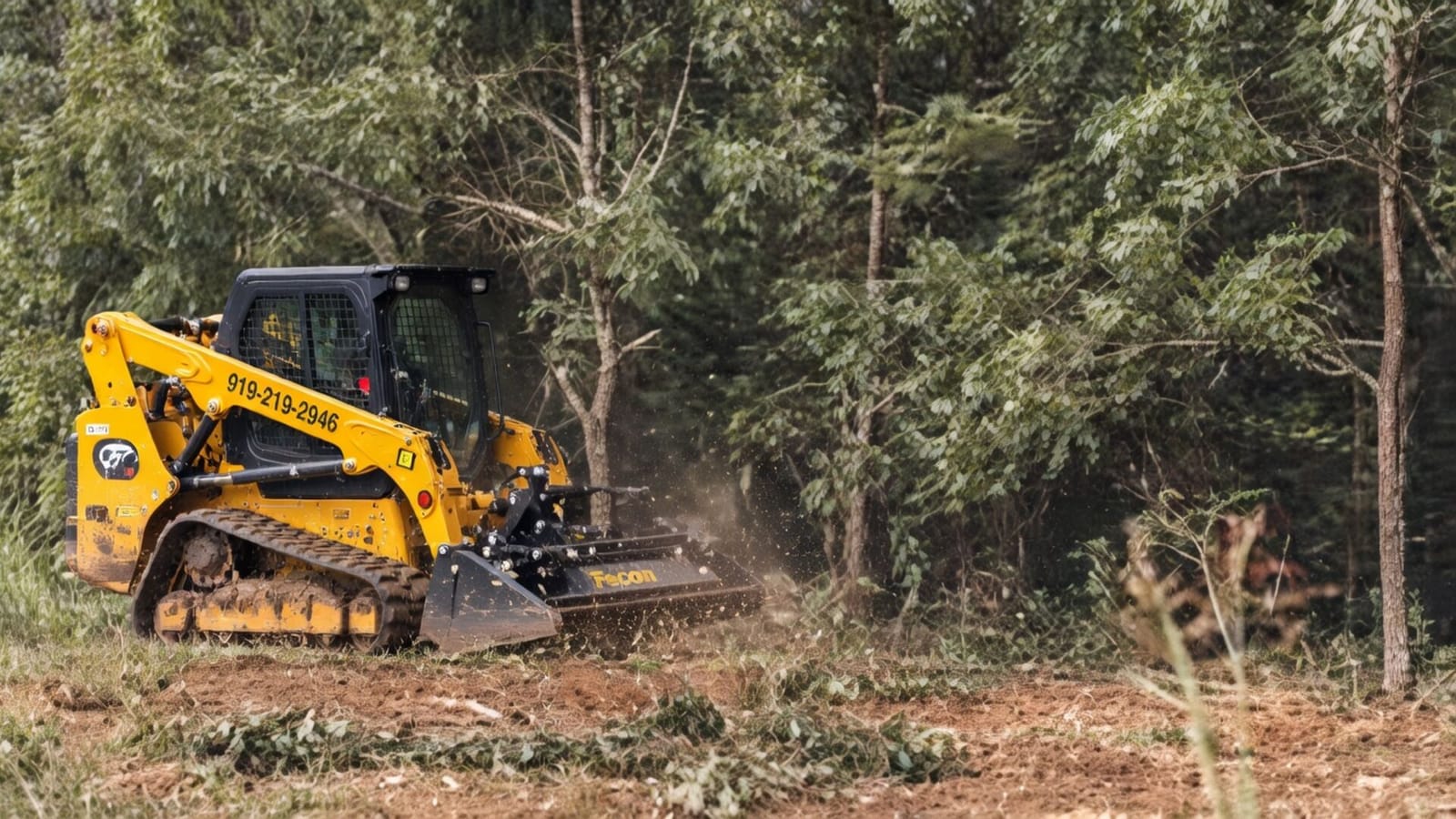
 Forestry Mulching Cost in Indianapolis, IN (2026)
Forestry mulching around Indianapolis runs $1,500 to $4,000 per acre. What wet till plain ground and Indiana disposal rules do to the hours on your tract.
 Guide
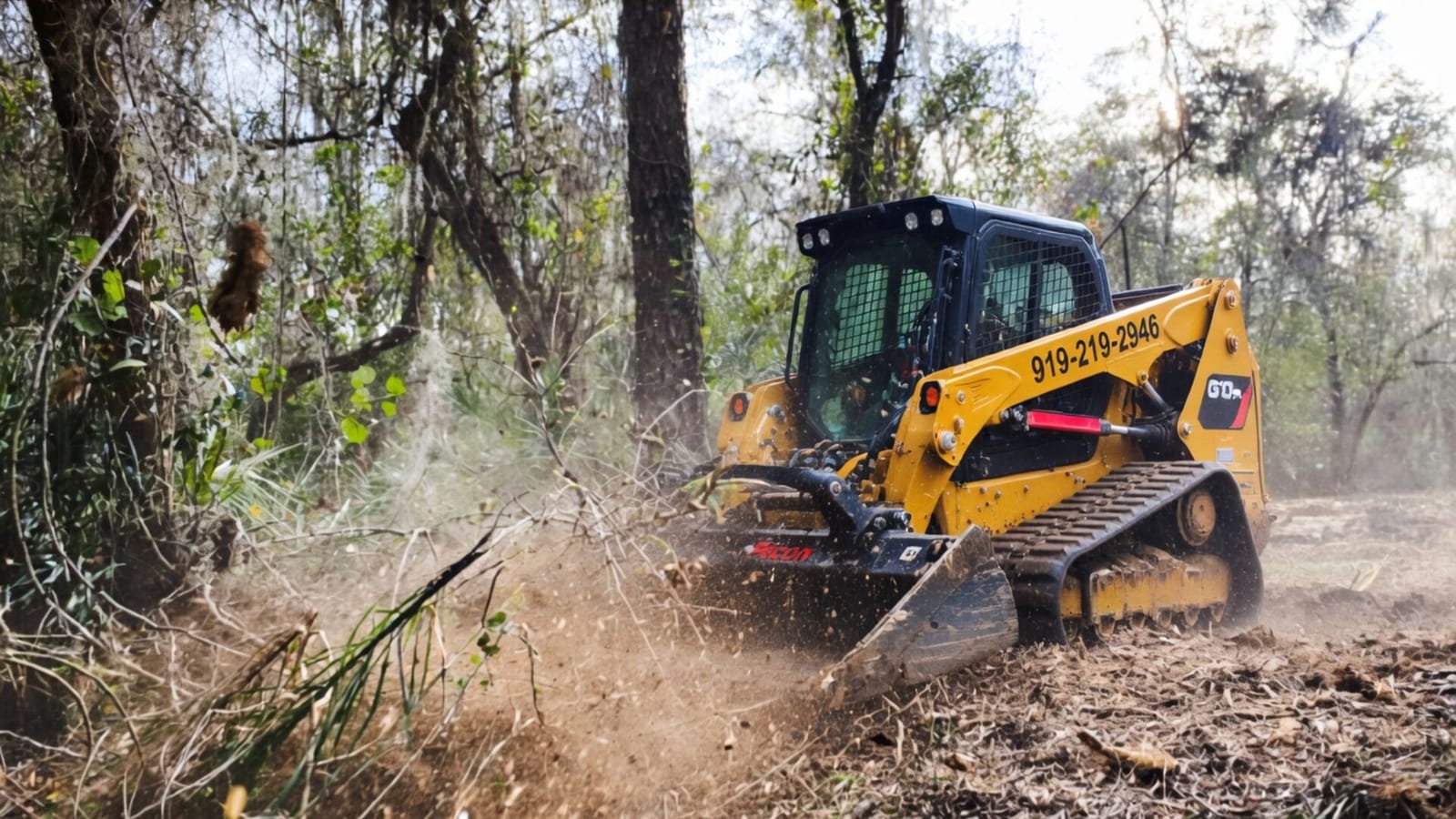
Guide Bush Honeysuckle Removal Around Indianapolis, IN
Asian bush honeysuckle fills central Indiana woodlots, and state law bars hauling it off site. What that changes about clearing it around Indianapolis.
 Guide
Guide Land Clearing Permits in Indianapolis & Marion County, IN
Indiana gates land clearing at one acre, Marion County adds a drainage permit below that, and a buried field tile can add a third office. The thresholds.
Ready to Get Started on Your Land?
Get a free, no-obligation estimate for property in Indianapolis & Central Indiana.
Get Your Free QuoteOr call us directly: (919) 525-3950