Forestry Mulching Cost in Indianapolis, IN (2026)
Cut Brush Team · September 12, 2026 · 6 min read
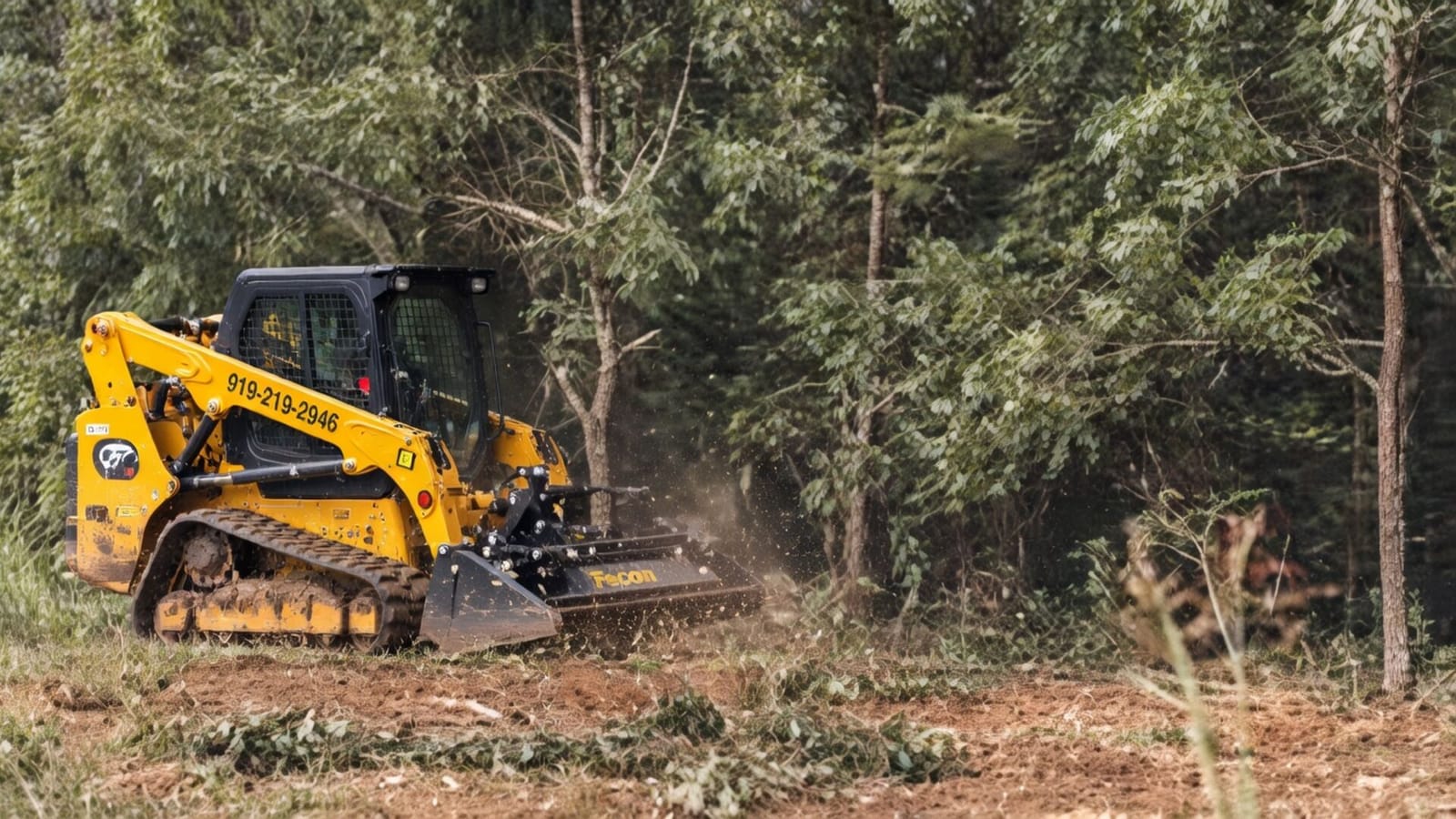
Forestry mulching around Indianapolis runs $1,500 to $4,000 per acre. Light regrowth on firm ground sits at the floor. A closed-in woodlot floor worked while the soil is saturated sits at the ceiling. The variable that moves a central Indiana number most is not acreage and not species: it is the week of the year, because the ground under most of this metro holds water rather than shedding it.
Here is how that band breaks down, and where mulching stops being the cheaper answer.
What Does Forestry Mulching Cost Per Acre Near Indianapolis?
| Condition | Range | Why it prices there |
|---|---|---|
| Light brush and saplings, firm ground | $1,500 – $2,000 / acre | One fast pass, long uninterrupted lines |
| Woodlot understory beneath standing hardwood | $2,000 – $3,000 / acre | Steering around keeper trees, slower work |
| Heavy stems, long-idle field edge, soft soil | $3,000 – $4,000 / acre | Careful passes, repositioning, more wear |
| Whole-tract clearing to a named finish | $1,500 – $4,500 / acre | A different scope entirely, see below |
A practical floor near $1,500 per project applies whatever the size, because trailering a tracked machine down a farm lane costs the same whether it cuts for one hour or eight. Under two acres, the sensible move is bundling a fence line, a field edge and a brush patch into one visit. Every range here is a budgeting band, and the walk-through that turns it into a written figure is free.
The Water Table Is Central Indiana’s Hour Meter
Ask three contractors what your acre costs and the spread usually comes from when each pictured doing the work, not from what is growing on it.
The soils under most of this metro formed on nearly level glacial till, and they hold water rather than shedding it. The USDA describes the Crosby series, which occupies the slight swells across the plain, as somewhat poorly drained on slopes of 0 to 6 percent, with the top of a perched seasonal high water table sitting between 0.5 and 2.0 feet down through winter and spring (USDA NRCS, Crosby series). In the shallow depressions between them, the Brookston series is poorly drained, with a water table ranging from half a foot above the surface to a foot below it for part of a normal year (USDA NRCS, Brookston series).
Saturated ground slows a tracked machine and marks up a surface that would have stayed clean six weeks later. So the most useful thing you can tell us is not the species list. It is which parts of the tract hold water in spring, what the lane will carry, and whether the schedule can move.
Mulching or Clearing: Which One Did You Actually Price?
This is the most common reason two quotes look nothing alike.
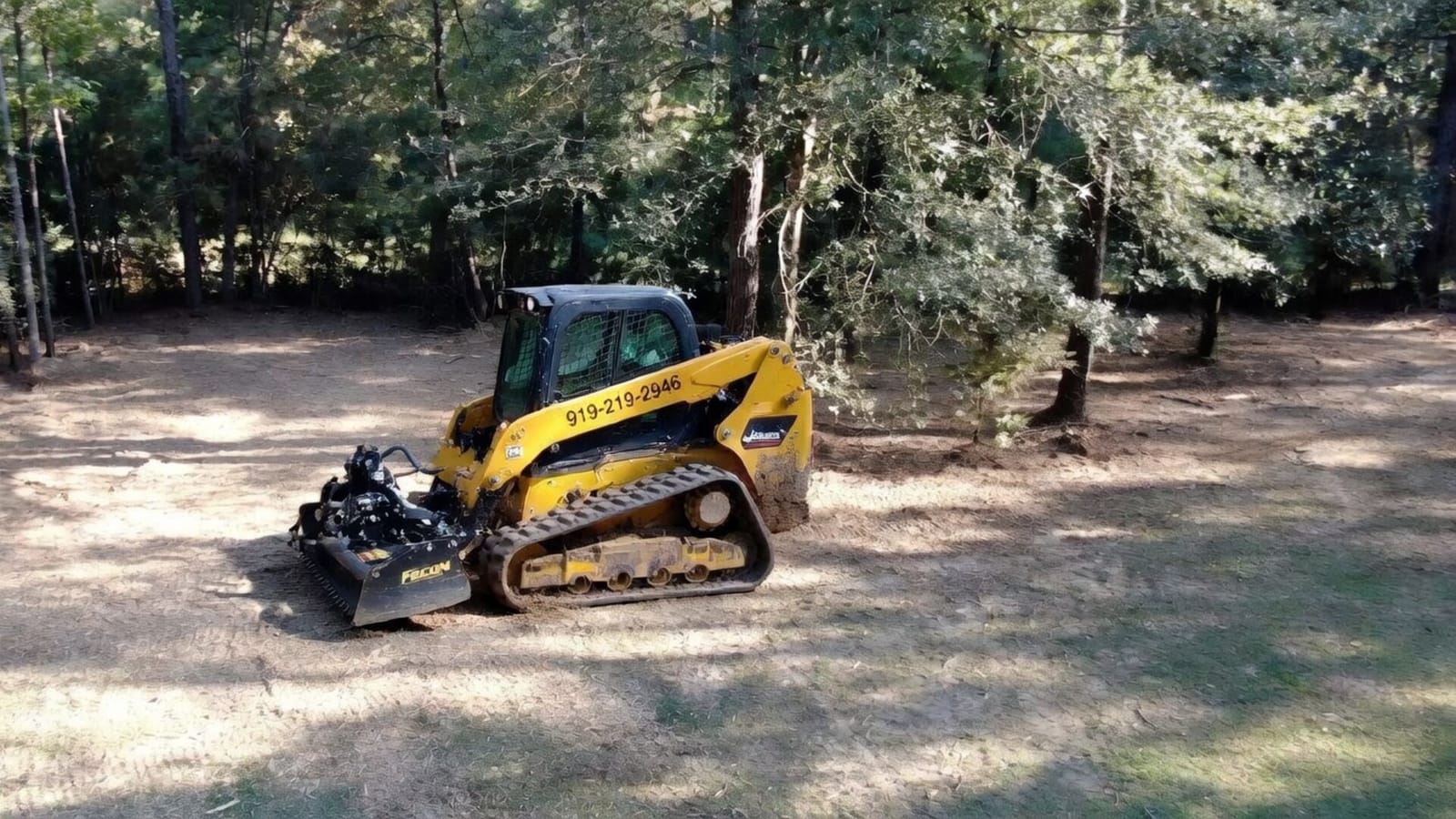
Forestry mulching is one tracked machine processing standing brush and small trees where they grew. Stumps are cut flush rather than pulled, the material stays down as a chip layer, and the ground is neither graded nor build ready. It is the right method for opening a woodlot floor, taking back a field edge, cutting trails or making a tract walkable.
Land clearing is whole-tract work whose ending gets named in the quote: whether stumps come out, whether material leaves the property, whether an envelope is cut and drained. It runs $1,500 to $4,500 per acre, and it is what you need if the parcel is headed for a house, a lane or a utility run.
Mulching is usually cheaper because it deletes the loading and hauling line. It only stays cheaper if it gets you the finish you need, so ask any bidder which of the two they priced.
Why Hauling the Brush Away Is Not the Cheap Option Here
The chip layer is not a bonus, it is a line item you avoided. Cut, pile, load and haul is four operations; mulching is one, and nothing leaves the property.
Indiana makes the alternatives harder than most states. Burning is not a free option: IDEM states that its approval is required before burning tree waste from clearing operations due to a change in land use, and the exemption it does grant covers maintenance burning of vegetation from farms, tree farms, drainage ditches and agricultural land in an unincorporated area rather than clearing (IDEM open burning). That is a process and an application, not a zero.
Trucking the brush off has a rule of its own. Under the state Terrestrial Plant Rule it is unlawful to transport any of 44 designated species, and Asian bush honeysuckle and autumn olive, the two shrubs filling most woodlot floors and fence lines around here, are both listed (Indiana DNR). Our guide to bush honeysuckle removal around Indianapolis covers what that means for a clearing plan.
Where the Permit Line Sits in Your Budget
Permits change your calendar rather than our rate, and around Indianapolis there can be two offices before the county surveyor is even involved. The state line is an acre: IDEM’s Construction Stormwater General Permit covers clearing, grading, excavation and other land-disturbing activities once a project disturbs one acre or more of total land area, and it reaches smaller work forming part of a larger common plan of development or sale (IDEM construction permitting).
Below that, the local line matters more. Requirements vary by parcel, scope and jurisdiction, and the authority makes the determination. Our Indianapolis permit guide has each threshold with its source.
Frequently Asked Questions
How much does it cost to mulch one acre near Indianapolis?
Budget $1,500 to $4,000 for an acre, with light regrowth at the floor and heavy stems on soft ground near the ceiling. A single acre usually prices close to the project floor, because mobilisation costs the same at any size, so bundling work into one visit gets you more for the money.
When is the best value time of year to book?
Late summer through hard frost, for two reasons unrelated to demand. The seasonal water table on these soils is at its lowest then, so a machine covers more ground per hour and leaves a cleaner surface. And brush out of leaf processes faster than brush in full leaf.
Will the brush grow back after mulching?
Some of it will. Anything that resprouts from a cut stem or a root crown returns and needs a follow-up plan, and the shrubs that dominate here are exactly that kind. A maintenance pass a year or two later costs a fraction of re-clearing a regrown thicket.
Get a Real Number for Your Indianapolis Property
What turns forestry mulching cost in Indianapolis into one figure is somebody standing on the ground: where the wet spots are, how old the growth is, and what the parcel is for.
Compare every range on the Indianapolis pricing guide, read the local conditions on our Indianapolis land clearing page, then request a free quote.
More from the Cut Brush Blog
Keep reading for more tips and guides on land clearing.
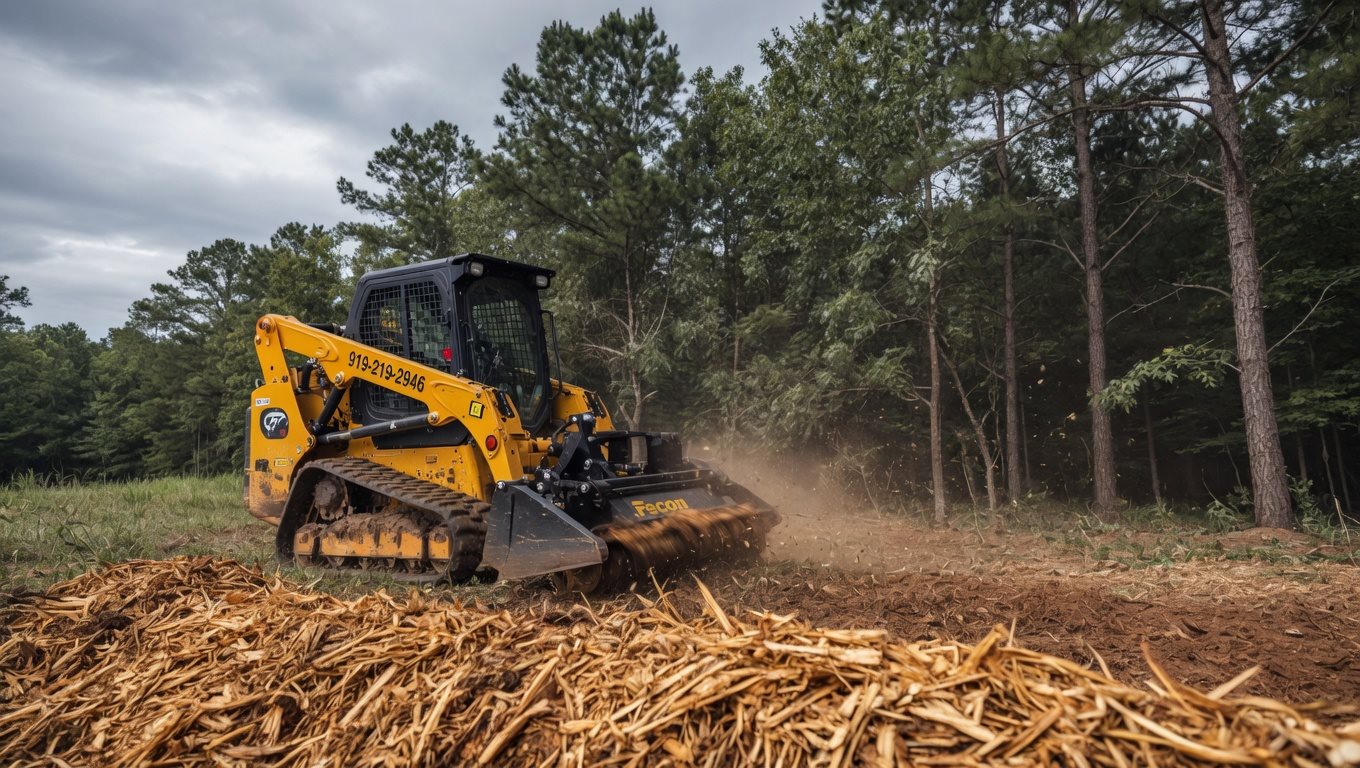 Cost Guide
 Land Clearing Cost Per Acre in Indiana (2026 Guide)
Land clearing cost per acre in Indiana runs $1,500 to $4,500. What oak and hickory stands, wet till plain soils and three statewide rules do to a quote.
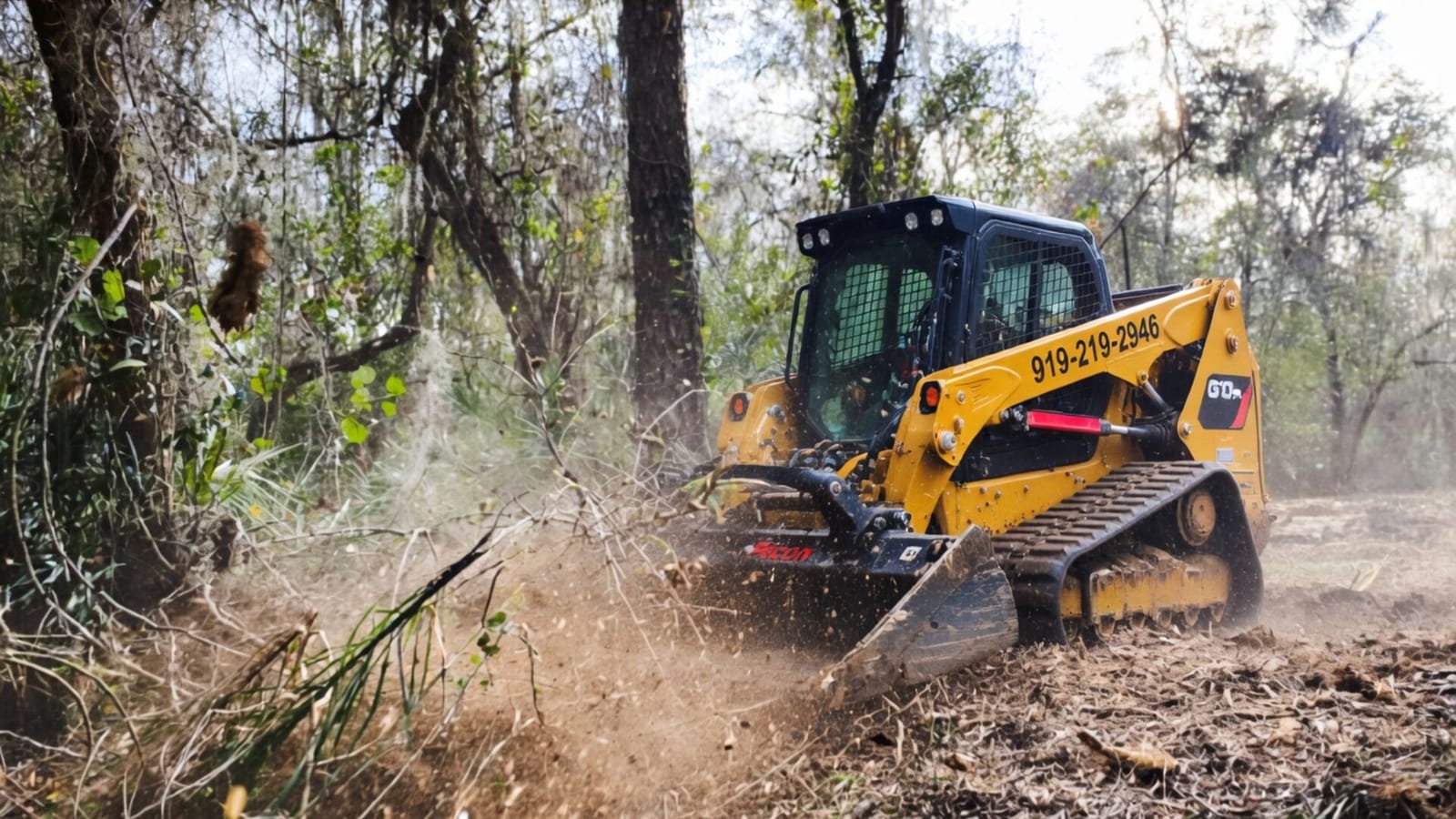 Guide
Guide Bush Honeysuckle Removal Around Indianapolis, IN
Asian bush honeysuckle fills central Indiana woodlots, and state law bars hauling it off site. What that changes about clearing it around Indianapolis.
 Guide
Guide Land Clearing Permits in Indianapolis & Marion County, IN
Indiana gates land clearing at one acre, Marion County adds a drainage permit below that, and a buried field tile can add a third office. The thresholds.
Ready to Get Started on Your Land?
Get a free, no-obligation estimate for property in Indianapolis & Central Indiana.
Get Your Free QuoteOr call us directly: (919) 525-3950