Clearing Wet Ground in Northeast Ohio: When to Book the Work
Cut Brush Team · September 12, 2026 · 5 min read
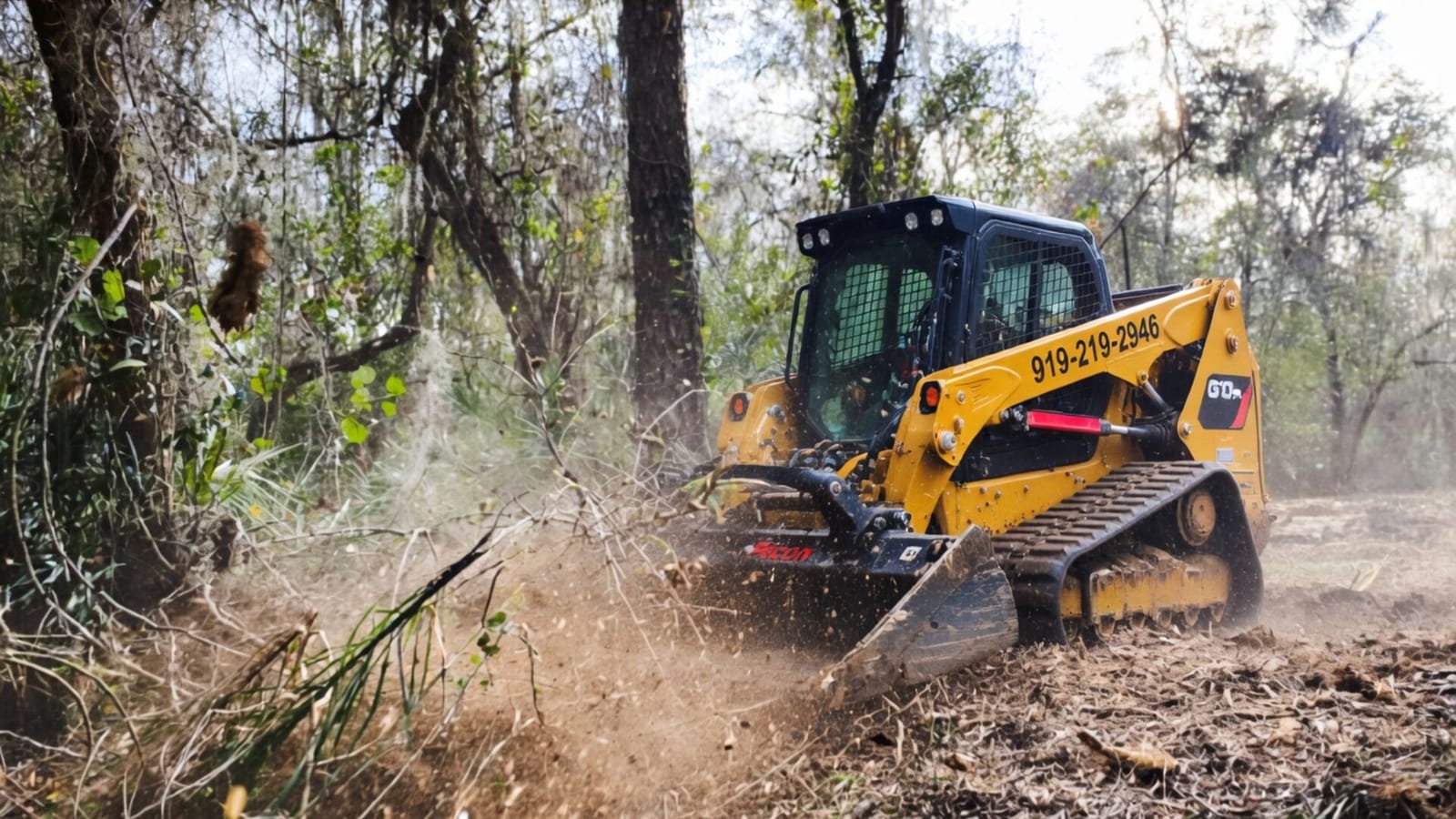
Anyone who has walked a back acre in Geauga or Medina County in April knows what governs land clearing in Northeast Ohio. It is not slope and it is not species. The ground here holds water inches under the surface for roughly eight months of the year, and that decides when a machine can work, what the surface looks like afterwards, and what the job costs.
Why the Ground Stays Wet Here
The glaciers left a sheet of dense till across these five counties, and the soils that formed on it drain sideways rather than down. The Mahoning series is the clearest example: the USDA describes it as somewhat poorly drained, formed in till on till plains, on slopes of 0 to 15 percent, with saturated hydraulic conductivity moderately low in the subsoil and moderately low or low in the material beneath it. More than 450,000 acres are mapped across northeastern Ohio and northwestern Pennsylvania (USDA NRCS).
The sentence that matters for scheduling is this one: a perched or apparent seasonal high water table can be present from 15 to 30 cm, which is 6 to 12 inches, below the surface from October through June in most years.
Read that with a tracked machine in mind. For eight months the water sits shallower than a boot print. The parcel is not a wetland; the top foot of soil simply has nowhere to send water.
The Two Windows That Actually Work
Northeast Ohio gives a clearing job two good windows, at opposite ends of the year.
The dry end of summer. Late July through September is when the water table drops, the surface firms up and a machine works long lines without leaving a mark. It gives the cleanest finish and the fastest hours, which is why it is the busiest.
Hard frozen ground. Ground frozen deep enough to carry weight behaves better than spring ground, and clearing on a hard freeze gives an excellent result. What does not work is the shoulder either side of it, once the frost has broken but the water table has not.
The months in between are not impossible, just more expensive for the same result, because the machine works shorter stretches and the operator spends attention on protecting the surface. If your project has a fixed date, tell us, and we will say whether moving the date or the budget is the better trade.
What Wet Ground Does to the Finish
Three things, all showing up after the invoice rather than on it.
Ruts. A rut in soft till is not cosmetic. It channels water, collects it, and is deeper by next spring. Repairing a surface is work nobody quoted for.
Compaction. Repeated passes on a saturated surface press the top layer closed, which matters if the plan is pasture, a food plot or a lawn. Ground you meant to seed can need loosening first.
Access damage. The route in is often the softest part of the property, and field entrances are where loaded trucks do the most harm. It is a strong argument against hauling in spring.
Why Chipping in Place Suits This Ground
Forestry mulching is a good fit for wet till, and not for marketing reasons.
Chipping material where it stands lays chip across the surface, spreading the machine’s weight instead of concentrating it under a track edge. Stumps are cut flush rather than dug out, so roots stay in the soil holding the top layer together. Nothing is piled, nothing is loaded, and no truck crosses the soft ground twice.
Cut and haul punishes a wet schedule hardest, because every load comes out over the same ground. Where bare soil is genuinely the requirement, that is a clearing scope and it belongs in the dry window. Ranges for both are on our Cleveland pricing guide, and what each method does is on the Cleveland services page.
Where There Is Water, There May Be a Setback
One more thing to check before a machine is booked, because wet ground and streams travel together.
Chagrin River Watershed Partners publishes a model riparian setback ordinance whose setbacks vary from 25 to 300 feet from either side of the stream, and inside that strip building and other soil disturbing activities are prohibited unless the applicant obtains a variance (Chagrin River Watershed Partners). Communities adopt it one at a time, so whether a setback governs the ditch, creek or river on your parcel is a question about your own community.
Where one applies, the scope usually changes shape rather than disappearing: selective cutting, work kept back from the bank, a wider strip left standing. Better found at a walk-through than after a stop work notice. The wider permit picture is in our Cleveland and Cuyahoga County permit guide.
Frequently Asked Questions
Can you clear my land in the spring?
Often, yes, and sometimes we will suggest waiting. It depends on how the parcel drains, how much surface the scope opens and what finish you need. A light understory pass forgives a damp spring; a whole-parcel job with hauling does not.
Does winter clearing cost more?
Not by itself. A hard freeze is one of the two good windows, so frozen ground prices as normal conditions. What adds cost is a thaw part way through, which can mean a second mobilisation.
Will mulch left on wet ground rot the soil?
No. A chip layer breaks down slowly and behaves like any other litter layer, holding moisture and protecting the surface. It does suppress seed contact, so if you are planting soon after, say so and the depth is managed in the scope.
Talk to Us About Timing Before You Talk About Price
On this ground the calendar and the quote are one conversation. Tell us when the parcel has to be finished and how wet it gets, and we will tell you what that costs.
Start on our Cleveland land clearing page, then request a free quote. We walk the ground, write the scope down, and name the window we would work in.
More from the Cut Brush Blog
Keep reading for more tips and guides on land clearing.
 County Guide
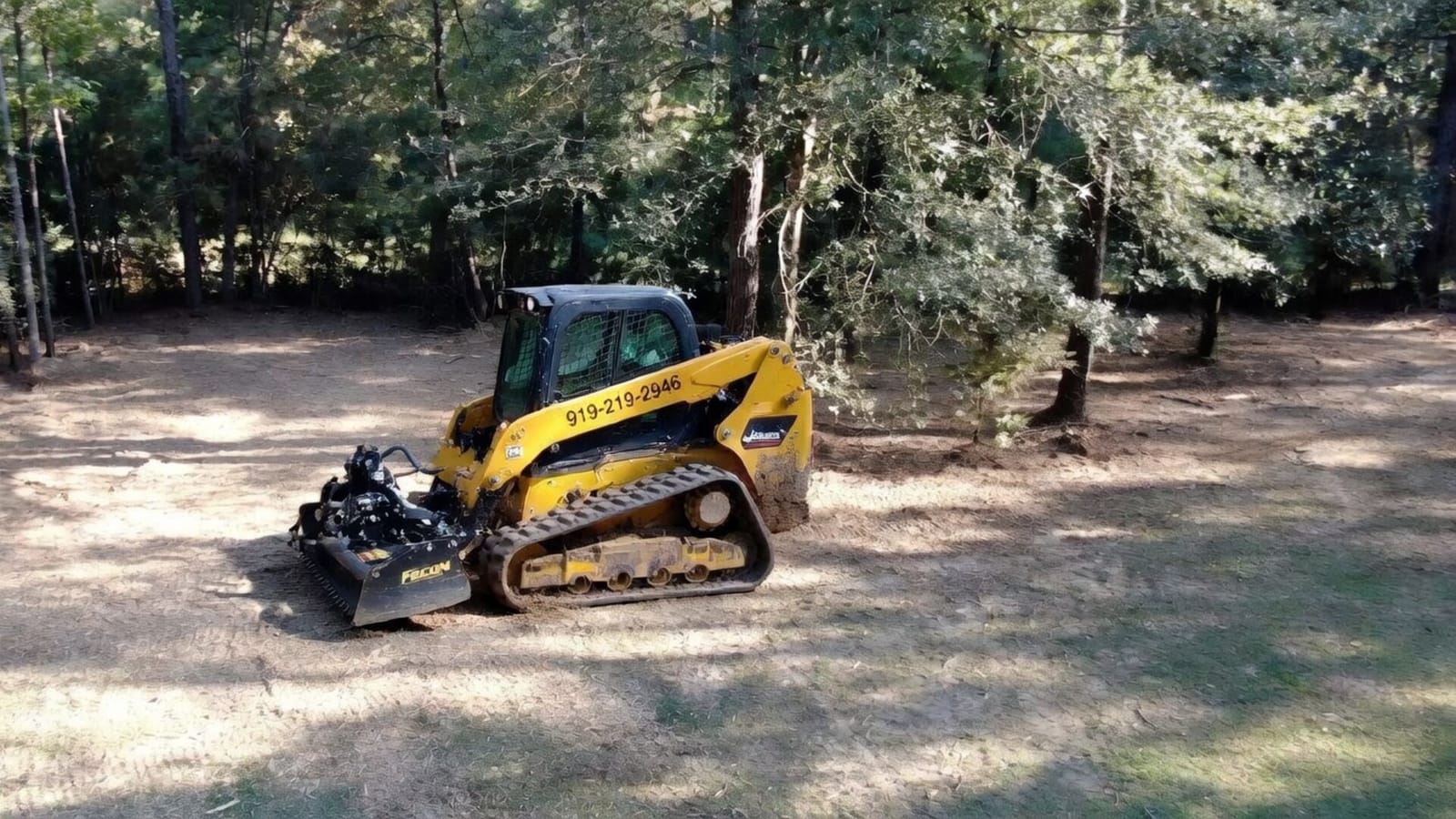
 Land Clearing Permits in Cleveland & Cuyahoga County (2026)
Do you need a permit to clear land in Cleveland? The acre is the line. Here are the city, county, state and stream rules with each official source.
 Cost Guide
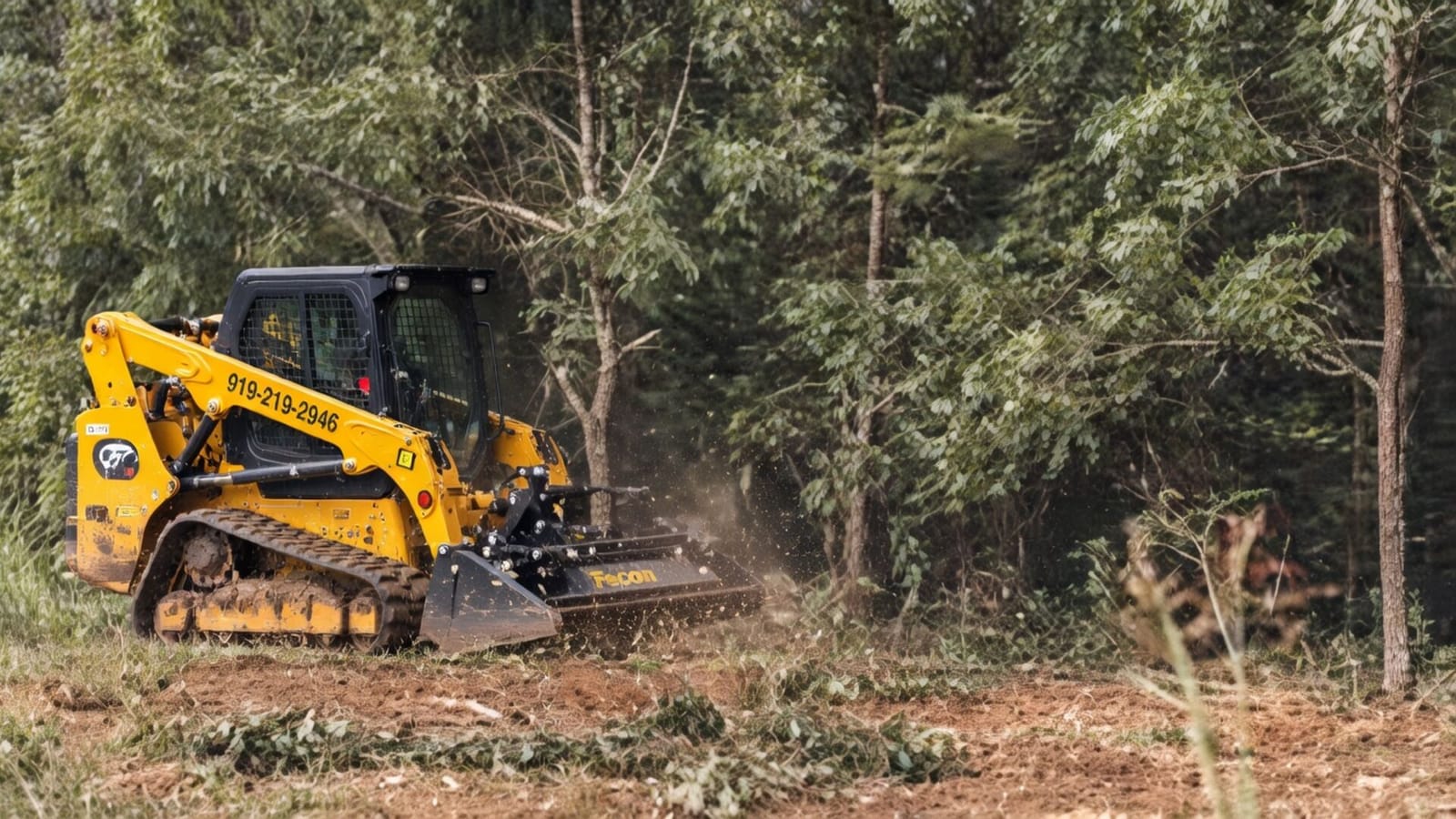
 Forestry Mulching Cost in Cleveland, OH (2026)
Forestry mulching around Cleveland runs $1,500 to $4,000 per acre. See what wet glacial till, stem size and resprouting shrubs do to the hours on your land.
Cost Guide Land Clearing Cost Per Acre in Ohio (2026)
Land clearing cost per acre in Ohio runs $1,500 to $4,500. See how glacial till, resprouting brush and the seasonal burning ban move the number. Free quotes.
Ready to Get Started on Your Land?
Get a free, no-obligation estimate for property in Cleveland & Northeast Ohio.
Get Your Free QuoteOr call us directly: (919) 525-3950