Clearing Pine Belt Land With Cogongrass on It
Cut Brush Team · September 25, 2026 · 5 min read
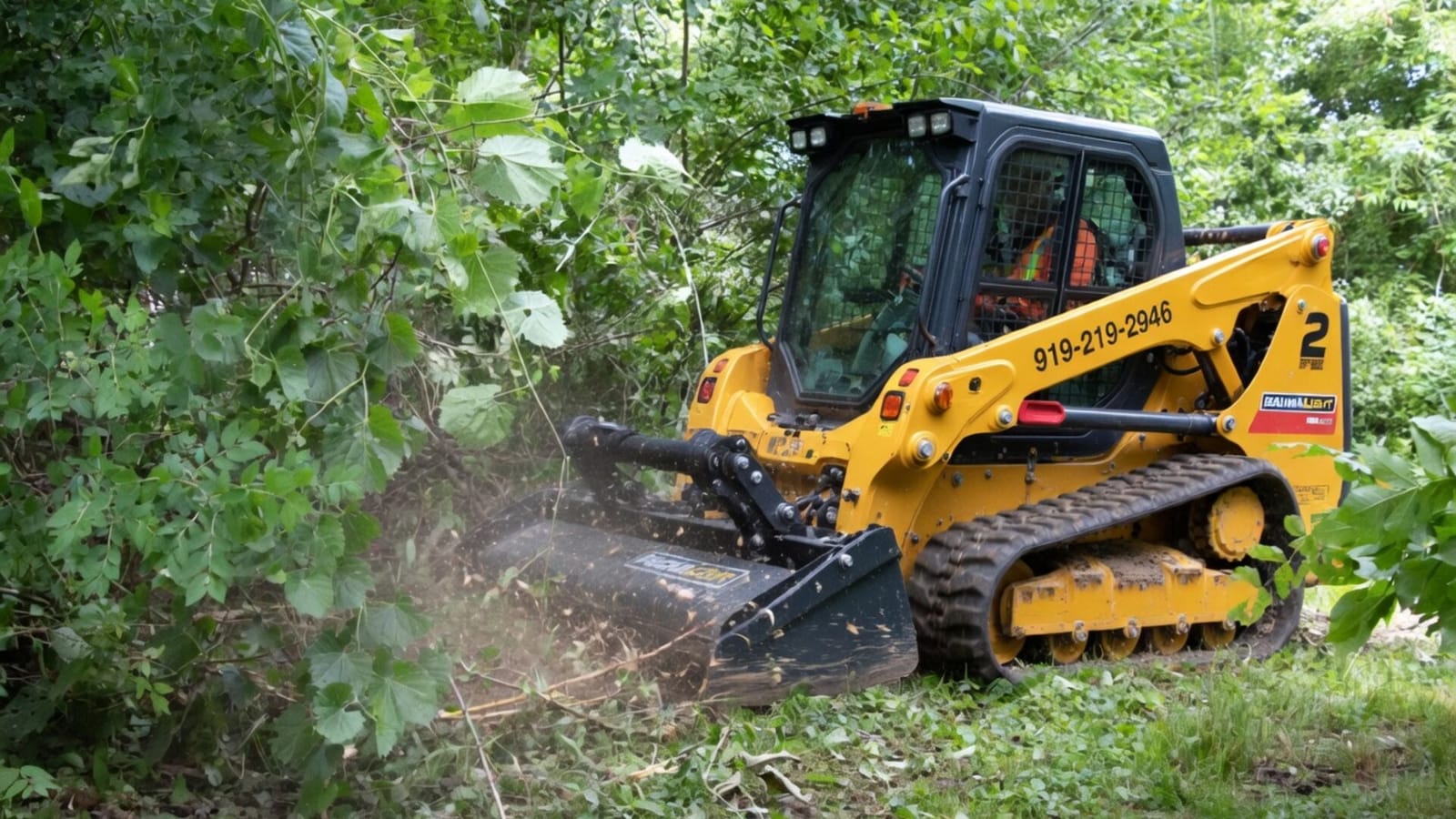
Clearing land does not get rid of cogongrass, and a machine that is not cleaned can carry it to new ground. The grass lives on through a mat of underground rhizomes that a mulching head never reaches. Around Hattiesburg, where the state has aimed treatment programs at Forrest and Lamar county landowners, the clearing plan and the cogongrass plan have to be made together and in the right order.
Here is what Mississippi’s own agencies say about the plant, what treatment takes, and how that shapes a clearing job in the Pine Belt.
Why It Matters in the Pine Belt
In April 2018 the Mississippi Forestry Commission opened free herbicide treatments specifically to private landowners in Forrest and Lamar counties, funded by a USDA Forest Service grant. The Commission called cogongrass one of the world’s ten worst weeds and described it spreading through the Gulf coastal Southeast, threatening forests, rangeland, roadsides and residential areas.
On Piney Woods property, the places to check are pine stands, pasture, road frontage, field edges and any ground that has been disturbed in the last few years. If you are not sure whether a grassy patch is cogongrass, say so when you ask for a quote and it gets looked at during the walk-through; the county Extension office can confirm an identification.
How It Spreads, and Why Machines Matter
Mississippi State University Extension lists the routes plainly: cogongrass is typically spread by wind, vehicles, equipment, animals and contaminated soil. Two of those five arrive on a trailer. A tracked carrier working through an infested patch picks up rhizome pieces in its tracks and teeth, and whatever it carries goes to the next open ground it touches.
The Forestry Commission’s 2026 guidance for landowners says equipment should always be cleaned off before it is moved or used in a different location. That is the single most useful question to ask any clearing contractor on a Pine Belt tract: how is the machine cleaned, and when?
Why Mowing, Mulching and Burning Do Not Fix It
Everything that works on ordinary brush works badly on cogongrass, because the part that matters is below ground.
- Mowing and mulching remove the leaves. Extension notes that mowing opens the canopy for new stems to emerge from the rhizomes.
- Burning does the same. Extension groups it with mowing: it removes what is above ground and makes room for regrowth from below.
- Tillage can hold cogongrass back only where ground is tilled often, which is not a plan for a pine stand or a pasture.
So a quote to “clear the cogongrass” with a mulcher alone buys a temporary result. The mulcher is not the tool that kills this plant.
What Treatment Takes
Herbicide, repeated, over years. The Forestry Commission says eradication usually takes two to three years of treatments, spraying twice a year. Extension describes glyphosate needing repeated applications each year for several years, and imazapyr-type products giving strong control for about a year but still needing multiple years to finish the job. Which one fits depends on what else is growing, and product labels govern how either is used. Grazing and hay ground carry their own herbicide restrictions.
That is a treatment provider’s job, not the clearing crew’s. The Commission’s Cogongrass Control Program offers an initial treatment at no charge to approved applicants, limited by funding, location and acreage. Its RESTORE grant covers six coastal counties only, so Pine Belt owners use the standard application. Program terms can change; check the Commission’s page for its status.
How Clearing Fits Around It
Clearing still has a real job on land with cogongrass. It has to be sequenced so it does not make the problem bigger. This is how Cut Brush approaches a Pine Belt tract with cogongrass on it.
Flag it before anything moves. The walk-through maps the patches, and the quote shows which ground is worked and which is left.
Clean machine in, clean machine out. Tracks and the mulching head are cleaned before the machine comes onto your land and again before it leaves.
Clean ground first, infested ground last or not at all. A patch inside the clearing area is either left standing for treatment or worked at the very end, just before the machine is cleaned. It is never crossed on the way to somewhere else.
Leave a surface the sprayer can work. With the brush and thicket gone, patches are easier to find, reach and treat. Opening a closed-in pine stand so the grass can be seen is often the most useful thing clearing does here.
Cogongrass does not change our per-acre rates, which are on the Hattiesburg pricing guide. What it can change is the calendar: on a heavily infested tract, part of the ground may be best cleared after treatment has begun, so the plan runs in stages. The mulching figure is broken down in our Hattiesburg forestry mulching cost guide.
Frequently Asked Questions
Can forestry mulching remove cogongrass?
No. It removes the leaves and the brush around them. The rhizomes stay alive and send up new growth, so a herbicide program over two to three years is what clears it.
Will a clearing machine bring cogongrass onto my land?
It can, which is why the Forestry Commission says equipment should be cleaned before it moves to a new location. Ask any contractor when and how they clean.
Should I burn a field that has cogongrass?
Burning removes the top growth and opens room for new stems from the rhizomes. Get treatment advice before planning a burn, and check the state’s burn rules first.
Get a Plan for Your Pine Belt Land
If you have seen cogongrass on your property, mention it when you ask for a quote and it will be mapped at the walk-through. What makes clearing here different is on our Hattiesburg land clearing page, and the quickest route to a written plan is to request a free quote.
More from the Cut Brush Blog
Keep reading for more tips and guides on land clearing.
 Guide
Guide Land Clearing Permits in Hattiesburg & Forrest County, MS
When clearing land in Hattiesburg needs a city Land Disturbance Permit, what Forrest County asks for under an acre, the state stormwater layers and burn rules.
 Cost Guide
 Forestry Mulching Cost in Hattiesburg, MS (2026)
Forestry mulching around Hattiesburg runs $1,500 to $4,000 per acre. How growth age, cogongrass, wet bottoms and the 500-yard burn rule move a Pine Belt quote.
Guide Kudzu Removal in Mississippi: Cost and Control Plan
Kudzu removal in Mississippi needs more than a mowing. See why the vine comes back, the multi-visit plan that kills the crowns, and the cost per acre.
Ready to Get Started on Your Land?
Get a free, no-obligation estimate for property in Hattiesburg & the Pine Belt.
Get Your Free QuoteOr call us directly: (919) 525-3950