Three Things That Decide a Hattiesburg Job
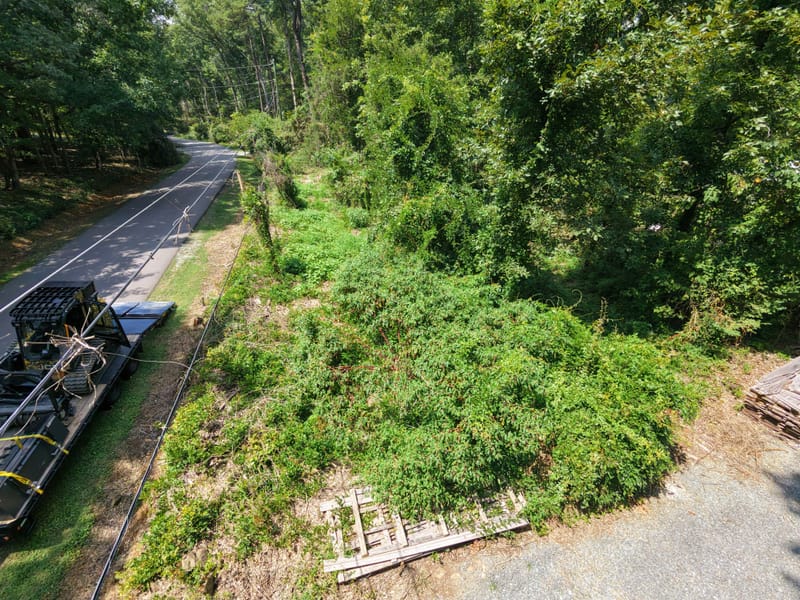
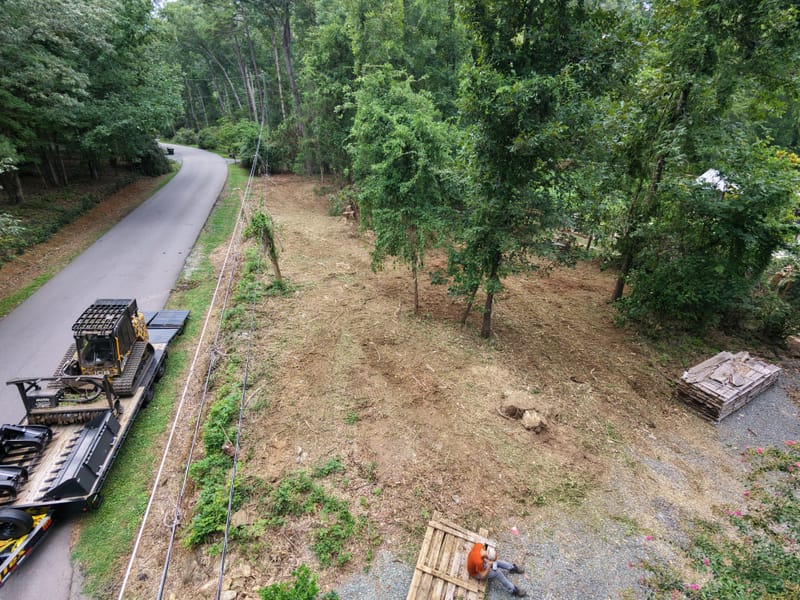
Cogongrass is part of the plan, not a surprise. The Mississippi Forestry
Commission has run free cogongrass herbicide treatments aimed specifically at private
landowners in Forrest and Lamar counties. Mississippi State University Extension lists
equipment among the ways the grass spreads, and the Commission says eradication usually
takes two to three years of spraying twice a year. For a clearing job that means patches are
flagged at the walk-through, worked last or left for a treatment provider, and the machine
is cleaned before it rolls onto your land and before it leaves. The order of work is in our
Pine Belt
cogongrass and clearing guide.
Inside the city, the permit table starts at zero acres. Hattiesburg's Land
Development Code, as adopted in 2017 and published by the city, lists a city Land
Disturbance Permit for every size of disturbance, including under half an acre, and defines
land disturbance to include clearing on undeveloped lots. From one acre the state's small
construction stormwater permit, notice of intent and pollution prevention plan are added;
from five acres the state approves first. Cleared ground has to be stabilized within seven
days. Existing farm, nursery and forestry operations are excepted. Requirements vary by
parcel, scope and jurisdiction, and the governing authority makes the determination. The
sequence is in the
Hattiesburg and
Forrest County permit guide.
A burn pile needs 500 yards of room. Under the state's open burning rules,
land clearing debris cannot be burned within 500 yards of an occupied dwelling unless a
forced-draft system is used, and even then not within 50 yards. That is current as of
September 2026. On a residential tract around Hattiesburg, Petal or Laurel, that much room is rare, so
the realistic endings are grinding in place or loading and hauling. Hauling is the line most
often missing from a budget, and it explains much of the gap between two bids for the same
acreage.