
Eastern Redcedar Removal in Nebraska: A Landowner's Plan
Cut Brush Team · October 16, 2026 · 7 min read

Eastern redcedar is a native Nebraska tree, but it is a problematic native: a native species that can act like an invader when environmental changes or human activity give it room. Left alone, it turns open grass into closed woodland, one bird-dropped seed at a time.
The good news is that redcedar does not sprout from the stump: cut below its lowest branches, a tree is finished. Getting a pasture back takes a clearing pass that removes the stand, a decision about which trees stay, and a light seedling check every few years. Clearing young cedar and fence rows typically runs $1,500 to $2,500 an acre.
Is It a Cedar Problem Yet?
If you can see numerous seedlings above the grass, you already have a cedar problem. Redcedar is a juniper, and that early stage is the one most often missed.
As cedar crowns close, the grass between them thins and grazing ground is lost. Clear unwanted trees while grass still shows between them, and keep mowing for seedlings afterward.
A rough way to place your own ground:
- Seedlings showing above the grass, trees mostly knee high. The cheapest stage to act. Mowing, haying or fire can still handle much of it.
- Scattered trees between head height and 10 feet, grass still between them. The middle stage. Cutting works well, and a clearing pass is quick.
- Crowns touching, little grass underneath. The late stage. This is full forestry mulching, and the pasture needs time to recover once the trees are gone.
How to recognize it. Look for scale-like leaves a tenth of an inch long or less and bluish, berry-like fruit, with male and female cones on separate trees.
How Redcedar Spreads
Birds carry it. Female trees begin producing small, berry-like fruit in their sixth or seventh year, and many birds and some small mammals eat it and spread the seed in their droppings. Every fruiting tree in a windbreak, fence row or neighbor’s yard is a seed source for the pasture next to it.
It left the bluffs when the fires stopped. Redcedar once grew mainly on the open, fire-protected edges of slopes, bluffs and rock outcrops. As land management changed, it moved from those protected edges into abandoned fields, pastures and the woods along rivers.
It takes the grass with it. Redcedar cuts forage production, and complete cover ends grass production altogether. The grass between the trees thins as the crowns close, which matters to anyone running cows or cutting hay.
Why One Clearing Is Not the End
Cutting works on redcedar in a way it does not on most problem trees. A tree cut below its lowest branches does not regrow, so physical removal is very effective. A mulched cedar is a dead cedar, with no stump sprouts to fight the next spring.
What one clearing does not do is stop the seed. Birds keep dropping it from every fruiting tree within reach. A cleared field left alone starts the clock again: seedlings in the grass, then a few trees bearing fruit of their own six or seven years later.
Two other habits keep cedar coming back:
- Cutting above the lowest live branches. A tree topped or limbed above its lowest branches is still alive. Pruning shapes a cedar; it does not remove one. For removal, the cut goes below the bottom whorl of branches.
- Clearing the big trees and missing the small ones. Knee-high cedar hiding in the grass is the next stand. A pass that takes the obvious trees and leaves the seedlings buys only a few years.
None of this calls for herbicide. A cedar cut below its lowest branches needs no stump treatment, and Cut Brush applies none. Individual-tree herbicide is one option for trees 2 to 10 feet tall; for chemical control, start with the state’s weed management guide and your county weed control authority. If you choose that route, it is a licensed applicator’s work.
A Clearing Plan That Holds
- Decide what stays. Walk the ground and flag the trees you want: a farmstead windbreak, shade around the house, cedar left as wildlife cover in a draw. If you plan to apply for a cost-share program, ask the Nebraska Forest Service what the program expects to remain before any tree comes down.
- Match the tool to the tree. Control goes by height. Under 2 feet, burning, cutting, digging, mowing, goats and broadcast herbicide all work. From 2 to 10 feet, cutting and individual-tree treatment work well. Over 10 feet, cutting is the most effective and economical control.
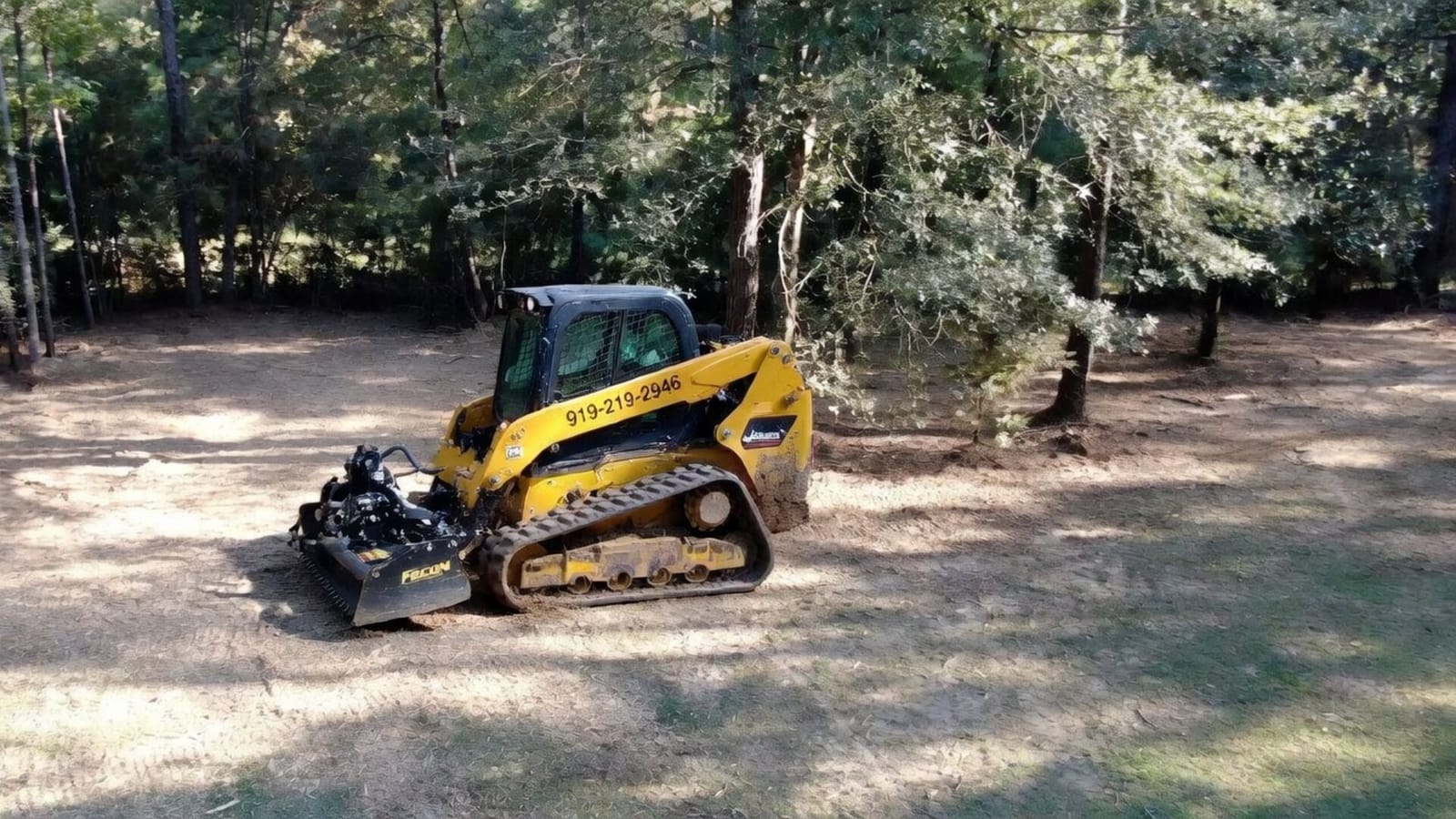
- Clear the stand in one pass. Our crew runs a forestry mulcher through the stand and grinds each cedar below its lowest branches, trunk and crown together, leaving chips over the soil and stumps flush with the ground. Nothing is piled. That matters because Neb. Rev. Stat. 81-520.01 bans fires for clearing land statewide unless your local fire chief waives the ban with a permit, and you must tell the chief before lighting.
- Decide what grows back. Opened ground fills with whatever arrives first. Settle before the cut whether the ground goes back to grass, hay or planted trees, and ask your county extension office about reseeding ground that sat under a closed stand for years.
- Keep the seedlings down. Haying every couple of years removes small seedlings before they get going, and prescribed fire is inexpensive and very effective against smaller trees, less so as they grow. A walk of the ground every few years, before any new tree reaches fruiting age, keeps the job small.
- Plan around a burn, if one is coming. Where a prescribed burn is part of the plan, the usual preparation is a tree-free zone around the unit and trees cut and stuffed on the interior so the fire carries. Mechanical work before a burn is the kind of job a mulcher is built for.
Pro tip: Look past your own fence line. If a neighbor’s windbreak or a road ditch holds fruiting female cedars, seed will keep arriving. Clear your own seed trees first, and plan the seedling checks on the side of the pasture that faces the source.
What Cedar Clearing Costs
Clearing young cedar, fence rows and shelterbelt edges typically runs $1,500 to $2,500 an acre, the young cedar and brush band on our Plattsmouth pricing page. A closed stand of tall trees prices as forestry mulching, $1,500 to $4,000 an acre, and small jobs carry a minimum charge of about $1,500, where they start rather than a fee on top. Each pass grinds stems and stumps into mulch on site, flush with the ground, with nothing hauled away; full stump removal below grade is discussed and priced in the quote, and grading is not part of our price.
For prices by tree height, the cost share and permits across the state, see the Nebraska land clearing cost guide.
Redcedar on the Eastern Bluffs and Across Nebraska
Plattsmouth and the Missouri River bluffs. The loess bluffs around Plattsmouth, from the Platte down toward Nebraska City, are the kind of fire-protected slope where redcedar started. On that ground the grade sets the pace more than the trees do, and the steepest sides may be beyond a machine. Our Plattsmouth land clearing page covers the towns on both sides of the river, the bluffs and the local permits, and the Plattsmouth forestry mulching cost guide compares mulching in place with cutting and burning.
Elsewhere in Nebraska. The method holds statewide; what changes is the ground and how far the stand has gone. The statewide cost guide describes clearing in the Loess Canyons, the Platte Valley, the Sandhills and the Pine Ridge.
Frequently Asked Questions
What herbicide kills eastern red cedar?
Usually none is needed. Cedar cut below its lowest branches does not regrow. For chemical options, start with the state’s weed management guide and your county weed authority; spraying is a licensed applicator’s work.
What are the downsides of eastern red cedar?
Cedar shades out forage as the crowns close. Removing unwanted trees while grass still grows between them is lighter work than opening a closed stand.
Can eastern red cedar be pruned instead of removed?
It can be pruned, but pruning does not control it. A tree cut above its lowest live branches keeps growing. For removal, cut below the lowest branches.
Will cedar come back after clearing?
Not from the stumps. New seedlings arrive from bird-carried seed, so plan a seedling check every few years, or hay the ground regularly.
Get Cedar Off Your Pasture
Request a free quote and we’ll contact you to discuss your property, access and the clearing you need. Our crew flags the keepers, grinds the stand below its lowest branches and catches the seedlings before they bear.
More from the Cut Brush Blog
Keep reading for more tips and guides on land clearing.
 Cost Guide
Forestry Mulching Cost in Plattsmouth, NE (2026)
Forestry mulching in Plattsmouth, NE costs $1,500 to $4,000 an acre. Grind cedar in place or cut and burn? Burn ban and bluff grade explained. Get a free quote.
 Cost Guide
Land Clearing Cost Per Acre in Nebraska (2026 Guide)
Land clearing in Nebraska: $1,500 to $4,500 an acre. See what cedar height and burning rules add around Plattsmouth. Request a free quote for your land today.
Let's Get Started on Your Land
Request a free quote. We'll contact you to discuss your property, access, and the clearing you need.
Get a Free QuoteOr call us directly: (919) 525-3950