
Forestry Mulching Cost in Plattsmouth, NE (2026)
Cut Brush Team · October 16, 2026 · 5 min read

Forestry mulching cedar around Plattsmouth, Nebraska costs $1,500 to $4,000 an acre, and cutting back young cedar and fence rows before a stand closes costs $1,500 to $2,500 an acre. On bluff pasture and acreage in Cass County, one choice shapes the bill more than any other: grind the cedar where it stands, or cut it, pile it and burn it later.
Whichever band your ground lands in, the price covers one finish: brush, small trees and stumps ground into mulch on site, stumps flush with the ground and nothing hauled away. Full stump removal below grade, and cutting and hauling very large trees, are discussed and priced in the quote. Grading is not part of our price; we clear to the ground so a builder can grade. Every job has a minimum charge of about $1,500. That is where small jobs start; it is a minimum charge, not a fee added on top.
Grind It in Place or Cut, Pile and Burn
The older way to take out cedar is a saw and a loader: trees felled, pushed into piles, and the piles burned once conditions allow. That route has three stages, and each one is a cost of its own. The burning stage carries a legal step. Neb. Rev. Stat. 81-520.01 sets a statewide ban on “fires for the purpose of clearing land.” Your local fire chief can waive it with a permit naming the place, the date and the material, the fire department may charge up to $10 for it, and you must notify the chief before lighting.
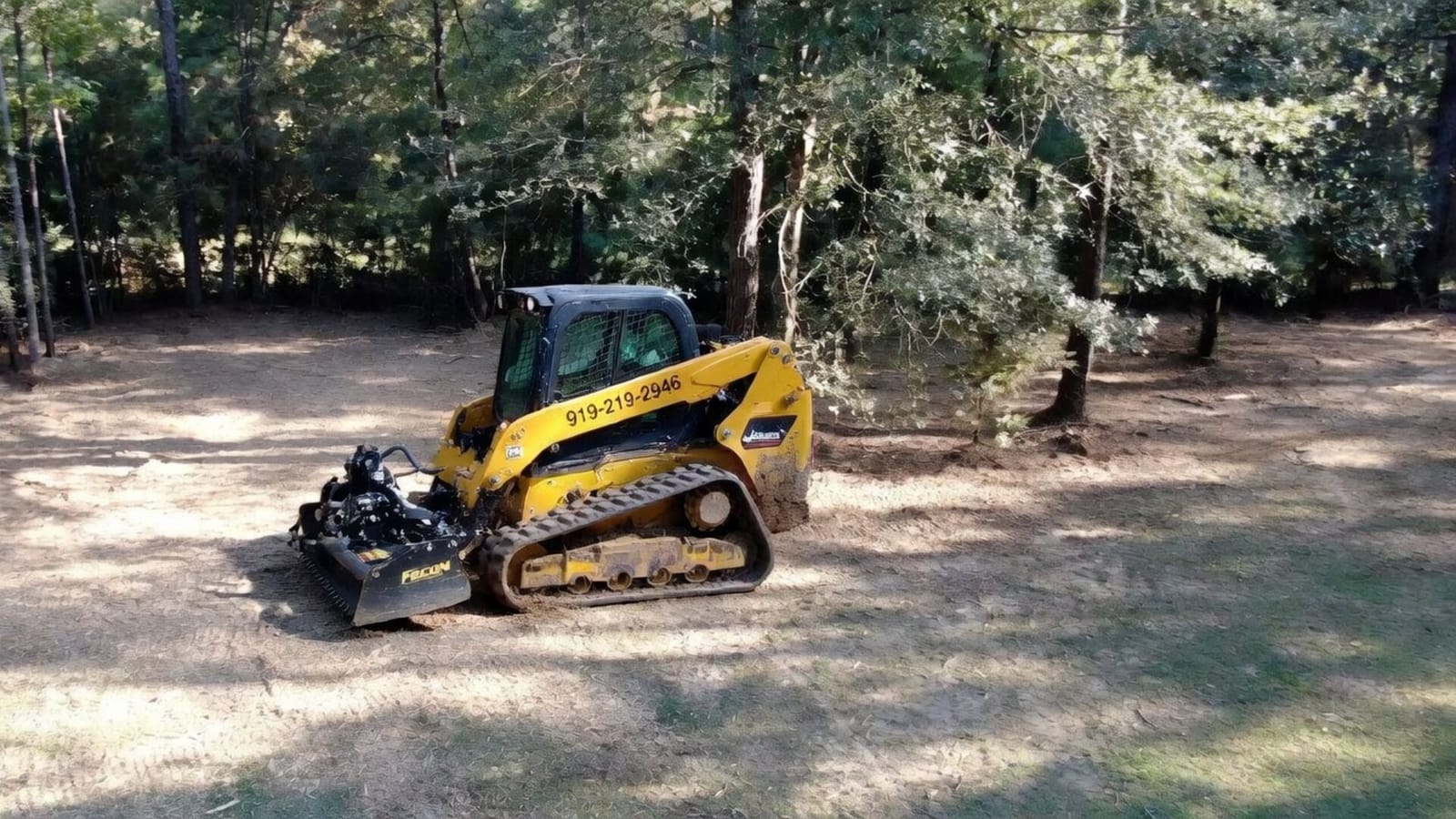
Forestry mulching skips the pile. The tree is ground down to chips in one pass, the chips stay on the soil, and there is nothing waiting for a calm, legal burn day. Here is how the two paths compare on a bluff acreage.
| Mulched in place | Cut, piled and burned | |
|---|---|---|
| What you pay for | One pass of the mulcher, priced by the acre | Felling, piling, the burn and the cleanup after it |
| Fire permit | None needed | Fire chief’s waiver for each burn |
| What is left | Chips over the soil, grass coming back through | Ash and scorched ground where the piles stood |
| Stumps | Ground flush | Cut stumps at whatever height the saw left them |
Our bands on the Plattsmouth pricing page are for mulching. If a stand has trees too large for the head, cutting and hauling those is discussed and priced in the quote.
What the Bluffs Do to the Total
The hills around Plattsmouth are loess. The loess soils here formed on the side slopes of the Missouri River hills in eastern Nebraska and western Iowa and run from flat to 40 percent slopes. The same acre of cedar costs more on the side of a draw than on the flat top above it, because the machine works across the grade, backs up and repositions instead of driving tree to tree.
Machines often cannot reach cedar on ground with difficult access or steep slopes. When a side is too steep to work safely, that ground is left out of the quote or handled another way, and we tell you before work starts.
How long does an acre take? It depends on the grade, the size of the trees and how many you are keeping, and an open hilltop and a steep draw can differ by a wide margin. That is why we quote the acre and the finish, not the hour.
Tree Height and the Lowest Band
Not every cedar problem needs the mulcher. Cedar control goes by height. Under 2 feet, burning, mowing, cutting or grazing goats all work. From 2 to 10 feet, cutting or treating individual trees works well. Past 10 feet, cutting is the most effective and economical control.
On a pasture where most trees are still under head height, the work usually sits in the young cedar band, $1,500 to $2,500 an acre. A closed stand of tall trees with crowns touching moves into the forestry mulching band, toward its top on steep ground.
Budgeting for What Comes Back
Cedar cut below its lowest branches does not regrow. Eastern redcedar is not a stump sprouter, so a mulched tree is gone for good. What returns is seed. Female trees begin bearing berries in their sixth or seventh year, and birds carry them off and drop the seed across the pasture.
So the follow-up on cedar is a light seedling pass, not a second clearing. Haying every couple of years removes seedlings before they get going, so a pasture that is hayed or mowed may need no return visit from us at all. Where one is wanted, it is priced per visit on its own line, so you can see the cost before committing to the first pass.
Comparing an Hourly Bid
Convert a time-based quote to the whole-job cost first: multiply an hourly rate by hours, or a day rate by days. Add the move-in charge, then divide the dollar total by the acres included. Ask, too, whether the bid includes the piling and burning, or only the felling. A per-acre mulching quote covers the whole job: the slow stretch on a bluff side is our time, not an added line on your bill.
Frequently Asked Questions
Is it cheaper to burn the cedar than to mulch it?
Not always. Cutting and burning adds piling, a permit for each burn and cleanup afterward. Mulching is one pass with nothing left to burn.
Do cedar trees grow back after forestry mulching?
Not from the stump, when the cut is below the lowest branches. New seedlings arrive from bird-carried seed, so plan a light check every few years.
What does a very small cedar job cost?
Small jobs start at the minimum charge of about $1,500. A single fence row or a few trees behind a house is billed at that minimum, not an acre rate with a fee added; once the acreage prices above it, the acre bands apply.
Get a Number for Your Plattsmouth Land
Request a free quote and we’ll contact you to discuss your property, access and the clearing you need, including which cedars you want left standing.
Read more: towns and permits on our Plattsmouth land clearing page, how to clear a stand and keep it clear in our Nebraska eastern redcedar removal guide, and the statewide picture in the Nebraska land clearing cost guide.
More from the Cut Brush Blog
Keep reading for more tips and guides on land clearing.
 Cost Guide
Land Clearing Cost Per Acre in Nebraska (2026 Guide)
Land clearing in Nebraska: $1,500 to $4,500 an acre. See what cedar height and burning rules add around Plattsmouth. Request a free quote for your land today.
 Guide
Eastern Redcedar Removal in Nebraska: A Landowner's Plan
Eastern redcedar removal in Nebraska: $1,500 to $2,500 an acre to clear scattered cedar from pasture. Trees to keep and follow-up. Request a free quote.
Let's Get Started on Your Land
Request a free quote. We'll contact you to discuss your property, access, and the clearing you need.
Get a Free QuoteOr call us directly: (919) 525-3950