
Forestry Mulching Cost in Eagle Point, OR (2026)
Cut Brush Team · October 16, 2026 · 6 min read

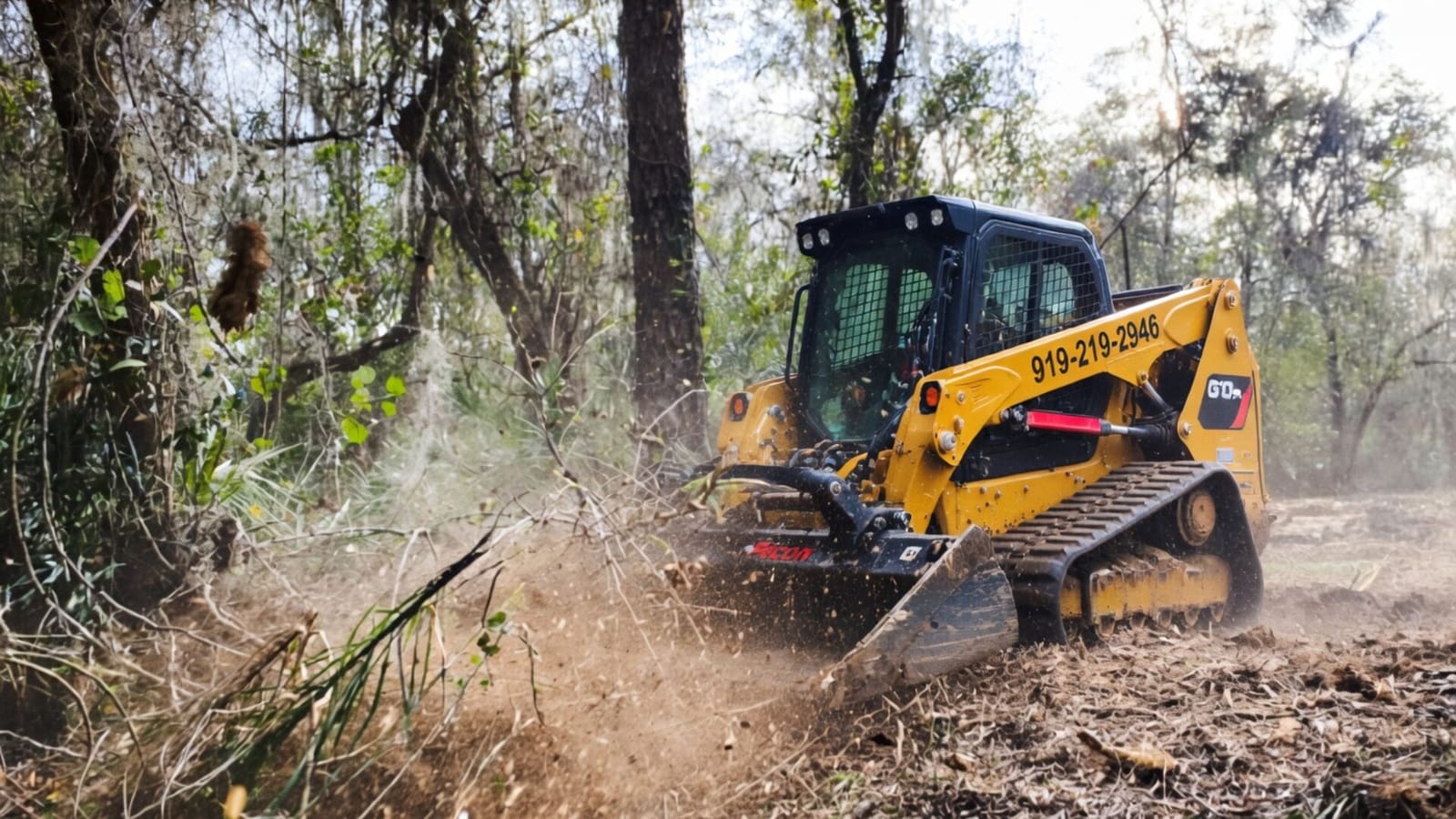
Hiring our crew to mulch an acre around Eagle Point, Oregon costs $1,500 to $4,000, and blackberry or brush along a fence or pasture edge prices at $1,500 to $2,500 an acre. Mulching can also be bought by the hour, or done yourself with a skid steer mulching head rented by the day. Each puts the cost of a slow day on someone different, and slow days here have two local causes: winter water on the flat ground and summer fire rules on wooded land.
Our per-acre price covers one finish. Brush, small trees and stumps are ground into mulch where they stand, stumps end flush with the ground and nothing leaves the property. Full stump removal below grade, and cutting and hauling very large trees, are discussed and priced in the quote. Grading is not part of our price; we clear to the ground so a builder can grade. Small jobs start at a minimum charge of about $1,500, which is a minimum charge, not a fee added to the acre rate.
Three Ways to Pay for the Same Acre
| How you buy it | What the number covers | Who pays for a slow day |
|---|---|---|
| A per-acre quote | The agreed finish on the agreed ground | We do |
| An hourly or day rate | Machine and operator time, often plus a trailer fee | You |
| A rented skid steer head | The attachment for the day; the carrier, your time and the cleanup are extra | You |
The rates on our Eagle Point pricing page cover the whole job. Convert an hourly bid to a total first: multiply the hourly rate by the expected hours, then add the quoted trailer charge. Divide that dollar total by the area being cleared to get a per-acre figure.
On firm, open ground an hourly bid can come out cheaper. Around Eagle Point, the ground and the calendar decide whether it stays that way.
Why Hours Run Long on Rogue Valley Ground
Winter water on the Agate Desert. North of Medford, around White City and Eagle Point, mounded prairie sits on a hardpan 0.6 to 2.5 feet below the surface. Fall and winter rain cannot soak through it, so the water collects in shallow vernal pools, some of them critical habitat for rare plants. A tracked machine there in a wet month crawls and leaves ruts. On an hourly bid, those slow hours are yours.
Summer fire precaution levels. On land the Oregon Department of Forestry protects west of the Cascades, its Industrial Fire Precaution Levels tighten as the season dries. At Level III, ground-based operations may run only between 8 p.m. and 1 p.m., with equipment able to build fire line on hand; at Level IV all operations stop. A wooded job booked for August can take far more calendar days than the same ground in late spring.
The window that suits most Eagle Point land sits between the two: after the pools dry, before the fire levels climb, or in fall once they drop and before the ground goes soft. A start date with a few weeks of give helps however you buy the work.
Renting a Skid Steer Mulcher Head Instead
A skid steer mulching head is the do-it-yourself route, and for a small patch on firm ground it can make sense. Price the parts that are easy to forget:
- The carrier. The head needs a skid steer with enough hydraulic flow to drive it, and both are usually rented separately.
- Your learning curve. A first-time operator covers ground slowly, and a mulching head throws debris, so the work area has to be kept clear of people.
- The ground. A rubber-tracked or wheeled machine on wet Agate Desert soil bogs down and tears up the surface faster than you expect.
- Fire season. Ask your Oregon Department of Forestry district about summer restrictions before you run power equipment in dry brush.
A hired mulcher brings the operator, the carrier and the head as one price, and on a per-acre quote the slow stretches are ours to absorb.
What Happens to the Brush
The cheapest brush is brush that never moves. Oregon rule OAR 340-264-0170 prohibits construction and demolition open burning inside the Rogue Basin open burning control area, which lies in Jackson and Josephine counties, unless DEQ issues a letter permit. Trees, brush, logs and stumps removed for site preparation count as demolition waste, and chipping is the named alternative. Its online map shows whether your parcel is inside a control area.
A chainsaw and brush pile approach leaves a pile you may not be able to light, so chipping or hauling it costs you later. Mulching in place, which our bands assume, leaves nothing to dispose of. Requirements vary by parcel, scope and jurisdiction, and the governing authority makes the determination.
Where an Eagle Point Acre Lands in the Band
Low in the band. Open brush and a season or two of blackberry canes on firm, flat ground, with a gate the trailer can reach.
Middle. An older blackberry thicket, a fence line with buried wire, or brush under keeper trees the machine steers around.
High. A closed stand of young trees, a steep hillside, scattered work areas across a large property, or a job where a few big trees are cut and hauled away on top.
Tree of heaven adds a step rather than a higher rate: a licensed applicator treats the trees before our crew cuts them, and a return visit takes care of the root suckers. Each follow-up visit appears in the quote as its own line.
Frequently Asked Questions
How much does forestry mulching cost an hour?
We price by the acre and the finish. To compare an hourly bid, multiply the hourly rate by the expected hours, add the trailer fee, then divide the dollar total by the acres.
Does the $1,500 minimum come on top of the acre rate?
No. It is a minimum charge, where small jobs start. A job that prices below it is charged the minimum; above it, the acre bands apply.
When is the best time to mulch around Eagle Point?
Usually late spring, once the winter pools have dried, or fall after fire precaution levels drop and before the rains return.
Get a Number for Your Eagle Point Land
Request a free quote and we’ll contact you to discuss your property, access and the clearing you need. You get the scope, the finish and the price in writing before any work starts.
Read more: the towns we cover on our Eagle Point land clearing page, and statewide rules in the Oregon land clearing cost guide.
More from the Cut Brush Blog
Keep reading for more tips and guides on land clearing.
 Guide
Tree of Heaven Removal in Oregon: Plan and Cost
Tree of heaven clearing in Oregon costs $1,500 to $2,500 an acre for brush and suckers. Plan treatment, cutting and return visits. Request a free quote.
 Cost Guide
Land Clearing Cost Per Acre in Oregon (2026 Guide)
Land clearing in Oregon runs $1,500 to $4,500 an acre with our crew. How blackberry, broom, juniper, wet ground and DEQ burn rules move the price on your land.
Let's Get Started on Your Land
Request a free quote. We'll contact you to discuss your property, access, and the clearing you need.
Get a Free QuoteOr call us directly: (919) 525-3950