
Forestry Mulching Cost in Illinois (2026 Guide)
Cut Brush Team · November 9, 2026 · 9 min read
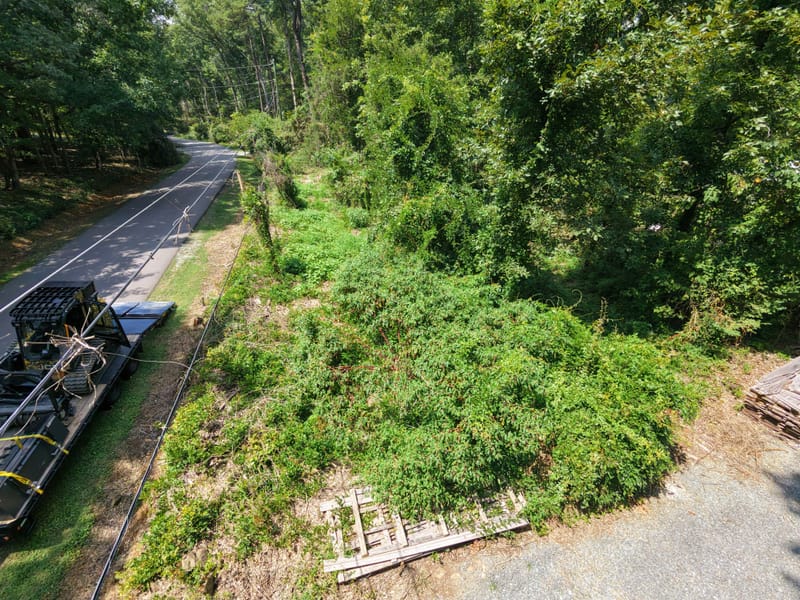
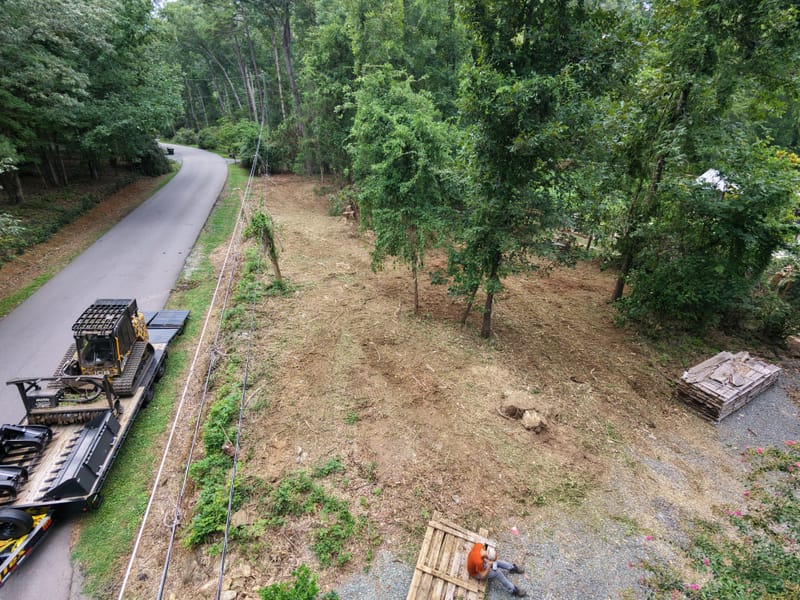
The back woods have gone to bush honeysuckle, a fence line has vanished under kudzu, or buckthorn has filled in beneath the oaks behind the house, and you want a figure before anyone comes out. Forestry mulching in Illinois costs $1,500 to $4,000 an acre with our crews, and each of our three Illinois markets publishes that same band. Stem size, slope, wet ground and the trees you want kept decide where your acre lands inside it.
At a glance:
- Brush and young trees ground where they stand: $1,500 to $4,000 an acre
- Only the shrub layer, under trees you keep: $1,500 to $2,500 an acre
- Small jobs: a minimum charge of about $1,500, where a half acre or a single fence row starts
- Burning: state law does not limit burning landscape waste where it grew, except in counties of more than 400,000 people, an exception that takes in Kane and Cook
- Cost share: state forestry cost share needs 10 contiguous enrolled acres, an approved forest management plan, and approval before any work begins
Our crews mulch Illinois ground from three markets: the Fox Valley around Gilberts (Kane, McHenry, Cook and DeKalb counties), the Illinois River valley around Peoria, and the lower Ohio River around Metropolis, IL (Massac, Johnson and Alexander counties).
How Much Does Forestry Mulching Cost in Illinois?
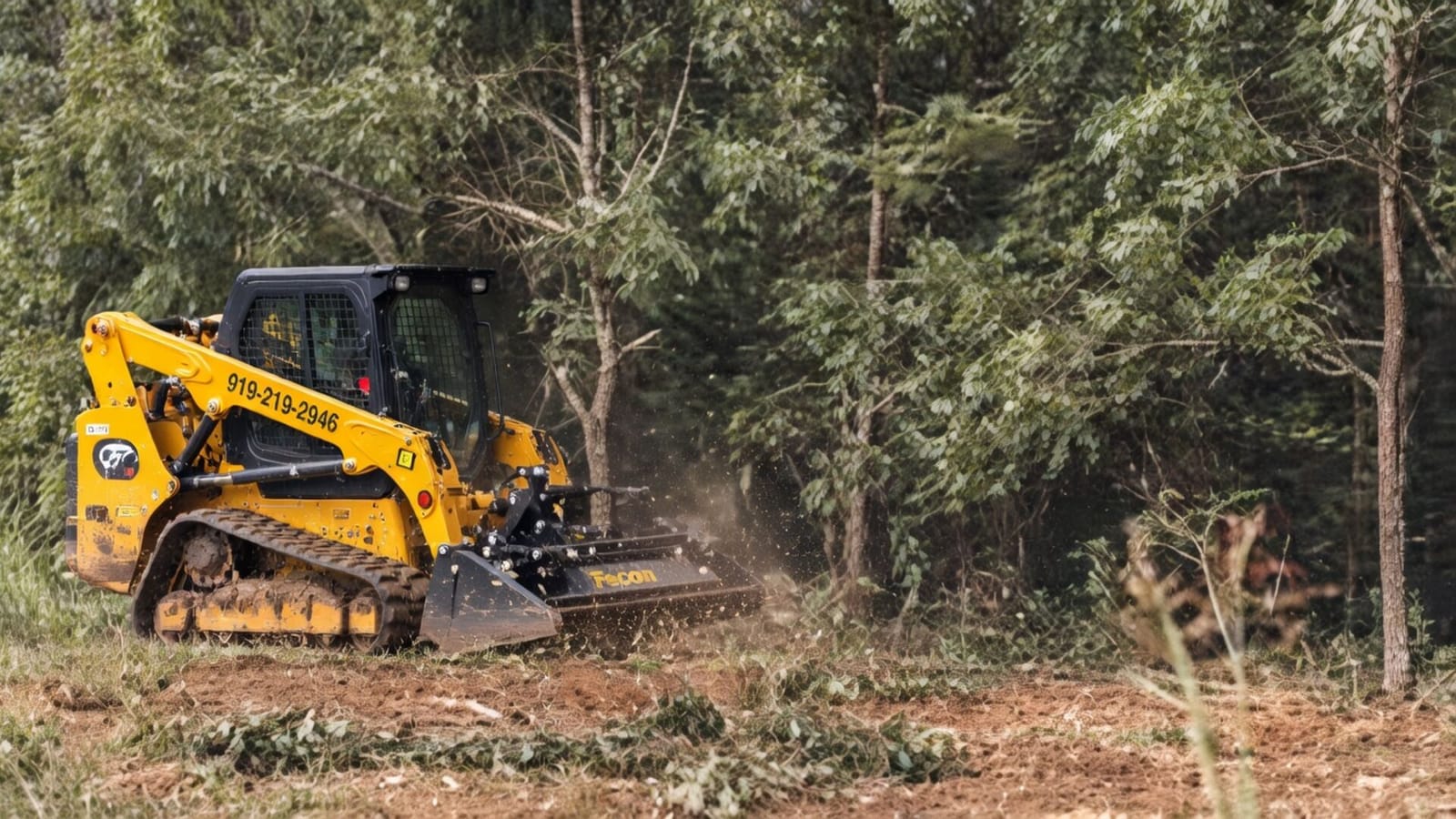
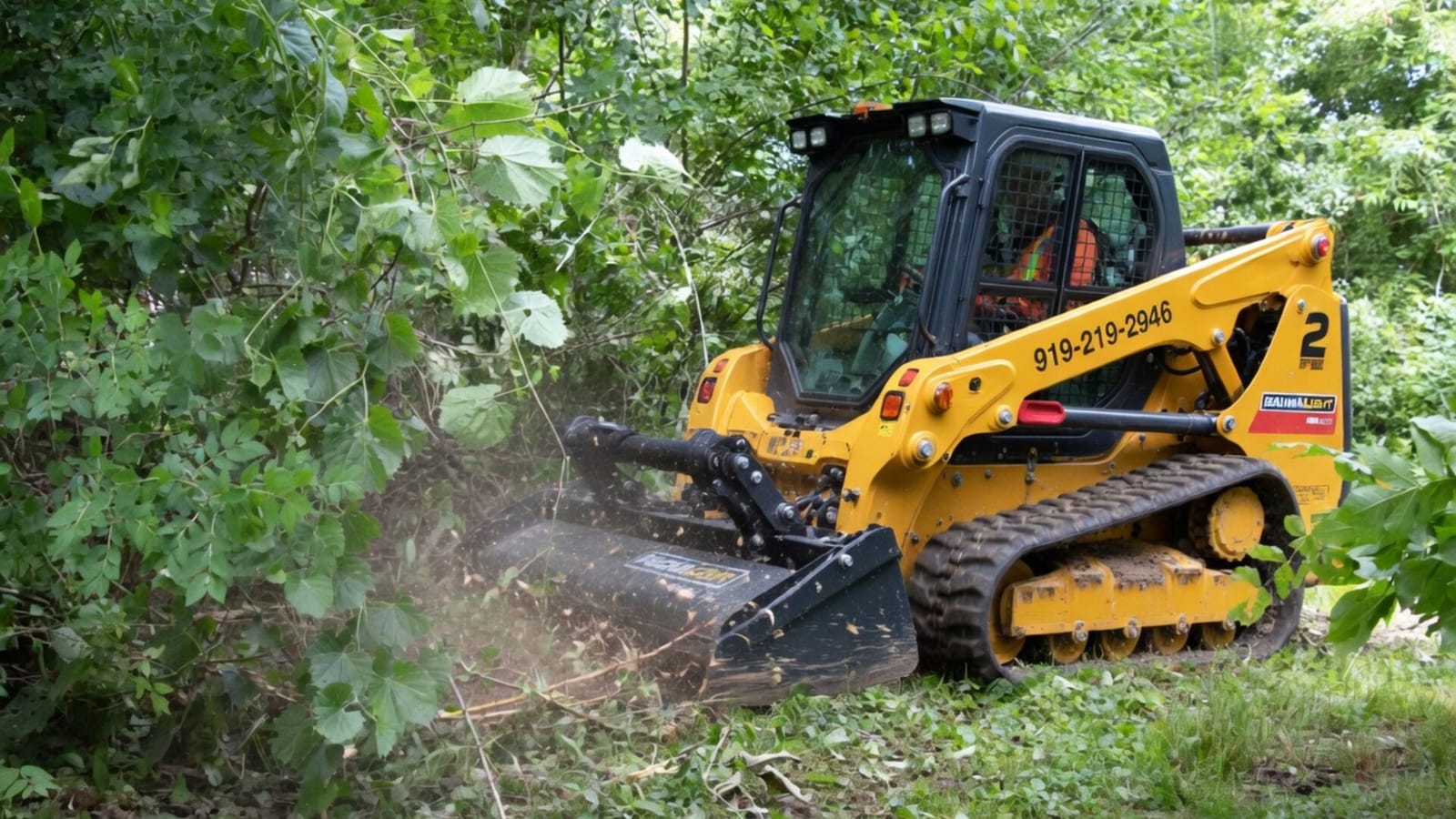
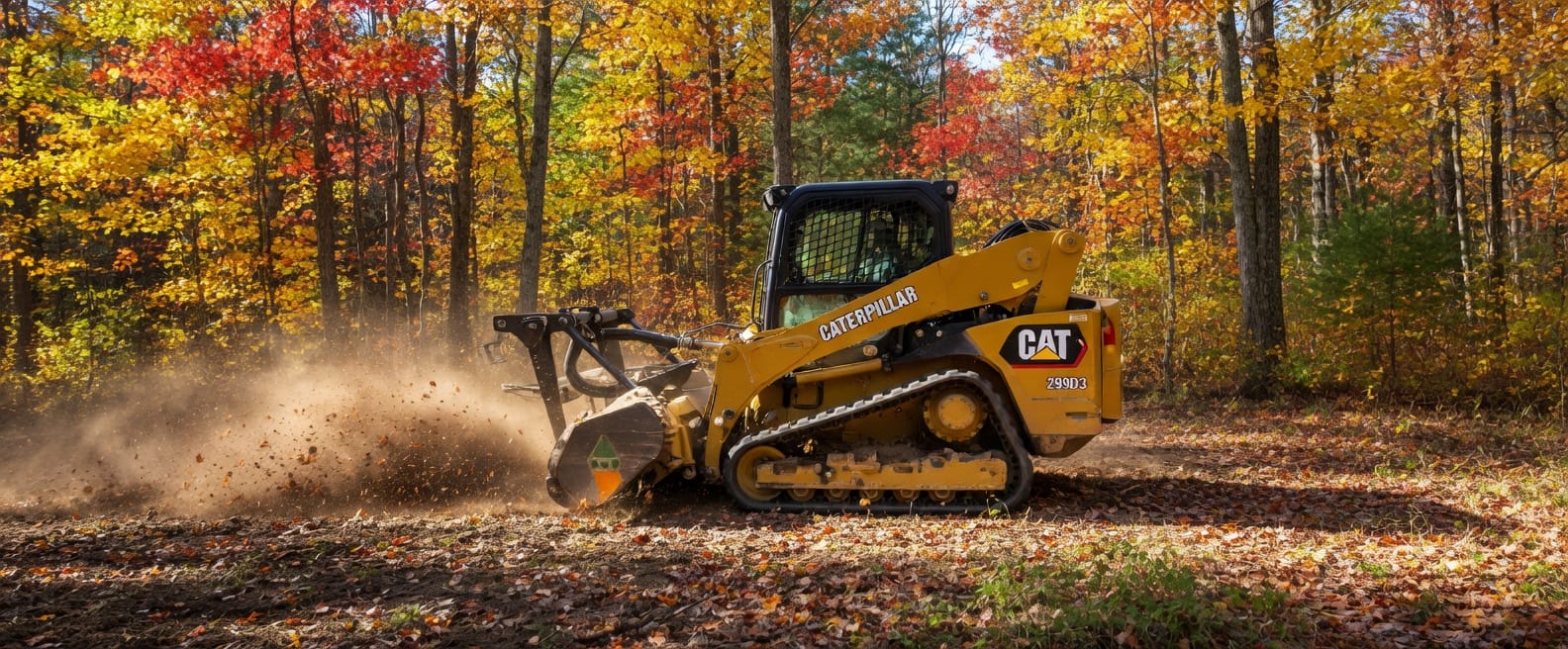
Forestry mulching is one tracked machine with a toothed drum on the front that chews honeysuckle, buckthorn, vines and saplings into chips where they grew: a walkable chip floor, no brush pile. Stumps are ground off level with the soil; digging them out below grade is its own quote line, and grading afterwards is your dirt contractor’s work.
| What is standing | Our price per acre | What it looks like in Illinois |
|---|---|---|
| Shrubs under trees you keep | $1,500 – $2,500 | Buckthorn beneath Fox Valley oaks, bush honeysuckle beneath Peoria bluff timber |
| Vines and brush on fence rows and field edges | $1,500 – $2,500 | Kudzu over a Massac County fence, multiflora rose and autumn olive along a field margin |
| Brush and young trees across the whole area | $1,500 – $4,000 | An idle upland pasture gone to saplings sits low; a creek bottom thick with young trees sits higher |
| An old, dense thicket with heavy stems | $1,500 – $4,000, toward the top | Honeysuckle or buckthorn left for decades, packed so tight nobody walks through it |
Where these numbers come from. They are the forestry mulching and understory rows on our Metropolis, IL pricing page, and the Gilberts and Peoria pricing pages carry identical figures. Only the understory row’s name follows the local problem: Buckthorn & Understory Clearing in the Fox Valley, Honeysuckle & Understory Clearing around Peoria, Kudzu & Bottomland Clearing on the Ohio. Trailering a mulcher to half an acre costs what five acres cost, hence the minimum charge. Timber too heavy for a mulched finish moves to full clearing, $1,500 to $4,500 an acre, which our Illinois land clearing cost guide covers.
What Changes the Price of an Illinois Mulching Job
Honeysuckle wood fights back. Bush honeysuckle grows as a clump of many stems, and its wood is tough enough to dull power tool blades quickly. A young stand passes through the drum fast; a clump of dozens of thick stems feeds in slowly, and that gap is most of the distance across the band. It probably grows in every Illinois county.
Oaks you want to keep. A fresh wound on an oak in April, May or June, and to be safe through July, bleeds sap that draws beetles able to carry the oak wilt fungus. Where keeper oaks stand close, the work waits for late summer or slows around each trunk, and slower work prices higher. In Fox Valley oak woods this calendar often sets the start date.
Black prairie soil in spring. Drummer, the dark soil on more than 500,000 acres of northern and central Illinois, is poorly drained, and even tiled fields can hold water at or just under the surface between January and May. A tracked mulcher sinks and slows there, and its ruts open the soil to the next wave of invasive shrubs. The same field edge mulched in August goes faster.
What your county allows you to burn. Kane and Cook each hold more than 400,000 people, so state law does not protect burning landscape waste where it grew, and village rules decide; Kane alone is past 500,000. Where a fire is off the table, the alternative to mulching is trucking brush away, and a mulching quote carries no truck line.
Will Honeysuckle and Buckthorn Come Back After Mulching?
Yes, unless the stumps are treated. The mulching pass is the first visit, not the last.
- Cut honeysuckle stems begin resprouting about three weeks after cutting. Without herbicide, cutting alone means cutting again, and again.
- Spraying the regrowth is rarely one trip. Foliar spraying takes several treatments in a row to finish a stand, so plan on more than one applicator visit.
So we price an Illinois honeysuckle or buckthorn job in two lines: the first pass, inside the bands above, and a lighter return visit for sprouts, quoted separately so you can take it or leave it. Herbicide on the sprouts is a licensed applicator’s work, hired by you. If the trees stay and only the shrub layer goes, our Illinois underbrush removal cost guide covers that scope.
Pro tip: If you are hiring an applicator for the resprouts, book them for roughly a month after the mulching pass. Honeysuckle starts sprouting from cut stems about three weeks out, and a small sprout takes far less spray than the shrub it came from.
Forestry Mulching Costs Across Illinois
The Fox Valley and Chicago suburbs. Here the work is mostly buckthorn and honeysuckle under oak, often on a lot with a lawn and a septic field to keep off. Kane and Cook sit above the 400,000 line, so the state does not protect a brush fire there; McHenry, at about 310,000 people, sits below it, though a village ordinance can still forbid a fire. Our Gilberts forestry mulching cost guide prices keeping the oaks against clearing the whole lot.
Peoria and the Illinois River valley. Honeysuckle under bluff timber is the common job in Peoria, Tazewell, Woodford, Fulton and Marshall counties. Slopes and ravine edges push an acre toward the top of the band; flat farm ground back from the river goes quickly once dry. The Peoria forestry mulching cost guide compares hourly and per-acre bids.
The Grand Prairie between them. Woody growth here lives in hedge rows, creek corridors and farmstead groves on black soil. Osage orange, black and honey locust and multiflora rose are the usual targets, and a long row is priced by its acreage equivalent in the understory band. Grass and saplings thinner than 2 to 3 inches are a mower’s job, priced in our Illinois brush hogging cost guide.
Metropolis and the lower Ohio River. Around Massac, Johnson and Alexander counties, kudzu on fence rows and field edges is the signature job, and kudzu is a listed noxious weed in Illinois. Nearly a tenth of the land within 15 miles of Metropolis is wooded wetland, so bottom ground waits for a dry stretch. Our Metropolis forestry mulching cost guide covers the river calendar and the kudzu return visits.
Burning, Stormwater and Cost Share in Illinois
Burning. State law does not limit burning landscape waste, including trees, stumps and brush, on the property that produced it, except in a county of more than 400,000 people, and a town’s ban still stands because state law does not override it. Brush cut to clear land for new development or a business is trade waste, which may only go through an air curtain incinerator with permits. A mulched job leaves nothing to burn.
Stormwater. Illinois treats soil left bare by clearing, grading or excavation as disturbed ground, and an acre or more of it needs ILR10 coverage, with a one-time fee of $250 under 5 acres or $750 at 5 or more. A mulched woodlot floor keeps its roots and a chip cover, but when mulching is the first step of a building project, those acres count toward that project’s permit. We do not file permits, so settle who will before the machine is booked.
Cost share. The Illinois Forestry Development Act cost share pays a flat rate per acre to control invasive and exotic species in enrolled woods, from $90 an acre where target species cover less than 10 percent of the area to $555 where they cover more than three quarters. Mechanical work counts alongside herbicide. To qualify you own or operate at least 10 contiguous acres enrolled in the program, the woods carry an approved forest management plan naming the target species, the treatment must reach 85 percent control, and no work may start until an IDNR forester approves your application. It reimburses you, never the contractor, after the work is done, so keep every receipt. On a dense honeysuckle acre it covers part of a mulching bill.
Frequently Asked Questions
How much does forestry mulching cost per acre in Illinois?
With our crews, $1,500 to $4,000 an acre in the Fox Valley, around Peoria and around Metropolis, IL. Clearing only the shrub layer under trees you keep runs $1,500 to $2,500 an acre. Small jobs start at a minimum charge of about $1,500.
Can cost share help pay to mulch honeysuckle out of my woods?
Possibly, if you have at least 10 contiguous acres enrolled with an approved forest management plan. Apply first: work that begins before an IDNR forester approves the application does not qualify. Second and third treatments within ten years can be cost-shared at lower rates.
Why are there roots and stumps left after forestry mulching?
The drum grinds stumps off at ground level instead of digging them out, so roots stay in the soil and hold it. Honeysuckle and buckthorn can resprout from those stumps, which is why the return visit matters. Stumps removed below grade for a lawn or a building are quoted as a separate item.
Will a crew take a small job, like one fence row?
Yes. A fence row, a backyard corner or a food plot opening starts at the minimum charge of about $1,500. Group several patches on one property into the same visit and they share a single trip.
Get a Forestry Mulching Quote for Your Illinois Land
Request a free quote and our crew will contact you to discuss the property, the access and the clearing you need. Pick the nearest of our three Illinois areas below. On that call, mention which trees stay and whether you are working toward cost share, so the first pass fits the forester’s plan.
Sources
- Illinois Department of Natural Resources, Forestry Development Cost-Share Program rules, 17 Ill. Adm. Code 1536
- Illinois EPA, open burning frequently asked questions
More from the Cut Brush Blog
Keep reading for more tips and guides on land clearing.
 Cost Guide
Forestry Mulching Cost in Metropolis, IL (2026)
Forestry mulching in Metropolis, IL and Paducah: $1,500 to $4,000 an acre. Wet river ground, kudzu follow-up and timing change the price. Get a free quote.
 Guide
Kudzu Removal in Illinois: Laws, Plan and Cost
Kudzu removal in Illinois: $1,500 to $2,500 an acre. What state law says, why one cutting fails and how to plan the repeat visits. Request a free quote.
 Cost Guide
Land Clearing Cost Per Acre in Illinois (2026 Guide)
Plan on $1,500 to $4,500 an acre to clear Illinois land, the rates our crew charges around Gilberts. What hedge, honeysuckle, buckthorn and wet soil add.
Comparing states? See land clearing costs by state.
Let's Get Started on Your Land
Request a free quote. We'll contact you to discuss your property, access, and the clearing you need.
Get a Free QuoteOr call us directly: (919) 525-3950
 Quick answers from Cut Brush