
Forestry Mulching Cost in North Dakota (2026 Guide)
Cut Brush Team · November 9, 2026 · 9 min read
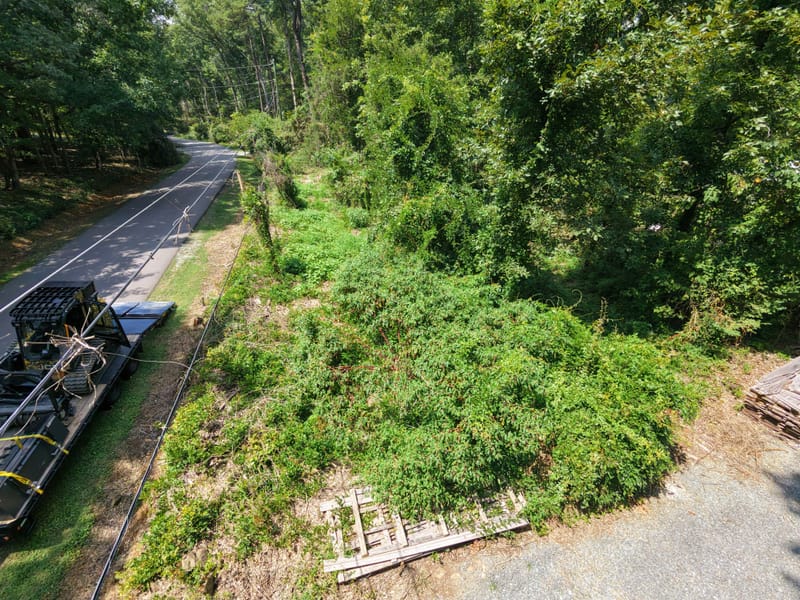
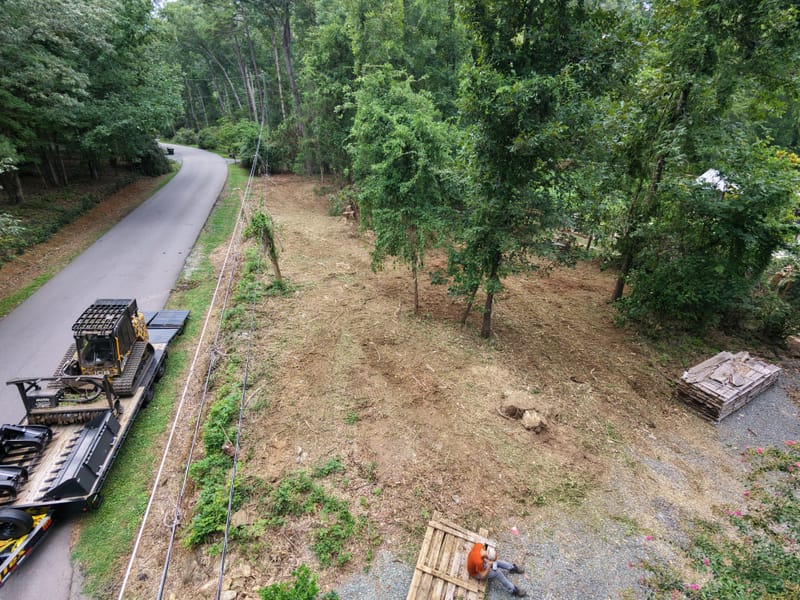
Forestry mulching in North Dakota costs $1,500 to $4,000 an acre with our crew, and a lone shelterbelt row or a strip of field-edge regrowth costs $1,500 to $2,500 an acre. Most mulching here is a tree row on a section line or an old farmstead belt gone to dead elm, so the real questions are what the row comes to in acres, what stays in the ground, and who might share the bill.
At a glance:
- Mulching band: $1,500 to $4,000 an acre for old belts, river brush and young trees ground where they stand
- Rows and understory: $1,500 to $2,500 an acre, with a row priced by its length times its width
- Minimum charge: about $1,500 for the whole job, which is where small jobs start
- What stays: stumps ground to the ground line and roots left in the soil, which limits how the old row can be planted or tilled
- Burning: brush from land clearing may be burned under state air rules, but never when the fire index is extreme or a burn ban is declared
- Ash wood: Cass, LaMoure and Burleigh counties are under the emerald ash borer quarantine
Our crew works North Dakota out of Fargo and the Red River Valley, Cass and Richland counties; elsewhere in the state, travel and your property set the number.
How Much Does Forestry Mulching Cost in North Dakota?
We price by what is standing and turn rows into acres: length times the width the crowns and suckers cover, divided by 43,560 square feet.
| What is standing | Our price per acre | What it usually measures |
|---|---|---|
| Caragana or lilac shrub row gone leggy | $1,500 – $2,500 | A quarter-mile row 25 feet across is about three quarters of an acre |
| One field row of elm, ash or cottonwood | $1,500 – $2,500 | A half-mile row 30 feet across is about 1.8 acres |
| Old multirow farmstead belt, mulched in place | $1,500 – $4,000 | Five rows 600 feet long, 110 feet edge to edge, cover about 1.5 acres |
| Coulee, draw or riverbank brush with young trees | $1,500 – $4,000 | Priced by stem count and footing rather than by length |
| Whole belt taken to a written finish | $1,500 – $4,500 | Stumps pulled below grade are priced in the quote |
Where these numbers come from. They are the forestry mulching, shelterbelt row and buckthorn, and land clearing bands on our Fargo pricing page, and every job carries a minimum charge near $1,500. A mulching price covers brush, trunks and stumps ground to chips on the spot, nothing hauled. Pulling stumps below grade is priced in the quote, and grading belongs to your dirt contractor.
What a row comes to. The quarter-mile shrub row above is 0.76 of an acre, so even at the top of the row band it bills about $1,900, and at the bottom the $1,500 minimum sets the price. The half-mile field row lands near $2,700 to $4,500. The five-row farmstead belt falls between about $2,300 and $6,100 in the mulching band, depending on trunk size. Two or three rows on one visit are the cheapest way to spend the minimum.
What Changes the Price of a North Dakota Mulching Job
Elm tops come with a deadline. On cost-shared renovation, the NRCS North Dakota windbreak specification has American and Siberian elm tops burned, buried, chipped or debarked against Dutch elm disease: right away if the trees come down in the growing season, and before the next growing season if they come down in fall or winter. Our mulching head turns the tops to chips where they drop, so the row and its disposal are done in one visit, with no pile left waiting.
Ash in three quarantined counties. In Cass, LaMoure and Burleigh counties, hardwood firewood, ash logs and branches, nursery stock and wood chips may not go to a county outside the quarantine without a permit, and the civil penalty runs up to $5,000. An ash belt near Mapleton or Bismarck mulched in place sends nothing down the road.
Trees you keep for wildlife. Where a stand of bigger trees stays after the dead rows go, the same specification suggests leaving hollow trees as den sites and a few large dead trees as raptor roosts. Each keeper is something the machine steers around: more time per acre, but fewer acres.
Shrub rows you want back. A leggy caragana or lilac row can be renewed by coppicing: cut low in mid to late winter, before leaf-out, so the roots send up thick new growth. That takes clean saw cuts, and the specification rules out rotary mowers because they tear stems; a mulching head shatters them the same way. A row meant to regrow is a saw job; a row meant to go is a quick job at the low end of our row band.
What a Mulched Row Leaves Behind
When we mulch a row, trunks and stumps are ground down to the ground line and the chips stay on the strip. The roots stay in the soil. That is the “tops only” route in the NRCS North Dakota windbreak specification, and it decides what the strip can do for the next few seasons.
- Stumps have to sit low enough not to get in the way of later field work. Ground flush, they do.
- Most broadleaf stumps sprout. Under the specification, live stumps get an approved herbicide immediately after cutting, and resprout control may be needed for one to two more years. We do not spray, so if your plan calls for stump treatment, the applicator works the row the same day we cut it.
- Replanting waits a season. Where new trees go back into the old line, resprouts are controlled and the strip sits fallow at least one growing season, with sod-forming grass kept down for a season before planting.
- Planting and weed control change. A tree planter with a coulter usually runs within a few feet of the old stump row, and a hydraulic auger with hand planting works inside it. Machine-laid fabric and in-row tillage often will not work over the old roots, so plan on hand-pinned fabric, mulch, warm-season grass or herbicide instead.
If you want the planter or the combine to run straight across where the belt stood, that is the other route: stumps and roots pulled and the strip leveled. That is digging, priced in the quote above our mulching band, and buried roots on a leveled strip can still catch a tree planter.
Pro tip: Pick the route before anyone quotes. A row mulched flat this fall and dug out next spring pays for a machine twice. If the field will be farmed through, ask for the stumps-out price at the start.
Forestry Mulching Across North Dakota
Cass and Richland counties. Our home ground: farmstead belts and field rows around Fargo, West Fargo, Casselton, Kindred and Walcott. The valley clay and the best months to work it are covered in our Fargo forestry mulching cost guide.
River woods along the Red and the Sheyenne. Where the big trees stay and only the brush beneath them goes, the job prices in the row and buckthorn band, and return trips for buckthorn sprouts are listed as their own lines. Our buckthorn removal guide sets out that plan.
LaMoure County and the Bismarck area. The other two quarantine counties. Bismarck city forestry crews have found emerald ash borer in declining ash, the first find in central North Dakota. Ash belts here are a strong case for mulching in place.
Grand Forks, Devils Lake, Jamestown and Minot. Outside the ash quarantine for now, though elm tops on cost-shared work still follow the disposal deadline.
Burning and Digging Rules in North Dakota
Burning. North Dakota’s open burning rule, NDAC 33.1-15-04-02, allows burning trees and brush from land clearing. Nothing burns when the fire index is extreme or a burn ban is declared. The fire must be attended the whole time, it may not foul the air of an occupied building or create a traffic hazard beside a road, and the material has to be dry enough to burn cleanly with as little dirt on it as possible. Local burn restrictions come first, so check your county before lighting anything.
Digging. Pulling stumps and roots can go well below tillage depth. Before that digging starts, whoever does it calls North Dakota One Call at 1-800-795-0555 so buried lines get marked; the windbreak specification requires it once disturbance passes 18 inches. A mulching pass works at the ground line and does not dig.
Frequently Asked Questions
What does it cost to mulch one shelterbelt row in North Dakota?
A row under about three quarters of an acre usually bills at the $1,500 minimum charge or a little above it, and a half-mile field row runs about $2,700 to $4,500. Several rows on one visit spread the minimum.
Why have I seen forestry mulching priced at a few hundred dollars an acre?
Prices that low describe light brush and saplings on open ground. A North Dakota tree row is decades of trunk wood in a narrow line, often elm and ash with disposal rules attached, and the trip to a farmstead costs the same for one row as for ten. That is why our band starts at $1,500 an acre and short rows bill at the minimum.
Can I farm or replant where a row was mulched?
Replanting, yes, after the strip sits fallow a season and the sprouts are controlled, using a planter beside the old line or an auger inside it. Farming straight through is harder, because the roots stay and in-row tillage often will not work over them. If that is the plan, choose stumps and roots out from the start.
Can someone help pay to renovate an old windbreak?
Ask in two places before any machine arrives. The North Dakota Forest Service runs a Windbreak Renovation Initiative with a free assessment, a renovation plan and funds toward removals and replanting; it has opened rounds for windbreaks damaged by wildfire, so ask whether enrollment is open for yours. NRCS EQIP in North Dakota includes windbreak and shelterbelt renovation and brush management among its practices; ask at your county USDA Service Center. Cost-shared work follows the NRCS specification, stump and elm rules included.
Get a Forestry Mulching Quote in North Dakota
Request a free quote and our crew will contact you to talk through the rows, the access and the finish you want: mulched flat so new trees can go back in line, or a stumps-out price so the field can be farmed through. Pick Fargo and the Red River Valley in the area list below. For the other work on the same farm, see our North Dakota guides to brush hogging costs, underbrush removal, clearing and grading and land clearing per acre.
Sources
- NRCS North Dakota, Practice Specification 650: Windbreak/Shelterbelt Renovation
- North Dakota Department of Environmental Quality, Open burning
More from the Cut Brush Blog
Keep reading for more tips and guides on land clearing.
 Cost Guide
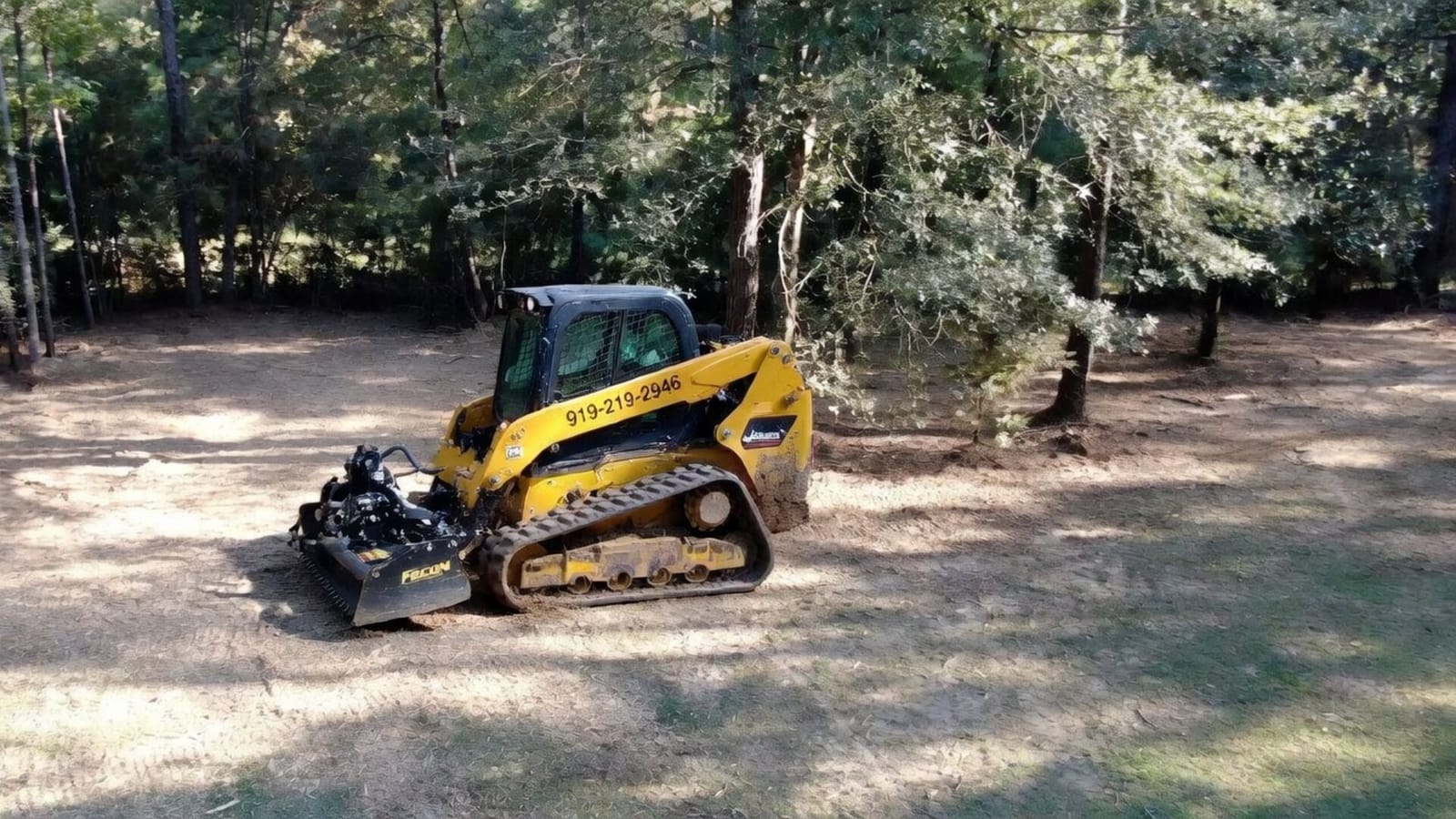
Land Clearing Cost Per Acre in North Dakota (2026 Guide)
$1,500 to $4,500 an acre to clear North Dakota land, the rates our crew charges around Fargo. How old shelterbelts, Fargo clay and burn days move the price.
 Cost Guide
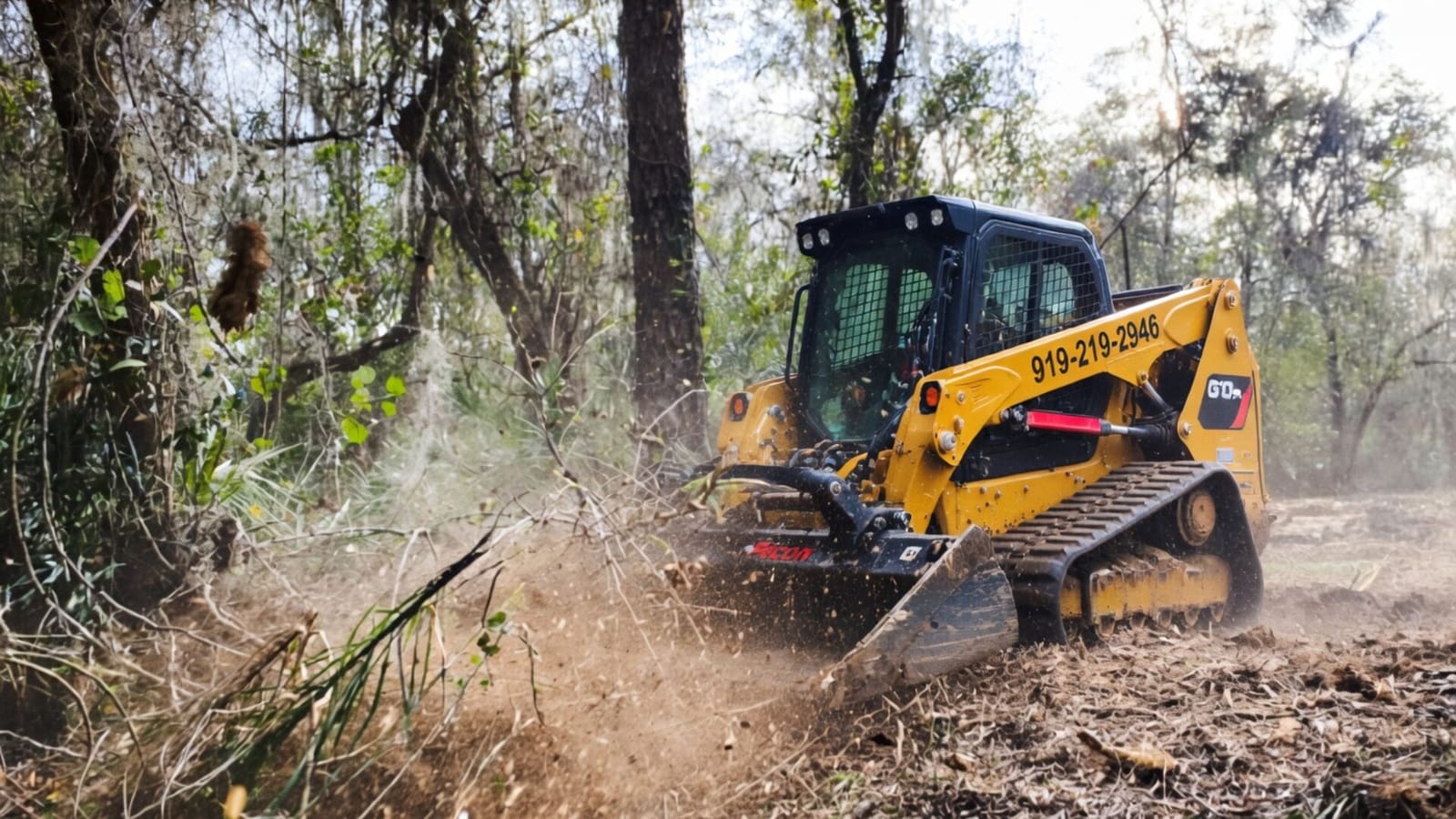
Underbrush Removal Cost in North Dakota (2026 Guide)
$1,500 to $2,500 an acre to clear underbrush under trees you keep in North Dakota. What grows back, when it becomes mulching work, and the burn rules.
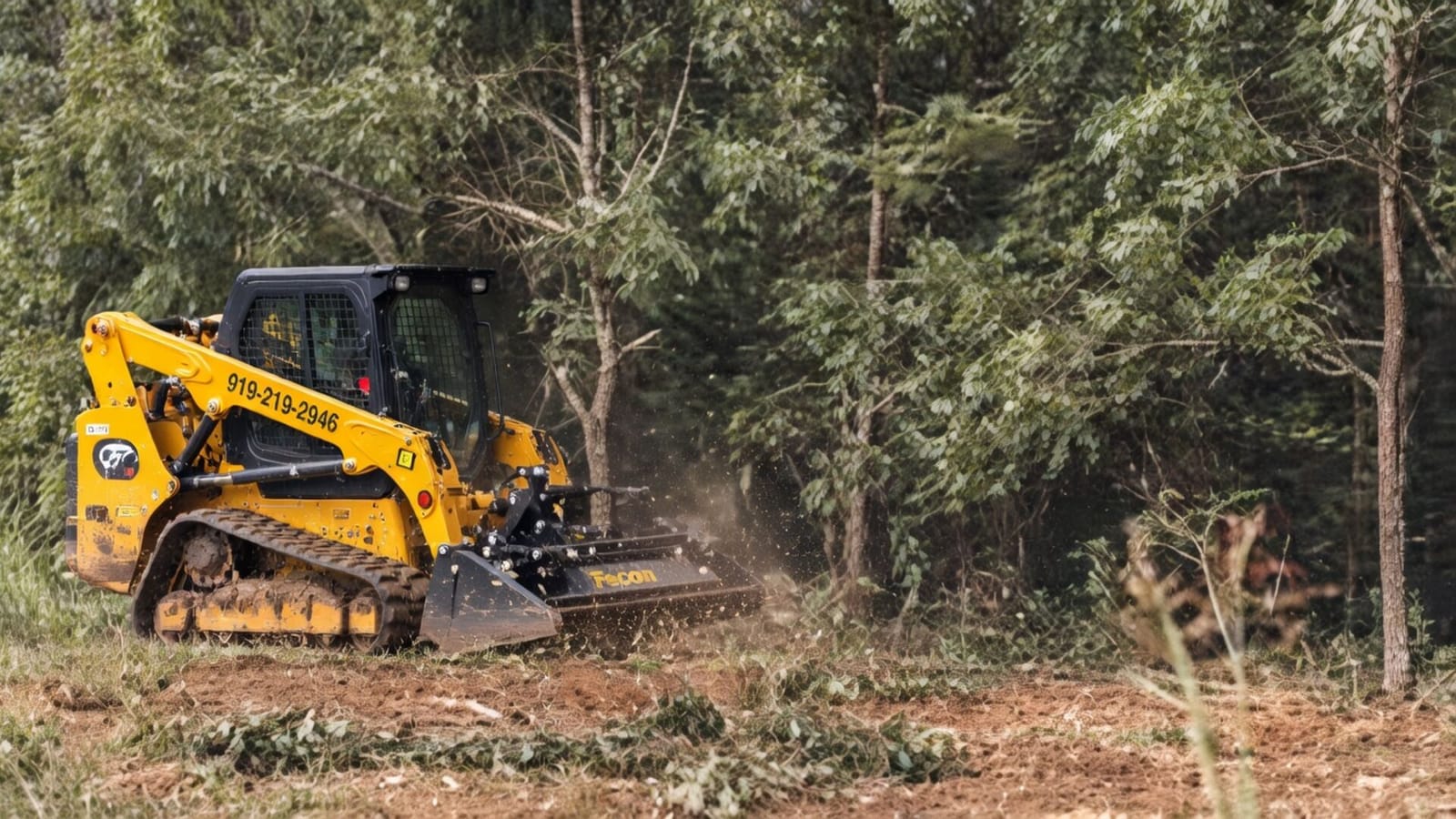 Cost Guide
Forestry Mulching Cost in Fargo, ND (2026)
Forestry mulching around Fargo, ND runs $1,500 to $4,000 an acre. What one shelterbelt row, an old belt or river brush costs, and how Fargo clay sets the price.
Comparing states? See land clearing costs by state.
Let's Get Started on Your Land
Request a free quote. We'll contact you to discuss your property, access, and the clearing you need.
Get a Free QuoteOr call us directly: (919) 525-3950
 Quick answers from Cut Brush