
Underbrush Removal Cost in North Dakota (2026 Guide)
Cut Brush Team · November 9, 2026 · 9 min read
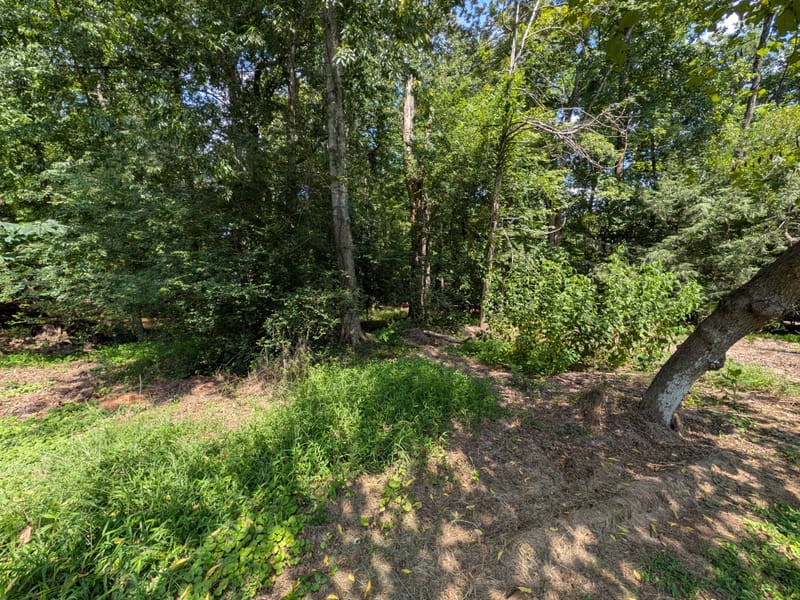
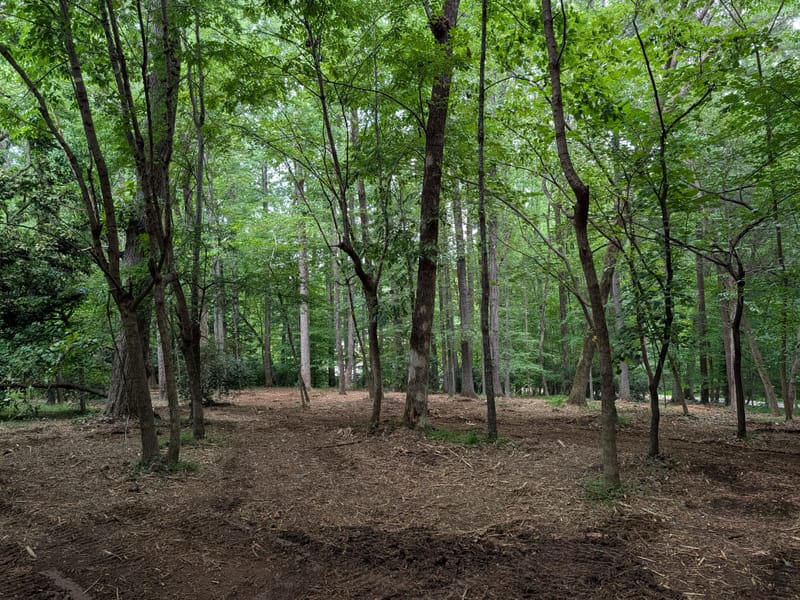
Woods in North Dakota come in strips: green ash and boxelder along the Red or the Sheyenne, or a farmstead belt with buckthorn and young elm filling every gap. Clearing the underbrush from under trees you keep costs $1,500 to $2,500 an acre with our crew, the Shelterbelt Row & Buckthorn Clearing band on our Fargo pricing page. Once the growth under the canopy has become a stand of trunks, the job moves to forestry mulching at $1,500 to $4,000 an acre.
At a glance:
- Shrubs, saplings and small elm under trees you keep: $1,500 to $2,500 an acre
- A closed thicket of larger stems with nothing above it worth keeping: $1,500 to $4,000 an acre, our mulching band
- Smallest job: a minimum charge of about $1,500, which is the whole price on a short strip, not a fee added on top
- Burning: brush from clearing land may be burned, but never while the fire index is extreme or a state or local burn ban stands
- Ash in Cass County: the county is inside the emerald ash borer quarantine, so ash branches and wood chips need a permit to leave for an area outside it
Our crew serves North Dakota from Fargo & the Red River Valley, across Cass and Richland counties, and quotes understory work elsewhere in the state too.
How Much Does Underbrush Removal Cost in North Dakota?
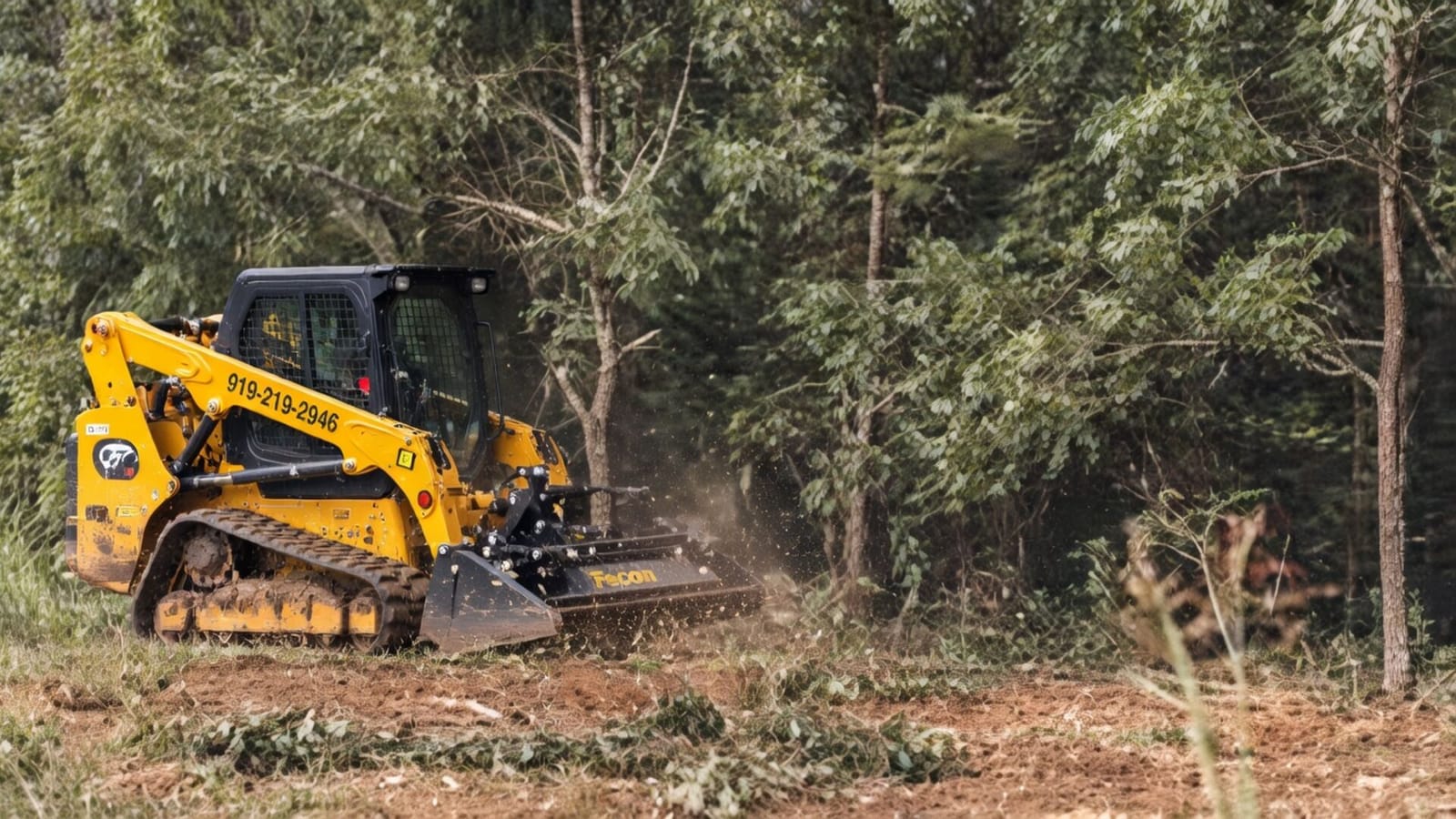
Underbrush removal cuts out the shrubs, suckers and small elm beneath a canopy you keep; a forestry mulcher grinds them in place and steers around every keeper trunk.
| What is under your trees | Our price per acre | What it looks like in North Dakota |
|---|---|---|
| Chokecherry, gooseberry and snowberry under green ash, boxelder and basswood | $1,500 – $2,500 | River woods along the Red and the lower Sheyenne |
| Buckthorn and volunteer elm coming up inside a belt you are keeping | $1,500 – $2,500 | Farmstead windbreaks around Casselton, Kindred and Horace |
| Hazel closing in under old aspen | $1,500 – $2,500 | Wooded ground among the lakes of the Turtle Mountains |
| Boxelder or buckthorn grown into a closed stand of trunks | $1,500 – $4,000 (mulching) | Neglected bottomland and the oldest belts |
Where these numbers come from. The three understory rows are the band our Fargo pricing page publishes for Shelterbelt Row & Buckthorn Clearing; the thicket row is its forestry mulching band. A strip is priced by its acreage equivalent, length times width. River woods 600 feet along the bank and 150 feet deep come to 90,000 square feet, just over two acres, or roughly $3,100 to $5,200 at the understory band. A strip well under an acre usually lands on the $1,500 minimum.
Where the understory band stops. Three lines decide it. Open ground with stems under 2 to 3 inches and no keepers is mowing work, priced in our North Dakota brush hogging guide. A wall of buckthorn or boxelder trunks with nothing above it worth saving is mulching, covered in the North Dakota forestry mulching guide. If the trees go too, our land clearing cost guide has that per-acre price.
What Grows Under North Dakota Trees, and What Comes Back
Forest covers under 2 percent of North Dakota, and the most common kind is the elm, ash and cottonwood woods along rivers and lakes. On the eastern rivers green ash, boxelder and basswood make the canopy, with hackberry, bur oak and willow mixed in. Dutch elm disease has pushed American elm down to a small understory tree that usually dies before it matures, so the elm stems under a Red River canopy are often the first thing we take out.
What we look at on the walk-through is how each plant answers a cut:
- Buckthorn sprouts back from the stump, and seed already in the ground keeps coming up for two to three summers. Cutting it again in early and late June, year after year, is what wears it down. Our buckthorn removal guide has the whole plan.
- Snowberry spreads on a web of underground stems that replaces whatever is cut, so one pass never holds it. A cut in August sets it back further than one in May or June, when it regrows and refills its roots before fall.
- Chokecherry and gooseberry belong to the native river shrub layer. Flag any clumps you want left and we steer around them like a keeper tree.
- Hazel under aging aspen in the Turtle Mountains can take over the understory and keep new trees from starting. Opening it gives the next aspen generation room.
So a follow-up plan in the Red River woods can mean a June visit for buckthorn sprouts and, where snowberry is the problem, a late summer one. We list return visits as their own lines so you can take or skip each. Treating stumps or sprouts with herbicide is a licensed applicator’s work, not ours; on stumps it goes onto the fresh cut right away, so plan that before the cut, not after the chips cover it.
What Moves the Price Under North Dakota Trees
How many keepers, and which species. Every trunk you keep is one the machine works around. With emerald ash borer now inside Fargo’s city limits and north of Mapleton, decide at the walk-through whether small ash are worth paying to protect; basswood, hackberry and bur oak make steadier keepers.
Dying elm among the keepers. Inside Fargo, Dutch elm disease on private property is the owner’s to deal with. Taking a sick elm down on the same visit costs less than bringing the machine back for it.
How thick and how old the shrub layer is. A few buckthorn stems in a belt go down in one pass at the low end of the band. A riverbank where buckthorn and snowberry have closed in for years takes more time per acre and a follow-up plan.
The ground under the trees. Much of the valley floor is Fargo series clay, with water at or near the surface at times from March into July, so spring slows any job there; our Fargo forestry mulching guide explains why late summer, fall and frozen ground price best.
Pro tip: Walk the strip with ribbon before we quote. Tie it on every bur oak, basswood and hackberry you want kept, and leave the small elm and ash bare unless one matters to you. Woods priced around a dozen flagged keepers come in lower than woods priced around every trunk.
Underbrush Work Across North Dakota
Red River and lower Sheyenne: Fargo, West Fargo, Horace, Kindred, Abercrombie. Green ash, boxelder and basswood over elm saplings, with buckthorn recorded in both Cass and Richland counties. Most work here is riverbank strips and farmstead belts, priced off our Fargo pricing page.
Sheyenne valley slopes. Bur oak, basswood, ironwood, aspen and green ash hold the valley sides. Slope, not stem count, sets the hours.
Pembina Gorge. A steep, cut-up escarpment of bur oak, aspen and green ash. How much of the understory a machine can safely reach sets the price there.
Turtle Mountains. Bur oak, aspen, paper birch, boxelder, Juneberry and snowberry, with hazel under the older aspen, among hundreds of wetlands and lakes. Water edges and soft ground set the path, so the layout of a lot matters as much as its acreage.
Western wooded draws. Cottonwood, ash and boxelder fill the draws, and Dutch elm disease still kills the elm there.
Brush Piles, Burning and Ash Wood
Mulching leaves the cut brush on the ground as chips, so nothing is hauled and there is no pile. If you would rather cut and burn, North Dakota air rules allow burning trees and brush from clearing land with conditions: no burning while the fire index is extreme or a state or local ban is declared, the brush dry and free of dirt, and the smoke kept off occupied buildings and roads. Your county and rural fire district can add their own limits, so call them before you light anything.
Wood that leaves the property has rules of its own. Cass County is inside the emerald ash borer quarantine, which covers hardwood firewood, ash logs and branches, nursery stock and wood chips; moving them to an area outside it without a permit can bring civil penalties up to $5,000. The City of Fargo asks that firewood not move in or out of town at all.
If the underbrush sits in an old farmstead belt rather than river woods, ask the North Dakota Forest Service about its Windbreak Renovation Initiative before you book. It helps pay for removals and replanting in deteriorated tree rows and offers a free site visit with a written renovation plan. Its latest open enrollment was for owners whose belts were damaged by wildfire, so ask whether a round is open for yours and what it covers.
Frequently Asked Questions
Can you clear the brush and leave the good trees?
Yes, that is the job. Mark the trees you want kept with ribbon and the mulcher steers around them, grinding the buckthorn, snowberry and young elm between.
What happens to all the brush after it is cut?
It stays on site as a layer of chips, with no piles or haul-off in the price. Burning instead is allowed only when the fire index is below extreme and no ban is in force.
Will buckthorn come back after the riverbank is mulched?
Yes, from the stumps and from seed in the soil for two to three summers. Plan cuts in early and late June for several years, and count on follow-up visits as separate lines. Herbicide on the fresh stumps is work for a licensed applicator, done the same day as the cut.
Can I just pile the elm and ash from an old windbreak?
Not safely. A diseased elm on private land in Fargo is the owner’s to handle, and Cass County ash branches and chips cannot leave for an area outside the quarantine without a permit. Grinding both where they stood settles each question in one visit.
How much does it cost to clear underbrush on one acre in North Dakota?
Usually $1,500 to $2,500. On a single acre the $1,500 minimum often sets the price, and a closed buckthorn thicket under few keepers can push the work into the mulching band.
Get an Underbrush Clearing Quote in North Dakota
Request a free quote and our crew will contact you to discuss the property, the access and the clearing you need under your trees. Pick the nearest area below. If the plan ends in a house site, our land clearing and grading guide shows who does each phase after we clear.
Sources
- NDSU Extension, North Dakota Prescribed Burning Rules and Regulations (R2077)
- North Dakota Department of Agriculture, emerald ash borer quarantine and the second Cass County find
More from the Cut Brush Blog
Keep reading for more tips and guides on land clearing.
 Cost Guide
Land Clearing Cost Per Acre in North Dakota (2026 Guide)
$1,500 to $4,500 an acre to clear North Dakota land, the rates our crew charges around Fargo. How old shelterbelts, Fargo clay and burn days move the price.
 Cost Guide
Brush Hogging Cost Per Acre in North Dakota (2026 Guide)
$75 to $400 an acre to brush hog North Dakota ground, $250 to $500 a visit minimum. Fargo clay, thistle and spurge, road ditch deadlines and nesting dates.
 Cost Guide
Forestry Mulching Cost in North Dakota (2026 Guide)
Forestry mulching in North Dakota runs $1,500 to $4,000 an acre. What a shelterbelt row costs, what mulching leaves in the ground and who can share the bill.
Comparing states? See land clearing costs by state.
Let's Get Started on Your Land
Request a free quote. We'll contact you to discuss your property, access, and the clearing you need.
Get a Free QuoteOr call us directly: (919) 525-3950
 Quick answers from Cut Brush